
A heated chamber can make a major difference when printing demanding materials such as ABS, ASA, nylon, and polycarbonate. By controlling the air temperature around the build, it helps reduce warping, layer separation, and inconsistent results on larger parts.
Our 2026 roundup compares 10 enclosed, actively heated 3D printers across industrial, prosumer, large-format, and multicolor categories. The right choice depends on chamber performance, build volume, toolhead configuration, material support, automation, and your budget.
Best 10 3d Printer with Heated Chamber Picks for 2026
Best for Multicolor Engineering Prints

- 65°C active heated chamber
- Four independent extruders
- 600mm/s CoreXY printing
Best For: Engineering materials and clean multicolor production
Best for Large Prusa-Style Production

- 11.8 × 11.8 × 12.99-inch build area
- 60°C actively heated chamber
- Rigid steel CoreXY frame
Best For: Large engineering parts and production-oriented workflows
Best for Maximum Build Volume
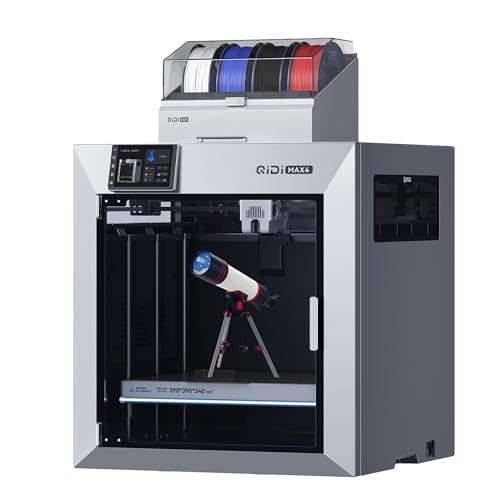
- 390 × 390 × 340mm build volume
- 65°C active heated chamber
- Up to 800mm/s printing
Best For: Large prototypes and high-temperature materials
Best for Easy Everyday Reliability

- Fully enclosed active-heated chamber
- Automatic calibration and one-click printing
- Rigid high-speed CoreXY design
Best For: Reliable home, studio, and business printing
Best High-Temperature Value

- 65°C actively heated chamber
- 370°C nozzle for engineering filaments
- 12 x 12 x 11-inch build volume
Best For: Large functional parts and high-temperature materials
Best Large-Format Multicolor Pick

- 320 x 320 x 300mm build volume
- 65°C chamber and 370°C extrusion
- Optional up-to-16-color printing
Best For: Large prototypes, batch production, and multicolor projects
Best Tool-Changing System

- Four independent toolheads
- 65°C heated chamber with HEPA13 filtration
- 600mm/s CoreXY printing
Best For: Low-waste multicolor and multimaterial printing
Best Overall
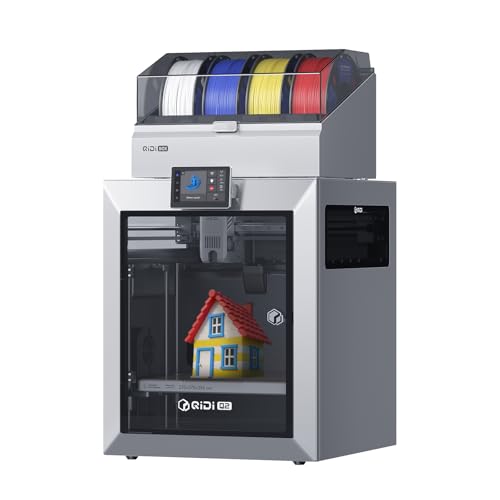
- 65°C heated chamber and 370°C nozzle
- Up to 16-color multi-material printing
- CoreXY speeds up to 600mm/s
Best For: Multi-material prototypes and composite filaments
Best Toolchanger

- Four toolheads with seven-second swapping
- 65°C actively heated chamber
- Supports engineering and flexible materials
Best For: Fast multi-material and engineering workflows
Best Large-Format
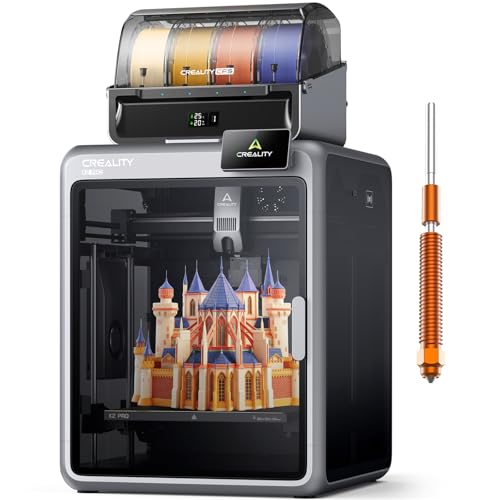
- 300 x 300 x 300mm build volume
- Up to 16-color CFS printing
- 60°C chamber and 600mm/s speed
Best For: Large prototypes and efficient batch printing
Best for Multicolor Engineering Prints – Creator 5 Pro
If you need a 3d printer with heated chamber for demanding materials and efficient multicolor work, the FLASHFORGE Creator 5 Pro combines a 65°C active chamber with four independent extruders. Its enclosed design, high-speed CoreXY platform, and HEPA13 filtration make it suited to high-throughput printing in a range of environments.
Best For: Engineering-grade ABS, ASA, PC, and Nylon parts, especially when independent multicolor or multi-material printing is important.
Pros:
- 65°C active heated chamber helps improve layer adhesion and reduce warping.
- Four independent extruders support clean multicolor and multi-material printing without shared-nozzle purging.
- Up to 600mm/s printing, automatic leveling, offset calibration, and a sealed HEPA13-filtered enclosure.
Cons:
- Its 256mm³ build volume is less suited to very large parts than the larger-format alternatives in this roundup.
- The feature-rich industrial design may be more capability than casual PLA users need.
The Creator 5 Pro is a strong choice when material control and multicolor efficiency matter as much as heated-chamber performance. It offers a particularly broad feature set for offices, workshops, and educational environments.
Best for Large Prusa-Style Production – CORE One L
The Original Prusa CORE One L is a 3d printer with heated chamber designed around a spacious 11.8 × 11.8 × 12.99-inch build area. Its actively heated 60°C chamber, rigid steel exoskeleton, and automated preparation make it a practical option for large engineering parts and repeatable high-speed workflows.
Best For: Large-format industrial parts, architectural models, cosplay helmets, and advanced materials such as ASA, ABS, PC, and Nylon.
Pros:
- Large build volume can accommodate substantial parts without splitting.
- 60°C actively heated chamber helps stabilize prints and reduce warping.
- Automated sensors, high-flow extrusion, rigid CoreXY construction, and offline-first operation support dependable use.
Cons:
- At 68.4 pounds, it is a substantial printer to position and move.
- The large enclosed design requires more space than a compact desktop machine.
Choose the CORE One L if build size and material stability are your main priorities. Its combination of a large chamber, automation, and Prusa support is well suited to users who want a production-oriented platform without cloud dependency.
Best for Maximum Build Volume – QIDI Max4 Combo
For buyers seeking a 3d printer with heated chamber and unusually generous capacity, the QIDI Max4 Combo offers a 390 × 390 × 340mm build volume and a 65°C active chamber. Its high-flow hotend, closed-loop motors, and optional QIDI BOX expansion make it capable of handling large prototypes and demanding materials.
Best For: Large industrial parts, molds, prototypes, and abrasive or high-temperature filaments such as carbon-fiber nylon and PPS-CF.
Pros:
- Very large build area enables many full-size parts to print in one piece.
- 65°C heated chamber and high-flow hotend support advanced materials and fast production.
- AI failure monitoring, closed-loop X/Y motors, and optional 16-color QIDI BOX compatibility add practical flexibility.
Cons:
- The printer is large and heavy at 120 pounds, so placement requires substantial space.
- The Polar Cooler is not included and must be purchased separately.
- QIDI BOX is an additional purchase for expanded multicolor and material management.
The Max4 Combo stands out when the largest possible print area is more important than a compact footprint. Its chamber and material support are compelling for serious prototyping, while the optional accessories let you expand capabilities over time.
Best for Easy Everyday Reliability – CORE One+
The Original Prusa CORE One+ is a 3d printer with heated chamber aimed at users who value a ready-to-print experience. Its fully enclosed active-heated chamber, automatic ventilation, automatic calibration, and rigid steel frame support reliable printing across materials from PLA and PETG to ASA, PC, and Nylon.
Best For: Home workshops, studios, businesses, and makers who want enclosed high-speed printing with straightforward setup and long-term support.
Pros:
- Fully assembled and tested with automatic calibration and one-click printing.
- Active chamber management and automatic ventilation help support varied materials.
- Rigid steel CoreXY construction, open Prusa ecosystem, lifetime assistance, and included Prusament PLA.
Cons:
- Its 250 × 220 × 270mm build volume is smaller than the CORE One L and QIDI Max4 Combo.
- The tall 28.1-inch design may require careful placement planning.
The CORE One+ is a balanced choice for buyers who want heated-chamber capability without giving up ease of use. It is especially appealing for repeatable everyday printing where support, calibration, and a mature ecosystem matter.
Best High-Temperature Value – QIDI PLUS4
The QIDI PLUS4 is a capable 3d printer with heated chamber for makers who need a generous build area and dependable support for engineering-grade materials. Its actively heated 65°C chamber, 370°C nozzle, and CoreXY design make it well suited to demanding ABS, ASA, PC, nylon, and composite-filament projects.
Best For: Professionals and advanced beginners printing large, functional parts with high-temperature filaments.
Pros:
- 65°C active chamber heating with air circulation and dual-layer insulation helps reduce warping and cracking.
- 12 x 12 x 11-inch build volume accommodates multiple models or larger prototypes.
- 370°C integrated nozzle supports materials including PPS-CF, PPA-CF/GF, ABS, ASA, PC, PA, and PET.
- Remote monitoring, filament detection, a camera, and quick setup add convenience.
Cons:
- Its 59.4-pound weight and large enclosure require substantial workspace.
- Multi-color printing requires the separately available QIDI BOX.
The PLUS4 balances chamber heating, material flexibility, and a practical large-format build area. It is a strong choice when high-temperature capability matters more than compact size.
Best Large-Format Multicolor Pick – QIDI Plus5 Combo
The QIDI Plus5 Combo is a large 3d printer with heated chamber designed for demanding prototypes, batch production, and multicolor work. It combines a 320 x 320 x 300mm build volume with a 65°C heated chamber, 370°C extrusion, and optional support for up to 16-color printing through QIDI BOX.
Best For: Engineers, production-focused makers, and users who need oversized parts or multicolor material capability.
Pros:
- Large build volume supports full-scale prototypes, multiple parts, and oversized models.
- 65°C chamber heating and 370°C extrusion suit PPS-CF, PPA-CF, PC, nylon, and other demanding materials.
- CoreXY motion system reaches up to 600mm/s with automatic leveling and camera monitoring.
- Optional QIDI BOX supports up to 16 colors and includes active filament drying.
Cons:
- At 96.8 pounds, it is a substantial machine to position and move.
- Some capabilities, including multicolor printing and the Polar Cooler, depend on optional accessories.
The Plus5 Combo is the most production-oriented option here, especially for large parts and extended print runs. Its added size and feature set make it best suited to users with the workspace and materials to take advantage of them.
Best Tool-Changing System – Flashforge Creator 5 Pro
The Flashforge Creator 5 Pro is an enclosed 3d printer with heated chamber that takes a different approach to multicolor and multimaterial printing. Four independent toolheads switch in about seven seconds, while the 65°C chamber, HEPA13 filtration, and adaptive cooling support a broad mix of engineering and everyday materials.
Best For: Users who want low-waste multicolor printing, material combinations, and remote oversight in a compact production-focused enclosure.
Pros:
- Four dedicated toolheads reduce flushing and color bleed when changing materials.
- 65°C active chamber heating supports ABS, ASA, and PA while adaptive cooling handles PLA, TPU, and PETG.
- HEPA13 filtration is rated to capture 99.97% of particles.
- Auto leveling, automatic XYZ offset, toolhead monitoring, and remote management simplify operation.
Cons:
- The 256 x 256 x 256mm build volume is smaller than the QIDI alternatives here.
- The four-toolhead system may be more capability than needed for single-material printing.
The Creator 5 Pro stands out for dedicated tool changing rather than maximum build size. Choose it when cleaner material transitions, enclosed chamber control, and filtration are more important than printing the largest parts.
Best Overall – QIDI Q2 Combo
The QIDI Q2 Combo is a versatile 3d printer with heated chamber for users who want multi-color printing alongside broad material compatibility. Its 65°C chamber, 370°C nozzle, CoreXY design, and filtration system make it well suited to demanding prototypes and detailed models.
Best For: Multi-color projects, engineering prototypes, and users printing carbon-fiber or glass-fiber composites.
Pros:
- Supports up to 16-color multi-material printing with dry-while-print technology.
- 65°C heated chamber and 370°C nozzle support materials including ABS, PA, PC, and composites.
- Includes auto-leveling, AI camera monitoring, power-loss recovery, and triple filtration.
- CoreXY motion system reaches speeds up to 600mm/s.
Cons:
- Its 54.9-pound weight and 21 x 20 x 23-inch footprint require substantial space.
- The extensive feature set may be more than casual PLA users need.
The Q2 Combo stands out as a strong all-around choice when heated-chamber performance, multi-material flexibility, and high-temperature printing matter more than a compact setup.
Best Toolchanger – FLASHFORGE Creator 5 Pro
The FLASHFORGE Creator 5 Pro is a capable 3d printer with heated chamber built around fast toolhead changes rather than traditional filament swapping. Four preloaded toolheads, a 65°C active chamber, and a hardened 320°C nozzle give it a practical edge for complex multi-material and engineering prints.
Best For: Users who frequently combine different materials or want faster, cleaner changes between filaments.
Pros:
- Four preloaded toolheads can swap in about seven seconds through the FlashSwap system.
- Supports a broad range of materials, including TPU, PVA, ASA, and carbon-fiber blends.
- 65°C active chamber helps reduce warping and improve layer bonding on large prints.
- Adaptive airflow and Flow Dynamics Calibration help maintain print quality.
Cons:
- The 320°C nozzle is lower-temperature than the 370°C nozzle on some competing models.
- Its toolhead-based workflow may be unnecessary for straightforward single-material printing.
Choose the Creator 5 Pro if efficient material changes are central to your workflow. Its chamber heating and calibration features add useful control for larger engineering parts, while adaptive airflow also benefits lower-temperature materials.
Best Large-Format – Creality K2 Pro Combo
The Creality K2 Pro Combo is a large-format 3d printer with heated chamber designed for fast production and multi-color work. Its 300 x 300 x 300mm build volume, 60°C active chamber, CFS compatibility, and dual AI cameras make it a flexible option for ambitious prototypes and batch printing.
Best For: Large prototypes, batch production, and users who want automated multicolor printing with remote monitoring.
Pros:
- 300 x 300 x 300mm build volume accommodates large models or multiple smaller parts.
- CFS enables up to 16-color and multi-material printing with filament identification and feeding.
- Print speeds reach up to 600mm/s with 20,000mm/s² acceleration.
- Dual AI cameras support failure detection, flow tuning, and blockage monitoring.
Cons:
- The 61.6-pound printer has a comparatively heavy footprint.
- Its 60°C chamber is slightly below the 65°C chamber rating of some alternatives.
- The CFS and camera features may add complexity for simple single-color projects.
The K2 Pro Combo is a compelling pick when build volume and productivity are priorities. It combines a spacious work area with high-speed motion, active chamber heating, and monitoring tools suited to repeatable projects.
How We Picked the Best 3d Printer with Heated Chamber
We focused on printers that either advertise active chamber heating or are specifically designed for enclosed, high-temperature workflows. We compared the listed chamber temperature, build volume, nozzle capability, motion speed, extrusion or tool-changing system, filtration, automation, and included multicolor features.
Because specifications and bundles can vary by region, check the current manufacturer listing before buying. A heated chamber alone does not guarantee excellent results: calibration, filament drying, bed adhesion, and a suitable build surface remain important.
Quick Comparison
| What to compare | Why it matters |
|---|---|
| Chamber temperature | Higher, actively controlled temperatures generally improve performance with warping-prone materials. |
| Build volume | Determines the maximum single-piece size and how efficiently you can batch-print parts. |
| Nozzle temperature | A high-temperature nozzle supports engineering filaments that require hotter extrusion. |
| Toolheads or color system | Independent toolheads and material systems can simplify multicolor or multimaterial printing. |
| Automation and monitoring | Leveling, cameras, sensors, and failure detection reduce hands-on supervision. |
Key Buying Factors for a 3d Printer with Heated Chamber
Material Compatibility
Match the printer to the filaments you actually plan to use. ABS, ASA, nylon, and polycarbonate benefit from stable enclosure temperatures, while carbon-fiber-filled materials may also require a hardened nozzle and wear-resistant filament path.
Chamber and Nozzle Performance
Look beyond the headline temperature. An actively heated chamber, insulated enclosure, controlled ventilation, and a high-temperature hot end work together. Verify whether the advertised chamber temperature is actively maintained or simply the maximum possible under ideal conditions.
Size, Speed, and Part Quality
Large-format models are useful for prototypes, fixtures, and production parts, but they require a rigid frame and dependable thermal control. High speed is valuable only when motion systems, extrusion, cooling, and firmware can maintain dimensional accuracy.
Workflow and Safety
HEPA filtration, enclosure design, remote monitoring, automatic bed leveling, and recovery features can make frequent printing easier and more comfortable. Even with filtration, operate high-temperature materials in a well-ventilated area and follow the manufacturer’s safety guidance.
Who Should Buy Which 3d Printer with Heated Chamber?
- For demanding engineering parts: Choose a model with active chamber heating, a high-temperature nozzle, and strong enclosure control.
- For large prototypes and functional components: Prioritize build volume, frame rigidity, thermal consistency, and reliable long-duration operation.
- For multicolor or multimaterial printing: Consider a combo bundle or independent toolhead system, while checking purge waste and material compatibility.
- For home workshops: Look for filtration, automatic calibration, camera monitoring, and a straightforward maintenance routine.
- For production-oriented users: Favor repeatability, service support, replaceable components, and a workflow that minimizes manual intervention.