
The best advanced science experiment sets turn scientific concepts into hands-on discoveries, combining guided activities with enough variety to keep curious learners engaged.
We compared 10 popular kits across chemistry, physics, electronics, magnetism, and general STEM to help you choose the right challenge, age range, and level of structure.
Best 10 Advanced Science Experiment Sets Picks for 2026
Best All-Around Variety
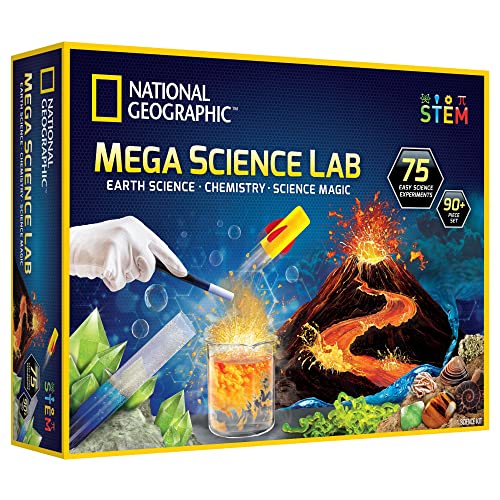
- Covers Earth science, chemistry, and science magic
- Includes 45 supplied experiments plus 30 bonus activities
- Features volcano, crystal, fossil, and reaction projects
Best For: Kids ages 8 and up who want a broad mix of science topics
Best for Physics Foundations
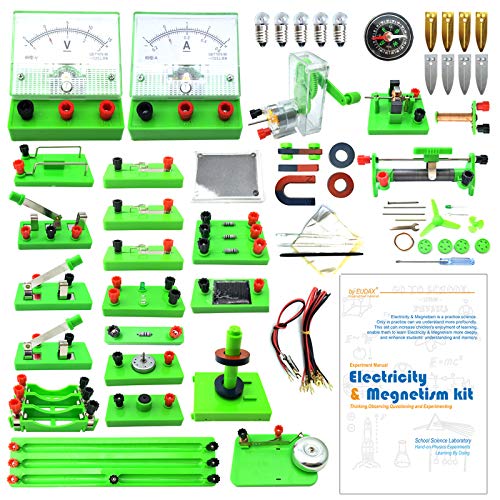
- Explores basic electricity and magnetism
- Includes 79 listed items and a color manual
- Builds circuits, electromagnets, bells, and generators
Best For: Students learning hands-on electricity and magnetism concepts
Best Chemistry Variety

- Offers 100+ chemistry experiment ideas
- Includes materials for 15 featured experiments
- Uses test tubes, beakers, and pipettes
Best For: Kids ages 8 and up who want chemistry-centered activities
Best for Advanced Electronics

- Supports more than 750 projects with 80 parts
- Builds circuits without soldering or tools
- Includes PC interface software for waveforms and frequencies
Best For: Kids 8 and up interested in extensive hands-on electronics
Best Complete Lab Setup

- 57-piece chemistry station with lab-style equipment
- Includes slime, fizzing, bubbles, and chromatography activities
- Designed for ages 6 and up with non-hazardous chemicals
Best For: Young scientists who want an immersive chemistry workspace
Best Guided Chemistry Introduction
Thames & Kosmos Chemistry C500

- Includes 28 classic guided chemistry experiments
- Explores acids, bases, invisible ink, and gas reactions
- 48-page guide explains procedures and scientific results
Best For: Ages 10–15 learning chemistry through structured activities
Best for Younger Beginners
National Geographic Junior Chemistry Set

- Offers 50 hands-on experiments for ages 4 and up
- Includes 20+ child-friendly tools, goggles, and test tubes
- Uses illustrated instructions and common household materials
Best For: Early STEM learners beginning chemistry at home
Advanced Chemistry Lab

- 333+ experiments across 27 chapters
- Real lab equipment and selected chemicals
- For ages 12+ with adult supervision
Best For: Aspiring chemists and serious STEM learners
Multi-Topic STEM Starter

- 150 projects across chemistry, physics, and earth science
- Illustrated step-by-step manual
- Designed for ages 8 and up
Best For: Families seeking varied hands-on STEM activities
Science Magic Fun

- 20 experiments with included materials
- Bonus booklet adds 85+ magic experiments
- For ages 8 and up; no batteries required
Best For: Kids who enjoy magic-themed STEM activities
Best All-Around Variety – Mega Science Lab
For families seeking advanced science experiment sets with broad subject coverage, this National Geographic lab combines Earth science, chemistry, and science magic in one package. It includes 45 supplied experiments plus a guide with 30 additional activities using common household items.
Best For: Kids ages 8 and up who want varied STEM projects, from volcanoes and crystals to chemical reactions and science tricks.
Pros:
- Combines three science themes in one kit.
- Includes rock, mineral, crystal, and fossil-related activities.
- Offers 75 total experiment ideas, including household-material projects.
Cons:
- Some bonus experiments require common household items.
- The wide range of topics may be less focused than a dedicated chemistry or electronics kit.
This is a strong choice when variety matters most. Its mix of supplied materials and household-based activities can keep young learners engaged across multiple areas of science.
Best for Physics Foundations – Electricity & Magnetism Lab
This EUDAX kit is a practical pick among advanced science experiment sets for learners exploring electricity and magnetism. Designed for grades 9–11 while listing a recommended age range of 8–18, it supports hands-on circuit and electromagnetism projects with 79 listed items and a color manual.
Best For: Students building foundational physics skills through series and parallel circuits, electromagnets, motors, and related investigations.
Pros:
- Focuses specifically on electricity and magnetism.
- Supports projects such as fruit batteries, Ohm’s law, electric bells, and hand-crank generators.
- Includes 56 electricity items, 21 magnetism items, repair tools, and a storage bag.
Cons:
- Three AA batteries are required and not included.
- The physics-focused projects may be more demanding than general introductory activities.
Choose this set when the goal is structured exploration of core electrical and magnetic principles. The project range gives students several ways to connect textbook concepts with working models.
Best Chemistry Variety – Amazing Chemistry Set
For chemistry-focused advanced science experiment sets, this National Geographic kit offers 15 activities with included materials and 85 additional ideas using household items. Young experimenters can work with test tubes, beakers, and pipettes while exploring reactions, color changes, crystals, and more.
Best For: Kids ages 8 and up who want an engaging introduction to hands-on chemistry with both kit-based and household-material experiments.
Pros:
- Provides more than 100 experiment ideas overall.
- Includes materials for 15 featured chemistry experiments.
- Uses real scientific tools such as test tubes, beakers, and pipettes.
Cons:
- Most of the 85 bonus activities rely on common household items.
- It is focused on chemistry rather than multiple science disciplines.
This set makes sense for children who are especially interested in reactions, color changes, and crystal growing. The supplied materials provide a starting point, while the bonus guide extends the kit’s usefulness.
Best for Advanced Electronics – Snap Circuits Extreme
Snap Circuits Extreme stands out among advanced science experiment sets for its electronics focus and reusable snap-together components. With 80 parts and more than 750 project possibilities, it lets kids build circuits without soldering or tools, including projects involving sound, light, radio, and measurement.
Best For: Kids ages 8 and up who want an extensive electronics platform with reusable parts and computer-connected exploration.
Pros:
- Supports more than 750 experiments with 80 parts.
- Snap-together construction requires no soldering or tools.
- Includes a PC-interface cable and software for viewing waveforms and frequencies.
Cons:
- Its electronics emphasis may not suit children seeking chemistry or Earth science activities.
- Battery power is required.
This is the strongest fit here for sustained electronics exploration. The large project count, no-tool assembly, and computer interface give learners room to progress from basic circuits toward more advanced concepts.
Best Complete Lab Setup – Ooze Labs Chemistry Station
For shoppers comparing advanced science experiment sets, the Ooze Labs Chemistry Station stands out as a colorful, hands-on chemistry workspace. It includes 57 pieces, non-hazardous chemicals, experiment cards, and a 16-page manual for activities such as glowing slime, fizzing reactions, oozing bubbles, and chromatography.
Best For: Kids ages 6 and up who want a dedicated, realistic-looking chemistry station with varied experiments and lab tools.
Pros:
- Complete station with beakers, test tubes, flasks, pipettes, and other lab equipment.
- Includes 57 pieces and multiple experiment formats, including slime, fizzing reactions, and chromatography.
- Printed cards clip onto the station, while the illustrated manual adds explanations and more activities.
- Uses non-hazardous chemicals and requires no batteries.
Cons:
- The large station may require more storage space than a compact boxed kit.
- The recommended age starts at 6, so some experiments may need adult supervision.
This is a strong choice when presentation, equipment variety, and an immersive lab setup matter as much as the experiments themselves. Its broad activity selection makes it a flexible pick for ongoing chemistry play.
Best Guided Chemistry Introduction – Thames & Kosmos Chemistry C500
Among advanced science experiment sets, the Thames & Kosmos Chemistry C500 is a focused introduction for older children. Its 28 guided experiments cover acids and bases, invisible ink, and reactions involving solids, liquids, and gases, with a 48-page manual explaining both the procedures and the science behind them.
Best For: Ages 10 to 15 who prefer structured experiments and clear explanations of the chemistry involved.
Pros:
- Provides 28 classic, guided chemistry experiments.
- Covers colorful acid-base reactions, fizzy and foamy reactions, and invisible ink.
- The 48-page, full-color guide explains setup, results, and why each reaction occurs.
- Includes essential lab items such as beakers, test tubes, chemicals, stoppers, and pipettes.
Cons:
- Offers fewer experiments than some larger kits.
- Its recommended age range makes it less suitable for younger children.
- The kit is more compact and focused than a full-size chemistry station.
The C500 is best suited to learners ready to move beyond simple demonstrations. Its emphasis on guided procedures and explanations makes it a practical option for building foundational chemistry knowledge.
Best for Younger Beginners – National Geographic Junior Chemistry Set
For families seeking advanced science experiment sets with an accessible starting point, the National Geographic Junior Chemistry Set offers 50 hands-on activities for children ages 4 and up. It combines more than 20 child-friendly lab tools with illustrated, step-by-step instructions and experiments using familiar household items such as baking soda and vinegar.
Best For: Young beginners ages 4 and up who need simple instructions, approachable materials, and early STEM exploration.
Pros:
- Includes 50 interactive chemistry experiments.
- Provides more than 20 durable, child-safe lab tools, including test tubes and goggles.
- Illustrated instructions are designed to be easy for young scientists to follow.
- Uses common household items such as baking soda and vinegar for activities.
Cons:
- Its junior focus may be less challenging for older children seeking advanced chemistry.
- Many experiments depend on household ingredients in addition to the included tools.
- The supplied notes do not specify the complete list of included chemicals or activities.
This kit prioritizes accessibility and experiment volume over a fully equipped laboratory setup. It is a sensible pick for introducing preschool and early elementary learners to chemistry with familiar materials and visual guidance.
Advanced Chemistry Lab – CHEM C3000
For students ready to move beyond introductory projects, the Thames & Kosmos CHEM C3000 is one of the most advanced science experiment sets in this roundup. It includes more than 333 experiments across inorganic, organic, and electrochemistry, along with authentic lab equipment and a detailed 192-page manual.
Best For: Aspiring chemists, homeschoolers, and students ages 12 and up working with adult supervision.
Pros:
- Offers more than 333 experiments across 27 chapters.
- Includes glassware, an alcohol burner, electrodes, goggles, and other lab equipment.
- Explains advanced topics such as chemical bonding, electrolysis, acids and bases, and organic chemistry.
- Provides safety, first-aid, labeling, and waste-disposal guidance.
Cons:
- Requires continuous adult supervision.
- Some experiments need common household additions.
- Its advanced chemistry focus may be more than younger beginners need.
Choose this set when depth and realistic chemistry practice matter more than quick, simple activities. Its extensive manual and broad chemical coverage make it a strong long-term option for serious learners.
Multi-Topic STEM Starter – 150 Experiments Science Kit
The UNGLINGA 150 Experiments kit is a broad, approachable choice among advanced science experiment sets for children who want variety. Its projects cover chemistry, physics, earth science, and surface tension, with illustrated instructions and many of the required tools and materials included.
Best For: Children ages 8 and up exploring different STEM topics with a parent or teacher.
Pros:
- Includes 150 hands-on experiments across several science subjects.
- Uses a step-by-step, illustrated manual.
- Provides kid-friendly tools and materials, including goggles.
- Some activities use regular household items for added flexibility.
Cons:
- Not every project is fully self-contained because some require household items.
- The wide subject range may provide less depth in any one area.
This is a practical pick for families seeking repeated, varied activity sessions rather than a specialized chemistry course. It supports learning through play and gives parents a straightforward way to participate.
Science Magic Fun – 100+ Experiments and Tricks
The National Geographic Science Magic Kit combines STEM activities with the appeal of magic tricks, making it a lively alternative to traditional advanced science experiment sets. It includes materials for 20 magic experiments plus a bonus booklet containing more than 85 additional magic experiments for children ages 8 and up.
Best For: Kids who are motivated by magic, demonstrations, and entertaining science activities.
Pros:
- Combines science experiments and magic tricks in one set.
- Includes materials for 20 experiments.
- Adds a booklet with more than 85 additional magic experiments.
- Requires no batteries and has STEM-focused educational objectives.
Cons:
- Its science-magic format may be less suitable for learners seeking a structured chemistry curriculum.
- The supplied notes provide fewer details about the specific experiment topics and equipment.
This kit is best when presentation and curiosity are the main priorities. The magic theme can make demonstrations especially engaging, while the large collection of activities supports repeat use during play or learning time.
How We Picked the Best Advanced Science Experiment Sets
We focused on kits that offer meaningful hands-on learning rather than a small collection of unrelated activities. Our selections cover chemistry, electricity, circuits, magnetism, physics, and broad STEM exploration, with options for younger children, older students, and family learning.
We also considered experiment count, clarity of instructions, included tools and materials, age guidance, progression from basic to more challenging activities, and how well each kit supports independent use. Because consumable supplies and safety requirements vary, buyers should check the package contents and manufacturer guidance before ordering.
Quick Comparison
| Best For | Look For |
|---|---|
| Broad science exploration | Large experiment counts and mixed-topic activities |
| Chemistry beginners | Clear instructions, safe demonstrations, and included materials |
| Advanced chemistry | More tools, expanded components, and progressive experiments |
| Electronics and circuits | Modular parts, reusable components, and troubleshooting guidance |
| Classroom or group use | Durable equipment, repeatable activities, and easy organization |
Key Buying Factors for Advanced Science Experiment Sets
Age and Skill Level
Age ranges are useful starting points, but the best choice also depends on reading ability, patience, and previous experience. Younger learners often benefit from visual, highly guided activities, while older students may prefer open-ended experiments and more technical explanations.
Subject Focus
Choose a broad kit if the learner is still exploring interests. Chemistry-focused sets are better for reactions, acids and bases, separation, and materials science. Circuit and physics kits are a stronger fit for children interested in electricity, engineering, magnetism, and problem-solving.
Experiment Depth and Supplies
A high experiment count does not always mean deeper learning. Check whether activities use substantial included components or simply repeat similar demonstrations. Also verify which household items, batteries, protective equipment, or replacement chemicals are required.
Safety and Supervision
Review safety instructions before purchase. Some experiments require adult supervision, eye protection, ventilation, careful measuring, or disposal procedures. Store components securely and follow the manufacturer’s age and handling recommendations.
Who Should Buy Which Advanced Science Experiment Sets?
For a child who wants variety, a large National Geographic or multi-topic kit can provide an approachable starting point. Learners specifically drawn to chemistry should consider a junior or guided chemistry set first, then move to a larger advanced kit as their confidence grows. Budding engineers are likely to get more value from a modular electronics or physics set with reusable parts.
For families learning together, prioritize clear instructions and experiments that can be repeated. For classrooms, compare component durability, replenishment costs, storage, and whether several students can participate at once. The right Advanced Science Experiment Sets should match the learner’s interests and provide enough structure to make each experiment successful without removing the opportunity to think, test, and troubleshoot.