
Choosing the right analog FPV goggles can make a huge difference in how clearly you see the course, how comfortably you fly, and how confidently you recover from mistakes.
Below, we focus on the 10 best options for 2026, from simple budget screens to more advanced goggles with better displays, DVR, and fit options.
Best 10 Analog Fpv Goggles Picks for 2026
Budget-Friendly Analog FPV Goggles
EV800D 5" DVR Diversity Goggles

- 5-inch 800x480 LCD screen
- Built-in DVR with MP4 recording
- Dual antennas and auto channel search
Best For: Affordable analog flying, DVR recording, and simple setup
Immersive Premium Goggles
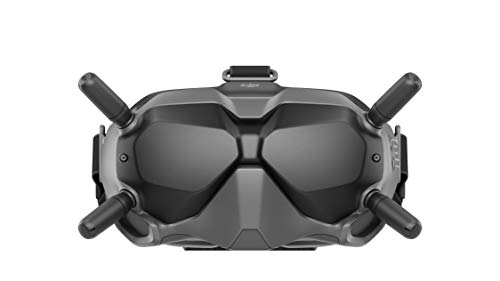
- FHD 1080p capture support
- Immersive FPV-focused design
- Battery sold separately
Best For: DJI users wanting an immersive goggle setup
Digital HD Alternative
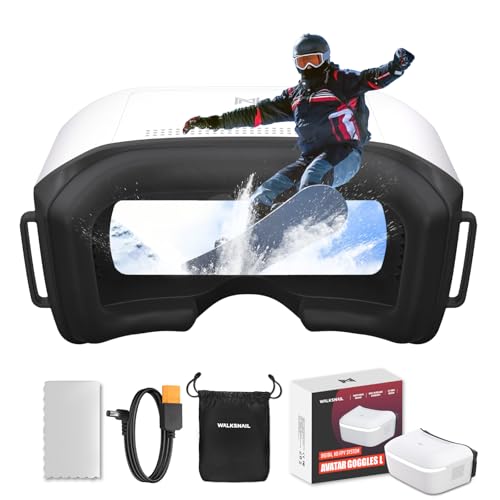
- 1080p/60fps 4.5-inch LCD
- Built-in DVR and replay support
- Only works with Walksnail Avatar HD
Best For: HD pilots upgrading to Walksnail Avatar
High-End Immersive Viewing

- 1920 x 1080 display resolution
- Portable with built-in controls
- Requires one battery
Best For: Premium DJI FPV pilots wanting a sharp portable goggle
Digital Walksnail Pick

- 1920x1080 TFT display with 4-inch screen
- 4 internal wide-beam directional antennas
- USB-C output, DVR button, and SD upgrade support
Best For: Walksnail Avatar pilots wanting a simple HD headset
Premium Motion Bundle

- Dual Micro-OLED screens with 1080p resolution
- Lightweight 86 g design with adjustable diopters
- Includes DJI RC Motion 2 controller
Best For: DJI pilots wanting a lightweight motion-control goggle
Record-and-Replay Choice

- 4.5-inch 1080p LCD with 60 Hz refresh
- Built-in record and replay to microSD
- Includes two 2600mAh batteries for up to 3 hours
Best For: Pilots wanting comfortable HD goggles with onboard recording
Premium DJI FPV

- 1080p Micro-OLED screens up to 100 Hz
- Real View PiP for safer situational awareness
- O4 HD transmission with supported DJI gear
Best For: DJI pilots seeking a premium immersive goggle system
OLED Racing Pick
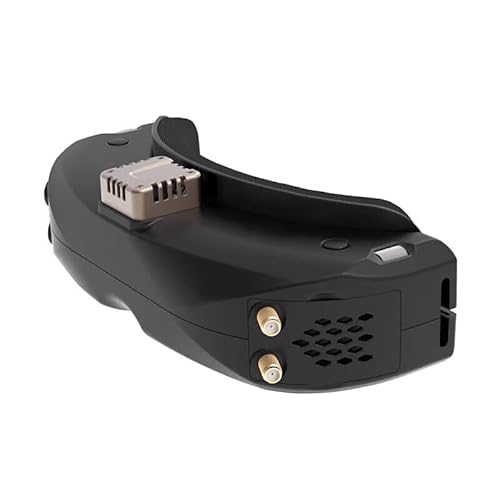
- OLED display with vivid color and contrast
- SKYFUSION dual-signal fusion technology
- Built to reduce tearing and flicker during switching
Best For: Racers wanting a high-contrast FPV goggle with stable wireless reception
Budget-Friendly Analog FPV Goggles – EV800D 5" DVR Diversity Goggles
If you want analog fpv goggles that prioritize value and simple operation, the EV800D is a practical pick. It combines a 5-inch 800×480 LCD, built-in DVR, and dual-antenna reception, making it useful for everyday practice flights, RC cars, and casual line-of-sight to screen viewing.
Best For: Pilots who want an affordable analog goggles setup with DVR recording and easy auto-search channel tuning.
Pros:
- Built-in DVR lets you record flights in MP4 format.
- Dual antenna reception helps improve signal stability.
- Auto-search and key frequency search make channel setup quick.
- 5-inch high-brightness LCD gives a larger viewing area than many compact goggles.
Cons:
- Bulky design is less compact than boxless-style goggles.
- Resolution is 800×480, so it is not a high-definition display.
- Battery charger cable is included, but an adapter is not.
The EV800D stands out as a straightforward analog FPV option when you want a big screen, recording support, and reliable reception without overcomplicating the setup.
Immersive Premium Goggles – DJI FPV Goggles
The DJI FPV Goggles are aimed at pilots who want an immersive first-person view experience rather than a basic analog fpv goggles setup. According to the supplied details, they include FHD 1080p capture support and a compact goggle design, but note that the battery is sold separately.
Best For: Pilots seeking an immersive DJI FPV viewing experience and are comfortable buying the battery separately.
Pros:
- Supports FHD 1080p video capture.
- Designed for an immersive FPV experience.
- Compact headset-style form factor.
Cons:
- Battery is not included, despite Amazon description confusion.
- Supplied notes do not list analog reception support.
- Limited detail provided on accessories and channel compatibility.
This model makes sense if you are already in the DJI ecosystem and want a more immersive viewing setup, but it is not the obvious choice for a traditional analog FPV buyer.
Digital HD Alternative – Walksnail Goggles L 1080p
If you are comparing analog fpv goggles with a clearer digital option, the Walksnail Goggles L are built for pilots who want sharper video and lower-latency performance. They feature a 4.5-inch 1080p LCD, built-in DVR, and head tracking, but they only work with Walksnail Avatar HD air units and do not receive analog video.
Best For: Pilots upgrading to the Walksnail Avatar HD ecosystem for freestyle, fixed-wing, or RC use.
Pros:
- 1080p/60fps display offers a clearer image than analog systems.
- Built-in DVR and replay support add convenience.
- Head tracking works with compatible fixed-wing and RC setups.
- 6V-25.2V input supports 2S-6S batteries for field use.
Cons:
- Does not receive analog video.
- No HDMI input is included.
- Walksnail-compatible air unit required, so it is not a universal goggle option.
The Walksnail Goggles L are a strong choice if you want to move beyond analog and you already know your system will stay inside the Avatar HD ecosystem.
High-End Immersive Viewing – DJI FPV Goggles V2
The DJI FPV Goggles V2 are built for an immersive racing-style viewing experience, with a 1920 x 1080 display and built-in controls in a portable design. While they are not marketed here as analog fpv goggles, they are a relevant higher-end option for pilots looking at immersive goggle systems with a sharp display.
Best For: Pilots who want a premium DJI goggle setup with a full HD display and portable design.
Pros:
- 1920 x 1080 resolution delivers a sharp image.
- Portable design makes it easier to carry and use in the field.
- Built-in controls reduce the need for extra accessories.
- Includes internal memory support up to 256 GB.
Cons:
- Supplied notes do not describe analog video support.
- One battery is required, but battery details are not included in the listing notes.
- Screen size is listed as 2 inches, which may feel small compared with box goggles.
If your priority is a premium DJI-branded viewing experience, the V2 offers strong resolution and portability, though it is less relevant for shoppers who specifically need traditional analog compatibility.
Digital Walksnail Pick – Fat Shark Recon HD
If you want analog fpv goggles only in the broad shopping sense but your build is Walksnail-based, the Fat Shark Recon HD is a practical HD option to consider. It pairs a 1920×1080 TFT display with a 4-inch screen, a 44-degree field of view, and onboard controls that make it straightforward to use at the field.
Best For: Pilots flying Walksnail Avatar VTXs who want an easy-to-use, headset-style HD goggle.
Pros:
- 1920×1080 TFT screen with a 4-inch display for HD viewing
- Four internal wide-beam directional antennas included
- 5-way OSD button navigation plus DVR record button
- USB-C video output and SD-card upgrade support
Cons:
- Compatible with Walksnail Avatar VTXs, so it is not a universal goggle choice
- 44-degree FOV is more focused than ultra-wide alternatives
- Uses a wired power setup rather than an all-in-one battery design
Overall, this is a solid pick if your priority is clean HD viewing and simple controls in a lightweight headset. It is best viewed as a system-matched goggle rather than a traditional analog all-rounder.
Premium Motion Bundle – DJI Goggles 2 Motion Combo
For buyers comparing analog fpv goggles to modern digital systems, the DJI Goggles 2 Motion Combo sits firmly in the premium end of the market. It combines dual Micro-OLED screens, DJI O3+ video transmission support, and a lightweight 86 g design, making it aimed at pilots who value clarity and portability.
Best For: DJI drone and Avata pilots who want a lightweight digital goggle with motion control.
Pros:
- Two Micro-OLED screens with 1920×1080 resolution
- Lightweight 86 g build with replaceable foam padding
- Adjustable diopters from +2.0 to -8.0
- Includes DJI RC Motion 2 controller for intuitive flying
Cons:
- Designed for DJI-compatible drones, not a broad analog FPV setup
- Premium feature set makes it less suited to budget buyers
- Motion-control focus may not appeal to every FPV pilot
This combo is best when you want a polished, travel-friendly goggle with strong image quality and integrated controls. It is less about analog compatibility and more about a streamlined DJI flying experience.
Record-and-Replay Choice – BETAFPV VR04 HD
If you’re shopping for analog fpv goggles in the practical sense of a compact, self-contained flying display, the BETAFPV VR04 HD is built around convenience. It offers a 4.5-inch LCD with 1920×1080 resolution, glasses-friendly comfort features, and built-in recording so you can save flights directly to microSD.
Best For: Pilots who want a comfortable HD goggle with built-in recording and flexible battery options.
Pros:
- 1920×1080 LCD screen on a 4.5-inch display
- Built-in record and replay with microSD support up to 1TB
- Comes with two 2600mAh batteries and up to 3 hours runtime
- Glasses-friendly fit with PU face padding and silicone nose bridge
Cons:
- Compatibility is focused on P1 Air Unit VTX and similar setups
- SD card is not included
- At 60 Hz refresh, it is not aimed at the fastest premium display tier
As an everyday-use option, the VR04 HD stands out for ease of wearing, easy recording, and flexible power. It is a sensible choice if you want a feature-rich goggle for HD-capable whoops and custom builds.
Budget Analog Viewer – SpeedyBee 3 Inch 5.8G 40CH
If you want a simple way to get into analog fpv goggles, this SpeedyBee model focuses on the basics that matter for casual flying and racing. The 3.0-inch 480×320 LCD, dual antennas, and 40-channel RaceBand support make it a practical pick for analog FPV camera and transmitter setups, with low power draw for longer sessions.
Best For: Beginners and budget-minded pilots who want a lightweight analog FPV viewing solution with built-in battery power.
Pros:
- Dual antennas help improve signal stability for analog FPV use.
- 40 RaceBand channels with auto-search make setup easier.
- Built-in 1200mAh battery and low power consumption support longer sessions.
- 3-inch high-brightness LCD and AV in/out add practical flexibility.
Cons:
- 480×320 display resolution is modest compared with premium goggles.
- Designed for analog FPV, so it is not a digital-first option.
- Best suited to intermediate or casual use rather than high-end immersion.
Overall, this is a straightforward analog FPV goggles option that prioritizes signal reliability, portability, and ease of use over advanced display tech. It makes the most sense if you want a compact receiver-style goggle for everyday FPV flying.
Premium DJI FPV – Goggles 3 Micro-OLED
For pilots shopping for analog fpv goggles alternatives with a premium feel, DJI Goggles 3 is built around immersive display quality and tightly integrated drone support. The 1080p Micro-OLED screens, Real View PiP, and O4 HD video transmission are aimed at users who want a smooth, modern FPV experience with strong visual clarity.
Best For: DJI drone pilots who want an immersive, high-end goggle system with advanced display and safety features.
Pros:
- 1080p Micro-OLED screens with up to 100 Hz refresh rate.
- O4 video transmission offers ultra-low latency and high bitrate with supported drones.
- Real View PiP lets you check surroundings without removing the goggles.
- Adjustable diopters and integrated headband battery improve comfort.
Cons:
- Compatibility is focused on DJI gear and supported DJI air units/controllers.
- Not a universal analog FPV goggle choice for mixed systems.
- Higher-end feature set makes it less of a simple plug-and-play budget option.
In practice, Goggles 3 is best viewed as a premium, ecosystem-specific FPV display rather than a general analog solution. If your setup is built around compatible DJI drones and accessories, it delivers a polished and feature-rich experience.
OLED Racing Pick – SKYZONE SKY04O Pro OLED
The SKYZONE SKY04O Pro is aimed at pilots who want a serious FPV goggles setup with strong image quality and race-ready reception. Its OLED display, 5.8G wireless transmission support, and SKYFUSION dual-signal fusion system are designed to reduce common analog viewing issues like tearing and flicker during signal changes.
Best For: FPV racers and flyers who want a high-contrast OLED goggle with robust analog-style wireless reception.
Pros:
- OLED screen delivers vivid color and high contrast for clearer flight detail.
- SKYFUSION dual video signal fusion helps smooth signal processing.
- Aims to prevent tearing, flickering, and rolling during signal switching.
- Adjustable diopter and multilingual UI add usability.
Cons:
- Field of view is 46 degrees, which may feel limited to some users.
- Resolution is 1280 x 960 per eye, so it is not the highest-res option available.
- Built around wireless FPV reception, so it is more specialized than general-purpose goggles.
This model stands out if image contrast and stable reception matter more to you than extras. For pilots comparing analog fpv goggles, it offers a focused racing-oriented package with display quality and signal handling at the center.
How We Picked These Analog Fpv Goggles
We focused on goggles that matter to real pilots: image clarity, latency, reception quality, comfort, recorder options, battery convenience, and overall value. We also looked at compatibility with analog 5.8GHz systems, since that is the core requirement for most analog FPV setups.
Because pilots fly in different environments, we included entry-level, midrange, and premium options so you can match the goggles to your flying style and budget.
Quick Comparison: What to Expect
In this lineup, some models are built specifically for Analog Fpv Goggles use with simple all-in-one screens and DVR, while others are hybrid or premium goggles that may suit pilots planning to move between analog and digital ecosystems. The main tradeoff is usually cost versus features: simpler goggles are easier on the wallet, while higher-end options tend to improve display quality, comfort, and expandability.
Key Buying Factors for Analog Fpv Goggles
Display Type and Size
A larger screen can feel more immersive, but image quality, brightness, and optics matter just as much. If you fly outdoors often, prioritize visibility in strong light. If you race, a sharper display and low perceived blur can help with gate timing and fast corrections.
Receiver Performance and Diversity
Good reception is essential for analog flying. Look for a stable receiver system, diversity support when available, and antenna flexibility. A strong receiver can reduce breakup and keep the image usable when you are flying behind obstacles or at longer range.
DVR and Recording
Built-in DVR is useful for reviewing lines, diagnosing video noise, and capturing flights. It is not mandatory, but it is a major plus for training and troubleshooting.
Comfort, Fit, and Portability
Goggles should sit securely without pressing too hard on your face. Adjustable straps, foam quality, weight, and heat buildup all affect long-session comfort. If you travel frequently, a smaller and lighter set may be worth more than a bulkier model with extra features.
Battery and Power Setup
Some goggles include a built-in battery, while others rely on external packs. Built-in power can be convenient, but external options may offer longer runtime and easier field replacement.
Who Should Buy Which Analog Fpv Goggles?
Beginners and budget-conscious pilots should look for straightforward Analog Fpv Goggles with a reliable screen and DVR, especially if they just want to get flying fast. Racers and frequent flyers may want stronger reception, better comfort, and improved optics for longer sessions and faster reactions.
If you are trying to bridge analog and newer systems, premium goggles may be the smarter long-term buy, even if they cost more upfront. The best choice is the one that matches your radio setup, flying goals, and how much time you spend in the air.