
Lightweight telescopes and compact imaging setups need mounts that balance portability, tracking accuracy, stability, and useful payload capacity. The right choice can make field setup easier while producing sharper, longer-exposure images.
This roundup compares ten options, including GoTo equatorial mounts, camera-focused star trackers, latitude bases, and simple alt-azimuth designs. Use the guide below to match each mount style to your telescope, camera, and observing goals.
Best 10 Astrophotography Mounts for Lightweight Telescopes Picks for 2026
Portable GoTo Pick

- Complete tripod and counterweight kit
- Built-in Wi-Fi and GoTo control
- Illuminated polar scope
Best For: Portable astrophotographers wanting an automated, complete setup
Compact Camera Tracker
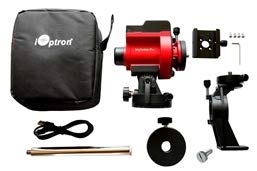
- Includes DEC and counterweight kit
- Supports both hemispheres
- Multiple tracking speeds
Best For: Mobile camera astrophotography and compact field setups
Alignment Accessory
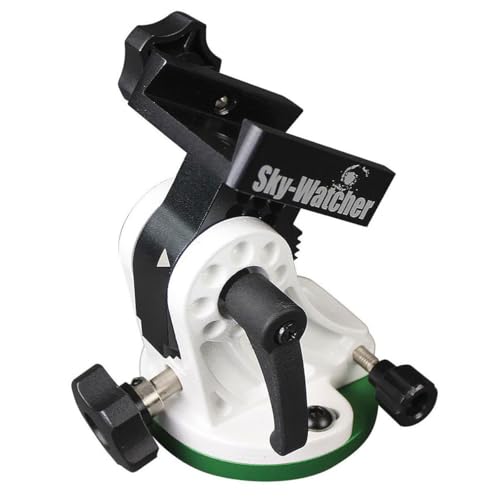
- Micro-adjustment knobs
- Latitude adjustment lock
- Compact 1.7-pound accessory
Best For: Star Adventurer owners refining EQ positioning
App-Controlled EQ System

- Eight-CPU PMC-Eight system
- Wi-Fi and Bluetooth control
- ExploreStars tablet app
Best For: App-driven GoTo operation and wireless telescope control
Best Compact Alt-Azimuth Pick
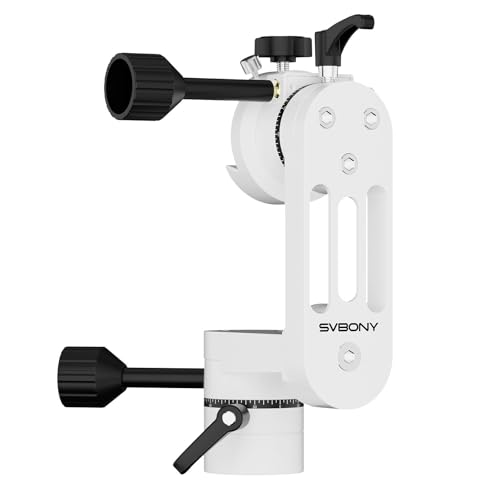
- 5 kg capacity in a roughly 1.5 kg mount
- 360° azimuth and -60° to 60° tilt adjustment
- Backlash-free geared controls with 3/8-16 thread
Best For: Portable manual observing with compatible lightweight telescopes
Best for Everyday Use
Star Adventurer GTi Mount Head Kit

- Full GoTo equatorial tracking in a compact package
- Built-in Wi-Fi and illuminated polar scope
- Includes counterweight bar and 5 lb counterweight
Best For: Portable astrophotography with compatible cameras or lightweight scopes
Best Latitude Adjustment Base
90° Precision Aluminum Equatorial Base

- 0° to 90° latitude adjustment range
- 3/8-inch tripod thread for compatible tripods
- Aluminum alloy construction weighing about 776 g
Best For: Manual alignment of compatible trackers, cameras, and lightweight telescope setups
Best Plug-and-Play Tracker
Compact Equatorial Mount with Ball-Head Gimbal

- Stellar, lunar, and custom rotation speeds
- Northern and southern hemisphere switching
- USB-powered and app-free operation
Best For: Portable camera-based astrophotography and time-lapse rigs
Best Low-Latitude Platform
CNC Aluminum Base for SkyGuider Pro

- Purpose-built for low-latitude alignment
- Lightweight CNC-machined aluminum
- Helps reduce vibration during long exposures
Best For: SkyGuider Pro users near the equator or in southern regions
Best Adjustable Heavy-Duty Option
Equatorial Tracker with Latitude Base

- All-metal CNC latitude-adjustment base
- 15 kg stated base load capacity
- Custom speeds and hemisphere switching
Best For: Adjustable tracking setups using cameras or lightweight telescope equipment
Portable GoTo Pick – Star Adventurer GTi Mount Kit
For photographers comparing astrophotography mounts for lightweight telescopes, the Sky-Watcher Star Adventurer GTi offers a portable GoTo EQ setup with a tripod, pier extension, counterweight, and built-in Wi-Fi. Its illuminated polar scope and multiple tracking rates support a practical, flexible field setup.
Best For: Portable astrophotographers who want GoTo control and a complete tripod-based kit.
Pros:
- Complete kit includes tripod, pier extension, counterweight bar, and 5-pound counterweight.
- Built-in Wi-Fi and GoTo functionality support convenient operation.
- Illuminated polar scope and multiple tracking rates aid alignment and tracking.
- Portable design with a listed 26-pound item weight.
Cons:
- Listed as not water resistant.
- The 26-pound listed weight may be substantial for minimalist travel setups.
This is a strong all-in-one choice when convenience and automated control matter more than carrying the lightest possible mount.
Compact Camera Tracker – iOptron SkyGuider Pro
The iOptron SkyGuider Pro is a compact option among astrophotography mounts for lightweight telescopes and camera-based observing. This package includes the DEC and counterweight kit, padded bag, and USB cable, while supporting use in both Northern and Southern Hemispheres.
Best For: Camera-focused astrophotographers prioritizing a small mount package and flexible tracking modes.
Pros:
- Full package includes a padded bag, DEC and counterweight kit, and USB cable.
- Supports Northern and Southern Hemisphere operation.
- Offers sidereal, half-speed, solar, and lunar tracking speeds.
- Fast RA slew is listed at up to 144x sidereal speed.
Cons:
- Listed compatible device is a camera, so telescope compatibility should be checked carefully.
- Warranty is listed as one year.
Its compact dimensions and accessory-rich package make it appealing for mobile imaging, especially when camera compatibility is the priority.
Alignment Accessory – Star Adventurer Latitude Base
Sky Watcher S20530 Star Adventurer Latitude (EQ) Base, Telescope Accessory, Black
Check Price On AmazonThe Sky-Watcher Star Adventurer Latitude Base is an accessory rather than a complete mount, but it can be useful when assembling astrophotography mounts for lightweight telescopes around the Star Adventurer system. Its latitude adjustment, lock, and micro-adjustment knobs are designed to support more controlled positioning.
Best For: Star Adventurer users who need a compact latitude-adjustment base for EQ mounting.
Pros:
- Includes a Star Adventurer latitude base, mounting block, instructions, and tool kit.
- Micro-adjustment knobs allow controlled positioning.
- Latitude adjustment lock helps secure the selected angle.
- Compact 5.5-inch dimensions and 1.7-pound listed weight suit portable kits.
Cons:
- It is an accessory, not a standalone tracking mount.
- Its usefulness depends on compatibility with the Star Adventurer setup.
Choose this when you already own compatible Star Adventurer equipment and want a dedicated, portable latitude-adjustment component.
App-Controlled EQ System – iEXOS-100-2 PMC-Eight
The iEXOS-100-2 PMC-Eight is an equatorial tracker system with tripod, Wi-Fi, Bluetooth, and GoTo control. For buyers evaluating astrophotography mounts for lightweight telescopes, its independent eight-CPU PMC-Eight system, belt-driven motors, and ExploreStars app provide a feature-rich approach to alignment and celestial navigation.
Best For: Users who want app-based GoTo operation and detailed electronic control in an equatorial system.
Pros:
- Integrated PMC-Eight system uses eight independent CPUs for defined functions.
- ExploreStars app works with Apple, Android, and Windows tablets.
- Wi-Fi and Bluetooth support wireless control.
- Clutched RA and declination axes support balancing and precise repositioning.
Cons:
- Polar alignment uses a sight hole through the RA axis rather than a polar scope.
- Tablet compatibility is central to the stated control setup.
This system suits buyers who value wireless GoTo features and app-guided operation, while its alignment method is worth considering before purchase.
Best Compact Alt-Azimuth Pick – SV225 Mini Alt-Azimuth Mount
For lightweight telescopes and visual observing, the SVBONY SV225 is a compact alt-azimuth mount with a 5 kg payload rating. Its dual-axis fine adjustment, numerical scales, and 360-degree azimuth rotation make it a practical option among astrophotography mounts for lightweight telescopes, particularly for portable setups and manual target positioning.
Best For: Beginners and observers using compatible lightweight telescopes, cameras, or accessories who prioritize portability and smooth manual control.
Pros:
- Supports up to 5 kg while weighing about 1.5 kg.
- Offers -60° to 60° tilt and 360° azimuth rotation.
- Backlash-free design, geared fine adjustment, and clear scales aid precise positioning.
- Uses a standard UNC 3/8-16 thread and works with the SV225T tripod.
Cons:
- Alt-azimuth operation is primarily suited to manual observing and positioning.
- Compatibility should be checked for telescope dovetails and accessories.
The SV225 stands out when low weight and straightforward control matter more than automated equatorial tracking. Its 5 kg capacity gives lightweight telescope users useful headroom, while the compact CNC design makes it easier to transport.
Best for Everyday Use – Star Adventurer GTi Mount Head Kit
The Sky-Watcher Star Adventurer GTi is an equatorial mount head kit designed for portable astrophotography with cameras and lightweight telescope setups. It combines full GoTo performance, built-in Wi-Fi, a polar scope with illuminator, and a counterweight system for users who want automated celestial tracking in a travel-friendly package.
Best For: Portable astrophotographers using compatible cameras or lightweight telescopes who want GoTo control and equatorial tracking features.
Pros:
- Provides full GoTo performance in a compact mount head.
- Built-in Wi-Fi supports convenient system control.
- Includes a polar scope with illuminator for alignment.
- Includes a counterweight bar and 5 lb counterweight.
Cons:
- The listed mount weight is 6.9 kg, so it is less lightweight than compact manual mounts.
- A DSLR or mirrorless camera dovetail is not included.
- Requires battery or external power.
Compared with simpler astrophotography mounts for lightweight telescopes, the Star Adventurer GTi offers more automation but adds carrying weight and setup requirements. It is the stronger choice when GoTo functionality and equatorial tracking are central to the workflow.
Best Latitude Adjustment Base – 90° Precision Aluminum Equatorial Base
This Zopsc precision aluminum base is a simple latitude-adjustment component for compatible Star Field telescopes, celestial trackers, cameras, and similar setups. With a standard 3/8-inch tripod thread and adjustment range from 0 to 90 degrees, it can provide a practical foundation for astrophotography mounts for lightweight telescopes when accurate tilt positioning is needed.
Best For: Beginners and outdoor users who need manual latitude adjustment between a compatible tripod and telescope tracker or camera setup.
Pros:
- Offers graduated 0° to 90° latitude adjustment.
- Micro-adjustment knobs support more controlled alignment.
- Standard 3/8-inch thread connects with many photography tripods.
- Aluminum alloy construction weighs approximately 776 g.
Cons:
- It is an adjustment base rather than a complete tracking mount.
- Designed for Star Field and similar compatible equipment, so fit should be verified.
- Does not provide listed GoTo or motorized tracking functions.
The Zopsc base is best viewed as a supporting alignment accessory, not a standalone astrophotography mount. Its wide latitude range and 3/8-inch connection make it useful for building a compact setup when the attached tracker or mount supplies the tracking capability.
Best Plug-and-Play Tracker – Compact Equatorial Mount with Ball-Head Gimbal
If you want astrophotography mounts for lightweight telescopes or camera-based setups, this compact equatorial mount offers a simple, portable starting point. Its PETG and carbon-fiber shell supports stellar, lunar, and custom rotation speeds, with northern and southern hemisphere switching built in.
Best For: Portable wide-field astrophotography, camera gimbals, and time-lapse photography where USB power and straightforward operation matter.
Pros:
- Ready to use without downloading an app.
- Supports stellar, moon, and custom rotation speeds.
- Can switch between northern and southern hemisphere operation.
- Runs from a power bank through its USB Type-C port.
Cons:
- Does not include a built-in battery.
- Requires a ball head to connect a camera.
- Power requires a USB-A-to-USB-C cable; USB-C-to-USB-C is prohibited.
The 38 mm quick-release base and standard 1/4-inch output make this a flexible option for lightweight camera rigs. Check your existing hardware carefully, especially the need for a 1/4-to-3/8-inch adapter sleeve.
Best Low-Latitude Platform – CNC Aluminum Base for SkyGuider Pro
For astrophotography mounts for lightweight telescopes used near the equator or in southern regions, this low-latitude base is designed to provide a more suitable polar-alignment range. It adds a rigid, lightweight CNC-machined aluminum foundation for compatible SkyGuider Pro tracking systems.
Best For: SkyGuider Pro users in low-latitude locations who need a stable platform for wide-field or longer-exposure astrophotography.
Pros:
- Designed specifically for low-latitude polar alignment.
- CNC-machined aluminum construction balances rigidity and low weight.
- Latitude adjustment supports location-specific alignment.
- Vibration-reduction design helps maintain stability during long exposures.
Cons:
- Compatibility is specifically described for iOptron SkyGuider Pro systems.
- It is a base mount rather than a complete tracking mount.
- Its low-latitude focus may be less useful at higher latitudes.
This is a specialized alignment accessory, not an all-in-one telescope mount. It makes the most sense when you already have a SkyGuider Pro and need a secure, adjustable foundation for low-latitude tracking.
Best Adjustable Heavy-Duty Option – Equatorial Tracker with Latitude Base
Equatorial Mount Star Tracker with Latitude Adjustment Base for Astrophotography
Check Price On AmazonAmong astrophotography mounts for lightweight telescopes, this tracker stands out for pairing a compact equatorial unit with an all-metal CNC latitude-adjustment base. It supports stellar, lunar, and custom rotation speeds, along with operation in both hemispheres, while the base is specified with a 15 kg load capacity.
Best For: Users who want adjustable polar positioning, USB-powered tracking, and more substantial load support for compatible camera or lightweight telescope equipment.
Pros:
- Includes an all-metal anodized CNC latitude-adjustment base.
- Supports stellar, moon, and custom rotation speeds.
- Offers northern and southern hemisphere switching.
- Rated with a 15 kg load capacity for the latitude base.
Cons:
- Does not include a built-in battery.
- Requires a ball head for camera connection.
- The standard 1/4-inch output may require a 1/4-to-3/8-inch sleeve.
The metal latitude base gives this model a more substantial alignment platform than a basic tracker. Verify your tripod, quick-release hardware, and actual equipment weight before relying on the stated capacity.
How We Picked These Astrophotography Mounts for Lightweight Telescopes
We focused on mounts suited to portable, lower-weight astronomy and imaging setups. Key considerations included equatorial tracking capability, stated payload suitability, polar-alignment support, portability, included hardware, and setup complexity. We also included supporting bases and accessories because a tracker’s practical performance depends heavily on a stable tripod, latitude adjustment, counterweight system, and secure attachment.
Some products are complete mount systems, while others are mount heads or alignment platforms. Check the included components carefully before buying, especially if you need a tripod, counterweight, pier extension, or camera adapter.
Quick Comparison
| Mount type | Best suited to | Main advantage |
|---|---|---|
| GoTo EQ mount | Small telescopes and guided imaging | Computerized object locating and tracking |
| Camera star tracker | Wide-field cameras and lenses | Compact, travel-friendly operation |
| Latitude or EQ base | Star trackers and polar alignment | More precise alignment and tilt adjustment |
| Alt-azimuth mount | Visual observing and basic setups | Simple, intuitive movement |
Key Buying Factors for Lightweight Telescope Astrophotography
Tracking Design
For long exposures, an equatorial mount or star tracker is generally more appropriate than a basic alt-azimuth mount. Equatorial tracking follows the sky’s rotation more naturally and helps reduce star trailing. Alt-azimuth models can still be useful for visual observing, lunar work, and short exposures.
Payload and Balance
Consider the complete imaging load: telescope, camera, finder, guide equipment, rings, dovetail, and cables. Stay comfortably below the published payload limit rather than operating at the maximum. A counterweight system can improve balance, but it also adds weight and setup time.
Polar Alignment and Latitude Range
Accurate polar alignment matters more as focal length and exposure time increase. Look for a suitable latitude-adjustment range, a rigid base, clear access to the polar scope or alignment app, and fine adjustment controls. A stable support platform is often more valuable than a lightweight but flexible one.
Portability, Power, and Control
For travel, compare packed size, total weight, tripod stability, battery requirements, and whether the mount supports Wi-Fi, Bluetooth, or a hand controller. GoTo features are convenient, but they may add power demands and configuration steps.
Who Should Buy Which Astrophotography Mounts for Lightweight Telescopes?
Choose a GoTo EQ system if you want automated object locating, broader telescope compatibility, and a foundation for more advanced imaging. A compact camera tracker is a better fit for wide-field lenses, lightweight cameras, and minimal packing lists. Select a latitude-adjustment base when you already own a tracker but need steadier or more accurate polar alignment.
For visual observing or casual lunar photography, an alt-azimuth mount may offer the simplest experience. Whichever style you choose, verify thread sizes, dovetail compatibility, included accessories, and the mount’s realistic payload capacity before ordering.