
Choosing among the best astrophotography mounts under $1,000 means balancing tracking accuracy, payload capacity, portability, and setup time. The right mount can make long-exposure deep-sky photography far more consistent without pushing you into professional-level pricing.
This roundup compares compact camera trackers and more capable GoTo equatorial mounts, helping beginners and experienced shooters find a practical match for their cameras, lenses, and observing locations.
Best 10 Astrophotography Mounts Under 1000 Picks for 2026
Best Portable GoTo Pick

- Complete kit with tripod and counterweight
- Built-in GoTo, Wi-Fi, and polar scope
- Portable design with multiple tracking rates
Best For: Portable astrophotographers seeking automated GoTo control
Best Accessory-Ready Camera Tracker
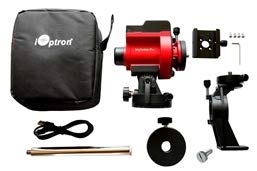
- Includes bag, DEC and counterweight kits
- Supports both hemispheres and several tracking speeds
- Compact camera-focused design
Best For: Mobile camera astrophotography setups
Best Lightweight Wide-Field Tracker
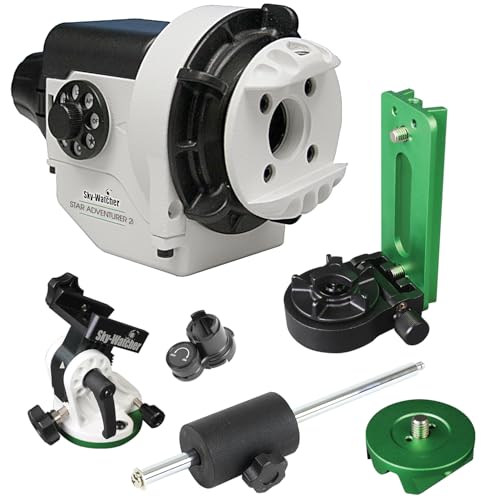
- 7-pound portable tracking platform
- Wi-Fi and smartphone app control
- Works with existing photographic tripods
Best For: Traveling nightscape and wide-field photographers
Best Responsive GoTo Equatorial System

- Eight-CPU PMC-Eight control architecture
- Tablet-based ExploreStars GoTo app
- Clutched dual-axis worm gears with belt drives
Best For: Connected equatorial astrophotography setups
Best Full-Featured Tracker

- Supports up to 11 pounds when balanced
- Illuminated polar scope aids alignment
- Rechargeable battery runs up to 20 hours
Best For: Photographers needing capacity, stability, and long sessions
Best Ultralight Travel Mount
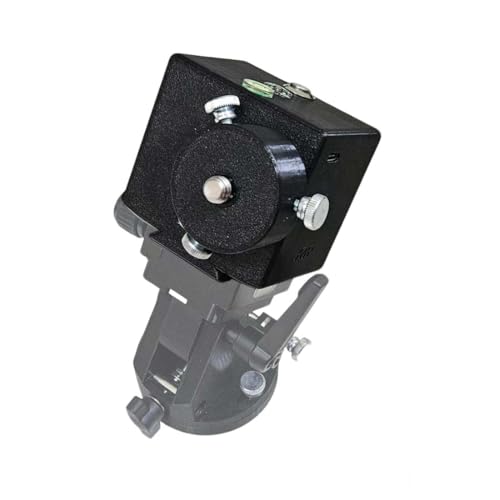
- Weighs just 340 grams
- Supports up to 4.2 kilograms
- Includes quick-mount and alignment aids
Best For: Travel photographers carrying compact astrophotography gear
Best Simple Camera Tracker

- Supports camera setups up to 6.6 pounds
- Includes several tracking speeds
- Comes with a polar scope and padded bag
Best For: Camera users wanting a compact, dedicated tracker
Best Portable GoTo Mount

- Full GoTo performance in a compact package
- Built-in Wi-Fi and illuminated polar scope
- Includes counterweight bar and 5-pound counterweight
Best For: Portable photographers seeking automated equatorial tracking
Best High-Capacity Open-Source Tracker

- Supports custom, stellar, and moon speeds
- 15 kg stated load capacity with metal latitude base
- Works in both northern and southern hemispheres
Best For: Advanced users building a customizable camera-tracking setup
Best Gimbal-Compatible Tracker

- Customizable rotation speeds for tracking
- Supports both northern and southern hemispheres
- Compatible with standard quick-release gimbal clamps
Best For: Photographers combining astrophotography with gimbal-based time-lapse work
Best Portable GoTo Pick – Star Adventurer GTi Mount Kit
For astrophotography mounts under 1000, the Sky-Watcher Star Adventurer GTi is a practical choice when you want portable GoTo tracking in a complete kit. It includes the mount head, tripod, pier extension, counterweight bar, and 5-pound counterweight.
Best For: Portable astrophotographers who want GoTo control, built-in Wi-Fi, and an illuminated polar scope.
Pros:
- Includes tripod, pier extension, counterweight bar, and 5-pound counterweight.
- Built-in GoTo functionality and Wi-Fi support smartphone-compatible control.
- Illuminated polar scope assists with polar alignment.
- Offers multiple tracking rates in a portable design.
Cons:
- At 26 pounds, it is less lightweight than compact camera trackers.
- It is not water resistant.
The GTi stands out as a more complete, ready-to-use setup for users who value automated operation and included support equipment over minimum pack weight.
Best Accessory-Ready Camera Tracker – iOptron SkyGuider Pro
Among astrophotography mounts under 1000, the iOptron SkyGuider Pro is aimed at camera users who want a compact tracking platform with a broad accessory package. This version includes a padded bag, declination and counterweight kit, and USB cable.
Best For: Camera-based astrophotographers who need a compact mount with northern and southern hemisphere tracking.
Pros:
- Package includes a padded bag, DEC kit, counterweight kit, and USB cable.
- Supports northern and southern hemisphere use.
- Offers 1x, 1/2x, solar, and lunar tracking speeds.
- Fast RA slew reaches up to 144x sidereal speed.
Cons:
- The supplied notes identify it as a camera-compatible mount rather than a complete tripod kit.
- It carries a one-year manufacturer warranty.
Its small 3.74-by-4.53-by-5.24-inch footprint and included carrying bag make it appealing for mobile setups, particularly when you already have compatible support equipment.
Best Lightweight Wide-Field Tracker – Star Adventurer 2i Pro Pack
For shoppers comparing astrophotography mounts under 1000, the Sky-Watcher Star Adventurer 2i Pro Pack emphasizes portability and wide-field tracking. Its modular design works with existing photographic tripods and supports nightscapes, time-lapse video, and telescopic use.
Best For: Travelers and nightscape photographers who want a lightweight tracker with smartphone control.
Pros:
- Weighs 7 pounds for easier transport.
- Supports wide-field astrophotography, time-lapse video, and telescopic use.
- Built-in Wi-Fi enables smartphone control through the SAM Console app.
- Includes a deluxe equatorial base for positioning during polar alignment.
Cons:
- The modular design may require an existing photographic tripod.
- The supplied notes do not list a built-in GoTo system.
The 2i Pro Pack is a strong fit when low carry weight and flexible tripod integration matter more than a fully automated GoTo mount.
Best Responsive GoTo Equatorial System – iEXOS-100-2 PMC-Eight Mount
Within the astrophotography mounts under 1000 category, the Explore Scientific iEXOS-100-2 offers a full equatorial tracker system with tripod, Wi-Fi, Bluetooth, and GoTo control. Its PMC-Eight architecture uses eight independent CPUs to handle defined functions.
Best For: Users who want app-based GoTo operation, dual-axis adjustment, and a complete equatorial mount system.
Pros:
- Includes an integrated eight-CPU PMC-Eight control system.
- ExploreStars app supports Apple, Android, and Windows tablets.
- Clutched RA and declination axes allow smooth balancing and repositioning.
- Quiet precision stepper motors use belt drives.
Cons:
- Polar alignment uses an RA-axis sight hole rather than a polar scope.
- The supplied details list no focuser.
This system is suited to users who prioritize connected GoTo control and a responsive equatorial platform, while its tablet-oriented operation may be more setup than a simple camera tracker requires.
Best Full-Featured Tracker – SkyGuider Pro Full Package
For astrophotography mounts under 1000, the iOptron SkyGuider Pro Full Package is a versatile option for photographers who want sturdy construction, a generous payload, and built-in polar-alignment assistance. Its compact design and rechargeable battery also suit extended sessions away from home.
Best For: Astrophotographers using balanced camera and lens combinations up to 11 pounds who want portability and adjustable alignment.
Pros:
- Supports up to 11 pounds when properly balanced.
- Integrated illuminated polar scope helps simplify alignment in low light.
- All-metal construction is designed to reduce vibration.
- Internal rechargeable battery provides up to 20 hours of operation at 20°C.
Cons:
- Its listed item weight is 10.1 pounds, which is heavier than the 2.2-pound mount figure in the product notes.
- Not water resistant.
- Requires careful balancing for its maximum payload.
The SkyGuider Pro stands out when stability, capacity, and long operating time matter more than minimizing pack weight. It is a strong choice for a flexible camera-based tracking setup.
Best Ultralight Travel Mount – Xiaoran Single-Axis Tracker
Among astrophotography mounts under 1000, the Xiaoran Single-Axis Automatic Tracking Equatorial Mount prioritizes portability and quick setup. At 340 grams, it is designed for travelers who want automatic tracking without carrying a conventional heavy mount.
Best For: Backpackers and mobile astrophotographers using mirrorless cameras, telephoto lenses, or compact telescopes up to 4.2 kilograms.
Pros:
- Very light 340-gram design for travel and backpacking.
- Built-in quick-release plate, bubble level, and compass support fast setup.
- High-brightness polar pointer helps with alignment in dark or cold conditions.
- Accepts common 5V power banks.
Cons:
- Single-axis tracking may be less versatile than a more advanced multi-axis setup.
- Its 4.2-kilogram payload is lower than the heaviest option in this roundup.
- The product notes do not specify included counterweights.
This mount is especially appealing when pack size and setup speed are top priorities. Its lighter payload makes it better suited to compact camera-based systems than heavier rigs.
Best Simple Camera Tracker – SkyTracker Pro Mount Only
The iOptron SkyTracker Pro is a straightforward choice among astrophotography mounts under 1000 for camera users who want automatic right-ascension tracking and a built-in polar scope. This mount-only package offers several tracking rates and a padded carrying bag for field use.
Best For: Camera and cellphone astrophotographers using setups up to 6.6 pounds who want a compact, dedicated tracker.
Pros:
- Supports up to 6.6 pounds.
- Offers sidereal, half-sidereal, solar, and lunar tracking modes.
- Includes a polar scope and padded bag.
- Charges through Micro USB.
Cons:
- This is the mount-only version, so additional setup equipment may be needed.
- Not water resistant.
- Its 3-kilogram payload is lower than the Full Package model’s stated capacity.
The SkyTracker Pro is a practical middle-ground tracker for lighter camera setups. Its multiple tracking modes add flexibility, while the mount-only format is best for buyers who already have compatible support gear.
Best Portable GoTo Mount – Star Adventurer GTi
For photographers comparing astrophotography mounts under 1000, the Sky-Watcher Star Adventurer GTi offers a compact equatorial setup with full GoTo performance. It includes a counterweight system, built-in Wi-Fi, and an illuminated polar scope, while the dovetail accepts a DSLR or mirrorless camera.
Best For: Portable astrophotographers who want GoTo tracking and a camera-friendly equatorial mount.
Pros:
- Full GoTo functionality in a compact mount head
- Built-in Wi-Fi and illuminated polar scope
- Includes counterweight bar and 5-pound counterweight
- Compatible with cameras and smartphones
Cons:
- Camera or mirrorless body is not included
- Battery or external power is required
- At 6.9 kg, it is less lightweight than the compact design suggests
This is the most feature-rich option in the group for users who value automated GoTo operation and a more complete portable package. Its included counterweight and polar-scope features reduce the need to assemble a basic tracking setup from separate parts.
Best High-Capacity Open-Source Tracker – TeSeek Equatorial Mount
Equatorial Mount Star Tracker with Latitude Adjustment Base for Astrophotography
Check Price On AmazonAmong astrophotography mounts under 1000, this TeSeek equatorial mount stands out for its open-source design, customizable rotation speeds, and stated 15 kg load capacity. Its metal latitude adjustment base and USB Type-C power input make it adaptable for camera tracking and time-lapse work.
Best For: Experienced users who want customizable tracking speeds, hemisphere switching, and a high stated load capacity.
Pros:
- Supports stellar, moon, and custom rotation speeds
- Switches between northern and southern hemispheres
- Includes a CNC-machined metal latitude adjustment base
- Can function as a gimbal head for time-lapse photography
Cons:
- Requires a ball head for camera connection
- May require a separate 1/4-to-3/8-inch screw sleeve
- Has no built-in battery and requires external USB-C power
This mount offers unusual flexibility for technically inclined photographers, especially those interested in custom motion control. Before buying, account for the required ball head, cable, and power source, and avoid disassembling the threadlocked screws.
Best Gimbal-Compatible Tracker – TeSeek Star Tracker
For shoppers exploring astrophotography mounts under 1000, this TeSeek star tracker combines customizable rotation control with direct compatibility for a standard quick-release gimbal setup. It supports stellar and moon speeds, hemisphere switching, and USB Type-C power without requiring an app.
Best For: Camera and gimbal users who want a compact tracker for astrophotography and time-lapse photography.
Pros:
- Supports stellar speed, moon speed, and custom rotation speed
- Switches between northern and southern hemispheres
- Works with a standard quick-release plate clamp
- Can also serve as a gimbal head for time-lapse photography
Cons:
- Requires a ball head for camera attachment
- Needs a separate 1/4-to-3/8-inch screw sleeve for many ball heads
- Requires external USB power and a USB-A-to-C cable
This is a compact and flexible choice when your existing camera-gimbal hardware already uses quick-release plates. Its app-free operation is convenient, but the mounting adapters and specified power-cable requirements should be confirmed before ordering.
How We Picked the Best Astrophotography Mounts Under 1000
We focused on mounts and star trackers designed for long-exposure night-sky photography, prioritizing dependable tracking, useful payload ratings, portability, alignment features, and overall value. The selection includes motorized single-axis trackers, compact equatorial mounts, and GoTo systems with broader automation.
We also considered what each package includes. Counterweights, tripods, polar scopes, latitude bases, pier extensions, and wireless controls can substantially affect the real-world cost and convenience of a mount. Because listed bundles vary, confirm the included accessories and compatibility before buying.
Quick Comparison
| Mount type | Best suited to | Main advantage | Typical trade-off |
|---|---|---|---|
| Single-axis tracker | Wide-field cameras and short lenses | Low weight and simple operation | Limited framing and payload flexibility |
| Camera star tracker | Travel astrophotography | Portable, relatively easy setup | Manual positioning and alignment may take practice |
| GoTo equatorial mount | Longer lenses and small telescopes | Automated pointing and broader control | Heavier, more complex, and tripod-dependent |
| Wi-Fi or Bluetooth mount | Remote-controlled imaging | Convenient app-based operation | Requires power and device compatibility |
Key Buying Factors for Astrophotography Mounts Under 1000
Payload and Balance
Check the mount’s practical imaging capacity, not only its maximum advertised load. Include the camera, lens or telescope, dovetail hardware, guide equipment, and counterweights. A comfortably balanced setup generally tracks more reliably than one operating near its limit.
Tracking and Alignment
Single-axis trackers are often sufficient for wide-angle Milky Way work, while equatorial GoTo mounts offer more control for longer exposures and smaller deep-sky targets. A built-in or compatible polar scope can simplify alignment, but accurate leveling and a clear view of the celestial pole still matter.
Portability and Power
For remote locations, weight, packed size, battery life, and setup speed may matter more than advanced automation. Verify whether the package includes a sturdy tripod, counterweight, pier extension, or latitude-adjustment base. Also check power requirements if you plan to image all night.
Camera and Control Compatibility
Confirm that your camera, lens, telescope, ball head, and mounting plates are compatible. Wireless control can be useful, but app support, Bluetooth or Wi-Fi range, firmware, and operating-system compatibility should be checked before purchase.
Who Should Buy Which Astrophotography Mounts Under 1000?
Travel photographers: Choose a lightweight tracker or compact camera mount if you primarily use wide or moderate focal lengths and need a small kit for dark-sky trips.
Beginners wanting automation: A GoTo equatorial mount with a tripod, counterweight, and pier extension can provide a smoother path into locating and tracking more targets, provided you are comfortable with a longer setup.
Deep-sky hobbyists on a budget: Prioritize payload headroom, accurate polar alignment, and a stable tripod over extra accessories. A sturdier mount is often a better upgrade than adding more weight to a lightweight tracker.
Casual wide-field shooters: A simple single-axis tracker may deliver the best value, especially if you photograph landscapes, star fields, and the Milky Way rather than using a telescope.