
Long-exposure astrophotography becomes much easier with a mount that follows the sky instead of forcing your camera to fight Earth’s rotation. The best budget star trackers can help produce sharper Milky Way, constellation, and wide-field deep-sky images without the cost or bulk of a full-size equatorial mount.
We’ve gathered 10 astrophotography mounts under $500, including compact single-axis trackers and more capable equatorial systems. Use the guide below to compare portability, alignment, tracking control, and compatibility before choosing one for your camera and lens.
Best 10 Astrophotography Mounts Under 500 Picks for 2026
Balanced Portable Tracker

- 11-pound balanced payload
- 2.2-pound portable body
- Up to 20-hour internal battery
Best For: Portable camera-and-lens astrophotography
Connected GoTo Mount

- Eight-CPU PMC-Eight system
- Tablet-based ExploreStars GoTo control
- Quiet belt-driven stepper motors
Best For: App-controlled equatorial astrophotography
Accessory-Ready Camera Tracker
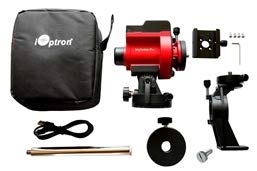
- Includes bag, DEC and counterweight kit
- 144x sidereal RA slew
- Multiple tracking speeds
Best For: Camera astrophotography with included accessories
Ultra-Light Travel Tracker
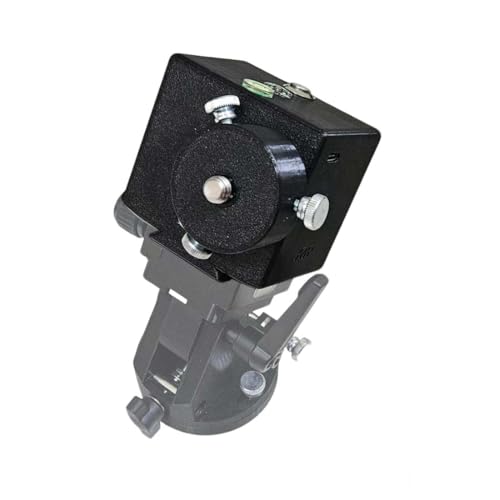
- 340-gram portable design
- 4.2-kilogram payload
- Built-in alignment and mounting aids
Best For: Backpacking and lightweight travel astrophotography
Best Compact Camera Tracker

- 6.6-lb payload for camera setups
- Includes polar scope and padded bag
- Supports multiple tracking speeds
Best For: Portable camera-based astrophotography
Best Precision Travel Tracker

- 1.4-kg body supports 4-kg payloads
- Wi-Fi and browser-enabled control
- Multiple polar-alignment methods
Best For: Lightweight travel imaging with app control
Best App-Free Open-Source Mount
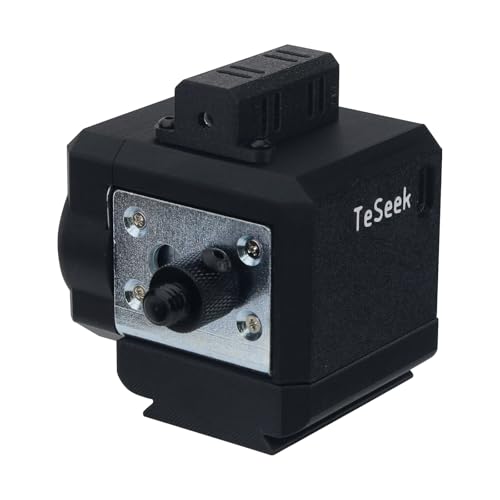
- App-free USB-powered operation
- Supports stellar, lunar, and custom speeds
- Built-in pointer and time-lapse mode
Best For: DIY-minded astrophotographers and time-lapse users
TeSeek Open-Source Tracker

- Custom, stellar, and lunar rotation speeds
- Northern/Southern Hemisphere switching
- USB power and app-free operation
Best For: Portable astrophotography and time-lapse setups
OrionU Portable Tracker
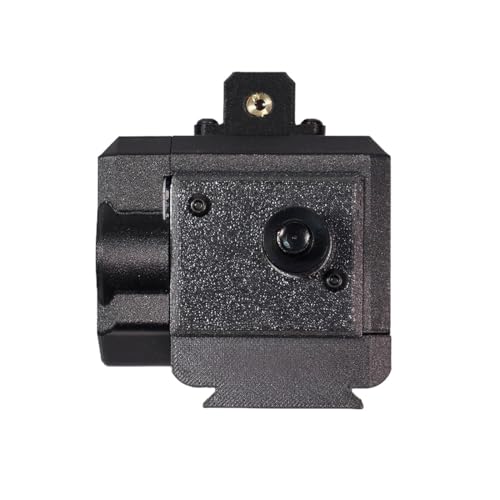
- 4kg axial-load support
- Cold-condition alignment pointer
- 500g carbon-reinforced body
Best For: Beginners and portable DSLR or mirrorless setups
TeSeek CNC Latitude Tracker
High-Capacity Equatorial Mount

- CNC metal latitude adjustment base
- 15kg stated base load capacity
- Custom speeds and hemisphere switching
Best For: Heavier portable imaging configurations needing latitude adjustment
Balanced Portable Tracker – SkyGuider Pro Full Package
For astrophotography mounts under 500, the iOptron SkyGuider Pro Full Package offers a portable, stable platform for camera-and-lens setups. Its all-metal construction, illuminated polar scope, and internal rechargeable battery make it practical for extended outdoor sessions.
Best For: Photographers who want a portable tracker with strong payload capacity and built-in polar-alignment assistance.
Pros:
- Supports up to 11 pounds when properly balanced.
- Compact 2.2-pound mount body is easy to transport.
- Illuminated AccuAlign polar scope helps with low-light alignment.
- Internal battery provides up to 20 hours of operation at 20°C.
Cons:
- Requires careful balancing for its stated maximum payload.
- Manual polar alignment and setup still take practice.
- Not water resistant.
The SkyGuider Pro is a well-rounded choice when stability, portability, and long battery life matter more than a fully automated telescope-mount experience.
Connected GoTo Mount – iEXOS-100 PMC-Eight
Among astrophotography mounts under 500, the Explore Scientific iEXOS-100 stands out for its equatorial design, Wi-Fi and Bluetooth compatibility, and PMC-Eight control system. It is aimed at users who want app-based GoTo operation and precise motorized tracking.
Best For: Beginners and intermediate users seeking tablet-based GoTo control and a full tripod-and-mount system.
Pros:
- Eight independent CPUs assign functions for responsive operation.
- ExploreStars app supports Apple, Android, and Windows tablets.
- Clutched RA and declination axes help with balancing and repositioning.
- Quiet belt-driven stepper motors and precise worm gears.
Cons:
- Requires a compatible tablet for app-based operation.
- Polar alignment uses a sight hole rather than a dedicated polar scope.
- The supplied notes do not specify payload capacity.
This mount is a compelling option for shoppers prioritizing connected GoTo functionality and equatorial control, though the unspecified payload makes system matching especially important.
Accessory-Ready Camera Tracker – SkyGuider Pro Kit
This SkyGuider Pro kit is a practical contender among astrophotography mounts under 500 for photographers who want a camera tracker with its main accessories included. The package adds a padded bag, declination and counterweight hardware, and a USB cable for a more complete setup.
Best For: Camera-based astrophotographers who value included accessories, portability, and flexible tracking speeds.
Pros:
- Includes a padded bag, DEC and counterweight kit, and USB cable.
- Fast RA slew reaches up to 144 times sidereal speed.
- Supports sidereal, half-sidereal, solar, and lunar tracking.
- Designed for northern and southern hemisphere use.
Cons:
- The supplied notes do not specify payload capacity.
- It is a camera-compatible tracker rather than a stated full GoTo telescope mount.
- Users may still need to perform manual alignment and balancing.
Choose this version when the included carry and counterweight accessories are more useful to you than buying a bare mount separately.
Ultra-Light Travel Tracker – Xiaoran Single-Axis Mount
For travelers comparing astrophotography mounts under 500, the Xiaoran single-axis mount emphasizes minimal weight and quick setup. Its 340-gram body, built-in mounting aids, illuminated polar pointer, and 5V power compatibility suit lightweight outdoor camera and lens systems.
Best For: Backpacking astrophotographers using mirrorless cameras, telephoto lenses, or compact telescopes.
Pros:
- Weighs just 340 grams for highly portable use.
- Built-in quick-release plate, bubble level, and compass speed setup.
- Supports up to 4.2 kilograms without counterweights.
- Can run from compatible 5V power banks.
Cons:
- Single-axis tracking is less versatile than a dual-axis equatorial mount.
- Its payload is lower than some larger camera trackers.
- The product notes do not specify tracking duration or accuracy.
The Xiaoran is best viewed as a lightweight travel solution: convenient and easy to carry, with enough capacity for modest imaging rigs but fewer capabilities than a larger equatorial system.
Best Compact Camera Tracker – iOptron SkyTracker Pro
The iOptron SkyTracker Pro is a straightforward option for shoppers comparing astrophotography mounts under 500. Its automatic right-ascension tracking, included polar scope, and 6.6-pound payload make it suitable for portable camera-based setups.
Best For: Portable astrophotography with a camera, cellphone, or lightweight imaging setup.
Pros:
- Supports up to 6.6 pounds (3 kg).
- Includes a polar scope and padded carrying bag.
- Offers sidereal, half-speed, solar, and lunar tracking modes.
- Uses automatic R.A. tracking with a DC servo motor.
Cons:
- Charging uses a Micro USB connection.
- It is not water resistant.
- A 30-second maximum shutter speed is listed in the specifications.
Choose this mount when compact portability and simple camera tracking matter more than a full-size equatorial system. The included alignment and carrying accessories add practical value for field use.
Best Precision Travel Tracker – OGST Single-Axis EQ Mount
The OGST Single-Axis Automatic Tracking Equatorial Mount stands out among astrophotography mounts under 500 for its lightweight carbon-composite body and app-enabled control. It is designed for portable imaging while supporting up to 4 kg of equipment.
Best For: Travelers who want a lightweight mount with Wi-Fi control and flexible polar-alignment options.
Pros:
- Claims ±10″ periodic error with a precision stepper motor and 1:101.25 gear system.
- Weighs 1.4 kg while supporting a 4 kg payload.
- Switches between Travel Mode and Fixed Mode.
- Offers browser and Wi-Fi control plus polar scope, smartphone, or pointer alignment.
Cons:
- It is a single-axis mount.
- The supplied information does not list included accessories or a warranty.
This is a compelling feature-focused choice for portable deep-sky work, especially when remote control and alignment flexibility are priorities. Verify included components and compatibility with your camera support before buying.
Best App-Free Open-Source Mount – TeSeek PETG-CF EQ Mount
The TeSeek PETG-CF Equatorial Mount is an unusual option among astrophotography mounts under 500, combining an open-source design with a built-in pointer and app-free operation. It supports stellar, lunar, and custom rotation speeds and can also serve as a time-lapse gimbal head.
Best For: Users who want a compact, USB-powered mount with direct controls and time-lapse versatility.
Pros:
- Supports stellar, moon, and custom rotation speeds.
- Works in both northern and southern hemispheres.
- Requires no app and can run from a power bank.
- Includes a built-in high-brightness pointer and 38 mm quick-release base.
Cons:
- A ball head is required to connect a camera.
- The mount has no built-in battery.
- It requires a USB-A-to-USB-C power cable; USB-C-to-USB-C is prohibited.
Consider this model if you value open-source hardware, simple startup, and time-lapse functionality. Its connection requirements deserve careful attention, particularly the separate ball head and specified power cable.
TeSeek Open-Source Tracker – Ball-Head Gimbal Mount
For photographers comparing astrophotography mounts under 500, this compact TeSeek tracker offers adjustable stellar, lunar, and custom rotation speeds without requiring an app. Its carbon-fiber-reinforced PETG shell, USB-C power, and gimbal functionality make it a flexible option for portable setups.
Best For: DSLR or mirrorless users who want a portable star tracker that can also support time-lapse work.
Pros:
- Supports stellar speed, moon speed, and custom rotation speed.
- Switches between Northern and Southern Hemisphere operation.
- Runs from a power bank and works without an app.
- 38mm quick-release base supports compatible gimbals.
Cons:
- No built-in battery.
- Requires a ball head for camera connection.
- USB-A-to-C power cable is required; USB-C-to-C is prohibited.
This is a practical choice when you value simple setup and multi-purpose operation. Keep the required ball head and cable limitations in mind when planning your complete kit.
OrionU Portable Tracker – Single-Axis Star Tracker
Among astrophotography mounts under 500, the OrionU Star Tracking Equatorial Mount is aimed at beginners who need a compact single-axis tracker for DSLR or mirrorless imaging. Its reinforced steel axis, alignment pointer, and 5V power-bank compatibility suit portable night-sky sessions.
Best For: Beginners seeking a lightweight, travel-oriented tracker for star tracking, deep-sky imaging, or time-lapse work.
Pros:
- Reinforced steel axis supports up to 4kg axial loads.
- Built-in alignment pointer is designed to maintain brightness in cold conditions.
- ESP32 dual-core control runs from 5V power banks.
- Carbon-reinforced PETG body weighs 500g.
Cons:
- Single-axis tracking may be less versatile than a multi-axis mount.
- Not water resistant.
- Product details list compatibility with camcorders, so verify fit with your specific camera setup.
Its low weight and alignment-focused design make it appealing for mobile astrophotography. The single-axis format is best matched with users who prefer a straightforward, compact tracker rather than a more elaborate mount.
TeSeek CNC Latitude Tracker – High-Capacity Equatorial Mount
Equatorial Mount Star Tracker with Latitude Adjustment Base for Astrophotography
Check Price On AmazonFor shoppers comparing astrophotography mounts under 500, this TeSeek model adds an all-metal CNC latitude adjustment base to a portable equatorial tracker. It offers custom rotation control, hemisphere switching, and a stated 15kg base load capacity for users building a more substantial imaging setup.
Best For: Astrophotographers who need latitude adjustment and higher stated load capacity for a heavier camera-and-accessory configuration.
Pros:
- All-metal CNC latitude adjustment base with anodized finish.
- Supports stellar, lunar, and custom rotation speeds.
- Switches between Northern and Southern Hemisphere operation.
- Stated 15kg load capacity for the latitude base.
Cons:
- No built-in battery; power is supplied through USB Type-C.
- Requires a ball head for camera connection.
- Needs a 1/4-to-3/8-inch adapter sleeve for many ball heads.
The metal latitude base gives this tracker a more substantial foundation than a basic portable unit. Confirm the load rating of the complete assembled system, and account for the required ball head and thread adapter before buying.
How We Picked the Best Astrophotography Mounts Under 500
We focused on mounts and star trackers priced below $500 that are designed for long-exposure imaging rather than ordinary fixed-tripod photography. Our evaluation criteria included tracking design, stated payload support, polar-alignment tools, portability, power and control options, and compatibility with DSLR, mirrorless, and common camera-lens combinations.
Because specifications and package contents can vary by seller, check the current listing for included heads, counterweights, batteries, cables, and adapters. A tracker’s real-world performance also depends on tripod stability, balance, alignment accuracy, and the focal length being used.
Quick Comparison
| Best For | Look For | Typical Advantage |
|---|---|---|
| Travel and wide-field Milky Way images | Lightweight body and simple polar pointer | Lower pack weight and faster setup |
| Longer lenses and heavier cameras | Higher payload rating, counterweight, and sturdy tripod | Better balance and tracking consistency |
| Guided or connected imaging | Wi-Fi, Bluetooth, app, or autoguiding support | More control and upgrade potential |
| Occasional time-lapse use | Simple tracking modes and flexible mounting | Useful for both stills and motion projects |
Key Buying Factors for Astrophotography Mounts Under 500
Payload and Balance
Do not compare payload numbers alone. Include the camera, lens, ball head, mounting plate, counterweight, and any accessories. A mount that is close to its limit may vibrate more and track less reliably, especially with a long or front-heavy lens.
Tracking and Alignment
Single-axis trackers are often sufficient for wide-angle imaging, while equatorial systems can offer more flexibility for longer exposures and heavier setups. A clear polar scope or illuminated alignment pointer can save time in the field. Precise alignment matters more as focal length and exposure time increase.
Portability and Support Equipment
A lightweight tracker is only convenient if your tripod and head are stable enough. Confirm the mounting thread, latitude range, counterweight requirements, and whether a tripod is included. Compact designs suit hiking and travel; heavier systems generally provide better stability.
Power and Control
Check whether the mount uses replaceable batteries, USB power, or an external supply. Wi-Fi, Bluetooth, and app controls can be useful, but they add setup steps and may depend on phone compatibility. For simple field sessions, physical controls may be preferable.
Who Should Buy Which Astrophotography Mounts Under 500?
Choose a Compact Single-Axis Tracker If…
You mainly shoot the Milky Way, star fields, and constellations with a lightweight DSLR or mirrorless camera and wide-to-moderate lens. These models are generally the easiest to carry and set up, but they require careful alignment and are less suited to demanding long-focal-length work.
Choose a Fuller Equatorial System If…
You expect to use heavier camera-and-lens combinations, want counterweight support, or plan to explore deeper-sky imaging. A larger mount can be a better long-term value when stability and upgrade flexibility matter more than minimum weight.
Choose a Connected Mount If…
You want wireless control, automated features, or a path toward more advanced imaging workflows. Just verify software support and included accessories before buying. For any option in this roundup, prioritize a solid tripod, accurate polar alignment, and a payload margin rather than selecting solely by advertised price.