
Getting started in FPV is easier when the kit is built for learning, not just speed. The best beginner setups combine a stable drone, comfortable goggles, and a controller that helps new pilots build confidence fast.
Below, you’ll find beginner FPV racing drone kits chosen for ease of use, safety features, and overall value so you can spend less time guessing and more time flying.
Best 10 Beginner Fpv Racing Drone Kits Picks for 2026
Starter Hover Kit

- All-in-one beginner bundle with goggles and radio
- Altitude hold and self-protection ease learning
- Simulator support helps practice before first flights
Best For: First-time FPV pilots who want stability and guided practice
Ready-to-Fly Speed Set
Tiny Hawk RTF Micro Indoor Racing Drone
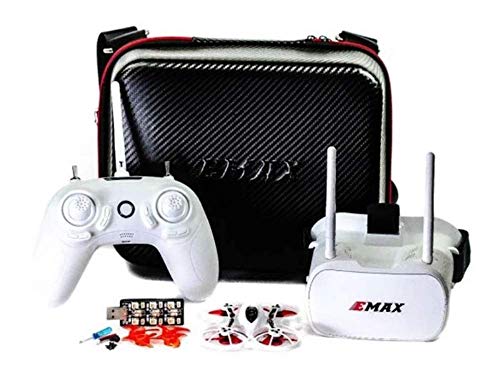
- Includes goggles, controller, and drone in one box
- Real FPV with up to 200 feet of range
- Lightweight build is tuned for beginner practice
Best For: New pilots who want a faster, race-style FPV starter kit
Progression FPV Pack

- Three flight modes support beginner-to-advanced growth
- 2S power and about 10 minutes of flight time
- Durable frame helps handle crashes and hard landings
Best For: Beginners who want a durable kit with a clear upgrade path
Beginner-Friendly Brushless Kit

- Auxiliary flight support for new pilots
- 3 flight modes with 3 speed levels
- Altitude hold, turtle mode, and self-protection
Best For: Beginners who want a guided brushless FPV starter kit
Ultra-Simple One-Stick Starter
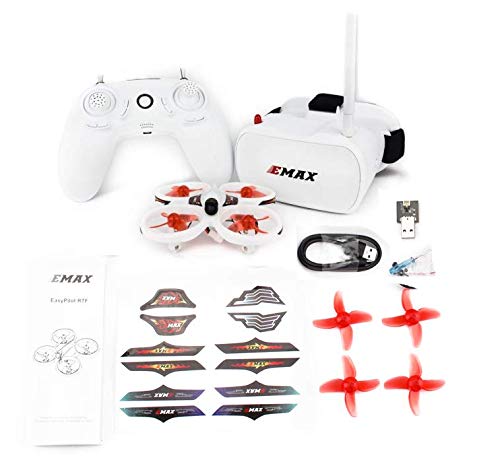
- Altitude control with one-stick flying
- Real 5.8G goggles included
- 3 skill levels from easy flight to flips
Best For: Kids and first-time flyers who want the simplest FPV start
Ready-to-Fly Starter Kit
APEX FPV Drone Kit with 120° Wide FPV Goggles

- Pre-tuned RTF setup with no soldering required
- 5.8G analog FPV goggles with low latency
- 3 flight modes plus 3 included batteries
Best For: Beginners who want an easy all-in-one FPV starter
Stable Practice FPV Kit
VR FPV Drone with HD Camera and Goggles Kit

- Brushless motors with adjustable speed settings
- Optical flow positioning for stable hovering
- Propeller guards and collision-resistant build
Best For: Beginners who want a stable, protective VR drone to practice with
Simulator-Ready FPV Starter
BETAFPV Cetus FPV Kit Brushed Racing Drone

- Includes drone, LiteRadio 2 SE, and VR02 goggles
- Simulator supported with USB joystick use
- Height hold and self-protection for easier learning
Best For: New pilots who want to practice in simulators before flying
Starter Hover Kit – BETAFPV Cetus FPV Kit
If you’re looking at beginner fpv racing drone kits, the BETAFPV Cetus is a friendly place to start because it bundles the drone, LiteRadio 2 SE, and VR02 goggles in one ready-to-fly package. The included altitude hold, self-protection features, and simulator support make it easier to build control skills before pushing into faster flying.
Best For: New pilots who want a simple indoor-friendly FPV kit with built-in practice support.
Pros:
- Includes drone, transmitter, and FPV goggles in one kit
- Altitude hold helps the quad hover steadily in N mode
- Supports FPV simulator practice through USB joystick mode
- Self-protection function can help with emergency landings
Cons:
- Maximum range is listed at just 25 meters
- Height hold is only available in N mode
- Designed more for learning than aggressive racing
Overall, the Cetus is a low-pressure entry into FPV flying, especially if you want help with the basics before moving up to more race-focused gear. It prioritizes stability, practice tools, and ease of use over raw speed.
Ready-to-Fly Speed Set – Tiny Hawk RTF Micro Indoor Racing Drone
Tiny Hawk RTF Micro Indoor Racing Drone with FPV Goggles and Controller for Beginners
Check Price On AmazonFor beginner fpv racing drone kits that lean a little more toward speed, the Tiny Hawk RTF is a compact ready-to-fly setup with FPV goggles, controller, and drone included. It uses real FPV rather than WiFi and is rated up to 35 mph, which makes it a strong pick if you want an easier path into faster indoor flying.
Best For: Beginners who want a complete FPV starter kit with a faster, more race-like feel.
Pros:
- Complete kit includes goggles, controller, and drone
- Real FPV system with up to 200 feet of range
- Lightweight and durable for indoor practice
- Reported top speed up to 35 mph
Cons:
- More speed-focused than ultra-stable learning kits
- Best suited to shorter-range flying
- Bulkier than ultra-mini whoops in the group
This is a practical choice if you want a kit that feels more like FPV racing without having to piece together separate components. It balances beginner convenience with enough speed to keep things exciting.
Progression FPV Pack – BETAFPV Aquila20 FPV Kit
The BETAFPV Aquila20 is a strong option in beginner fpv racing drone kits if you want room to grow after the first few flights. It combines a 2S propulsion system, three flight modes, altitude hold in N mode, and durable construction, making it a well-rounded kit for indoor or outdoor learning.
Best For: Beginners who want a complete kit that can grow from stable hovering into more advanced control.
Pros:
- Three flight modes support step-by-step skill progression
- Altitude hold and stable hover help early learning
- 2S propulsion system delivers about 10 minutes of flight time
- Durable PA410 frame is designed to absorb impacts
Cons:
- N mode cannot switch to S/M during flight
- Uses a complete kit approach, so there is less customization
- More advanced than a very basic hover-only starter
If you want a beginner kit that does not feel outgrown too quickly, the Aquila20 offers a smart balance of stability, durability, and progression. The included transmitter and goggles make it easy to start, while the extra modes leave a clear path forward.
Ultra-Light Practice Kit – Tinyhawk Lite FPV Drone
The Tinyhawk Lite is a compact entry in beginner fpv racing drone kits for pilots who want a true FPV setup without a lot of extra weight. With a lightweight 75mm frame, included goggles and controller, and Betaflight configuration support, it is aimed at beginners who want a simple but capable practice platform.
Best For: Beginners who want a very light, ready-to-fly FPV kit with real tuning tools.
Pros:
- Real FPV with low-latency video, not WiFi streaming
- Includes FPV goggles and remote control for immediate use
- Betaflight support lets you tune flight behavior over time
- Very light 37g design can help with agile practice flights
Cons:
- Smaller 1S battery setup is less powerful than 2S kits
- Very light build may feel less substantial than larger drones
- Best for practice rather than a full-feature race platform
As a beginner-friendly micro FPV kit, the Tinyhawk Lite focuses on portability, real FPV performance, and room to learn the basics of tuning. It is a sensible pick if you want a small drone that is easy to carry and easy to start flying.
Beginner-Friendly Brushless Kit – BETAFPV Cetus Pro FPV Kit
If you want beginner FPV racing drone kits that make the first flights feel less overwhelming, the BETAFPV Cetus Pro is built around that goal. It adds auxiliary flight support, three flight modes, altitude hold in N mode, and self-protection features, so new pilots can practice, recover from mistakes, and start flying faster and further with more confidence.
Best For: New pilots who want a brushless all-in-one kit with training-friendly flight aids.
Pros:
- Auxiliary flight support lowers the learning curve for beginners.
- Three flight modes and three speed levels let you grow from slow practice to more advanced flying.
- Altitude hold, emergency landing, self-protection, and turtle mode help with indoor practice and crash recovery.
- Includes goggles, transmitter, batteries, charger, and carrying bag in one kit.
Cons:
- Altitude hold is only available in N mode.
- The included transmitter uses Frsky D8 protocol, which may not suit every pilot’s setup.
Overall, the Cetus Pro is a practical starter package for beginners who want a smoother path into FPV without giving up room to progress into faster flight and freestyle.
Ultra-Simple One-Stick Starter – EZ Pilot FPV Drone Kit
For beginner FPV racing drone kits aimed at kids and first-time flyers, the EZ Pilot keeps things simple with altitude control and a one-stick learning mode. It includes real 5.8G FPV goggles and a camera, so the pilot gets the full first-person-view experience without needing a smartphone or Wi-Fi.
Best For: Kids and absolute beginners who want a very easy first FPV setup.
Pros:
- Altitude control and one-stick flying make early practice easier.
- 3 difficulty levels let pilots progress from beginner control to flips.
- Includes real 5.8G FPV goggles and camera for true FPV flight.
- Compact kit is designed for indoor and outdoor use.
Cons:
- Advertised flight time is up to 4 minutes.
- Built mainly for beginner learning rather than higher-end racing performance.
The EZ Pilot is a simple, confidence-building entry point if you want a kid-friendly FPV kit that emphasizes easy control and fast first success over advanced features.
Simulator-Ready Long-Range Kit – BETAFPV Aquila16 FPV Kit
If you’re comparing beginner FPV racing drone kits and want one that supports learning before real flights, the BETAFPV Aquila16 stands out with simulator practice support and an ELRS V3 transmitter. It also adds 3 flight modes, position hold in N mode, turtle mode, DVR recording on the goggles, and up to 8 minutes of flight time with the included battery.
Best For: Beginners who want simulator training, longer flight time, and room to advance.
Pros:
- LiteRadio 2 SE supports simulator practice and has ELRS V3 firmware.
- 8-minute flight time with the included 1100mAh battery.
- VR03 goggles include DVR recording and work with most analog VTXs.
- 3 flight modes, speed levels, and turtle mode support gradual progression.
Cons:
- Position hold is only available in N mode.
- The notes mention checking the camera cable if signal is lost after crashes.
That mix of practice tools, longer battery life, and indoor/outdoor flexibility makes the Aquila16 a strong training-focused kit for beginners who want to keep advancing after the basics.
Ready-to-Fly Starter Kit – APEX FPV Drone Kit with 120° Wide FPV Goggles
If you want beginner fpv racing drone kits that are easy to start with, this APEX bundle is built around a pre-tuned RTF setup and included FPV goggles. The analog 5.8G system keeps latency low for responsive flying, while the three flight modes let you progress from stabilized practice to manual freestyle as your skills improve.
Best For: New FPV pilots who want a ready-to-fly kit with goggles, beginner modes, and room to grow into freestyle.
Pros:
- Ready to fly and pre-tuned, with no soldering or complex setup required.
- 120° wide FPV goggles and low-latency analog transmission for an immersive view.
- Three flight modes, including beginner self-stabilization and full manual acro.
- Includes 3 batteries for longer total air time.
Cons:
- Analog video is standard definition, so some snow or scan lines are normal.
- Best suited to users comfortable with an entry-level whoop-style setup rather than a high-end digital system.
Overall, this kit is a practical starting point if you want a simple beginner FPV package with goggles and a clear path from first flights to freestyle practice.
Stable Practice FPV Kit – VR FPV Drone with HD Camera and Goggles Kit
This option fits beginner fpv racing drone kits if you want a more stability-focused practice drone with VR goggles and a brushless power setup. Optical flow positioning helps it hover steadily indoors or outdoors, and the speed settings plus propeller guards make it easier to learn without feeling overly aggressive.
Best For: Beginners and hobby flyers who want stable hovering, protective features, and a VR flying experience.
Pros:
- Brushless motors for smooth, responsive flight performance.
- Optical flow positioning supports stable hovering indoors and outdoors.
- Full propeller guard and collision-resistant structure add beginner-friendly protection.
- Dual cameras and 360° stunts give you more flexibility for casual flying.
Cons:
- The focus is stability and fun, not a pure racing-first layout.
- Product details are lighter on setup and battery-time specifics than some kits.
As a beginner practice drone, this kit stands out for stable hovering and safety-oriented design, making it a good choice if you want to learn control before moving into faster FPV flying.
Simulator-Ready FPV Starter – BETAFPV Cetus FPV Kit Brushed Racing Drone
For buyers comparing beginner fpv racing drone kits, this BETAFPV Cetus bundle is appealing because it combines a brushed whoop drone, VR02 goggles, and a LiteRadio 2 SE transmitter with simulator support. The height hold function and self-protection features make it especially approachable for indoor learning and first flights.
Best For: First-time pilots who want simulator practice, height hold, and an easy indoor-friendly FPV starter kit.
Pros:
- Includes drone, transmitter, and VR02 goggles in one package.
- Supports FPV simulators, and the transmitter works as a USB joystick.
- Height hold helps the drone stay steady when you release the controls.
- Self-protection and emergency landing features add peace of mind for beginners.
Cons:
- Height hold is only available in N mode.
- Brushed whoop design is more about learning and indoor flying than aggressive racing performance.
This kit is a strong beginner-first choice because it helps you practice in a simulator before flying and adds stabilizing features that reduce the learning curve.
How We Picked the Best Beginner Fpv Racing Drone Kits
We focused on kits that reduce the learning curve for first-time pilots. That means stable flight modes, altitude hold or other assist features, usable goggles, and controllers that are ready out of the box. We also prioritized complete bundles so beginners don’t have to piece together extra gear before their first flight.
For Beginner Fpv Racing Drone Kits, the most important factor is not top speed. It’s whether the kit helps you practice safely, recover from mistakes, and progress from indoor hovering to more confident outdoor flying.
Quick Comparison: What Matters Most
Some kits are better for indoor practice, while others are better if you want room to grow outside. Brushed and smaller whoop-style drones are usually easier and safer for absolute beginners. Brushless kits can offer better performance, but they may feel less forgiving if you’re brand new.
Goggles and transmitter quality also matter. A better controller layout, lower-latency video, and simulator support can make the learning process smoother and help you develop muscle memory before your first real flights.
Key Buying Factors for Beginner Fpv Racing Drone Kits
Flight Assist Features
Look for altitude hold, self-protection, emergency landing, optical flow, or easy flight modes if you’re new. These features can make takeoffs, hovering, and landings much less stressful.
Indoor Vs. Outdoor Use
If you want to start inside, choose a smaller, more stable drone with prop protection and gentle control response. If you want outdoor practice too, pick a kit with enough power and wind tolerance to stay controllable in open spaces.
Simulator Support
Simulator compatibility is a major plus for beginners. It lets you practice throttle control, turns, and orientation without risking the drone, which can save money and speed up progress.
Goggles, Controller, and Battery Count
A complete kit should include workable goggles and a controller that feels comfortable in your hands. Extra batteries are also valuable because short flight times are normal at the beginner stage, and more packs mean more practice per session.
Who Should Buy Which Beginner Fpv Racing Drone Kits?
If you want the easiest possible start, choose a stable training-focused kit with strong beginner aids and simulator support. If you want to learn indoors and gradually move outside, a lightweight whoop-style bundle is often the safest bet. If you’re willing to trade a little simplicity for more performance, consider a brushless kit that still includes beginner-friendly modes and a complete ready-to-fly package.
For most first-time buyers, the best choice is the kit that gives you the most confidence on day one and the most room to improve over time.