
The best beginner science experiment sets make it easy for children to explore chemistry, physics, biology, and STEM concepts through hands-on activities. The right kit should match a child’s age, attention span, interests, and available adult supervision.
We compared 10 popular options, from introductory chemistry and microscope kits to large experiment collections, so you can choose a set that feels exciting without being unnecessarily complicated.
Best 10 Beginner Science Experiment Sets Picks for 2026
Best All-Around Starter

- More than 60 hands-on experiments
- Includes tools, manual, and safety goggles
- Designed for ages 4 and up
Best For: Families wanting a varied, parent-guided starter kit
Best for Early Chemistry

- 50 interactive experiments
- 20+ kid-friendly lab tools
- Illustrated step-by-step instructions
Best For: Young beginners starting with chemistry
Best for Growing STEM Skills

- 50+ hands-on experiments
- Includes 26 parts and a manual
- Recommended for ages 8–14
Best For: Older beginners developing problem-solving skills
Best Complete Lab Setup

- 57-piece functional lab station
- Includes experiment cards and manual
- Non-hazardous chemicals; no borax
Best For: Kids wanting an immersive chemistry workspace
Best All-Around Variety

- Guidance cards cover 80 experiments
- Includes goggles, test tubes, droppers, and more
- Designed for children ages 6 and up
Best For: Young learners who want a wide range of introductory experiments
Best for Microscopy
58-Piece Beginner Microscope Kit

- Includes 13 prepared and 31 blank slides
- Comes with essential observation tools
- Stores in an included carrying case
Best For: Children starting hands-on microscope exploration
Best Three-in-One Set
National Geographic Mega Science Lab
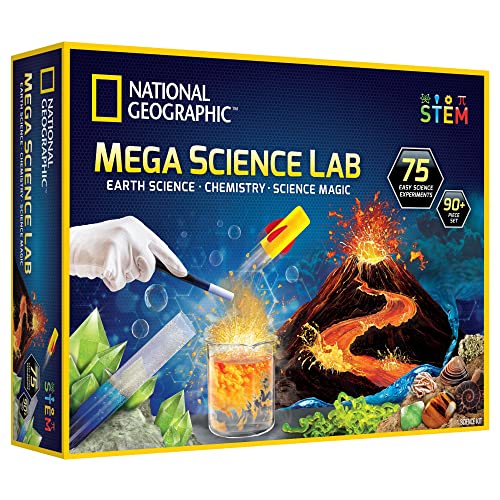
- Combines Earth science, chemistry, and science magic
- Includes 45 kit-based and 30 bonus experiments
- Recommended for ages 8 and up
Best For: Kids who want varied science themes in one larger kit
Best with Extra Features
UNGLINGA 50+ Science Lab Experiments Kit

- 50+ Earth, chemistry, and magic experiments
- Guide explains the science behind each activity
- Includes volcano, gemstone, and fountain projects
Best For: Ages 8+ seeking a varied first science kit
Best for Science Magic
National Geographic Science Magic Kit

- 20 supplied magic experiments
- Bonus booklet adds 85+ activities
- Manual operation requires no batteries
Best For: Ages 8+ who enjoy magic-style science demonstrations
Best for Maximum Variety
UNGLINGA 150 Experiments Science Kit

- 150 activities across chemistry, physics, and Earth science
- Illustrated step-by-step experiment manual
- Includes tools, materials, and kid-friendly goggles
Best For: Ages 8+ needing many projects for ongoing home learning
Best All-Around Starter – 60+ Science Experiment Kit
The Melican 60+ Science Experiment Kit is a broad beginner science experiment set for younger children who benefit from variety and parent-guided activities. It combines hands-on chemistry-themed projects with illustrated instructions, safety goggles, and included materials.
Best For: Families seeking a high-count experiment set for children ages 4 and up, with activities suitable for supervised exploration.
Pros:
- Offers more than 60 hands-on experiments.
- Includes experimental materials, tools, a manual, and safety goggles.
- Features accessible activities such as volcanoes, dinosaur-egg excavation, milk animation, and lava lamps.
- Supports observation, questioning, and problem-solving through STEM activities.
Cons:
- Parent assistance is recommended for carrying out the experiments and explaining concepts.
- The kit is chemistry-themed, so it may not provide broad coverage of other science fields.
With its large activity count and included protective gear, this is a practical choice when you want one beginner-friendly set for repeated weekend, vacation, or gift-time use.
Best for Early Chemistry – Junior Chemistry Set
The National Geographic Junior Chemistry Set is a beginner science experiment set focused on early chemistry for children ages 4 and up. It pairs 50 hands-on experiments with more than 20 child-friendly lab tools and illustrated, step-by-step directions.
Best For: Young children who want a structured introduction to chemistry using the included equipment and familiar household items such as baking soda and vinegar.
Pros:
- Provides 50 interactive chemistry experiments.
- Includes more than 20 lab tools, including test tubes and goggles.
- Illustrated instructions are designed to be easy to follow.
- Requires no batteries.
Cons:
- Some activities use common household items in addition to the kit contents.
- Its focus is primarily chemistry rather than a broad range of science topics.
This set stands out for beginners who need clear guidance and a recognizable lab setup. It offers a substantial number of activities without requiring batteries, although families should check each experiment for any household supplies needed.
Best for Growing STEM Skills – My First Science Kit
The Smartivity My First Science Experiment Kit is a beginner science experiment set aimed at older children, with a listed manufacturer recommendation of ages 8 to 14. It includes 50-plus experiments, 26 components, and an instruction manual designed to support hands-on STEM learning.
Best For: Children ready for a more involved chemistry-themed kit that emphasizes problem solving, experimentation, and independent project work.
Pros:
- Includes more than 50 science experiments.
- Provides 26 parts and an instruction manual.
- Targets a wider older-child range than many early-learning kits.
- Was kid-tested for more than 1,000 hours according to the product notes.
Cons:
- The manufacturer-recommended age is 8 to 14, despite broader age language in the listing.
- The supplied notes do not specify the individual experiments or whether all consumables are included.
- Its chemistry focus may be less suitable for children seeking earth or physical science projects.
This kit makes the most sense for an older beginner who has outgrown very simple activities. Before buying, confirm the age recommendation and review the included components if you want a fully specified materials list.
Best Complete Lab Setup – Ooze Labs Chemistry Station
The Ooze Labs Chemistry Station is a beginner science experiment set built around a large, colorful lab station for children ages 6 and up. Its 57 pieces, experiment cards, full-color manual, and non-hazardous chemicals create a more immersive setup than a basic collection of materials.
Best For: Children who enjoy role-play and want a dedicated chemistry workspace for slime, fizzing reactions, bubbles, chromatography, and related activities.
Pros:
- Includes 57 pieces with beakers, test tubes, flasks, pipettes, and other lab equipment.
- The lab station provides an organized, functional setup.
- Experiment cards clip onto the station for convenient reference.
- Uses non-hazardous chemicals and does not contain borax.
Cons:
- Its large station requires more storage space than a compact kit.
- The activities are chemistry-focused rather than multidisciplinary.
- The product is intended for ages 6 and up and still calls for appropriate adult supervision.
Choose this set when presentation and lab-style play matter as much as the experiments themselves. The organized station and substantial equipment list make it especially appealing for children who want to feel like working chemists.
Best All-Around Variety – 80-Experiment Science Lab Kit
For families comparing beginner science experiment sets, this kit offers a broad mix of guided activities rather than focusing on one science topic. Kids can try colorful demonstrations such as rainbow rain, volcanoes, fountains, and balloon experiments while practicing hands-on observation and basic measuring.
Best For: Children ages 6 and up who want many introductory experiments and scientist-themed role play.
Pros:
- Includes guidance cards covering 80 experiments, from simple to more challenging activities.
- Provides a large assortment of tools and supplies, including goggles, test tubes, droppers, measuring cups, gloves, and balloons.
- Supplied chemicals come in separate bottles with tight lids for continued use.
Cons:
- The kit involves chemical materials, so children will need appropriate adult supervision.
- The product details describe the included components but do not specify how much of each chemical is provided.
This is a flexible choice when variety matters most. Its illustrated guidance and extensive accessory selection can keep young experimenters busy, though families should plan to supervise activities and follow each experiment’s instructions.
Best for Microscopy – 58-Piece Beginner Microscope Kit
Among beginner science experiment sets, this kit stands out for children who prefer looking closely at specimens. The optical microscope, prepared slides, blank slides, and basic lab tools create a straightforward introduction to observing plants, insects, and everyday objects.
Best For: Kids ages 5-12 beginning microscope work at home, in a classroom, or during guided parent-child activities.
Pros:
- Includes 13 prepared slides plus 31 blank slides for children to make their own observations.
- Comes with useful accessories such as tweezers, a dropper, and a scalpel.
- Carrying case keeps the microscope and accessories organized between sessions.
- Colorful guidance introduces microscope parts and basic observation skills.
Cons:
- Requires two AA batteries, which are not included.
- It is designed as an introductory tool rather than professional laboratory equipment.
This is a practical pick for young learners who are curious about magnification and specimens. The prepared slides make it easier to begin immediately, while the blank slides support continued exploration with adult or teacher guidance.
Best Three-in-One Set – National Geographic Mega Science Lab
This National Geographic kit is a strong option for shoppers seeking beginner science experiment sets with several subject areas in one box. It combines Earth science, chemistry, and science magic, with 45 supplied activities and 30 additional ideas that use common household items.
Best For: Children ages 8 and up who want varied projects involving rocks, minerals, crystals, reactions, and science demonstrations.
Pros:
- Combines three themes: Earth science, chemistry, and science magic.
- Includes activities such as building a volcano, growing a glow-in-the-dark crystal, making water tornadoes, and conducting bubbling reactions.
- Provides real rock, mineral, crystal, and fossil specimens for collection and exploration.
- Bonus guide adds 30 experiments using common household items, with no batteries required.
Cons:
- The recommended age is 8 years and up, so it may not suit younger beginners.
- Some bonus activities require household items beyond the contents of the kit.
Choose this set when breadth and themed discovery are more important than a single type of experiment. Its specimen-based Earth science activities and chemistry demonstrations offer variety, while the household-item bonus guide can extend the kit beyond the supplied materials.
Best with Extra Features – UNGLINGA 50+ Science Lab Experiments Kit
For families looking for beginner science experiment sets, this UNGLINGA kit offers more than 50 guided activities spanning Earth science, chemistry, and science-themed magic. The manual explains the concepts behind projects such as volcanoes, gemstones, foamy fountains, and color-changing flowers, while many activities use common household items.
Best For: Kids ages 8 and up who want a broad, hands-on introduction to science with family or friends.
Pros:
- Includes more than 50 experiments across several science topics.
- Step-by-step learning guide explains the science behind the activities.
- Encourages critical thinking, problem-solving, and STEM skills.
- Includes engaging projects such as a volcano, gemstones, and foamy fountain.
Cons:
- Some experiments require additional common household items.
- Recommended for ages 8 and up, so younger children may need more supervision.
This is a practical entry point for children who want variety without committing to one narrow area of science. Its mix of supplied materials and household-item activities makes it flexible for repeat experiment sessions.
Best for Science Magic – National Geographic Science Magic Kit
Among beginner science experiment sets, this National Geographic kit stands out for children who enjoy the performance side of science. It includes materials for 20 magic experiments plus a bonus booklet with more than 85 additional magic experiments, creating a large collection of activities for ages 8 and up.
Best For: Kids who are especially motivated by magic tricks, demonstrations, and science-themed entertainment.
Pros:
- Provides materials for 20 magic experiments.
- Includes a bonus booklet with more than 85 additional experiments.
- Combines science, STEM learning, and magic-themed presentation.
- No batteries are required for operation.
Cons:
- The supplied materials cover 20 experiments; the additional activities are provided in the booklet.
- Its science-magic focus may be less suitable for children seeking broad chemistry or physics coverage.
The large activity count and magic-focused format make this a strong choice for children who learn best through surprises and demonstrations. It is also a convenient pick when you want a kit that works manually without batteries.
Best for Maximum Variety – UNGLINGA 150 Experiments Science Kit
For shoppers comparing beginner science experiment sets, this UNGLINGA kit offers the largest activity count in the group: 150 experiments covering Earth science, surface tension, chemistry, physics, crystals, volcanoes, and more. Its illustrated, step-by-step manual is designed to help children work through projects with the included tools and materials, alongside some regular household items.
Best For: Families wanting a large supply of hands-on activities for weekends, school breaks, and extended at-home science time.
Pros:
- Offers 150 experiments across chemistry, physics, Earth science, and other topics.
- Illustrated manual uses a step-by-step format.
- Includes kid-friendly lab tools and materials, including goggles.
- Supports hands-on learning and shared parent-child activity time.
Cons:
- Some projects still require regular household items.
- The large number of activities may require more planning and storage.
- Recommended for ages 8 and up.
This is the strongest fit when variety and repeat use matter most. The broad topic coverage can keep curious children engaged over many sessions, while the illustrated instructions make the extensive activity list easier to approach.
How We Picked These Beginner Science Experiment Sets
We focused on kits that offer clear educational value, age-appropriate activities, and enough variety to encourage repeated use. The selection includes compact introductory sets, chemistry-focused kits, microscope-based learning tools, role-play lab sets, and larger collections with dozens of experiments.
We also considered the types of materials included, experiment count, stated age range, portability, and whether the kit appears better suited to independent exploration or guided parent-child activities. Experiment counts can vary in complexity, so a higher number does not automatically mean a better learning experience.
Quick Comparison
| Best For | Look For |
|---|---|
| Young beginners | Simple instructions, safe household ingredients, and short activities |
| Chemistry enthusiasts | Reaction-based experiments, lab tools, and structured explanations |
| Biology explorers | A usable microscope, prepared slides, and specimen accessories |
| Maximum variety | Large experiment libraries with clearly organized materials |
| Independent play | Visual instructions, premeasured components, and manageable cleanup |
Key Buying Factors for Beginner Science Experiment Sets
Age and Supervision
Choose the kit’s recommended age range as a starting point, not a guarantee. Younger children usually need an adult to explain steps, handle materials, and supervise mixing or heating. Older children may prefer more open-ended projects and scientific explanations.
Experiment Quality and Variety
Look beyond the headline experiment count. A set with fewer well-explained activities may provide more value than a large kit filled with repetitive demonstrations. Check whether experiments cover multiple science areas or concentrate on one theme such as chemistry.
Included Equipment and Refills
Review the parts list before buying. Test tubes, droppers, goggles, measuring tools, slides, and storage cases can make a kit easier to use. Also check whether ingredients are included, whether common household supplies are required, and how easily consumables can be replaced.
Instructions, Safety, and Cleanup
Clear instructions are especially important for first-time experimenters. Look for safety guidance, adult-supervision notes, and activities that can be completed on a washable surface. A carrying case or organized storage tray is useful when a kit contains many small pieces.
Who Should Buy Which Beginner Science Experiment Sets?
For a younger child beginning to explore science, choose a simple kit with short, visually guided activities. Children interested specifically in reactions and laboratory tools may prefer a chemistry station or chemistry set. A microscope kit is the better match for learners fascinated by cells, insects, plants, and tiny specimens.
For families wanting the widest selection, a larger National Geographic or UNGLINGA experiment collection may offer more opportunities to revisit the kit. A science-and-magic set can be a strong choice for children who enjoy performance and surprise, while a role-play laboratory kit may appeal to imaginative learners who benefit from a more playful format.
Whichever option you choose, plan to participate at least for the first few activities. Asking children to predict results, record observations, and explain what happened turns a one-time project into a stronger science-learning experience.