
The right bench grinder can sharpen tools, clean up welds, remove burrs, and handle routine metalworking without taking over your workbench. However, motor speed, wheel size, stability, and included accessories vary widely between models.
We compared 10 bench grinders for workshops across compact sharpening tools, heavy-duty 8-inch machines, variable-speed designs, and versatile grinder-sander combinations to help you choose with confidence.
Best 10 Bench Grinders for Workshops Picks for 2026
Heavy-Duty Power Pick
DEWALT DW758 8-Inch Bench Grinder

- 3/4 HP induction motor at 3,600 RPM
- Rugged cast iron construction
- 12-1/2-inch span between wheels
Best For: Industrial-style grinding and larger workpieces
Low-Speed Sharpening Choice
BUCKTOOL 8-Inch Low-Speed Bench Grinder

- 1,750 RPM induction motor
- Wide WA wheel and CBN-wheel compatibility
- LED light and 3X magnifying eye shield
Best For: Sharpening chisels, gouges, axes, and carving tools
Compact Starter Option
WEN BG4276 6-Inch Bench Grinder
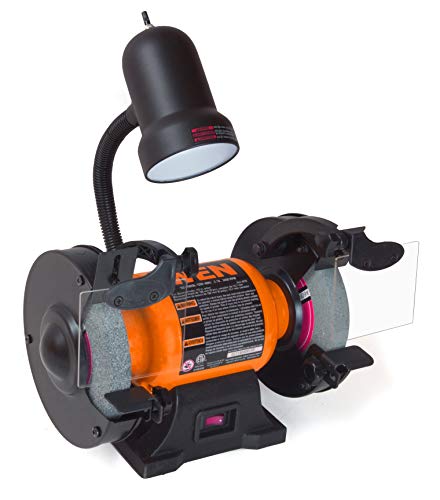
- 2.1-amp motor reaches 3,450 RPM
- Flexible work light included
- 36- and 60-grit wheels included
Best For: General sharpening in compact workshops
Versatile Combo Station
BUCKTOOL 2x42-Inch Belt Sander Grinder
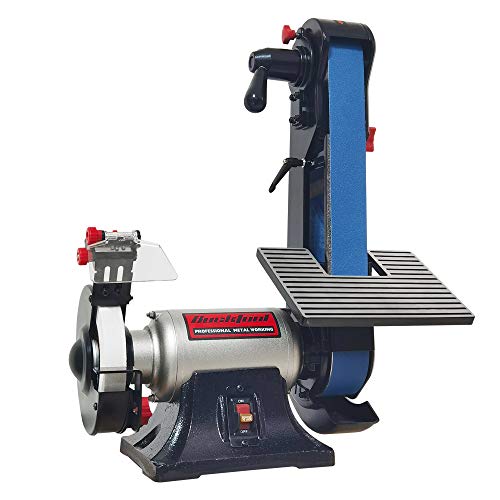
- Combines belt sander and 6-inch grinder
- 0–90-degree belt positioning
- Two worktables and quick belt changes
Best For: Knife making, metal finishing, and woodworking
Best High-Speed Option
Woodskil 6-Inch 1/2HP Bench Grinder
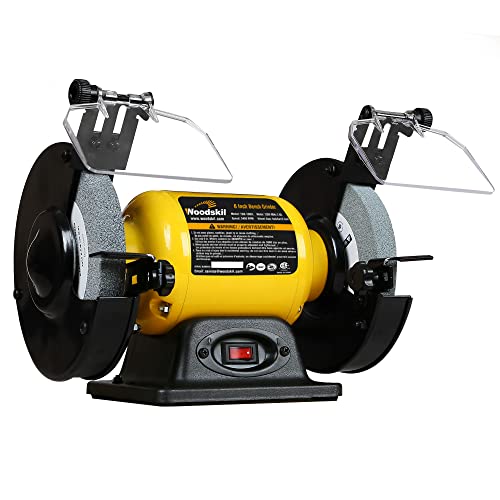
- 3,450 RPM, 1/2HP motor
- 36- and 60-grit wheels included
- Steel base with eye shields and spark arrestors
Best For: Fast sharpening and general workshop metalwork
Best Value Variable-Speed Pick
WEN BG625V 6-Inch Bench Grinder

- 2,000–3,400 RPM variable speed
- Flexible work light
- 36- and 80-grit wheels included
Best For: Tool, knife, and bit restoration with speed control
Best Advanced Control
Woodskil 8-Inch Digital Bench Grinder
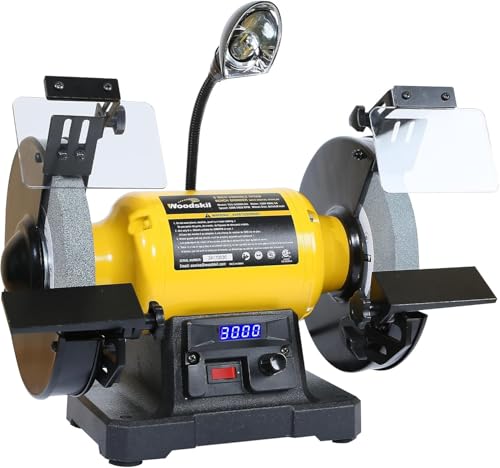
- 3/4HP variable-speed motor
- Digital speed display and 2W work light
- 8-inch wheels with stable steel base
Best For: Precise, higher-power grinding and deburring
Compact Workshop Starter
WEN BG4260 6-Inch Bench Grinder
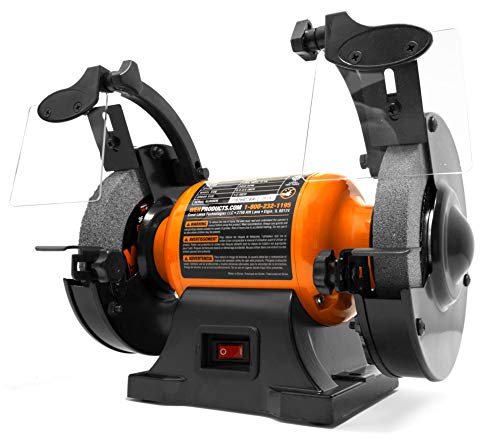
- 2.1-amp motor reaches up to 3,450 RPM
- Includes 36- and 60-grit wheels
- Pivoting rests and adjustable eye guards
Best For: Basic tool, knife, and bit sharpening
Two-Tool Workstation
VEVOR 8-Inch Grinder and Belt Sander
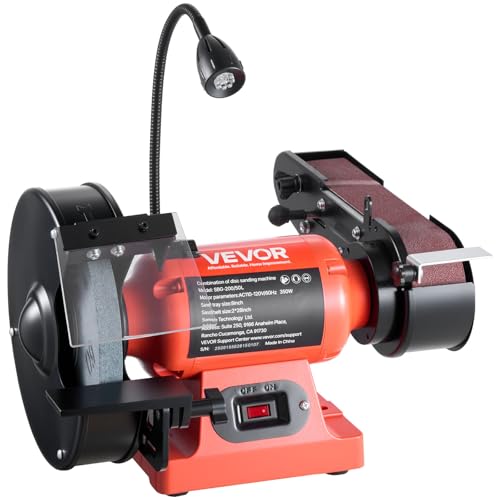
- Combines an 8-inch grinder with a 2-by-28-inch belt sander
- Adjustable sanding arm moves from 0 to 90 degrees
- LED light, eye shield, and 29.1-pound steel construction
Best For: Versatile metalworking, woodworking, and knife shaping
Adjustable Precision Option
6-Inch Variable-Speed Bench Grinder

- Variable speed from 1,725 to 3,450 RPM
- Includes two wheels and a diamond dresser
- Cast-iron base, LED light, and water tray
Best For: Controlled sharpening, grinding, polishing, and metalwork
Heavy-Duty Power Pick – DEWALT DW758 8-Inch Bench Grinder
For workshops that need fast material removal, the DEWALT DW758 is one of the more powerful bench grinders for workshops. Its 3/4 HP induction motor runs at 3,600 RPM, while the cast iron construction is designed for durability during demanding grinding tasks.
Best For: Industrial-style grinding, larger workpieces, and users who prioritize power and a wide working span.
Pros:
- 3/4 HP motor and 3,600 RPM speed support rapid material removal
- Cast iron base and motor housing are built for durability
- Precision-machined aluminum tool rests help with accurate positioning
- 12-1/2-inch distance between wheels accommodates longer workpieces
Cons:
- High-speed operation may be less suitable for delicate sharpening tasks
- Does not include a built-in work light or magnifying eye shield
The DW758 is a straightforward, heavy-duty choice for a workshop where grinding performance and rugged construction matter more than low-speed detail features.
Low-Speed Sharpening Choice – BUCKTOOL 8-Inch Low-Speed Bench Grinder
The BUCKTOOL TDS-200C4HL brings controlled, low-speed performance to bench grinders for workshops. Its 1,750 RPM induction motor, wide grinding wheel, adjustable rests, LED light, and magnifying eye shield make it especially useful for sharpening and detail-oriented work.
Best For: Woodworkers, turners, carvers, and anyone sharpening chisels, gouges, axes, or similar tools.
Pros:
- 1,750 RPM motor is suited to controlled sharpening work
- Includes 1-1/2-inch-wide WA wheel and compatibility with a CBN wheel
- Adjustable tool rests support angles from 0 to 45 degrees
- Built-in 3W LED and 3X magnifier improve visibility for detail work
Cons:
- Low-speed design is slower for heavy material removal
- Larger and heavier than some compact workshop grinders
With its low-speed motor and sharpening-focused accessories, this BUCKTOOL is a strong fit when precision and visibility are more important than maximum grinding speed.
Compact Starter Option – WEN BG4276 6-Inch Bench Grinder
WEN BG4276 2.1-Amp 6-Inch Single Speed Bench Grinder with Flexible Work Light, Black,orange
Check Price On AmazonThe WEN BG4276 is a compact option among bench grinders for workshops, with a 2.1-amp motor driving 6-inch wheels at up to 3,450 RPM. Its flexible work light and included 36- and 60-grit wheels make it practical for routine tool, knife, and bit maintenance.
Best For: General-purpose sharpening and smaller workshop tasks where a compact 6-inch grinder is sufficient.
Pros:
- Compact 6-inch format suits smaller work areas
- Flexible work light illuminates the grinding area
- Includes both 36-grit and 60-grit wheels
- Two-year warranty provides added ownership support
Cons:
- Smaller wheels provide less capacity than 8-inch models
- Single-speed operation offers less control for delicate sharpening
The BG4276 is a sensible entry-level-style workshop grinder for everyday maintenance, particularly when space, included lighting, and basic versatility are priorities.
Versatile Combo Station – BUCKTOOL 2×42-Inch Belt Sander Grinder
For workshops that need more than a conventional grinder, the BUCKTOOL BG2600 combines a 6-inch bench grinder with a 2-by-42-inch belt sander. The 3.5-amp induction motor delivers 3,450 RPM at the wheel and 4,480 FPM belt speed, while the tilting belt and two worktables support varied metalworking and woodworking tasks.
Best For: Knife making, metal finishing, woodworking, and users who want grinding and belt sanding in one machine.
Pros:
- Combines a 6-inch grinder with a versatile 2-by-42-inch belt sander
- Belt housing tilts from horizontal to vertical for different workpieces
- Quick-release tension and tracking simplify belt changes
- Includes LED lighting, a 60-grit wheel, and two worktables
Cons:
- Combo design occupies more vertical space than a standalone grinder
- 1/3 HP motor is less powerful than the 3/4 HP motors in the 8-inch grinder options
- May be more equipment than users seeking grinding only need
The BG2600 earns consideration when workspace efficiency and multi-material capability matter. Its belt-sanding functions expand what it can do beyond routine grinding and sharpening.
Best High-Speed Option – Woodskil 6-Inch 1/2HP Bench Grinder
For shoppers comparing bench grinders for workshops, the Woodskil 6-inch model emphasizes fast sharpening and steady operation. Its 1/2HP, 2.8A motor runs at 3,450 RPM, while the included 36- and 60-grit aluminum oxide wheels cover rough shaping and finer work.
Best For: Hobbyists, woodworkers, and DIY users who want a straightforward, high-speed grinder for tool maintenance and metalwork.
Pros:
- Powerful 1/2HP motor with a 3,450 RPM maximum speed.
- Includes coarse 36-grit and fine 60-grit aluminum oxide wheels.
- Pre-drilled steel base is designed for stable, wobble-free use.
- Includes eye shields, spark arrestors, CSA listing, and a two-year limited warranty.
Cons:
- Fixed high-speed operation offers less speed flexibility than variable-speed models.
- Its 6-inch wheel size may provide less working area than an 8-inch grinder.
This Woodskil is a practical pick when speed, included wheel options, and a rigid base matter more than variable-speed control. Read the manual and use appropriate eye protection before operation.
Best Value Variable-Speed Pick – WEN BG625V 6-Inch Bench Grinder
WEN BG625V 2.5-Amp 6-Inch Variable Speed Bench Grinder with Flexible Work Light , Black
Check Price On AmazonThe WEN BG625V is a flexible choice among bench grinders for workshops because its 2.5-amp motor adjusts from 2,000 to 3,400 RPM. A flexible work light, pivoting tool rests, and two included wheels make it suited to everyday sharpening and restoration tasks.
Best For: Users who want adjustable speed and built-in illumination for reviving tools, knives, and bits.
Pros:
- Variable-speed motor operates from 2,000 to 3,400 RPM.
- Flexible work light helps illuminate the project during operation.
- Includes 80-grit and 36-grit wheels, pivoting tool rests, and adjustable eye guards.
- Backed by a two-year warranty.
Cons:
- Its 0.4HP motor is less powerful on paper than the 1/2HP and 3/4HP options in this roundup.
- The 6-inch wheel format offers less surface area than an 8-inch model.
Choose the BG625V if speed control and work lighting are priorities. The two wheel grits also give it useful range for both heavier material removal and finer finishing.
Best Advanced Control – Woodskil 8-Inch Digital Bench Grinder
For demanding bench grinders for workshops, this Woodskil combines an 8-inch format with a 3/4HP, 5A variable-speed motor. Its digital display shows the current speed from 2,000 to 3,450 RPM, while the built-in 2W light improves visibility at the work area.
Best For: Users who want a larger grinding wheel, precise speed monitoring, and extra power for chisels, deburring, and metal grinding.
Pros:
- 3/4HP, 5A motor provides variable speed from 2,000 to 3,450 RPM.
- Digital display provides real-time speed readings.
- 8-inch wheels offer a larger working format than the 6-inch models.
- Includes a 2W work light, adjustable tool rests, eye shields, and a rigid steel base with non-slip pads.
Cons:
- Its larger 17.32-inch length and 13.39-inch height require more bench space.
- It is likely a less compact choice than the 6-inch grinders for smaller work areas.
This model stands out when power, larger wheels, and measurable speed control are more important than a compact footprint. Its stability features and illumination support more controlled workshop work.
Compact Workshop Starter – WEN BG4260 6-Inch Bench Grinder
For shoppers comparing bench grinders for workshops, the WEN BG4260 is a straightforward single-speed option for routine sharpening, tool restoration, and light grinding. Its 2.1-amp motor reaches up to 3,450 RPM and drives the included 36- and 60-grit wheels.
Best For: DIY users and small workshops that need a compact grinder for reviving tools, knives, and bits.
Pros:
- Includes both 36-grit and 60-grit grinding wheels.
- Pivoting tool rests and adjustable eye guards support safer, more controlled work.
- Compact 14-pound design with a two-year warranty.
Cons:
- Single-speed operation offers less control than a variable-speed grinder.
- The 6-inch wheel size is less suited to larger grinding tasks.
The BG4260 keeps the feature set simple, which can be an advantage for basic workshop maintenance. Choose it when included wheels, compact size, and uncomplicated operation matter more than speed adjustment or multi-function sanding.
Two-Tool Workstation – VEVOR 8-Inch Grinder and Belt Sander
Among bench grinders for workshops, this VEVOR combination machine stands out by pairing an 8-inch grinding wheel with a 2-by-28-inch belt sander. The 350W motor supports grinding at up to 3,450 RPM and belt sanding at 1,500 RPM for varied metalworking and woodworking tasks.
Best For: Workshops that want one machine for coarse grinding, belt sanding, knife sharpening, and shaping.
Pros:
- Combines a bench grinder and belt sander in one unit.
- Belt arm adjusts from 0 to 90 degrees for horizontal or vertical sanding.
- Includes an LED work light, eye shield, steel body, and non-slip feet.
- Heavier 29.1-pound construction helps reduce wobbling.
Cons:
- The combination design occupies more space than a basic grinder.
- Its listed 2.9-amp capacity is more modest than some dedicated workshop grinders.
This VEVOR is a practical choice when versatility is a priority. Its adjustable sanding arm broadens the machine’s usefulness, while the heavier base and integrated lighting support steadier, more visible work.
Adjustable Precision Option – 6-Inch Variable-Speed Bench Grinder
For bench grinders for workshops that require more control, this 6-inch variable-speed model lets users select between 1,725 and 3,450 RPM. Its 2.5-amp brushless induction motor, LED light, cast-iron base, and included wheel dresser support repeated sharpening, grinding, and polishing work.
Best For: DIY and workshop users who want adjustable speed for sharpening, shaping, polishing, and general metalwork.
Pros:
- Variable speed accommodates different grinding and finishing tasks.
- Includes 36- and 60-grit wheels plus a diamond wheel dresser.
- Cast-iron base and anti-vibration feet help minimize wobble.
- LED work light, adjustable shields, water tray, and tool-free guides add convenience.
Cons:
- The 6-inch wheel size limits the scale of larger grinding jobs.
- Its multiple adjustments may be more features than needed for simple sharpening.
This grinder is the most control-oriented option of the three. The broad speed range and cooling tray are useful when moving between coarse removal, sharpening, and finishing, while the cast-iron base supports stable bench work.
How We Picked the Best Bench Grinders for Workshops
We focused on the features that matter most in a real workshop: motor power, wheel diameter, operating speed, construction, work-rest adjustment, eye protection, lighting, and accessory compatibility. We also considered whether each machine is better suited to sharpening, fabrication, deburring, knife work, or general maintenance.
Models with variable-speed control or low-speed operation received particular attention because slower grinding can reduce heat buildup on cutting tools. Combo machines were assessed for versatility, while compact single-speed grinders were considered for straightforward sharpening and light-duty work.
Quick Comparison
| Type | Best For | Main Advantage | Potential Limitation |
|---|---|---|---|
| 6-inch single-speed | Basic sharpening and maintenance | Compact and usually affordable | Less control over heat and material removal |
| 8-inch standard grinder | General metalworking | Larger wheels and longer service life | Requires more bench space |
| Variable-speed grinder | Tool sharpening and knife work | Better control over heat and finish | Usually costs more |
| Low-speed grinder | Precision sharpening | Helps limit overheating | Slower stock removal |
| Grinder and belt-sander combo | Fabrication and shaping | Handles both grinding and sanding | Less specialized at either task |
Key Buying Factors for Bench Grinders for Workshops
Wheel Size and Motor Power
Six-inch grinders are suitable for most home workshops and routine sharpening. Eight-inch models generally offer larger working surfaces and are better for frequent metalwork. Match motor power to your workload rather than choosing the highest rating automatically; a stronger motor is most useful when the machine must maintain speed under pressure.
Speed Control and Heat Management
High-speed grinders remove material quickly but can heat cutting edges rapidly. A variable-speed or low-speed model is usually the better choice for chisels, planer blades, knives, and other tools that can lose temper. Use light pressure and cooling breaks regardless of the grinder type.
Stability and Safety
A solid base, adjustable work rests, spark guards, and eye shields make a noticeable difference. Check whether the grinder can be securely bolted to the bench, especially if you regularly sharpen large tools or apply firm pressure. A built-in LED work light is helpful but should not replace proper shop lighting and safety glasses.
Wheel and Accessory Compatibility
Confirm the included wheel types, arbor size, replacement-wheel availability, and whether the machine supports wire wheels, buffing wheels, or CBN wheels. A wheel dresser is useful for keeping abrasive surfaces flat and clean.
Who Should Buy Which Bench Grinders for Workshops?
- For occasional home maintenance: Choose a compact 6-inch single-speed grinder with adjustable rests and eye shields.
- For general metalworking: An 8-inch grinder offers a useful balance of capacity, durability, and working area.
- For sharpening knives and edged tools: Select a variable-speed or low-speed model to improve control and reduce overheating.
- For fabrication and shaping: A grinder-and-belt-sander combo can save space and expand your finishing options.
- For frequent workshop use: Prioritize a rigid base, dependable induction motor, replaceable accessories, and easy access to service parts.
Before ordering, measure your available bench space, verify the machine’s voltage and wheel specifications, and decide whether speed control or extra versatility will provide more value than maximum grinding speed.