
The right external recorder can give directors cleaner footage, more monitoring control, higher-quality codecs, and dependable production audio without forcing a full camera upgrade.
We selected 10 standout options across HDMI monitor-recorders, camcorders with built-in recording, portable audio recorders, and emerging camera-to-cloud workflows. Use the guide below to match features, media, connectivity, and set complexity to your production style.
Best 10 Camera External Recorders for Directors Picks for 2026
RAW Monitoring Power

- 1500-nit HDR touchscreen with pro monitoring tools
- Records ProRes and ProRes RAW to supported media
- Camera control and flexible mobile power options
Best For: Directors needing RAW recording and precise on-set monitoring
All-in-One 4K Coverage

- 4K 60p recording with up to 200 Mbps bitrate
- 24x optical zoom from 25mm to 600mm equivalent
- Hybrid stabilization and face-detection autofocus
Best For: Directors wanting a portable, self-contained 4K camcorder
Versatile HDMI Capture
Atomos Ninja 5.2-inch 4K Monitor
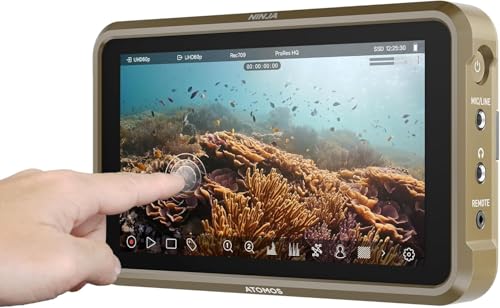
- Records 4Kp60 in ProRes, DNxHD, and H.265
- Captures up to 6Kp30 in ProRes RAW
- Compact design with RemoteView sharing tools
Best For: Directors adding flexible recording to HDMI-output cameras
Production Sound Companion
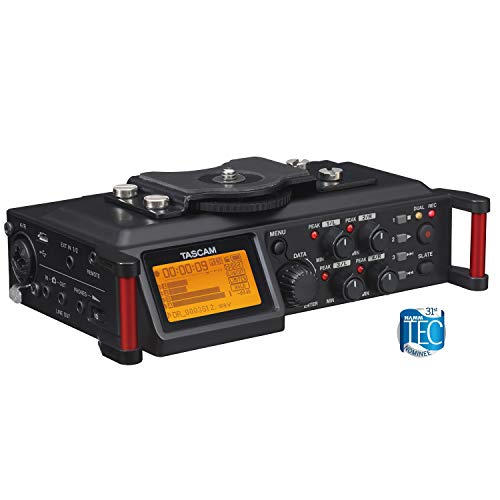
- Four balanced XLR/TRS inputs with phantom power
- Dual Recording mode provides a lower-level safety copy
- Mounts above or below a camera for production use
Best For: Directors and crews needing multitrack location audio
All-in-One Production Camera
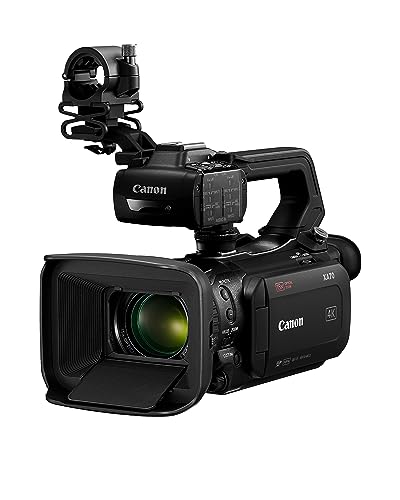
- 4K UHD recording with XF-AVC and MP4 options
- 15x optical zoom with optical stabilization
- Mini-HDMI, USB-C streaming, dual SD, and XLR audio
Best For: Directors wanting a complete 4K camcorder with production connectivity
Connected Monitoring Recorder

- Records multiple codecs, including 8K30 ProRes RAW
- Locking 12G-SDI and HDMI 2.0 I/O
- Bright touchscreen with Wi-Fi, timecode, and cloud features
Best For: Directors needing a dedicated monitor-recorder for advanced camera workflows
Production Audio and Sync Recorder

- 32-bit float audio recording for no-clip capture
- Dual XLR/TRS inputs plus 3.5mm input
- Built-in timecode generation and sync functions
Best For: Directors needing compact external audio and timecode support
Best All-Around Pick

- 1500-nit touchscreen with professional monitoring tools
- Records up to 6K RAW to CFexpress Type B or USB-C
- Supports multiple codecs, HDMI, Wi-Fi 6E, and NDI
Best For: Directors seeking a compact, flexible HDMI monitor-recorder
Best Production Bundle

- Adds dual HDMI 2.0 and 12G-SDI inputs
- Supports up to 8K30 RAW recording
- Includes battery, charger, mount, hood, and cables
Best For: Directors wanting a connectivity-focused kit with accessories
Best Accessory Kit
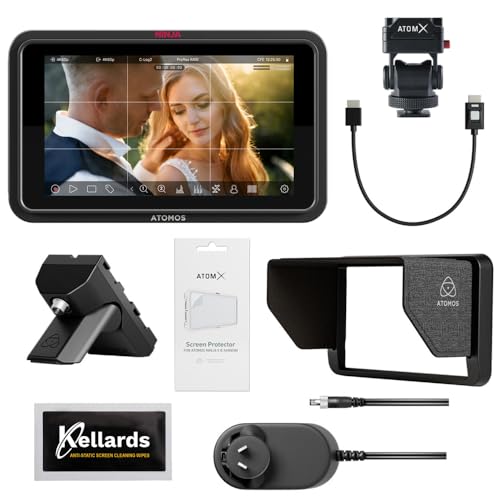
- Includes Creator Accessory Kit and five cleaning wipes
- Records up to 6K RAW with multiple codec options
- Offers a 1500-nit touchscreen and Wi-Fi 6E
Best For: Directors wanting a compact recorder with added care accessories
RAW Monitoring Power – Atomos Ninja RAW
For directors comparing camera external recorders for directors, the Atomos Ninja RAW combines a bright HDR monitor, camera control, and high-quality recording in a compact production tool. It records ProRes or ProRes RAW from compatible HDMI or USB-C cameras to CFexpress Type B media or external USB-C storage.
Best For: Directors and cinematographers who need professional monitoring, ProRes RAW recording, and hands-on camera control in the field.
Pros:
- 1500-nit, 5.2-inch HDR touchscreen improves viewing in bright conditions.
- Records ProRes, ProRes RAW, ProRes RAW HQ, ProRes LT, 422, and 422 HQ.
- Includes waveform, focus peaking, EL Zone false color, and Onion Skin tools.
- Runs from NP-F batteries, USB-C power banks, or a DC adapter.
Cons:
- Storage media, network adapter, and some accessories are sold separately.
- Camera control depends on compatibility with the connected camera.
The Ninja RAW is a strong choice when monitoring and acquisition quality matter equally. Its rugged design and flexible power options also suit mobile production, though the broader setup cost can rise with required media and accessories.
All-in-One 4K Coverage – Panasonic X1600 4K Camcorder
Although it is a complete camcorder rather than a standalone recorder, the Panasonic X1600 is relevant to camera external recorders for directors when portability and dependable coverage are priorities. It pairs 4K 60p recording with a 24x optical zoom, stabilization, autofocus, and extended battery life.
Best For: Directors and videographers who want a self-contained 4K camera for events, documentaries, travel, and varied shooting distances.
Pros:
- Records 4K 59.94p/50p at up to 200 Mbps with 10-bit 4:2:0 MOV recording.
- 25mm-to-600mm equivalent range and 24x optical zoom cover wide and distant shots.
- Face Detection autofocus and color recognition help track moving subjects.
- Hybrid five-axis stabilization and a rated battery life of up to 6 hours and 10 minutes support long shoots.
Cons:
- It is a camcorder, not an external monitor-recorder for an existing camera.
- Its built-in recording uses SDHC/SD media rather than the external media workflows of dedicated recorders.
The X1600 makes the most sense when a director values a ready-to-shoot package over modular camera accessories. Its broad zoom range and stabilization reduce the need for additional production equipment, while its camcorder format may be less suitable for cinema-camera workflows.
Versatile HDMI Capture – Atomos Ninja 5.2-inch 4K Monitor
The Atomos Ninja is a practical option for directors evaluating camera external recorders for directors because it adds high-quality recording and monitoring to a wide range of HDMI-output cameras. Its compact design supports up to 4Kp60 recording in multiple codecs and up to 6Kp30 in Apple ProRes RAW.
Best For: Directors using HDMI cameras who want a lightweight monitor-recorder with flexible codec support and modern playback and sharing tools.
Pros:
- Records up to 4Kp60 in Apple ProRes, Avid DNxHD, and H.265/HEVC.
- Supports up to 6Kp30 in Apple ProRes RAW.
- AtomOS 11 improves responsiveness and memory management.
- RemoteView can share the Atomos screen with compatible devices and other Atomos Connect users.
Cons:
- Its core camera connection is based on HDMI output, so compatibility depends on the camera.
- Supplied notes do not specify included recording media or battery accessories.
The Ninja is a flexible middle ground for productions that need more than a camera screen without the feature set of a larger field monitor. Its codec range and wireless viewing features are useful for collaborative workflows, provided the camera and connected devices support the required functions.
Production Sound Companion – TASCAM DR-70D Audio Recorder
For directors researching camera external recorders for directors, the TASCAM DR-70D addresses the audio side of production rather than video capture. It provides four balanced XLR inputs, phantom power, built-in microphones, and multitrack WAV recording in a camera-mountable package.
Best For: Filmmakers, documentary teams, and DSLR or mirrorless crews that need multiple microphone inputs and a separate production-audio recording path.
Pros:
- Four balanced XLR/TRS inputs with phantom power support professional microphones.
- Individual gain controls and HDDA preamps provide up to 64 dB of gain.
- Dual Recording mode creates a lower-level safety copy to help prevent distorted takes.
- Can mount above or below a camera and includes built-in microphones.
Cons:
- It records audio only, so it does not replace a video monitor-recorder.
- Operation requires four AA batteries, and the supplied warranty is 90 days labor and one year parts.
- The 1.5-inch screen is compact for detailed level and menu work.
The DR-70D is a useful complement to a camera recorder when clean, separately captured production sound is the priority. Its four-input layout and safety recording mode offer practical protection on set, especially for crews using several microphones.
All-in-One Production Camera – Canon XA70
For directors seeking camera external recorders for directors, the Canon XA70 is a compact professional camcorder that combines 4K capture, optical zoom, stabilization, and flexible connectivity in one production-ready package. Its mini-HDMI output can integrate with external recording and monitoring equipment, while dual SD slots support relay or simultaneous recording.
Best For: Directors who want a self-contained 4K camcorder with external-output flexibility, long-reach zoom, and professional audio inputs.
Pros:
- Records 4K UHD in XF-AVC or MP4 formats, including 160Mbps recording at 30P/24P.
- 1-inch CMOS sensor, 15x optical zoom, and optical image stabilization support detailed, steady footage.
- Mini-HDMI, USB-C UVC streaming, dual SD slots, and two XLR terminals provide versatile production connectivity.
Cons:
- It is a complete camcorder rather than a dedicated external recorder, so it may be more equipment than a recorder-only workflow requires.
- The supplied notes do not specify recording directly to external media through the mini-HDMI output.
The XA70 is the strongest choice here for directors who need the camera and core recording functions in one unit. Its external video output, dual-card recording, and XLR audio make it adaptable to larger production setups without giving up portability.
Connected Monitoring Recorder – Atomos Ninja TX
Among camera external recorders for directors, the Atomos Ninja TX stands out as a monitor-recorder built for high-resolution camera workflows and connected production. It accepts HDMI 2.0 or locking 12G-SDI, records to CFexpress Type B, and includes Wi-Fi, timecode synchronization, and camera-to-cloud uploading features.
Best For: Directors and camera teams needing an on-camera monitor, external recording, timecode support, and connected workflow features.
Pros:
- Records Apple ProRes, Avid DNx, H.265/H.264, and supports 8K30 ProRes RAW recording.
- Provides locking 12G-SDI and HDMI 2.0 input/output with cross conversion.
- Bright 1500 cd/m² touchscreen, CFexpress Type B recording, Wi-Fi 6, and camera-to-cloud uploading support modern production workflows.
Cons:
- It requires a compatible camera and separate CFexpress Type B media for recording.
- The 5.2-inch monitor may be less convenient than a larger dedicated production display for crew viewing.
The Ninja TX is the most purpose-built external recorder in this group. Its broad codec support, professional video I/O, bright touchscreen, and connected features make it a flexible upgrade for directors building a more advanced camera-to-cloud or external-monitoring setup.
Production Audio and Sync Recorder – TASCAM FR-AV2
For directors comparing camera external recorders for directors, the TASCAM FR-AV2 addresses the audio and synchronization side of production rather than video capture. Its dual XLR/TRS inputs, 32-bit float recording, and built-in timecode generation help simplify field recording and reduce the risk of clipped dialogue or location sound.
Best For: Videographers and directors who need compact external audio recording with timecode integration and flexible professional inputs.
Pros:
- 32-bit float recording with dual ADCs supports no-clip audio capture and faster setup.
- Dual XLR/TRS combo inputs use Ultra HDDA preamps, with an additional 3.5mm input.
- Built-in timecode generation, timecode input/output, and high-accuracy TCXO support camera synchronization.
Cons:
- It is an audio recorder and timecode generator, not a video recorder or monitor.
- Wireless monitoring requires the optional AK-BT2 Bluetooth adapter.
- It uses three AA batteries, which adds a separate power consideration for longer shoots.
The FR-AV2 is a focused companion for directors who already have a camera or video recorder but need dependable, sync-ready sound. It cannot replace a video-focused external recorder, yet its 32-bit float capture and timecode tools can significantly strengthen a multi-device production setup.
Best All-Around Pick – Atomos Ninja TX GO 5-inch
Atomos Ninja TX GO 5-inch Camera Monitor-Recorder, HDMI CFexpress Wi-Fi HDR Touchscreen ProRes RAW
Check Price On AmazonFor directors comparing camera external recorders for directors, the Atomos Ninja TX GO combines a bright 5-inch touchscreen with professional recording and monitoring tools. It supports up to 6K RAW capture to CFexpress Type B or USB-C storage and offers broad codec compatibility for post-production.
Best For: Directors who want a compact HDMI monitor-recorder with strong monitoring, recording, and workflow features.
Pros:
- 1500-nit touchscreen for bright, clear monitoring
- Records ProRes, ProRes RAW, Avid DNx, H.265, and H.264
- Captures up to 6K RAW to CFexpress Type B or USB-C storage
- Supports HDMI, Wi-Fi 6E, NDI streaming, and direct ATOMOSphere uploads
Cons:
- Compatible storage, network adapters, and calibration probes may be sold separately
- Power options and accessories add to the overall setup
The Ninja TX GO is a versatile choice when on-camera monitoring, RAW recording, and flexible file handling matter more than having a larger display. Its USB-C, NP-F battery, and AC power options also suit varied production setups.
Best Production Bundle – Atomos Ninja TX 5.2-inch
Among camera external recorders for directors, this Ninja TX bundle stands out for its dual HDMI and 12G-SDI connectivity, 1500 cd/m² HDR display, and included production accessories. It is designed for filmmakers who want a more complete setup for monitoring, recording, and on-set power.
Best For: High-end productions needing HDMI/12G-SDI connectivity and a ready-to-use accessory package.
Pros:
- Dual HDMI 2.0 and 12G-SDI inputs
- 1500 cd/m² HDR display for detailed monitoring
- Records up to 8K30 RAW to CFexpress Type B or USB-C media
- Includes sun hood, monitor mount, screen protector, cables, battery, and charger
Cons:
- The bundle may be more equipment than a minimalist rig requires
- Its listed video input details emphasize HDMI, so connection planning is important
This bundle is a practical option for directors who value connectivity and included field accessories. The battery, charger, mount, and sun hood reduce the need to assemble a separate basic kit.
Best Accessory Kit – Atomos Ninja TX GO Bundle
This Ninja TX GO bundle gives directors evaluating camera external recorders for directors the same core 5-inch, 1500-nit monitoring and recording platform with an added Creator Accessory Kit and cleaning wipes. It supports ProRes RAW workflows, up to 6K RAW capture, and HDMI/Wi-Fi 6E connectivity.
Best For: Directors who want a compact Ninja TX GO plus basic monitor-care accessories.
Pros:
- Bright 1500-nit touchscreen with touch-to-focus and camera controls
- Records ProRes, ProRes RAW, Avid DNx, H.265, and H.264
- Captures up to 6K RAW to CFexpress Type B or USB-C storage
- Includes the Atomos Creator Accessory Kit and five anti-static cleaning wipes
Cons:
- Storage media is not identified as included in the supplied notes
- Some workflow accessories, including network adapters, are sold separately
Choose this version when the Ninja TX GO’s core capabilities fit your production and the included accessory kit is useful. It is especially convenient for directors who want to keep the monitor surface clean while working on location.
How We Picked the Best Camera External Recorders for Directors
We compared these options by looking at the needs directors face on set: recording format, input compatibility, monitoring quality, media workflow, audio capability, timecode support, camera control, portability, and reliability. The selection includes dedicated HDMI recorders such as the Atomos Ninja line, integrated camcorders from Panasonic and Canon, and TASCAM field recorders for productions where clean audio matters as much as image quality.
Because cameras vary widely, verify that your camera supports the recorder’s required HDMI or other connection, output resolution, frame rate, and recording protocol before buying. Accessories such as batteries, cables, media, cages, and mounting hardware may also be necessary.
Quick Comparison
| Best For | Look For | Strong Match |
|---|---|---|
| RAW or ProRes capture | HDMI compatibility, supported codecs, fast media | Atomos Ninja RAW or Ninja TX GO |
| Simple all-in-one shooting | Built-in lens, optical zoom, stabilization, autofocus | Panasonic X1600 or Canon XA70 |
| Multi-mic production audio | Multiple XLR inputs, limiters, headphone monitoring | TASCAM DR-70D |
| Clipping-resistant audio | 32-bit float recording and timecode | TASCAM FR-AV2 |
| Cloud-connected workflows | Camera-to-cloud support, Wi-Fi, compatible services | Atomos Ninja TX models |
Key Buying Factors for Camera External Recorders for Directors
Camera and Recording Compatibility
Start with the camera’s output. Some recorders accept HDMI only, while others depend on specific signal types and supported frame rates. Confirm whether the recorder can capture the format you actually need, including ProRes, ProRes RAW, or standard high-bitrate video.
Monitoring and Exposure Tools
A bright touchscreen with waveform, false color, focus assist, and HDR viewing can help a director judge exposure and focus more confidently than a camera’s built-in screen. Consider screen size and visibility when working outdoors or on a rig.
Media, Power, and Rigging
External recording adds media and power requirements. Check supported SSDs or CFexpress cards, expected recording times, battery options, and mounting points. A compact recorder may suit handheld work, while a larger monitor can be preferable on a tripod or cinema rig.
Audio and Synchronization
If the recorder is handling production sound, prioritize the number and type of inputs, phantom power, limiters, headphone monitoring, and timecode. A dedicated field recorder can be the better choice when several microphones or separate-system recording are involved.
Who Should Buy Which Camera External Recorders for Directors?
Choose an Atomos Ninja model if you want a director-friendly monitor and recorder for an HDMI-equipped mirrorless, cinema, or compact video camera. Choose a Ninja TX or TX GO when remote delivery and camera-to-cloud workflows are central to the production.
Choose the Panasonic X1600 or Canon XA70 for event, documentary, education, or run-and-gun work where an integrated lens, dependable autofocus, and straightforward operation matter more than building a modular rig. Choose the TASCAM DR-70D for multi-source recording on a camera-based setup, or the FR-AV2 if 32-bit float capture and timecode are priorities. For the best fit, define your camera output, desired codec, audio plan, media budget, and shooting style before comparing prices.