
The right external recorder can give a DSLR a larger monitoring screen, cleaner codecs, higher-quality files, and more dependable control than in-camera recording alone.
We compare 10 options ranging from compact 4K HDMI recorders to bright field monitors, ProRes and ProRes RAW systems, SSD bundles, and camera-to-cloud workflows.
Best 10 Camera External Recorders for Dslr Cameras Picks for 2026
Best HDR Recorder

- 1000-nit 5-inch HDR monitor
- Records 4K and professional codecs
- Compact for handheld or gimbal rigs
Best For: Filmmakers needing bright monitoring and flexible external recording
Best Standalone DVR

- Standalone HDMI recording without a PC
- 4K recording and 4K60 passthrough
- H.264 and H.265 codec support
Best For: Simple standalone capture from compatible HDMI cameras
Best Bright Field Monitor

- 1600-nit display for outdoor viewing
- Waveform, histogram, and false color tools
- Works with DSLR, mirrorless, and cinema cameras
Best For: Outdoor shooters needing clear focus and exposure monitoring
Best Compact ProRes Option
Atomos Ninja 5.2-inch 4K Monitor
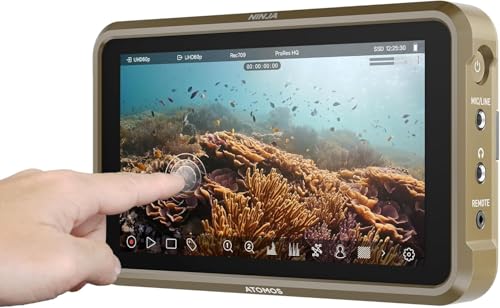
- 4Kp60 ProRes, DNxHD, and H.265 recording
- Up to 6Kp30 ProRes RAW with compatible cameras
- Lightweight 210-gram camera-mounted design
Best For: HDMI-camera users building professional codec workflows
Best Budget Recording Monitor

- Records HDMI video up to 1080p30 to USB
- 6-inch Full HD touchscreen
- Extensive exposure and focus tools
Best For: Budget-conscious DSLR shooters needing built-in USB recording
Best Pro RAW Recorder

- Records ProRes and ProRes RAW
- 1500-nit HDR touchscreen
- Camera control and professional monitoring tools
Best For: Advanced production workflows using compatible HDMI or USB-C cameras
Best Daylight Monitor

- 1200-nit Full HD daylight-viewable screen
- Custom 3D LUT and Log-to-Rec.709 support
- Comprehensive framing and exposure tools
Best For: Outdoor DSLR monitoring when recording is handled separately
Best Connected Upgrade
Atomos Ninja TX 5.2-inch Monitor/Recorder

- 1500-nit touchscreen
- Up to 8K30 ProRes RAW
- HDMI and 12G-SDI I/O
Best For: Connected productions needing advanced recording and monitoring
Best Value Bundle
Atomos Ninja 4K Monitor/Recorder with 240GB SSD

- 240GB SSD included
- 4Kp60 professional recording
- HDMI camera compatibility
Best For: Users wanting an HDMI recorder bundle ready for immediate use
Best Compact RAW Option
Atomos Ninja TX GO 5-inch Recorder

- Up to 6K RAW capture
- 1500-nit touchscreen
- CFexpress and USB-C storage
Best For: Portable rigs needing RAW capture and flexible storage
Best HDR Recorder – Atomos Ninja V
For creators comparing camera external recorders for DSLR cameras, the Atomos Ninja V combines a bright 5-inch HDR monitor with external recording. It supports up to 4K HDMI input and records formats including Apple ProRes, ProRes RAW, Avid DNxHR/HD, and HEVC, depending on camera and setup compatibility.
Best For: Filmmakers and video creators who need bright on-camera monitoring plus professional recording formats.
Pros:
- 1000-nit HDR display helps with on-location monitoring.
- Supports 4K recording and multiple professional codecs.
- Compact, lightweight design suits tripods, handheld rigs, and gimbals.
- Includes playback, review, tagging, and playlist features.
Cons:
- Optional accessories may be needed for some camera connections.
- The included package does not list a recording SSD.
The Ninja V is a strong all-around choice when monitoring tools and recording flexibility matter more than having the simplest standalone setup.
Best Standalone DVR – ClonerAlliance UHD Pro
The ClonerAlliance UHD Pro is a practical option among camera external recorders for DSLR cameras when you want standalone HDMI capture without a computer. It records to USB storage or a TF card, supports H.264 and H.265, and passes through 4K at 60fps for viewing on a compatible display.
Best For: Users who want straightforward standalone recording, pause/resume control, and broad HDMI-source compatibility.
Pros:
- Records without requiring a PC.
- Supports 4K recording up to 30fps and 4K60 passthrough.
- Offers H.264 and H.265 codec options.
- Includes pause/resume recording and audio-only recording modes.
Cons:
- HDR and Dolby audio must be disabled from the source during recording.
- Does not support HDCP-protected content.
- Included editing and conversion software is Windows-only.
This recorder is especially appealing for simple HDMI capture workflows, though DSLR users should confirm their camera output settings and storage media before buying.
Best Bright Field Monitor – FEELWORLD F5 Prox
The FEELWORLD F5 Prox is a monitoring-focused choice for shoppers exploring camera external recorders for DSLR cameras. It does not present recording features in the supplied notes, but its 5.5-inch 1600-nit touchscreen-style field-monitor design provides a larger view with focus and exposure tools for demanding shoots.
Best For: DSLR and mirrorless users who prioritize bright outdoor monitoring over built-in recording.
Pros:
- 1600-nit brightness is designed for direct-sunlight visibility.
- Focus peaking, waveform, histogram, and false color support exposure and focus checks.
- LUT preview can help visualize a Log shooting look.
- Mounts on rigs, cages, gimbals, tripods, and handheld setups.
Cons:
- Supplied information does not specify external recording capability.
- At 2.82 pounds listed package weight, it may add more bulk than smaller monitors.
Choose the F5 Prox when a highly visible, tool-rich monitor is the priority; pair it with a separate recorder if you need to capture externally.
Best Compact ProRes Option – Atomos Ninja 5.2-inch 4K Monitor
The Atomos Ninja is a compact recording monitor for creators comparing camera external recorders for DSLR cameras with HDMI output. It records up to 4Kp60 in Apple ProRes, Avid DNxHD, and H.265, while compatible cameras can reach up to 6Kp30 in Apple ProRes RAW.
Best For: HDMI-camera users who want a lightweight monitor-recorder with professional codec support and newer workflow tools.
Pros:
- Records up to 4Kp60 in several supported formats.
- Supports up to 6Kp30 Apple ProRes RAW with compatible cameras.
- Lightweight 210-gram design is suitable for camera mounting.
- AtomOS 11 adds memory-management and recording/playback features.
Cons:
- Recording performance depends on camera output and compatibility.
- The supplied details do not specify included storage media.
- Its native display resolution is listed as 1920×1080 despite accepting up to 4K input.
The Ninja is a capable compact option for users who value ProRes and RAW workflows, provided their camera and recording setup support the desired formats.
Best Budget Recording Monitor – FEELWORLD CUT6
For camera external recorders for DSLR cameras, the FEELWORLD CUT6 combines a 6-inch Full HD touchscreen with direct USB recording. It can capture compatible HDMI video up to 1080p30 to a FAT32 USB flash drive, making it a practical option for straightforward on-set recording and monitoring.
Best For: DSLR shooters who want an affordable monitor with built-in 1080p recording and detailed exposure and focus tools.
Pros:
- Records compatible HDMI video up to 1080p30 in MP4 format to a USB flash drive.
- 6-inch, 1920×1080 touchscreen provides a larger viewing area.
- Includes waveform, vectorscope, histogram, focus peaking, zebra, false color, and audio metering.
- Supports LUT recording and HDMI loop-out with 4K 60Hz input support.
Cons:
- USB recording is limited to 1080p30 and requires a FAT32 flash drive.
- HDMI output supports up to 1080p60 rather than 4K output.
The CUT6 is a sensible pick when you value a large monitoring screen and simple USB recording more than advanced RAW workflows. Its extensive visual-assistance tools also make it useful for checking exposure and focus during production.
Best Pro RAW Recorder – Atomos Ninja RAW
The Atomos Ninja RAW is a high-end choice among camera external recorders for DSLR cameras and compatible mirrorless systems. Its 5.2-inch HDR monitor can record ProRes or ProRes RAW from the camera sensor to CFexpress Type B media or external USB-C storage, while also providing camera control and professional monitoring tools.
Best For: Production teams and advanced shooters who need ProRes RAW recording, camera control, and a bright HDR monitoring display.
Pros:
- Records ProRes, ProRes RAW, ProRes RAW HQ, ProRes LT, 422, and 422 HQ.
- 1500-nit HDR touchscreen remains suitable for bright shooting environments.
- Can control start/stop, ISO, shutter, aperture, and white balance on compatible cameras.
- Supports CFexpress Type B media and external USB-C storage.
Cons:
- Its advanced RAW workflow is likely more than casual DSLR users need.
- External USB-C storage and network accessories are sold separately.
The Ninja RAW stands out when maximum recording flexibility and on-set control matter. It is a substantial investment, but its RAW support, bright display, and NLE-compatible ProRes formats make it the strongest professional option in this group.
Best Daylight Monitor – VILTROX DC-550
The VILTROX DC-550 is primarily a bright, compact monitor for camera external recorder setups rather than a recorder itself. Its 5.5-inch 1200-nit Full HD touchscreen, sunshade, HDMI connectivity, LUT support, and exposure tools help DSLR users frame and evaluate footage in demanding shooting conditions.
Best For: DSLR filmmakers who need a daylight-viewable monitor with LUT previewing and detailed focus and exposure aids.
Pros:
- 1200-nit brightness improves visibility in intense outdoor lighting.
- Supports custom 3D LUTs, Log-to-Rec.709 viewing, and anamorphic de-squeeze monitoring.
- Provides waveform, parade, vectorscope, histogram, focus peaking, zebra, and false color tools.
- Compact design includes a sunshade, NP-F battery, and multiple 1/4-inch mounting points.
Cons:
- The supplied notes describe monitoring features, not onboard video recording.
- It has a single HDMI port and a 1920×1080 display resolution.
Choose the DC-550 if your camera or a separate recorder handles capture and you mainly need a reliable on-camera viewing solution. Its high brightness and LUT workflow make it especially useful for outdoor shoots and look development.
Best Connected Upgrade – Atomos Ninja TX 5.2-inch Monitor/Recorder
The Atomos Ninja TX is a versatile choice among camera external recorders for DSLR cameras, combining a bright 5-inch touchscreen with HDMI 2.0 and 12G-SDI connectivity. It records to CFexpress Type B media and supports ProRes, Avid DNx, H.265, and H.264 workflows.
Best For: Creators who need professional recording, monitoring, wireless connectivity, and camera-to-cloud features in one unit.
Pros:
- 1500-nit 1920 x 1080 touchscreen for outdoor monitoring
- Supports up to 8K30 ProRes RAW recording
- Includes Wi-Fi 6, timecode sync, NDI, and direct uploading features
- Offers both locking 12G-SDI and HDMI 2.0 input/output
Cons:
- CFexpress Type B media is required for recording
- Its advanced connectivity may be more than a basic DSLR setup needs
Choose the Ninja TX when you want a future-facing monitor-recorder with broad codec support and strong networking options. Its feature set is especially compelling for productions that move beyond simple HDMI capture.
Best Value Bundle – Atomos Ninja 4K Monitor/Recorder with 240GB SSD
For shoppers comparing camera external recorders for DSLR cameras, this Atomos Ninja bundle pairs a 5.2-inch 4K HDMI monitor-recorder with a 240GB SSD. It supports recording up to 4Kp60 in ProRes, Avid DNxHD, and H.265, making it a practical way to add higher-quality capture to compatible HDMI cameras.
Best For: DSLR, cinema, and mirrorless users who want a ready-to-use HDMI recording bundle with included storage.
Pros:
- Includes a 240GB recording SSD
- Records up to 4Kp60 in several professional codecs
- Supports up to 6Kp30 in Apple ProRes RAW
- Includes RemoteView and recording/playback assistance features
Cons:
- Connectivity is limited to HDMI
- The included 240GB capacity may be restrictive for long recordings
- Some remote services and accessories may require separate purchases
This bundle is a straightforward option for HDMI-equipped cameras, particularly if you want storage included rather than sourcing an SSD separately. It balances professional codec support with a relatively simple setup.
Best Compact RAW Option – Atomos Ninja TX GO 5-inch Recorder
Atomos Ninja TX GO 5-inch Camera Monitor-Recorder, HDMI CFexpress Wi-Fi HDR Touchscreen ProRes RAW
Check Price On AmazonThe Atomos Ninja TX GO is a compact option among camera external recorders for DSLR cameras, with HDMI 2.0 input/output, a 1500-nit touchscreen, and recording to CFexpress Type B or compatible USB-C storage. It supports ProRes RAW, ProRes, Avid DNx, and H.265/H.264 formats.
Best For: Shooters who want RAW capture, touchscreen camera control, and flexible USB-C or CFexpress storage.
Pros:
- Captures up to 6K RAW
- Bright 1500-nit touchscreen includes professional monitoring tools
- Supports HDMI, Wi-Fi 6E, NDI, and two USB-C ports
- Can run from USB-C power, an NP-F battery, or an AC adapter
Cons:
- Storage drives, network adapters, and calibration probes may be sold separately
- Its advanced RAW and networking features may exceed basic recording needs
The Ninja TX GO is a strong fit when portability and recording flexibility matter. Its support for 6K RAW, multiple storage options, and USB-C power gives compatible camera rigs room to grow.
How We Picked the Best Camera External Recorders for Dslr Cameras
We focused on practical compatibility and workflow value rather than treating every monitor-recorder as interchangeable. The selection covers HDMI recording, 4K support, HDR viewing, touchscreen control, daylight visibility, codec options, storage approaches, and newer wireless or camera-to-cloud features.
We also considered how each unit fits a real DSLR rig. A recorder should have an appropriate HDMI input, manageable size and weight, useful monitoring tools, and a recording format your editing system can handle. Features such as focus peaking, false color, waveform monitoring, LUT support, and camera control can be more valuable than headline resolution.
Quick Comparison
| Best For | Look For | Notable Options |
|---|---|---|
| General 4K recording | 4K HDMI input, reliable codec, SSD support | Atomos Ninja V, Atomos Ninja |
| Bright outdoor monitoring | High-nit display and touchscreen controls | FEELWORLD F5 Prox, VILTROX 5.5-inch |
| Budget capture | H.264 or H.265 recording and simple HDMI connectivity | ClonerAlliance UHD Pro |
| RAW or advanced post-production | ProRes RAW compatibility and camera control | Atomos Ninja RAW, Ninja TX GO |
| Remote delivery workflows | Wi-Fi, cloud connectivity, and supported services | Atomos Ninja TX, Ninja TX GO |
Key Buying Factors for Camera External Recorders for Dslr Cameras
Camera and HDMI Compatibility
Check your DSLR’s HDMI output type, maximum resolution, frame rates, clean-output support, and whether it disables overlays during recording. Some cameras output 4K only at specific frame rates, while others may limit recording time or autofocus behavior when connected to an external device.
Resolution, Frame Rate, and Codec
4K capture is useful for reframing and delivery, but codec quality determines how well footage survives editing and color correction. H.264 and H.265 can be efficient, while ProRes is often easier to edit. ProRes RAW can preserve more post-production flexibility, but it requires compatible cameras, software, storage, and a suitable workflow.
Display Brightness and Monitoring Tools
For outdoor shooting, prioritize brightness measured in nits, along with an effective hood or shade. Focus peaking, zebras, waveform, vectorscope, false color, and LUT support help you expose and focus accurately without relying on the DSLR’s smaller screen.
Storage, Power, and Rigging
Confirm whether the recorder uses SSDs, CFexpress media, SD cards, or an external capture destination. Budget for media with sufficient sustained write speed, spare batteries or a power solution, mounting hardware, and cables. A feature-rich recorder is less useful if it makes the rig unbalanced or runs out of power mid-take.
Who Should Buy Which Camera External Recorders for Dslr Cameras?
Choose a compact Atomos Ninja model if you want a broadly capable monitor-recorder for filmmaking, interviews, events, or content creation. Pick a FEELWORLD or VILTROX monitor when a bright touchscreen and affordable on-camera viewing are more important than advanced delivery features.
The ClonerAlliance UHD Pro suits users who mainly need straightforward HDMI capture with efficient H.264 or H.265 files. Select an Atomos RAW model if your camera and editing software support RAW and you expect to grade heavily. The Ninja TX models are better suited to creators and production teams building camera-to-cloud or connected review workflows.
Finally, consider the bundle with included SSD storage if you want a ready-to-shoot package and do not already own compatible media. Before buying, verify your DSLR’s output specifications, the recorder’s supported codec, and the storage and power accessories required for your intended shooting day.