
External recorders can turn a mirrorless camera into a more capable video system, adding higher-quality codecs, larger monitoring displays, and practical recording controls.
This roundup compares 10 options across professional Atomos units, field monitors, bundled SSD systems, and budget-friendly capture devices so you can match features to your camera and workflow.
Best 10 Camera External Recorders for Mirrorless Cameras Picks for 2026
Best Overall
Atomos Ninja V 4K Monitor-Recorder

- 1000-nit 5-inch HDR display
- Records ProRes, ProRes RAW, DNxHR/HD, and HEVC
- Compact design for handheld, tripod, or gimbal use
Best For: Filmmakers needing bright monitoring and versatile external recording
Best Camera Pairing

- 24.1MP APS-C sensor with DIGIC 8 processor
- Micro-HDMI video output for accessory connectivity
- Includes RF-S18-45mm lens and supports 4K video
Best For: Entry-level users building a Canon mirrorless recording setup
Best Advanced Workflow

- 1500-nit 5-inch touchscreen
- Captures up to 6K RAW to CFexpress or USB-C storage
- Adds Wi-Fi 6E, NDI, HDMI I/O, and cloud uploads
Best For: Advanced creators needing RAW capture and network features
Best Beginner Kit
Dumjug 4K Camcorder Vlogging Kit

- 4K recording at 60 fps with up to 64MP photos
- Includes microphone, stabilizer, remote, card, and two batteries
- Rotating screen, webcam mode, and HDMI output
Best For: Beginners wanting a complete standalone vlogging camera kit
Best for Easy Setup
Atomos Ninja 5.2-inch 4K Recorder Monitor

- Records 4Kp60 in ProRes, DNxHD, and H.265
- Supports up to 6Kp30 ProRes RAW
- Includes a 240GB SSD and power accessories
Best For: Mirrorless and cinema users wanting a complete external recorder kit
Best All-in-One Camera
Uytya X70 5K Vlogging Camcorder

- Captures 5K video and 4K at 60 fps
- Includes flip touchscreen and external microphone
- Comes with card, batteries, tripod, and remote
Best For: Beginners seeking a complete standalone vlogging camera
Best Battery Bundle
Atomos Ninja V 4K Recorder Monitor Kit

- 5.2-inch, 1000-nit touchscreen monitor
- Offers 4K HDMI 2.0 input and output
- Includes two NP-F770 batteries and chargers
Best For: Longer shoots where spare recorder batteries are important
All-in-One Camcorder Pick
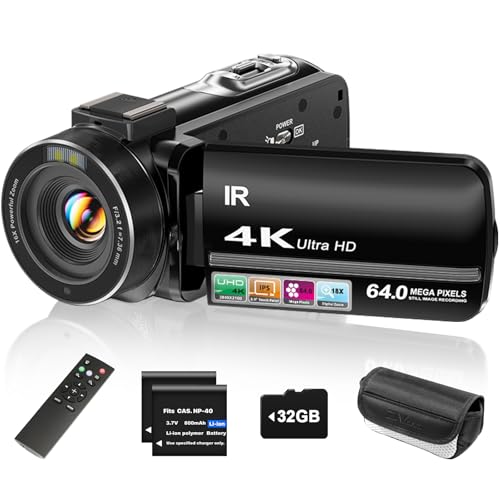
- 4K video and 64MP still capture
- Rotating touchscreen for self-framing
- Includes card, two batteries, and remote
Best For: Beginners and casual vloggers wanting a complete camcorder
Feature-Rich Recording Monitor

- Records HDMI video to a USB flash drive
- 6-inch 1920×1080 touchscreen
- Includes scopes, LUT, and focus tools
Best For: Filmmakers needing monitoring and 1080p30 recording
Compact Budget Recorder
RH35 Unlimited Recording Monitor
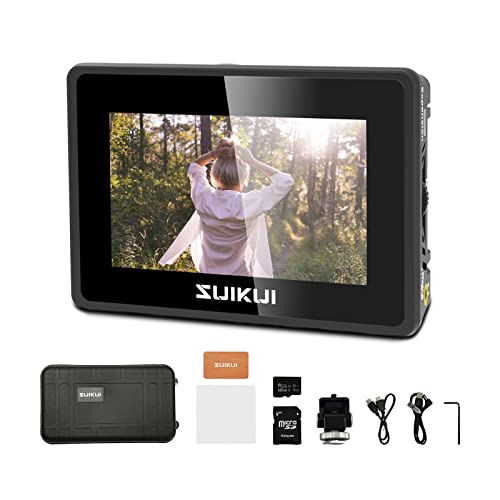
- Unlimited 1080p30 H.264 recording
- Compact 3.5-inch monitor design
- Supports microSD and USB storage
Best For: Lightweight mirrorless rigs and basic Full HD capture
Best Overall – Atomos Ninja V 4K Monitor-Recorder
The Atomos Ninja V is a strong choice among camera external recorders for mirrorless cameras when you want a bright on-camera display and professional recording formats. Its 5-inch, 1000-nit HDR screen supports 4K HDMI input and recording in formats including ProRes, ProRes RAW, DNxHR/HD, and HEVC.
Best For: Filmmakers and content creators who need portable HDR monitoring, external recording, and broad camera compatibility.
Pros:
- Bright 1000-nit, 5-inch HDR display for daylight-viewable monitoring.
- Supports 4K recording and professional ProRes, ProRes RAW, DNxHR/HD, and HEVC formats.
- Compact, lightweight design suitable for tripod, handheld, or gimbal setups.
- Works with many DSLR, mirrorless, and cinema cameras through HDMI or optional accessories.
Cons:
- Storage is handled through a compatible solid-state drive rather than built-in storage.
- Some camera connections may require optional accessories.
The Ninja V balances portability, monitoring quality, and recording flexibility. It is particularly practical for mirrorless users whose cameras benefit from an external recorder and a more capable viewing screen.
Best Camera Pairing – Canon EOS R100 Mirrorless Kit
The Canon EOS R100 is the camera in this roundup rather than an external recorder, but it can be a useful starting point for a setup built around camera external recorders for mirrorless cameras. It combines a 24.1MP APS-C sensor, interchangeable RF mount, micro-HDMI output, and 4K video recording at up to 24 fps.
Best For: Entry-level Canon users who want a compact mirrorless camera with HDMI output for a future external-monitor or recorder setup.
Pros:
- 24.1MP APS-C CMOS sensor and DIGIC 8 processor.
- Compact, lightweight EOS R-series body with an included RF-S18-45mm lens.
- 4K video recording at up to 24 fps and Full HD recording at up to 60 fps.
- Dual Pixel CMOS AF with face and eye detection across a wide area.
Cons:
- It is a camera body, not an external recorder.
- Its video output uses micro-HDMI, so cable selection matters when connecting accessories.
- 4K recording is limited to up to 24 fps according to the supplied specifications.
The EOS R100 makes the most sense as an affordable mirrorless source for an external recording workflow. Its HDMI output and interchangeable-lens design provide a practical foundation, while the included kit lens keeps the initial setup simple.
Best Advanced Workflow – Atomos Ninja TX GO
Atomos Ninja TX GO 5-inch Camera Monitor-Recorder, HDMI CFexpress Wi-Fi HDR Touchscreen ProRes RAW
Check Price On AmazonThe Atomos Ninja TX GO is a feature-rich option among camera external recorders for mirrorless cameras. It pairs a 1500-nit, 5-inch touchscreen with HDMI input and output, ProRes RAW recording, up to 6K RAW capture to CFexpress Type B or USB-C storage, Wi-Fi 6E, and NDI streaming support.
Best For: Advanced creators who want professional codecs, high-resolution RAW capture, wireless features, and touchscreen camera control.
Pros:
- Super-bright 1500-nit touchscreen for monitoring in challenging environments.
- Records ProRes, ProRes RAW, Avid DNx, H.265, and H.264 formats.
- Captures up to 6K RAW to compatible CFexpress Type B or USB-C storage.
- Supports HDMI I/O, Wi-Fi 6E, NDI streaming, and direct cloud-service uploads.
Cons:
- Compatible storage, network adapters, and calibration accessories may be sold separately.
- Its feature set and 0.7 kg weight may be more than casual users need.
The Ninja TX GO is the most connectivity-focused recorder here. If your mirrorless camera supports suitable HDMI output and your workflow benefits from RAW, networking, or NDI, it offers substantially more flexibility than a basic monitor-recorder.
Best Beginner Kit – Dumjug 4K Camcorder Vlogging Kit
The Dumjug 4K camcorder is not an external recorder for a mirrorless camera, but it is a self-contained alternative for beginners who want a ready-to-use video kit. It records 3840×2160 video at 60 fps, includes an external microphone, stabilizer, remote, memory card, and two batteries, and provides HDMI output for TV viewing.
Best For: Beginners, students, and casual YouTube users who prefer an all-in-one camcorder instead of building a mirrorless external-recording setup.
Pros:
- Records UHD 4K video at 60 fps and captures photos up to 64MP.
- Includes an external microphone, stabilizer, remote, memory card, and two batteries.
- 270-degree rotating 3-inch IPS screen supports vlogging and self-monitoring.
- Offers webcam use, HDMI output, and shooting modes such as slow motion and time lapse.
Cons:
- It is a standalone camcorder, not an external recorder for a mirrorless camera.
- Its 21X zoom is digital rather than optical.
- The supplied notes specify digital image stabilization.
Choose this model when convenience matters more than interchangeable lenses or professional external codecs. It provides a broad starter bundle, though users specifically seeking camera external recorders for mirrorless cameras should consider a dedicated monitor-recorder instead.
Best for Easy Setup – Atomos Ninja 5.2-inch 4K Recorder Monitor
For shoppers comparing camera external recorders for mirrorless cameras, the Atomos Ninja combines a 5.2-inch touchscreen monitor with HDMI recording and a bundled 240GB SSD. It records up to 4Kp60 in ProRes, DNxHD, and H.265, while compatible cameras can record up to 6Kp30 in ProRes RAW.
Best For: Mirrorless, DSLR, and cinema-camera users who want a capable external recorder with included storage.
Pros:
- Records up to 4Kp60 in several professional codecs.
- Supports up to 6Kp30 Apple ProRes RAW with compatible cameras.
- Includes a 240GB 2.5-inch SSD and power accessories.
- AtomOS 11 adds responsiveness and recording-assistance tools.
Cons:
- Requires an HDMI-output camera and compatible recording setup.
- The included warranty is limited to one year.
This is the strongest all-around choice in the group for creators who need both monitoring and higher-quality external recording. Its codec support and included SSD make it a practical starting package, though camera compatibility and power requirements should be checked first.
Best All-in-One Camera – Uytya X70 5K Vlogging Camcorder
The Uytya X70 is not a standalone HDMI recorder for a mirrorless camera; it is a complete handheld camcorder with built-in recording. It may suit buyers who want an alternative to camera external recorders for mirrorless cameras, with 5K video, a flip touchscreen, microphone support, and bundled accessories.
Best For: Beginners and vloggers who want a self-contained video camera rather than an external recorder accessory.
Pros:
- Captures 5K video at 20 fps and 4K video at 60 fps.
- Includes a 3-inch 270-degree rotatable touchscreen.
- Bundle includes a 32GB card, two batteries, tripod, microphone, and remote.
- Offers Wi-Fi control, webcam support, and IR night vision.
Cons:
- It is a camcorder, not an external recorder for a separate mirrorless camera.
- Video is recorded in MP4 rather than the professional recorder codecs offered by the Atomos models.
- Manual focus may require more hands-on operation.
This product belongs in a broader video-camera comparison rather than a dedicated external-recorder shortlist. Choose it if convenience and included accessories matter more than recording from a mirrorless camera’s HDMI output.
Best Battery Bundle – Atomos Ninja V 4K Recorder Monitor Kit
This Atomos Ninja V bundle is a useful option for shoppers seeking camera external recorders for mirrorless cameras and who need extra power for extended shoots. The 5.2-inch monitor provides a 4K HDMI input and output, while the package adds two NP-F770 batteries, chargers, a caddy, and a screen-cleaning kit.
Best For: Mirrorless, DSLR, and cinematic-camera users who already have recording media or prioritize a ready-to-use battery setup.
Pros:
- Provides a 5.2-inch touchscreen with 1000-nit brightness.
- Includes 4K HDMI 2.0 input and output.
- Bundle adds two NP-F770 batteries and two chargers.
- Supports multiple log formats and recording to Master Caddy II or III media.
Cons:
- The listed bundle does not include a 240GB SSD.
- Recording media must be compatible with the Master Caddy system.
- Battery runtime will depend on camera, monitor, and shooting conditions.
Compared with the SSD bundle, this package emphasizes power accessories rather than included storage. It is a sensible pick for users who want the Ninja V monitor-recorder and plan to supply their own supported recording media.
All-in-One Camcorder Pick – ZYDIIE 4K Vlogging Camcorder
The ZYDIIE is not an external recorder for a mirrorless camera, but it is a self-contained alternative for creators who want 4K video without assembling a camera-monitor-recorder setup. Its rotating touchscreen, remote, night vision, and included storage make it practical for casual recording and vlogging.
Best For: Beginners, family recording, travel vlogs, interviews, and solo creators who want an all-in-one camcorder.
Pros:
- Records 4K video and captures 64MP still photos.
- 270-degree rotating touchscreen helps with self-framing and unusual angles.
- Includes a 32GB microSD card, two batteries, and a wireless remote.
- Offers USB webcam use and infrared night vision.
Cons:
- It is a standalone camcorder rather than an HDMI external recorder for a mirrorless camera.
- Zoom is digital, with fixed focus listed in the specifications.
- Digital image stabilization may be less capable than a dedicated camera-and-recorder setup.
Choose this model when simplicity and included accessories matter more than integrating with an interchangeable-lens mirrorless workflow. It is best viewed as a complete recording device, not a conventional field monitor.
Feature-Rich Recording Monitor – FEELWORLD CUT6 6-Inch Monitor
The FEELWORLD CUT6 is a strong fit for shoppers comparing camera external recorders for mirrorless cameras because it combines HDMI monitoring with onboard recording. It can capture compatible camera output at up to 1080p30 to a FAT32 USB flash drive while also providing a high-resolution touchscreen and production tools.
Best For: Mirrorless-camera filmmakers, livestreamers, and creators who want recording, monitoring, exposure tools, and LUT support in one field monitor.
Pros:
- Records HDMI video up to 1080p30 in MP4 format to a USB flash drive.
- 6-inch 1920×1080 touchscreen provides a clear monitoring surface.
- HDMI input supports 4K 60Hz signals, with loop-out up to 1080p60.
- Includes waveform, vectorscope, false color, focus peaking, zebra, and audio-meter tools.
Cons:
- Onboard recording is limited to 1080p30, even though the HDMI input supports 4K 60Hz.
- Recording requires a compatible FAT32 USB flash drive.
- The unit weighs about 1.23 pounds, adding noticeable bulk to a camera rig.
For a mirrorless setup, the CUT6 offers a useful balance between recording and professional monitoring. Check your camera’s HDMI output compatibility and your desired recording frame rate before buying.
Compact Budget Recorder – RH35 Unlimited Recording Monitor
The RH35 is a compact option among camera external recorders for mirrorless cameras, offering HDMI monitoring and unlimited 1080p30 H.264 recording. Its small 3.5-inch display and support for microSD cards or USB flash drives make it suited to lightweight rigs where portability matters.
Best For: Budget-conscious shooters, compact mirrorless rigs, and users who need straightforward Full HD recording with basic focus and exposure aids.
Pros:
- Records H.264 1080p30 without a stated recording-time limit.
- Accepts HDMI input and provides HDMI output up to 1080p60.
- Supports recording to a microSD card or USB flash drive.
- Includes peaking, zebra, waveform, false color, and focus-assist tools.
Cons:
- The 3.5-inch display has an 800×480 resolution, lower than the FEELWORLD CUT6.
- Recording is limited to 1080p30.
- Its single listed HDMI port and basic LCD may feel restrictive for more advanced rigs.
The RH35 makes sense when a small footprint and simple Full HD capture are priorities. Its lower-resolution screen is a trade-off for the compact design, so it is better suited to basic framing and recording than detailed 4K monitoring.
How We Picked These Camera External Recorders for Mirrorless Cameras
We focused on the features that affect real-world recording: HDMI compatibility, supported resolutions and frame rates, codec or capture options, screen visibility, storage, power, and portability. The selection spans dedicated monitor-recorders, HDMI capture monitors, bundled systems, and lower-cost video devices marketed for creator workflows.
Before buying, verify your camera’s clean HDMI output, bit depth, frame-rate limits, and whether it can provide power or recording control over HDMI. An external recorder cannot exceed the signal your camera outputs.
Quick Comparison
| Type | Best For | What to Check |
|---|---|---|
| Professional monitor-recorder | RAW, ProRes, HDR, and production work | Codec support, licensing, media, and camera compatibility |
| SSD bundle | Longer recording sessions at a controlled cost | Drive type, mounting, batteries, and sustained write speed |
| Field monitor with capture | Framing, exposure checks, and simple HDMI recording | Resolution, brightness, input format, and file handling |
| Budget camcorder or capture device | Basic streaming and casual video | Actual HDMI behavior, audio inputs, and build quality |
Key Buying Factors
HDMI Signal and Recording Format
Match the recorder to your camera’s HDMI output. Some mirrorless cameras output 4K at 24, 30, or 60 frames per second, while others are limited to Full HD. If you need ProRes, DNx, or ProRes RAW, confirm that both the camera and recorder support the required signal and license.
Screen Quality and Monitoring Tools
A bright display is valuable outdoors, but brightness ratings alone do not describe usability in direct sun. Look for tools such as waveform, false color, zebras, focus peaking, magnification, and LUT preview. A larger screen can improve framing, but it also adds weight to the camera rig.
Storage, Power, and Mounting
Check whether the unit uses SSDs, CFexpress, SD cards, or another medium, and calculate storage for your chosen bitrate. External recorders can drain batteries quickly, so evaluate NP-F compatibility, USB-C power, battery runtime, and whether your cage or tripod setup can support the recorder securely.
Audio and Workflow
Confirm how audio enters the system: through the camera’s HDMI feed, a recorder input, or a separate interface. Also check file naming, timecode, proxy options, and transfer requirements if the footage will move into a professional editing workflow.
Who Should Buy Which Camera External Recorders for Mirrorless Cameras?
Choose an Atomos Ninja model if you need dependable monitoring, HDR tools, or high-quality edit-ready recording for a compatible mirrorless camera. A Ninja bundle with an SSD and batteries is convenient when you want a ready-to-use rig rather than sourcing accessories separately.
A compact field monitor such as the FEELWORLD or RH35-style option makes more sense for framing, exposure assistance, basic capture, or streaming on a tighter budget. These are especially practical when your camera already records internally and you mainly need a larger display.
The listed standalone 4K and 5K camcorders are better viewed as independent creator cameras than universal external recorders. Consider them when you need a secondary camera for YouTube or casual production, but do not assume they will add external recording to an existing mirrorless body. For every option, confirm the return policy and test HDMI output, audio, and recording behavior with your exact camera before an important shoot.