
The right flash can make indoor portraits, event photos, and bounced-light shots look more polished without requiring advanced lighting knowledge. The best camera flashes for beginners combine straightforward controls, dependable compatibility, and enough power to grow with your skills.
This roundup covers compact mini flashes, affordable manual speedlights, and wireless models with more creative flexibility. Before buying, confirm your camera’s hot-shoe type and decide whether you need simple on-camera fill or off-camera lighting control.
Best 10 Camera Flashes for Beginners Picks for 2026
Best Pocket Manual Flash
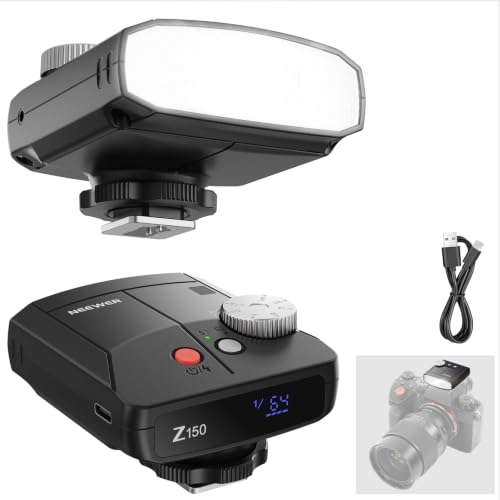
- Ultra-light 3.6-ounce design
- Rechargeable battery rated for 640 full-power flashes
- Manual output with S1/S2 optical slave modes
Best For: Portable close-range fill light and casual shooting
Best Compact Bounce Flash

- Four manual brightness levels
- 90° adjustable angle for nearby bounce lighting
- Rechargeable USB-C design with added fill light
Best For: Portable close-range indoor portraits and fill light
Best Compact Manual Pick

- Lightweight 5.3-ounce body
- Manual power from 1/128 to 1/1
- Up to 650 full-power flashes
Best For: Portable manual flash practice and everyday shooting
Best Reach and Accessories

- GN33 output for greater reach
- Eight manual power levels
- Includes stand, pouch, and 12 filters
Best For: Indoor portraits, events, and beginner off-camera setups
Best Ultra-Light Starter
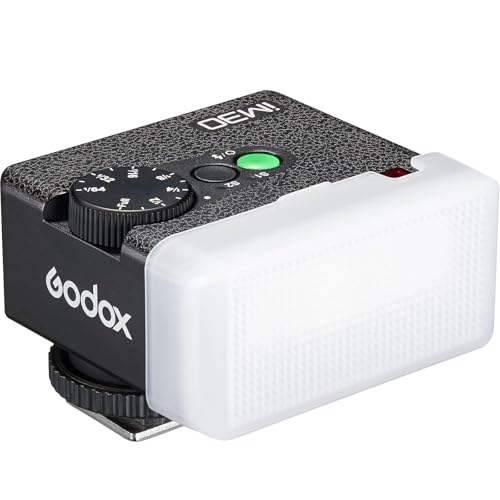
- 78g palm-sized design
- Seven manual power levels
- Diffuser kit included
Best For: Basic fill light and highly portable beginner kits
Best Wireless Starter Flash – Godox TT600
For beginners comparing camera flashes for beginners, the Godox TT600 is a strong option if you want to learn off-camera lighting and manual flash control. Its built-in 2.4G Godox X System supports wireless control with compatible Godox triggers, while the GN60 output provides useful reach for portraits and indoor work.
Best For: Beginners who want a powerful, expandable wireless lighting setup.
Pros:
- Built-in 2.4G wireless system with up to 100 meters of transmission range.
- GN60 output, 0.1–2.6-second recycle time, and approximately 230 full-power flashes.
- Works with many Canon, Nikon, Pentax, Olympus, Fujifilm, and Panasonic cameras with standard hot shoes.
- Large LCD and support for up to five groups and 32 channels.
Cons:
- Manual flash; TTL trigger is sold separately.
- Does not provide HSS when mounted directly on the camera hot shoe.
- Requires four AA batteries, which are not included.
The TT600 offers more output and wireless growth potential than a basic on-camera flash, but beginners should be comfortable adjusting power manually. It is particularly appealing if you plan to build a Godox-based lighting system over time.
Best Pocket Manual Flash – NEEWER Z150 Mini Flash
The NEEWER Z150 is a compact choice for beginners looking at camera flashes for beginners and wanting a lightweight fill-flash solution. Its built-in rechargeable battery and 3.6-ounce body make it convenient for everyday carry, though its universal single-contact design requires manual adjustment and careful camera compatibility checks.
Best For: Travel, casual portraits, and photographers who prefer a small manual flash.
Pros:
- Very lightweight at 3.6 ounces and small enough for everyday carry.
- Built-in 1200mAh battery supports up to 640 full-power flashes.
- Manual output adjusts from 1/64 to 1/1 and includes S1 and S2 optical slave modes.
- Compatible with many listed Canon, Nikon, Sony, and Fujifilm cameras with a standard center-contact hot shoe.
Cons:
- No TTL, HSS, automatic exposure, or camera-menu control.
- GN15 output and a 3.1-second recycle time are modest.
- Some cameras are specifically incompatible, and Fujifilm users must use mechanical shutter mode.
The Z150 is easy to carry and useful for close-range fill light, but it is not the best choice for long distances or automated exposure. Confirm your camera model and hot-shoe type before buying.
Best Budget Bounce Flash Kit – Godox TT520III
For beginners choosing camera flashes for beginners, the Godox TT520III provides a straightforward manual setup with useful bounce adjustment and included accessories. It supports many standard hot-shoe cameras and adds a transmitter, diffuser kit, and wireless operation without requiring a TTL-based workflow.
Best For: Beginners learning manual bounce and off-camera flash on a budget.
Pros:
- GN33 output with eight-stop adjustment from 1/128 to full power.
- Flash head tilts up to 120 degrees and rotates 330 degrees for bounce lighting.
- Includes an RT transmitter, diffuser kit, mini stand, and storage bag.
- Offers approximately 1.8-second recycling and up to 400 full-power outputs.
Cons:
- Manual flash rather than TTL automatic exposure.
- Requires four AAA batteries, sold separately.
- Wireless operation uses the included 433MHz system rather than the Godox 2.4G X System.
The TT520III is a practical teaching tool for learning flash power, bounce direction, and off-camera positioning. Its included kit makes it more immediately useful, provided you are comfortable setting exposure manually.
Best Compact Bounce Flash – ULANZI SL03 Mini Flash
The ULANZI SL03 is a small manual flash for beginners seeking camera flashes for beginners that are easy to carry. It offers four power levels, a 90-degree adjustable flash angle, and a built-in fill-light function, making it suitable for close-range portraits and everyday photography.
Best For: Compact cameras and close-range indoor fill light.
Pros:
- Compact mini-flash design with four manual brightness levels: 1/1, 1/2, 1/4, and 1/8.
- 90-degree flash-angle adjustment supports bounce lighting from nearby ceilings or walls.
- Updated design adds a flash-plus-fill-light function for focusing assistance.
- Rechargeable via the included USB-A-to-C charging cable.
Cons:
- No TTL or automatic exposure.
- GN8 output is intended for closer subjects rather than long-distance lighting.
- Requires a single-contact hot shoe and shutter speeds no faster than 1/250 second.
The SL03 keeps a beginner flash setup simple and portable, especially for indoor subjects where bounce is possible. Its low output and manual operation limit its range, so verify compatibility and expect to adjust exposure yourself.
Best Compact Manual Pick – NEEWER Z160 SE
For shoppers comparing camera flashes for beginners, the NEEWER Z160 SE is a compact starting point for learning manual exposure. Its center-contact hot shoe, rotary controls, and 1/128-to-1/1 power range keep operation straightforward, but it does not provide TTL, HSS, or camera-menu control.
Best For: Beginners using a compatible single-contact hot shoe who want a lightweight flash for street, everyday, or basic studio photography.
Pros:
- Lightweight 5.3-ounce design is easy to carry.
- Offers 20Ws output, GN15, and adjustable manual power.
- Built-in 1200mAh battery supports up to 650 full-power flashes.
- S1 and S2 optical slave modes enable simple wireless setups.
Cons:
- No TTL, HSS, automatic exposure, or camera-menu control.
- Requires mechanical shutter mode on Fujifilm and other compatible mirrorless cameras when electronic and mechanical shutters are available.
- USB power adapter is not included.
The Z160 SE is appealing if portability and battery convenience matter more than automation. Confirm your camera has a compatible center-contact hot shoe before ordering, and expect to adjust flash power manually.
Best Reach and Accessories – PHOTOOLEX FK300
The PHOTOOLEX FK300 is a practical option for beginners who want more reach than a mini flash typically provides. Its GN33 output, manual controls, and S1/S2 optical modes cover on-camera and basic off-camera use, while the included stand and color filters add flexibility.
Best For: Beginners photographing indoor portraits, events, products, or simple multi-light setups with compatible single-contact hot shoe cameras.
Pros:
- GN33 output provides stronger reach and coverage.
- Eight power levels range from 1/128 to 1/1.
- Includes a protective pouch, flash stand, and 12 color filters.
- Offers S1 and S2 optical wireless trigger modes.
Cons:
- Manual-only operation does not include TTL automation.
- Compatibility depends on a standard single-contact hot shoe.
- It is not water resistant.
Choose the FK300 when output and included accessories are higher priorities than compact size or automatic exposure. Its 24-month warranty and broad listed camera compatibility are additional conveniences, but verify the hot shoe format first.
Best Ultra-Light Starter – Godox iM30
The Godox iM30 is one of the simplest camera flashes for beginners who want a tiny, easy-to-carry unit. It uses a single-contact hot shoe and seven manual power levels, making it approachable for basic fill light, though it lacks TTL and can produce shadows with some wide-angle or telephoto lenses.
Best For: Beginners seeking an inexpensive, lightweight manual flash for compatible cameras and straightforward fill-light work.
Pros:
- Very compact 78g design fits easily in a small kit.
- Seven power levels range from 1/64 to 1/1.
- Two AAA batteries provide up to 230 flashes.
- Included diffuser kit helps soften harsh shadows and protects the flash head.
Cons:
- Uses manual exposure rather than TTL automation.
- AAA batteries must be purchased separately.
- Wide-angle or telephoto lenses may cause shadows.
The iM30 makes sense when portability and simple controls are the main goals. Its GN15 output is suited to modest fill-light duties, while photographers needing longer reach or more automation should consider a larger or TTL-capable flash.
Best Compact Beginner Flash – VILTROX Vintage Z2-S
For beginners seeking camera flashes for beginners that are easy to carry and operate, the VILTROX Vintage Z2-S offers straightforward TTL and manual modes in a very small package. Its foldable design, USB-C charging, and simple power controls suit everyday portraits, indoor shooting, and product photos, but compatibility should be confirmed before buying.
Best For: Sony users who want an ultra-lightweight TTL or manual flash for casual photography and travel.
Pros:
- Independent buttons make switching between TTL and manual modes simple.
- Compact 52g design and foldable 65-degree lighting structure are easy to carry.
- Rechargeable 420mAh battery supports USB-C charging, pass-through use, and up to 700 full-power flashes.
- Five power levels and recycle times from 0.1 to 2 seconds provide basic exposure flexibility.
Cons:
- No 2.4GHz wireless triggering or HSS.
- The head is non-rotatable, limiting bounce-light positioning.
- Camera compatibility must be checked, and it is specifically not for the Sony ZV-1.
The VILTROX is a convenient starter option when portability and simple TTL operation matter more than advanced wireless control or full bounce versatility. Its limitations make compatibility checking especially important.
Best Wireless Manual Starter – Godox TT520II
The Godox TT520II is a practical choice for photographers comparing camera flashes for beginners and wanting wireless triggering without moving to a TTL system. It combines manual controls, multiple output levels, optical slave modes, and useful included accessories for learning on-camera or off-camera lighting.
Best For: Beginners using compatible Canon, Nikon, Sony, Olympus, Pentax, or Fuji cameras who want an affordable manual flash with wireless options.
Pros:
- Supports 433MHz wireless triggering with 16 channels and includes an RT transmitter.
- Offers M, S1, and S2 modes plus eight power levels from 1/128 to full power.
- Built-in reflection card and wide diffuser help shape or soften light.
- Package includes a stand, diffuser, color filters, carrying bag, and transmitter.
Cons:
- Manual exposure control requires adjusting flash output yourself.
- Compatibility is listed by camera system and specific model, so confirmation is recommended.
- It is not water resistant.
The TT520II gives beginners a broad introduction to manual and off-camera lighting at a useful price point. Choose it if wireless triggering and included accessories are more important than automatic TTL exposure.
Best Adjustable Manual Flash – NEEWER TT560
The NEEWER TT560 is a straightforward option among camera flashes for beginners who want to learn flash exposure manually. It provides a tilting and rotating head, eight output levels, optical slave modes, and PC sync, while requiring standard center-contact hotshoe compatibility and mechanical-shutter operation on Fujifilm and some other mirrorless cameras.
Best For: Beginners who want an inexpensive, fully manual flash for bounce practice, optical slave work, and off-camera learning.
Pros:
- GN38 output and eight manual power levels from 1/128 to 1/1 provide useful control.
- Flash head tilts from 0 to 90 degrees and rotates up to 270 degrees for bounce lighting.
- S1 and S2 optical slave modes plus PC sync support basic off-camera setups.
- Includes low-battery indication, power saving, overheating protection, and external power support.
Cons:
- No TTL, HSS, automatic exposure, or camera-menu control.
- Requires four AA batteries, which are not included.
- Camera compatibility is limited by the standard center-contact hotshoe; electronic shutter mode cannot trigger it.
The TT560 is best treated as a hands-on learning tool rather than an automatic convenience flash. Its articulated head and broad manual range make it useful for mastering bounce and exposure, provided your camera meets the compatibility requirements.
How We Picked the Best Camera Flashes for Beginners
We focused on the features that matter most when learning flash photography: camera compatibility, ease of operation, useful power levels, recycle performance, portability, and charging convenience. The selection includes both universal single-contact models and more specialized units, so beginners can choose between simple manual control and broader wireless functionality.
We also considered practical use cases. A compact flash may be ideal for travel or casual portraits, while a larger speedlight with a built-in receiver can be a better long-term choice for bouncing light or experimenting with off-camera setups.
Quick Comparison
| Type | Best For | What to Look For |
|---|---|---|
| Mini flash | Travel, snapshots, compact cameras | Low weight, rechargeable battery, simple controls |
| Manual speedlight | Learning exposure and portrait lighting | Adjustable power, tilt or bounce head, reliable recycle time |
| Wireless speedlight | Off-camera lighting and multi-light setups | Built-in receiver, compatible transmitter, adequate range |
| TTL-compatible flash | Fast-moving subjects and changing distances | Dedicated camera support and automatic exposure communication |
Key Buying Factors for Camera Flashes for Beginners
Compatibility
Check whether the flash supports your camera brand and hot-shoe design. Single-contact flashes usually provide manual triggering across many systems, but they may not support TTL exposure or camera-menu control. Dedicated versions can offer more automation, but compatibility is narrower.
Power and Coverage
Guide number gives a rough indication of flash output, but real-world results also depend on ISO, aperture, modifiers, and bounce distance. For indoor portraits, a tilting head and moderate power are often more useful than maximum output alone.
Manual Controls and Recycle Time
Adjustable output lets you learn how flash power affects brightness and shadows. A wide range, such as full power down to low settings, makes it easier to balance flash with ambient light. Faster recycle times help when photographing people or events.
Battery and Charging
Rechargeable built-in batteries reduce the need to carry spare AA cells, while replaceable batteries are convenient for long sessions. USB-C charging is especially practical for travel, but check charging time and expected full-power shots.
Size and Bounce Capability
Mini flashes are easy to carry but generally offer less output and fewer controls. A rotating or tilting head lets you bounce light from a white ceiling or wall, often producing softer and more flattering results than direct flash.
Who Should Buy Which Camera Flashes for Beginners?
Choose a Mini Flash If You Value Portability
Compact models suit travelers, casual photographers, and anyone using a small mirrorless camera. They are convenient for fill light and quick snapshots, but may be limited for large rooms or repeated high-power bursts.
Choose a Manual Speedlight If You Want to Learn
A straightforward manual unit is a strong first purchase for understanding flash exposure. Look for adjustable power and a bounce head, then pair it with a diffuser or inexpensive light stand as your skills develop.
Choose a Wireless Model If You Plan to Expand
Built-in wireless triggering is worthwhile if you expect to move the flash off-camera. Confirm transmitter compatibility before buying, and remember that wireless features do not automatically provide TTL exposure.
Choose a Dedicated TTL Model for Convenience
If you photograph moving subjects, events, or changing distances, TTL support can reduce setup time. It costs more and requires the correct camera-specific version, but it can be easier than adjusting manual power for every shot.