
Great food photography depends on controlled light, accurate color, and enough flexibility to shape highlights without making dishes look flat or artificial. The right flash or compact LED can help you create consistent results in a home kitchen, studio, or restaurant setting.
These 10 picks cover practical speedlites, wireless manual flashes, macro lighting, and continuous LED panels. Use the guide below to match each option to your camera, shooting style, and budget.
Best 10 Camera Flashes for Food Photography Picks for 2026
Best Starter Speedlite Kit

- GN33 output with eight power settings
- Manual, S1, and S2 optical modes
- Includes stand, pouch, and 12 color filters
Best For: Beginner manual flash and tabletop photography
Best for Close-Up Detail
Godox ML150 II Macro Ring Flash

- Shadowless ring illumination for close-ups
- 11 brightness levels for fine control
- Eight included lens adapter rings
Best For: Macro food and ingredient photography
Best Pocket LED Fill Light

- 5500K daylight output with CRI 95+ LEDs
- Five brightness levels from 20% to 100%
- Compact rechargeable design with three cold shoes
Best For: Portable tabletop and food product photography
Best Bi-Color Food Photography Light
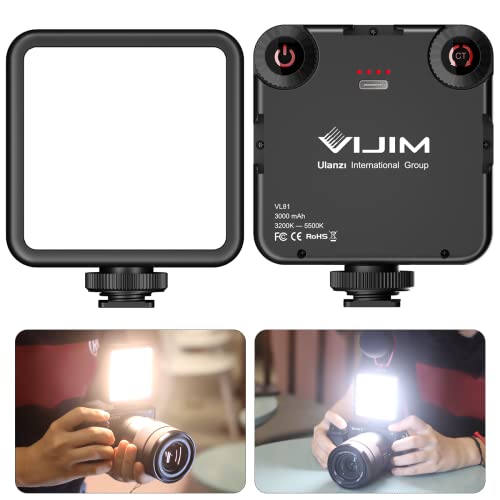
- Adjustable 3200K-5600K color temperature
- CRI 95+ output with included softbox
- 3000mAh battery and three cold-shoe mounts
Best For: Flexible continuous lighting for food photos and video
Best Compact Pick
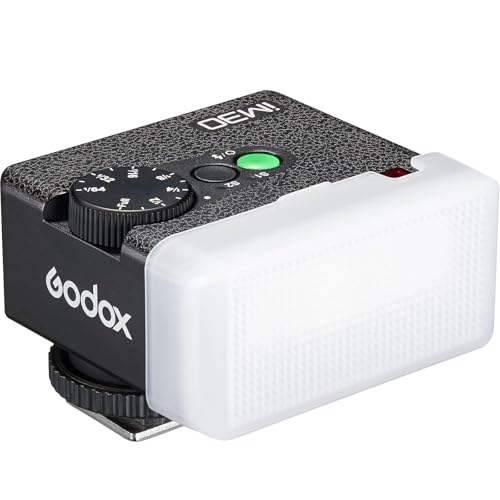
- 78g palm-sized design for portable tabletop shooting
- Seven manual power levels with included diffuser
- Up to 230 flashes using two AAA batteries
Best For: Beginners using compatible single-contact hot shoe cameras
Best Macro Control
Godox MF-T76C Macro Twin Flash

- Twin heads adjust from 0° to 150° independently
- TTL, HSS, and manual power down to 1/256
- 550 flashes per charge with 1.2-second recycling
Best For: Canon users shooting detailed close-up food subjects
Best Battery-Powered Manual Pick

- Built-in battery supports up to 650 full-power flashes
- Manual output from 1/128 to 1/1 with S1/S2 modes
- Compact 150g body with 20Ws output
Best For: Users wanting rechargeable manual lighting without TTL or HSS
Best Manual Value – NEEWER TT560 Speedlite
For photographers building a budget-friendly setup of camera flashes for food photography, the NEEWER TT560 offers straightforward manual control and flexible positioning. Its GN38 output, adjustable head, and optical slave modes make it useful for shaping light around tabletop subjects, but it requires manual exposure adjustments.
Best For: Photographers who want an affordable manual flash for controlled food, product, or tabletop setups.
Pros:
- GN38 output with eight power levels from 1/128 to full power.
- Tilts from 0° to 90° and rotates from 0° to 270° for flexible bounce lighting.
- Supports S1/S2 optical slave modes and PC sync for off-camera use.
- Includes overheating protection, power saving, and support for an external CP-E4 power source.
Cons:
- No TTL, HSS, automatic flash exposure, or camera-menu control.
- Requires four AA batteries, which are not included.
- Compatibility varies by camera; some models are specifically excluded, and Fujifilm users must use mechanical shutter mode.
The TT560 is a practical choice when you are comfortable metering and adjusting flash power yourself. Its high output and movable head suit food photography, while its manual-only design is less convenient for fast-changing scenes.
Best Continuous-Light Kit – Torjim Softbox Lighting Kit
Although it is not a flash, the Torjim kit is a useful alternative among camera flashes for food photography when you want to see the lighting effect before shooting. Two softboxes, adjustable LED bulbs, and diffusers provide continuous illumination for tabletop compositions, recipes, and product-style food images.
Best For: Beginners and creators who prefer continuous, softened light for indoor food photography and video.
Pros:
- Includes two softboxes, two LED bulbs, two diffusers, and two 62-inch tripod stands.
- 3000–7500K adjustable color temperature supports warmer or cooler looks.
- Softbox construction is designed to spread light evenly and reduce shadows.
- Each head rotates up to 210° for flexible positioning.
Cons:
- Provides continuous LED lighting rather than a camera-triggered flash.
- Not water resistant, so it requires care around food preparation areas.
- CRI is listed as 80, which may be less color-accurate than higher-CRI lighting.
This kit makes the lighting process easy to preview and is especially helpful for food creators who also record video. Choose it over a speedlight when soft, constant illumination matters more than flash portability or burst power.
Best Starter Speedlite Kit – PHOTOOLEX FK300
The PHOTOOLEX FK300 is a compact manual option for photographers comparing camera flashes for food photography and product work. Its GN33 output, eight-step power adjustment, and S1/S2 optical modes give you basic control for shaping light on a tabletop, while the included stand and filters add setup flexibility.
Best For: Beginners who want a universal manual hot-shoe flash with useful starter accessories.
Pros:
- GN33 output and eight power levels from 1/128 to full power.
- Manual, S1, and S2 modes support on-camera or optical off-camera setups.
- Universal single-contact hot shoe works with listed Canon, Nikon, Sony, Panasonic, Olympus, Fujifilm, Pentax, Sigma, Minolta, and Leica cameras.
- Includes a protective pouch, flash stand, and 12 color filters.
Cons:
- Manual exposure control does not provide TTL automation.
- The listed version is “No Trigger,” so wireless operation relies on optical triggering.
- Not water resistant.
For controlled food scenes, the FK300 provides the essential manual adjustments without a complicated interface. Its included accessories make it a convenient starting point, provided your camera has a compatible standard hot shoe and you are comfortable setting exposure manually.
Best for Close-Up Detail – Godox ML150 II Macro Ring Flash
For close-up dishes, ingredients, and plated details, the Godox ML150 II offers a lens-mounted lighting approach distinct from conventional camera flashes for food photography. Its ring design surrounds the lens for shadowless illumination, and 11 brightness levels help fine-tune contrast on small subjects.
Best For: Macro-style food photography, ingredient details, and close-up tabletop subjects.
Pros:
- Ring-shaped illumination helps produce shadowless light and controlled contrast.
- Offers 11 brightness levels for more precise adjustment.
- Includes adapter rings for 49, 52, 55, 58, 62, 67, 72, and 77mm lens diameters.
- Designed for food, plants, insects, portraits, and dental photography.
Cons:
- GN12 output is more suited to close-up work than broad scene lighting.
- Uses manual exposure control rather than TTL automation.
- Requires four AA batteries.
The ML150 II is the most specialized choice here. Its surrounding light source can reveal texture and detail evenly in close-ups, but photographers needing dramatic directional shadows or greater working distance may prefer a conventional speedlite.
Best Pocket LED Fill Light – Ulanzi VL49
The Ulanzi VL49 is a compact constant LED option for photographers who want portable lighting for food photography. Its 5500K daylight output, adjustable brightness, and CRI 95+ rating can provide even fill light for tabletop shots, while the rechargeable battery keeps the setup cable-free.
Best For: Portable food photography, product images, and small tabletop setups where daylight-balanced fill light is useful.
Pros:
- Compact 130g design is easy to carry and position around a food setup.
- 5500K output and CRI 95+ LEDs support natural-looking color.
- Five brightness levels allow adjustable fill from 20% to 100%.
- Three cold-shoe mounts and a 1/4-inch screw hole support flexible rigging.
Cons:
- It is a constant LED light rather than a traditional flash, so it may provide less instantaneous power for fast-moving subjects.
- The fixed 5500K color temperature offers less flexibility than a bi-color light.
- It is not water resistant.
Choose the VL49 when portability and simple, repeatable illumination matter more than flash-style bursts. It is especially practical for close-up plates and product-style food images.
Best Manual Bounce Flash – Godox TT520III
The Godox TT520III is the traditional flash choice among these camera flashes for food photography. Its GN33 output, tilting and swiveling head, included diffuser kit, and manual power control make it suitable for shaping light across dishes and small tabletop scenes.
Best For: Photographers who want a conventional hot-shoe flash for manual bounce lighting and off-camera food photography.
Pros:
- GN33 output provides more flash-style illumination than a small continuous fill light.
- 330-degree horizontal rotation and 120-degree adjustment support bounce positioning.
- Eight-stop power range from 1/128 to full power enables manual exposure control.
- Includes a diffuser kit, mini stand, RT transmitter, and storage bag.
Cons:
- Manual operation does not provide TTL exposure automation.
- Four AAA batteries are required and sold separately.
- It is not water resistant.
The TT520III makes the most sense when you are comfortable setting flash power yourself and want to bounce or trigger the light away from the camera. Its included accessories also make it a practical starting kit for controlled tabletop lighting.
Best Bi-Color Food Photography Light – Ulanzi VL-81
The Ulanzi VL-81 is a rechargeable bi-color LED light suited to food photography setups that need adjustable color and soft illumination. Its 3200K-5600K range, CRI 95+ output, included softbox, and 81 LEDs provide a flexible constant-light alternative to a flash.
Best For: Food photographers who need portable, adjustable-color continuous light for tabletop scenes, video, or mixed ambient lighting.
Pros:
- Bi-color adjustment from 3200K to 5600K helps match warm or daylight environments.
- CRI 95+ output supports accurate-looking food and product colors.
- Included softbox helps create a softer, less harsh light source.
- Three cold-shoe mounts allow additional lights or accessories to be attached.
Cons:
- As a constant LED, it does not deliver the brief high-power burst of a conventional flash.
- Maximum-brightness battery life is listed at up to 150 minutes.
- It is not water resistant.
The VL-81 is a strong fit when you want to see the lighting effect continuously while composing food images or video. Its color adjustment is particularly useful when daylight and warm interior light appear in the same scene.
Best Compact Pick – Godox iM30 Mini Flash
For photographers seeking compact camera flashes for food photography, the Godox iM30 provides simple manual fill light in a remarkably small package. Its seven power levels and included diffuser make it useful for controlling harsh shadows on tabletop scenes, while the single-contact hot shoe keeps setup straightforward.
Best For: Beginners and mobile food photographers using compatible single-contact hot shoe cameras.
Pros:
- Very lightweight at 78g and easy to carry.
- Seven manual power levels from 1/64 to 1/1.
- Included diffuser helps soften light and reduce harsh shadows.
- Up to 230 flashes from two AAA batteries.
Cons:
- Manual operation does not provide automatic exposure control.
- AAA batteries are required but not included.
- Wide-angle or telephoto lenses may produce shadows.
The iM30 is a practical entry-level choice when portability and uncomplicated fill light matter more than advanced automation. Verify that your camera has a compatible single-contact hot shoe before purchasing.
Best Macro Control – Godox MF-T76C Macro Twin Flash
The Godox MF-T76C stands out among camera flashes for food photography when close-up lighting control is the priority. Its twin flash heads can be angled and adjusted independently, helping illuminate plated details, ingredients, and textures while reducing unwanted shadows and vignetting.
Best For: Canon users photographing close-up food, garnishes, ingredients, and detailed tabletop subjects.
Pros:
- TTL and manual operation with power adjustment from 1/1 to 1/256.
- Dual flash heads offer independent control and 0°–150° angle adjustment.
- Built-in modeling lamps provide 10 brightness levels for focusing and previewing light.
- Rechargeable battery supports up to 550 full-power flashes with a 1.2-second recycle time.
Cons:
- Designed for Canon cameras, limiting compatibility.
- The twin-head macro format is less compact than a standard mini flash.
- Its specialized design may be unnecessary for wider food scenes.
For close-up food work, the MF-T76C offers substantially more shaping control than a basic on-camera flash. TTL, HSS, modeling lamps, and wireless Godox X-system support add flexibility for more involved lighting setups.
Best Battery-Powered Manual Pick – NEEWER Z160 SE Flash
The NEEWER Z160 SE is a straightforward option among camera flashes for food photography, especially for photographers who prefer direct manual control. Its built-in lithium battery, compact body, and broad single-contact hot shoe compatibility make it suitable for portable tabletop or studio sessions.
Best For: Photographers who want rechargeable, manually adjustable lighting and do not need TTL or HSS.
Pros:
- Manual output adjusts from 1/128 to 1/1.
- Built-in 1200mAh battery provides up to 650 full-power flashes.
- Compact 150g design with a rotary dial and display screen.
- S1 and S2 optical slave modes support wireless triggering in manual mode.
Cons:
- No TTL, HSS, automatic exposure, or camera-menu control.
- Requires a standard center-contact hot shoe and has extensive camera exclusions.
- Fujifilm and other compatible mirrorless cameras must use mechanical shutter mode.
The Z160 SE is appealing when repeatable manual output and rechargeable convenience are more important than automation. Check the detailed camera compatibility requirements, and remember that the power adapter is not included.
How We Picked the Best Camera Flashes for Food Photography
We focused on lighting tools that offer useful control for still-life food images, including adjustable power, bounce or diffusion options, color consistency, portability, and compatibility with common camera systems. The selection includes traditional speedlites for directional lighting, LED panels for seeing the effect before shooting, and macro flashes for close-up detail.
We also considered practical setup factors: whether a unit uses a standard hot shoe, supports manual power adjustment, includes a diffuser or softbox, and can work off-camera or in tight spaces. Since food photographers often build simple lighting setups, ease of positioning and modifier compatibility matter as much as maximum output.
Quick Comparison
| Type | Best For | What to Look For |
|---|---|---|
| Standard speedlite | Flexible tabletop and small-studio lighting | Tilting or swiveling head, manual power, compatible trigger system |
| LED video light | Continuous preview and phone or video work | Adjustable brightness, color temperature, CRI, battery life |
| Macro flash | Close-ups of ingredients and plated details | Even coverage, adapter rings, TTL or manual control |
| Softbox lighting kit | Large, soft overhead or side light | Diffusion size, stand stability, output, and power source |
Key Buying Factors for Camera Flashes for Food Photography
Power and Control
A higher guide number can help when the light is placed farther away or softened through a diffuser, but adjustable manual power is often more important. Low-power settings make it easier to preserve texture in glossy sauces, glassware, and reflective plates.
Light Quality and Diffusion
Direct flash can create harsh shadows and bright specular spots. Look for a tilting head, built-in bounce capability, included diffuser, or compatibility with umbrellas and softboxes. Continuous LEDs should offer a high CRI when accurate food color is important.
Color and Consistency
Flash units generally provide a consistent daylight-like burst, while bi-color LEDs let you match warm household bulbs or window light. Mixing different color temperatures can make white plates and food tones difficult to correct, so consistency across the setup is valuable.
Camera Compatibility
Check the hot-shoe design and whether the unit supports TTL, manual firing, or only a single-contact connection. A universal manual flash can work across brands, but advanced TTL features may require a Canon-, Nikon-, Sony-, or other brand-specific model.
Size, Battery, and Workflow
Compact lights are convenient for small tables and travel, while larger softboxes produce more flattering coverage. Rechargeable batteries simplify location work, but replaceable cells may be preferable for long sessions. For a static setup, an AC-powered kit can deliver a more predictable workflow.
Who Should Buy Which Camera Flashes for Food Photography?
Choose a standard speedlite if you want an affordable, versatile starting point for bounce flash, side lighting, and off-camera experiments. The NEEWER, PHOTOOLEX, and Godox TT520III-style options suit photographers comfortable with manual exposure.
Choose an LED panel or softbox kit if you need to preview shadows, shoot video, or work with a phone or mirrorless camera. The Torjim kit is suited to a more complete tabletop setup, while the Ulanzi VL49 and VL-81 favor portability.
Choose a macro flash for extreme close-ups of garnishes, ingredients, textures, or small products. The Godox ring and twin-flash designs can provide more controlled coverage than a single on-camera light.
Choose a compact mini flash if portability is your priority. The Godox iM30 and NEEWER Z160 SE are easier to pack for restaurant shoots or small surfaces, though their lower output may require closer placement or wider apertures.