
Low-angle photography often demands more control than a handheld setup can provide, but a full tripod may be too slow, bulky, or restrictive. The right monopod gives you a steadier platform while keeping your camera kit mobile.
We selected 10 camera monopods for low-angle shots, ranging from compact aluminum models to carbon-fiber designs with feet, removable bases, and pan-tilt or ball heads. Use the guide below to match features and stability to your shooting style.
Best 10 Camera Monopods for Low Angle Shots Picks for 2026
Best All-Around Control
Koolehaoda 3-Way Pan-Tilt Monopod

- 3-way head tilts from -70° to +90°
- Detachable stabilizing tripod base
- 22-pound maximum load
Best For: Low-angle framing and controlled multi-angle shooting
Best Pedal-Lock Design
IFOOTAGE Cobra 3 Carbon Fiber Monopod
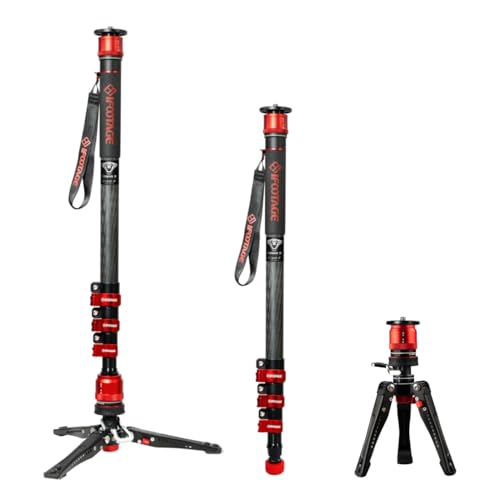
- Foot pedal locks and unlocks the base
- 17.6-pound vertical payload
- Quick-release camera plate
Best For: Fast-paced sports, wedding, and wildlife shooting
Best Lightweight Travel Pick
Manbily Compact Aluminum Monopod

- Weighs about 1.1 pounds
- Folds to a compact 15.7 inches
- Rubber and metal foot options
Best For: Travelers who prioritize compact outdoor gear
Best One-Handed Adjustment
SmallRig Carbon Fiber Ball Head Monopod

- One-touch height locking system
- 11-pound ball-head capacity
- Built-in bubble level and accessory thread
Best For: Fast, precise adjustments in compact shooting spaces
Best Stability Upgrade

- 20° tilting base with 360° rotation
- Supports up to 15.5 pounds
- Includes rubber and metal-spike feet
Best For: Photographers wanting flexible low-angle positioning and higher load capacity
Best Lightweight Option

- Weighs just 0.59 pounds
- Folds to 16.75 inches
- Includes rubber foot and retractable spike
Best For: Travelers using lightweight camera setups up to 5 pounds
Best Multi-Mode Pick

- Five height settings from 16.9 to 61 inches
- Supports up to 11.02 pounds
- Converts for monopod, selfie-stick, and hiking use
Best For: Travel photographers seeking adjustable height and multipurpose portability
Flexible Low-Angle Support

- 19.5- to 66-inch height range
- Removable rotating and tilting base
- 11-pound maximum load
Best For: Travel and outdoor shooting with added tabletop support
Terrain-Ready Stability
K&F CONCEPT 63-Inch Monopod

- Five-section adjustable design
- Rubber and metal spike foot options
- 17-inch folded length
Best For: Outdoor shooting across varied terrain
Lightweight Quick-Adjust Pick

- Four quick-lock height positions
- 0.88-pound portable aluminum design
- Interchangeable rubber and spike feet
Best For: Mobile creators and fast outdoor setups
Best All-Around Control – Koolehaoda 3-Way Pan-Tilt Monopod
For photographers and creators comparing camera monopods for low angle shots, the Koolehaoda stands out for its 3-way pan-tilt head and detachable stabilizing base. Its broad tilt range and adjustable feet make it useful when you need to position a camera close to the ground or on uneven surfaces.
Best For: Low-angle framing, sports, weddings, travel vlogging, and multi-angle video work.
Pros:
- 3-way head supports 360° horizontal rotation and -70° to +90° vertical tilt.
- Detachable, adjustable tripod base can also function as a compact tabletop tripod.
- Supports up to 22 pounds while collapsing to about 22.8 inches.
- Includes dual 1/4-inch and 3/8-inch mounting screws, carry bag, and foot options.
Cons:
- At 3.5 pounds, it is heavier than the more travel-focused options here.
- The 3-way head and multiple locking controls may take longer to adjust than a simpler monopod.
The Koolehaoda is a versatile choice when precise camera positioning matters more than minimum weight. Its stable base and wide head movement make it particularly capable for controlled low-angle compositions.
Best Pedal-Lock Design – IFOOTAGE Cobra 3 Carbon Fiber Monopod
The IFOOTAGE Cobra 3 is a strong option for camera monopods for low angle shots when fast repositioning is important. Its foot-operated locking system, lengthened base, and adjustable damping help you change position without repeatedly bending down to operate a knob.
Best For: Weddings, sports, wildlife, birds, and fast-moving video setups.
Pros:
- Patented pedal lock lets you lock and unlock the monopod with your foot.
- Lengthened feet create a base about 13.4 inches wide when fully open.
- Carbon fiber construction weighs about 2.8 pounds and supports up to 17.6 pounds vertically.
- Quick-release plate and convertible 1/4-inch and 3/8-inch mounting screws speed up device changes.
Cons:
- Its 27-inch collapsed length is less compact than the Manbily model.
- The base and pedal mechanism may add bulk compared with a traditional bare monopod.
- It is not water resistant according to the supplied specifications.
Choose the Cobra 3 when quick, hands-free adjustments are a priority. The carbon fiber build keeps weight reasonable, while the broad base and damping are well suited to dynamic low-angle shooting.
Best Lightweight Travel Pick – Manbily Compact Aluminum Monopod
For travelers seeking camera monopods for low angle shots without carrying much weight, the Manbily A-555L is a compact choice. It weighs about 1.1 pounds, folds to 15.7 inches, and uses convertible rubber and metal feet for different ground conditions.
Best For: Travel, sports, wildlife photography, unstable footholds, and lightweight outdoor kits.
Pros:
- Folds to 15.7 inches and weighs approximately 1.1 pounds.
- Six-section design adjusts from 15.7 to 61 inches using quarter-turn twist locks.
- Supports up to 15.4 pounds with a 28 mm aluminum leg.
- Includes rubber and metal foot options, a walking-stick handle, phone holder, and carry case.
Cons:
- It does not include an integrated pan-tilt or ball head.
- Its 61-inch maximum height is shorter than the Koolehaoda and IFOOTAGE models.
- The supplied specifications list it as not water resistant.
The Manbily is best when portability is the deciding factor. Its short folded size and walking-stick functionality make it easy to pack, while the interchangeable feet help accommodate varied outdoor surfaces.
Best One-Handed Adjustment – SmallRig Carbon Fiber Ball Head Monopod
The SmallRig 13778 is worth considering among camera monopods for low angle shots when one-handed height changes and a ball head are useful. Its one-touch locking system, bubble level, and accessory-mounting point support quick adjustments in confined shooting spaces.
Best For: Compact outdoor video setups, confined spaces, and photographers using ball-head positioning.
Pros:
- One-touch height adjustment locks the monopod at any position.
- Four-section carbon fiber leg extends to 65.6 inches and folds to 26.8 inches.
- Ball head supports loads up to 11 pounds, while the legs support up to 33 pounds.
- Built-in bubble level and 1/4-inch locating hole expand setup and accessory options.
Cons:
- The included head’s 11-pound capacity is lower than the leg capacity.
- At about 3.8 pounds, it is not the lightest monopod in this group.
- Its folded length is longer than the Manbily’s 15.7-inch storage size.
The SmallRig offers a useful balance of portability and fast operation. Its one-touch mechanism is especially practical when framing low or changing perspectives while keeping one hand on the camera.
Best Stability Upgrade – Manbily A-222 Monopod
For photographers comparing camera monopods for low angle shots, the Manbily A-222 stands out for its adjustable tripod base and 20° tilt, which can help position a camera closer to challenging perspectives. Its five sections extend from 21 to 67 inches, while the aluminum construction supports up to 15.5 pounds.
Best For: Photographers who want a versatile monopod with a tilting base, interchangeable feet, and high stated load capacity.
Pros:
- Tilting base supports 20° adjustment and 360° rotation.
- Supports up to 15.5 pounds for heavier camera setups.
- Includes rubber and metal-spike feet for different surfaces.
- Folds to 21 inches and includes a wrist strap for travel.
Cons:
- The base is intended to improve stability, not function as a standalone tripod.
- The manufacturer recommends avoiding the smallest-diameter tube section for better stability.
- No ball head is included.
The A-222 is a strong option when low-angle positioning and surface adaptability matter more than minimum weight. Keep the wrist strap secured during use, especially when working with the tilted base.
Best Lightweight Option – Altura Photo 62-Inch Monopod
The Altura Photo 62-Inch Monopod is a compact choice for photographers seeking camera monopods for low angle shots without adding much weight to a kit. It retracts to 16.75 inches, weighs 0.59 pounds, and uses a four-section design with a non-skid foot and retractable spike.
Best For: Travelers and hikers carrying lightweight DSLR, mirrorless, video, or scope setups up to 5 pounds.
Pros:
- Lightweight 0.59-pound aluminum design.
- Folds to a compact 16.75 inches for bags and carry-ons.
- Universal 1/4-inch mount includes a 3/8-inch screw adapter.
- Soft foam grip, wrist strap, rubber foot, and retractable spike are included.
Cons:
- Supports up to 5 pounds, less than the other listed options.
- Its 62-inch maximum height is lower than the Manbily’s.
- No dedicated low-angle tilt feature is specified.
This Altura model prioritizes portability and quick deployment. Its adjustable height and terrain-friendly foot make it practical for mobile shooting, though heavier cameras or specialized low-angle setups may call for a sturdier monopod.
Best Multi-Mode Pick – ULANZI TB12 61-Inch Monopod
For flexible camera monopods for low angle shots, the ULANZI TB12 offers five height settings from 16.9 to 61 inches, making it easier to adapt the camera position to different subjects and compositions. The aluminum monopod weighs about 0.83 pounds and supports up to 11.02 pounds.
Best For: On-the-go photographers and videographers who want one compact support tool for monopod, selfie-stick, and outdoor walking-stick modes.
Pros:
- Five height settings cover 16.9 to 61 inches.
- Supports cameras up to 11.02 pounds.
- Folds to about 16.9 inches and fits in a 20-inch carry-on.
- Supports monopod, selfie-stick, hiking-stick, and trekking-pole modes.
Cons:
- No dedicated tilting base or interchangeable feet is specified.
- It is not water resistant.
- A head is not specifically included in the supplied details.
The TB12 is a practical travel-focused option when multiple operating modes and compact storage are priorities. Its lowest 16.9-inch setting can support lower perspectives, while the stated load rating accommodates many compact cameras and DSLRs.
Flexible Low-Angle Support – Koolehaoda Extendable Monopod
For camera monopods for low angle shots, the Koolehaoda combines a 19.5- to 66-inch range with a removable support base. Its 5-section aluminum design is lightweight, while the base adds 360-degree rotation and 20-degree tilt for more controlled positioning.
Best For: Travelers and outdoor photographers who want a monopod that can also function as a mini tabletop tripod.
Pros:
- Extends from 19.5 to 66 inches and supports up to 11 pounds.
- Removable base provides panoramic rotation and tilt for flexible framing.
- Rubber feet and stainless spikes suit indoor and outdoor surfaces.
- Includes reversible 1/4-inch and 3/8-inch mounting screws.
Cons:
- The user must hold the monopod when a camera is mounted.
- Its screw leg-locking system may take longer to adjust than flip locks.
- It is not water resistant.
The foldable base makes this a particularly versatile option for low-positioned compositions, though it is better suited to supported shooting than hands-free camera operation.
Terrain-Ready Stability – K&F CONCEPT 63-Inch Monopod
The K&F CONCEPT MS16 is a practical choice among camera monopods for low angle shots, with five adjustable sections and a 17-inch folded length. Its dual-purpose foot uses rubber for hard surfaces and metal spikes for softer ground, helping you adapt your setup to changing terrain.
Best For: Outdoor photographers who need compact transport and interchangeable footing across floors, grass, sand, or muddy ground.
Pros:
- Adjusts up to 63 inches and supports up to 22 pounds according to the supplied specifications.
- Rubber and metal spike feet accommodate hard and soft surfaces.
- 17-inch storage length is convenient for carrying and packing.
- 1/4-inch and 3/8-inch interfaces support cameras, gimbals, and other devices.
Cons:
- It does not include a ball head or other head in the supplied components.
- The monopod is not water resistant.
- Its listed specifications contain differing payload references, so buyers should verify the current rating.
With quick plate locks and adaptable feet, the MS16 is well suited to fast repositioning for low-angle work, especially when shooting outdoors on mixed surfaces.
Lightweight Quick-Adjust Pick – NEEWER TP41 61-Inch Monopod
For camera monopods for low angle shots, the NEEWER TP41 offers four quick-lock height positions from 67.5 to 155 centimeters. It weighs about 0.88 pound and folds to 17.3 inches, making it a convenient option for photographers and creators who move frequently.
Best For: Mobile content creators and outdoor shooters who prioritize low carry weight, fast adjustments, and flexible mounting.
Pros:
- Flip locks allow quick changes between low and full-height positions.
- Supports DSLR cameras up to 17.6 pounds.
- Interchangeable rubber and steel spike feet suit indoor and outdoor surfaces.
- Dual-headed 1/4-inch to 3/8-inch adapter supports cameras, gimbals, and video accessories.
Cons:
- Its four preset heights offer less continuous adjustment than a fully variable system.
- The supplied notes do not indicate a rotating or tilting support base.
- It is not water resistant.
The TP41 stands out for portability and fast setup. Its lowest listed height is useful for lower viewpoints, while the interchangeable feet add flexibility without much extra weight.
How We Picked the Best Camera Monopods for Low Angle Shots
We focused on features that matter when working close to the ground or from unusual perspectives: usable minimum and maximum height, folding or removable feet, locking security, head compatibility, portability, and overall versatility. We also included both aluminum and carbon-fiber options so shoppers can weigh lower cost against reduced weight and vibration control.
A monopod with a supporting base can stand briefly on its own, but it should not be treated as a substitute for a full tripod in windy conditions or during unattended exposures. For low-angle work, the ability to position the camera securely and adjust framing quickly is usually more valuable than maximum height alone.
Quick Comparison
| Feature | What to look for | Why it matters |
|---|---|---|
| Construction | Aluminum or carbon fiber | Aluminum is typically more affordable; carbon fiber can reduce carrying weight and vibration. |
| Base design | Foldable feet, removable stand, or plain foot | Feet improve temporary support, while a simple foot is lighter and faster to pack. |
| Head type | Ball head, pan-tilt head, or separate head mount | Controls how easily you can compose vertical, horizontal, and angled shots. |
| Height range | Low minimum height plus sufficient extension | Determines whether the monopod works for ground-level perspectives and standing use. |
Key Buying Factors for Camera Monopods for Low-Angle Shots
Minimum Height and Leg Position
Check the collapsed length and minimum working height, not just the advertised maximum. A model that folds compactly and can be used near the ground is more useful for foreground detail, action, wildlife, and creative architectural perspectives.
Stability and Base Support
Foldable feet or a removable tripod-style base can help when you need both hands briefly, but they add weight and moving parts. Look for a secure locking mechanism and a broad, durable contact point. Keep one hand on the monopod when conditions are unstable.
Camera Load and Locking Hardware
Match the stated load capacity to your camera, lens, and accessories rather than the body alone. Twist locks may pack neatly, while flip locks are often quicker to inspect and operate. Whichever style you choose, confirm that each section locks firmly before mounting expensive gear.
Head Compatibility and Movement
A pan-tilt head suits controlled video and deliberate panning; a ball head is faster for still-photo composition. If the included head is limited, a standard mounting thread lets you install a preferred head or quick-release system.
Who Should Buy Which Camera Monopods for Low Angle Shots?
Choose carbon fiber if you hike, travel frequently, or carry your support gear for long periods. The IFOOTAGE and SmallRig options are especially appealing to shoppers prioritizing lower weight and a more premium build.
Choose aluminum if value, durability, and straightforward operation matter most. The Manbily, Altura Photo, ULANZI, K&F CONCEPT, and NEEWER models offer practical formats for general DSLR and mirrorless use.
Choose a model with feet or a stand base if you frequently switch between handheld movement and temporary supported framing. Koolehaoda and Manbily designs are worth considering for that flexibility. For the simplest travel setup, select a compact monopod without extra base hardware and add a head that matches your camera workflow.