
Outdoor filming demands more than a lightweight support system. Uneven ground, changing weather, long shooting sessions, and moving subjects all make a dependable monopod especially valuable.
We selected 10 camera monopods spanning compact travel designs, carbon-fiber models, aluminum options, fluid heads, and removable tripod bases to help you find the right balance of stability, portability, and control.
Best 10 Camera Monopods for Outdoor Filming Picks for 2026
Best Fluid-Head Pick

- Fluid head with 360° pan and tilt control
- Removable feet convert to a desktop tripod
- 74.8-inch height and 13.2-pound capacity
Best For: Outdoor video creators needing controlled movement and extra base support
Best Lightweight Budget Option

- Weighs only 0.59 pounds
- Folds to a compact 16.75 inches
- Rubber foot includes a retractable leg spike
Best For: Hikers and travelers using lightweight camera setups
Best Carbon-Fiber Travel Pick
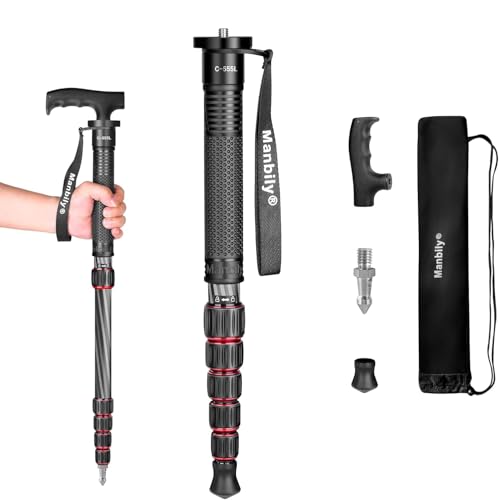
- Carbon fiber with a 15.4-pound load rating
- Folds to 15.7 inches and weighs 0.93 pounds
- Rubber and metal feet plus a trekking-pole handle
Best For: Mobile outdoor filming with heavier gear and minimal pack weight
Best Terrain-Ready Aluminum Pick

- 63-inch aluminum monopod folds to about 17 inches
- Dual rubber and metal feet suit varied terrain
- 1/4-inch and 3/8-inch interfaces support cameras and gimbals
Best For: Outdoor shooters working across hard, soft, and uneven surfaces
Best Professional Setup
COMAN KX3232Q6 Fluid-Head Monopod

- 73.2-inch aluminum monopod with 22-pound capacity
- Q6 fluid head for panoramic and angled video shots
- Converts between monopod, stand, and low-angle tripod
Best For: Heavy-camera outdoor video and fluid-head shooting
Best Quick-Deploy Design
IFOOTAGE Cobra 3 A180T Monopod
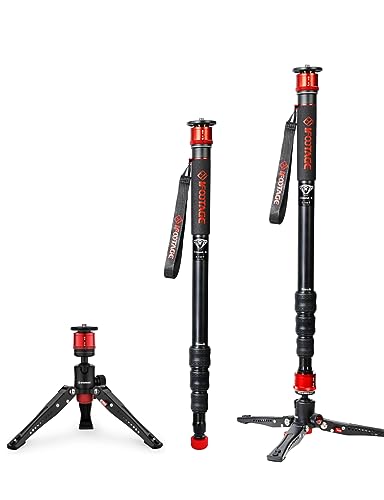
- 71.7-inch aluminum design with 17.6-pound payload
- Twist-lock joints support quick height adjustments
- Detachable mini tripod base adds shooting flexibility
Best For: Fast-moving outdoor video setups
Best Ultralight Travel Pick

- Weighs about 0.83 pounds and folds to 16.9 inches
- 61-inch height with support for up to 11.02 pounds
- Works as a monopod, selfie stick, or walking stick
Best For: Hiking, travel, and lightweight outdoor photography
Best All-in-One Setup

- Converts between tripod and monopod
- 71-inch height with 360° ball head
- Supports up to 33 pounds vertically
Best For: Creators wanting versatile tripod and monopod support
Best Lightweight Option

- Weighs about 0.88 pounds
- Folds to 17.3 inches
- Includes rubber and spike feet
Best For: Portable outdoor filming and travel content
Best Adjustable Travel Support

- Adjusts from 21 to 67 inches
- Includes detachable three-foot base
- Rubber and spike feet for varied terrain
Best For: Traveling videographers needing extra base stability
Best Fluid-Head Pick – NEEWER TP78 Monopod with Feet
For camera monopods for outdoor filming, the NEEWER TP78 stands out when you need more controlled movement and support on uneven ground. Its removable tripod base, fluid head, broad height range, and 13.2-pound load rating make it suited to DSLR cameras and camcorders.
Best For: Outdoor video creators who want a fluid head and detachable feet for added stability.
Pros:
- Fluid head provides 360° pan and -70°/+90° tilt with damping control.
- Removable feet can support the monopod or convert it into a desktop tripod.
- Adjusts from 26.8 to 74.8 inches and supports up to 13.2 pounds.
- Includes a Manfrotto-compatible quick-release plate and accessory thread.
Cons:
- At 3.8 pounds, it is heavier than simpler travel monopods.
- Its larger fluid-head design may be more than still photographers need.
The TP78 is a feature-rich option for filming rather than a minimalist support stick. Choose it when smooth panning, tilt control, and a more stable base matter more than minimizing carry weight.
Best Lightweight Budget Option – Altura Photo 62-Inch Monopod
The Altura Photo is a practical choice among camera monopods for outdoor filming when portability is the priority. It weighs just 0.59 pounds, collapses to 16.75 inches, and provides a universal mount for cameras, video cameras, ball heads, or scopes up to 5 pounds.
Best For: Hikers and travelers who need a basic, lightweight monopod for smaller camera setups.
Pros:
- Very light and compact for backpacks, carry-ons, and tote bags.
- Extends to 62 inches and includes a carry pouch.
- Rubber foot with a retractable spike adapts to indoor and outdoor terrain.
- Soft foam grip and wrist strap improve carrying and handling comfort.
Cons:
- Its 5-pound capacity limits heavier camera and lens combinations.
- It does not include a built-in fluid head or tripod-style base.
This monopod favors convenience over advanced video control. It is a sensible fit for lightweight equipment and mobile shooting, but filmmakers using larger rigs may need a stronger model with a dedicated head.
Best Carbon-Fiber Travel Pick – Manbily C-555L Monopod
The Manbily C-555L combines a carbon-fiber build with a 15.4-pound load rating, making it a strong contender among camera monopods for outdoor filming. It weighs 0.93 pounds, folds to 15.7 inches, and includes interchangeable rubber and metal feet for varied surfaces.
Best For: Outdoor filmmakers, sports shooters, and wildlife photographers who value low weight and high capacity.
Pros:
- Eight-layer carbon fiber supports up to 15.4 pounds.
- Six-section design extends from 15.7 to 61 inches.
- Two-in-one rubber and metal feet suit hard, soft, or uneven ground.
- Included handle lets it function as a trekking pole.
Cons:
- Its maximum height is shorter than some full-size monopods.
- It uses quarter-turn twist locks rather than flip locks.
The C-555L offers an appealing balance of capacity and portability. Its walking-stick handle and adaptable feet are especially useful for mobile outdoor work, while the carbon-fiber construction keeps pack weight down.
Best Terrain-Ready Aluminum Pick – K&F CONCEPT MS16 Monopod
The K&F CONCEPT MS16 is designed for flexible setup in the field, making it a useful option among camera monopods for outdoor filming. Its five-section aluminum design reaches 63 inches, while dual rubber and metal feet help accommodate hard surfaces and softer ground.
Best For: Outdoor shooters who want a compact aluminum monopod with adaptable feet and broad device compatibility.
Pros:
- Extends to 63 inches and folds to approximately 17 inches.
- Rubber feet and metal spikes support different terrain types.
- 1/4-inch and 3/8-inch interfaces accept cameras, gimbals, and other devices.
- Anti-slip padding, wrist strap, and plate-lock adjustments support field use.
Cons:
- It is not water-resistant.
- The supplied notes list no included head or carrying case.
The MS16 is a versatile, compact choice for changing outdoor conditions. Its terrain-focused foot design is useful for location work, though users filming in wet weather should plan for additional protection.
Best Professional Setup – COMAN KX3232Q6 Fluid-Head Monopod
For outdoor filming that calls for height, fluid movement, and flexible support, the COMAN KX3232Q6 is a substantial choice among camera monopods for outdoor filming. Its aluminum body reaches 73.2 inches, supports up to 22 pounds, and includes a detachable tripod base for added versatility.
Best For: Videographers using heavier cameras, camcorders, or compatible DJI RS and Manfrotto setups who want fluid pan-and-tilt control.
Pros:
- Q6 fluid head supports 360° panning and +90°/-60° tilting.
- 3-in-1 design works as a monopod, portable stand, or low-angle tripod.
- High 22-pound load capacity and 73.2-inch maximum height.
- Quick-release system and built-in hex keys simplify camera setup.
Cons:
- At 3.9 pounds, it is heavier than the other options here.
- Its 26-inch folded length is less compact for small bags.
- It is not water resistant.
The COMAN offers the broadest shooting flexibility in this group, especially for video work requiring a fluid head and stable base. Its larger size and weight make it better suited to planned outdoor shoots than ultralight travel.
Best Quick-Deploy Design – IFOOTAGE Cobra 3 A180T Monopod
The IFOOTAGE Cobra 3 A180T is a practical option for camera monopods for outdoor filming when fast setup matters. Its twist-lock joints, automatic quick-disconnect mechanism, and detachable mini tripod base support quick transitions between handheld movement and freestanding support.
Best For: Outdoor videographers who prioritize rapid deployment, modular support, and a relatively light aluminum build.
Pros:
- Quick-adjusting twist-lock joints help change height without disconnecting sections.
- Automatic one-step release and locking mechanism speeds deployment.
- 3-in-1 design includes a detachable, foldable mini tripod base.
- Supports up to 17.6 pounds while weighing 2.76 pounds.
Cons:
- Its 17.6-pound payload is lower than the COMAN model.
- Maximum height is 71.7 inches, slightly shorter than the COMAN.
- It is not water resistant.
The Cobra 3 balances portability and professional functionality well. It is a strong middle-ground choice for mobile shoots where quick changes and a modular base are more important than maximum load capacity.
Best Ultralight Travel Pick – ULANZI TB12 61-Inch Monopod
For hikers, travelers, and wildlife photographers, the ULANZI TB12 is one of the most portable camera monopods for outdoor filming. It weighs about 0.83 pounds, folds to 16.9 inches, and extends to 61 inches while supporting cameras up to 11.02 pounds.
Best For: Travelers and outdoor photographers who need a lightweight support option that can also function as a selfie stick or walking stick.
Pros:
- Very light 0.83-pound aluminum construction is easy to carry.
- 16.9-inch folded size fits conveniently into a 20-inch carry-on.
- Five height settings range from 16.9 to 61 inches.
- Supports up to 11.02 pounds and offers multiple outdoor-use modes.
Cons:
- Its 11.02-pound capacity is lower than the other two monopods.
- Maximum height is 61 inches.
- It is not water resistant.
The TB12 prioritizes mobility over advanced video-head features or maximum capacity. Its compact folded size and walking-stick mode make it particularly convenient for hiking and travel, provided your camera setup stays within its load limit.
Best All-in-One Setup – SmallRig CT-10 Tripod Monopod
For outdoor filming, the SmallRig CT-10 is a flexible choice when you want both a tripod and a monopod in one kit. Its 71-inch reach, 360-degree ball head, and broad camera and phone compatibility suit changing shooting positions, while the 16.9-inch folded size helps with travel.
Best For: Creators who want one versatile support system for hiking, travel, photography, and video.
Pros:
- Converts between a tripod and monopod for different outdoor setups.
- 360-degree ball head supports horizontal and vertical positioning.
- Adjusts from 16 to 71 inches with quick-release flip locks.
- Supports up to 33 pounds vertically and includes three accessory mounting holes.
Cons:
- At 3.4 pounds, it is heavier than a dedicated lightweight monopod.
- Telephoto lenses may require an additional tripod or lens mount ring for balance.
- It is not water resistant.
The CT-10 is a strong fit if flexibility and load capacity matter more than minimum carry weight. It offers useful low-angle and macro positioning, though travelers seeking the lightest camera monopods for outdoor filming may prefer a simpler design.
Best Lightweight Option – NEEWER TP41 Camera Monopod
The NEEWER TP41 keeps camera monopods for outdoor filming easy to carry, weighing just 0.88 pounds and folding to 17.3 inches. Its 61-inch maximum height, dual screw adapter, and interchangeable rubber and spike feet make it practical for travel across varied surfaces.
Best For: Lightweight outdoor filming, vlogging, hiking, and creators who frequently change locations.
Pros:
- Lightweight aluminum design weighs about 0.88 pounds.
- Folds to 17.3 inches for convenient transport.
- Rubber feet suit smooth surfaces, while steel spikes suit grass, sand, and dirt.
- Supports cameras and video gear up to 17.6 pounds with 1/4-inch and 3/8-inch mounting options.
Cons:
- Its 61-inch height is shorter than some full-size support options.
- It does not include a ball head for independent camera angle adjustment.
- It is not water resistant.
The TP41 is particularly appealing when packability is a priority. The interchangeable feet add useful outdoor versatility, while the 17.6-pound capacity accommodates many camera, camcorder, gimbal, and action-camera setups.
Best Adjustable Travel Support – Manbily A-222 Monopod
The Manbily A-222 combines a compact travel design with a detachable three-foot base for added support during outdoor filming. Its five sections adjust from 21 to 67 inches, and interchangeable rubber and metal spike feet help adapt it to paved surfaces or softer ground.
Best For: Travelers and videographers who want a portable monopod with a removable stabilizing base.
Pros:
- Five-section design adjusts from 21 to 67 inches with quarter-turn locks.
- Detachable tripod base and wrist strap support easier carrying and handling.
- Rubber and metal spike feet accommodate smooth or soft surfaces.
- Supports up to 15.5 pounds and has a 20-degree base tilt with 360-degree rotation.
Cons:
- The base is intended to increase stability, not function as a standalone tripod.
- It has no ball head, so camera angle control depends on the mounted equipment.
- The manufacturer recommends avoiding the minimum-diameter tube section for better stability.
The A-222 is a practical middle ground for outdoor filming: more adaptable than a basic pole, yet compact enough for travel. Keep the wrist strap secured and treat the base as a stabilizer rather than a hands-free tripod.
How We Picked These Camera Monopods for Outdoor Filming
We focused on the features that matter most when filming away from a studio: maximum height, folded size, construction material, weight capacity, foot or base design, head movement, and ease of adjustment. The selection includes models for lightweight mirrorless cameras as well as heavier DSLR and video setups.
We also considered practical outdoor details such as removable tripod bases, walking-stick-style handles, locking mechanisms, and compatibility with common Canon, Nikon, Sony, and universal camera mounts. Product specifications can vary by configuration, so confirm the manufacturer’s listed capacity before pairing a monopod with a large camera, lens, cage, or monitor.
Quick Comparison
| Feature | What to look for | Why it matters outdoors |
|---|---|---|
| Height | Approximately 61 to 75 inches | Supports comfortable eye-level shooting and overhead angles |
| Material | Aluminum or carbon fiber | Balances durability, weight, and vibration control |
| Base design | Simple foot, removable tripod, or stabilizing feet | Improves balance on uneven terrain |
| Head type | Ball head, pan-tilt head, or fluid head | Controls framing and helps create smoother motion |
| Load rating | Higher than your fully assembled camera rig | Adds a safety margin for lenses and accessories |
Key Buying Factors for Camera Monopods for Outdoor Filming
Stability and Base Design
A conventional monopod provides vertical support but still requires hand control. Feet or a removable tripod base can improve stability for interviews, wildlife observation, and longer takes, though they do not turn a monopod into a fully hands-off tripod. Choose a compact foot for mobility or a broader base when steady positioning matters more.
Material, Weight, and Portability
Aluminum models are generally durable and cost-effective, while carbon fiber can reduce carry weight and dampen some vibration. For hiking or travel, check both the folded length and the total weight—not just the maximum height. A shorter, faster-to-deploy monopod may be more useful than a taller model that is cumbersome to pack.
Head Movement and Compatibility
A fluid or pan-tilt head is useful for video pans and tilts, while a ball head offers flexible framing for stills and hybrid shooting. Verify the mounting thread, plate system, and clearance around your camera. Your setup should allow access to battery doors, ports, and control dials.
Locks and Load Capacity
Twist locks can be streamlined, while flip locks are often quicker to inspect and adjust. Whichever style you choose, look for secure sections and a load rating that exceeds the weight of the complete rig, including the heaviest lens and accessories.
Who Should Buy Which Camera Monopods for Outdoor Filming?
Travel filmmakers: Choose a lightweight, compact model that packs easily and deploys quickly. Interview and event shooters: Prioritize a stable base, reliable locks, and a fluid or pan-tilt head. Wildlife and sports users: Look for a high load rating, fast height adjustment, and smooth repositioning. Hybrid photo-video creators: A ball head or interchangeable head gives greater framing flexibility. Budget-conscious beginners: An aluminum monopod with a straightforward foot or base offers useful support without adding unnecessary complexity.
Before buying, compare the monopod’s folded size with your bag, confirm its real-world capacity for your camera rig, and decide whether you need a stable base or simply a lightweight support for moving between shots.