
The best chemistry sets turn science concepts into hands-on discovery, giving children safe, structured ways to explore reactions, mixtures, acids, bases, and more.
We compared 10 popular kits by experiment variety, included equipment, instruction quality, age suitability, and room for continued learning.
Best 10 Chemistry Sets Picks for 2026
Best Overall Starter
National Geographic Chemistry Set

- 45 hands-on experiments
- Illustrated, kid-friendly guide
- Designed for ages 8 and up
Best For: Young learners beginning hands-on chemistry
Best Real Lab Introduction

- 125 experiments in 10 chapters
- Includes real lab equipment
- Seven chemicals and safety guidance
Best For: Learners ages 10 and up seeking authentic lab practice
Best for Early Learners
National Geographic Junior Chemistry Set

- 50 introductory experiments
- 20-plus child-safe lab tools
- Illustrated instructions for ages 4 and up
Best For: Young children starting supervised science exploration
Best Advanced Home Lab

- 333-plus experiments across 27 chapters
- Covers inorganic, organic, and electrochemistry
- Includes extensive lab equipment and chemicals
Best For: Students ages 12 and up pursuing advanced chemistry
Best All-Around Pick
National Geographic Mega Science Lab
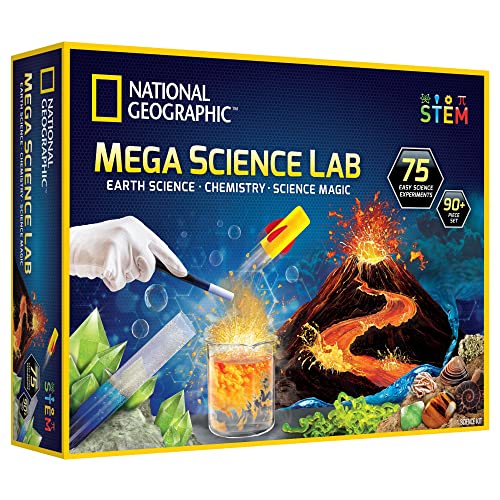
- Three-in-one chemistry, Earth science, and magic kit
- Includes 75 experiments and real specimens
- Designed for kids ages 8 and up
Best For: Broad STEM exploration and repeat activity sessions
Best Guided Chemistry Set
Thames & Kosmos Chemistry C500

- 28 structured chemistry experiments
- Includes a detailed 48-page science guide
- Recommended for ages 10–15
Best For: Focused chemistry learning with step-by-step instructions
Best for Experiment Variety

- Offers 150 projects across multiple science topics
- Includes tools, materials, and goggles
- Recommended for kids ages 8 and up
Best For: Families wanting many hands-on projects for home science time
Advanced Lab Pick

- 250 experiments across 18 chemistry topics
- Real lab equipment and alcohol burner included
- Designed for ages 11+ with adult supervision
Best For: Older learners seeking an in-depth, hands-on chemistry foundation
Broad Activity Value
UNGLINGA 70-Experiment Science Kit

- Includes 70 varied science experiments
- Features volcanoes, crystals, circuits, and reactions
- Illustrated guide supports introductory STEM learning
Best For: Families wanting varied, accessible science activities for ages 8+
Most Action-Packed
Discovery Super Reactions Science Kit

- Includes 66 activities and DIY experiment ideas
- Covers pH, acid-base reactions, and gas expansion
- Features volcanoes, glow lava, slime, and test tubes
Best For: Kids ages 8+ who learn through colorful, exciting demonstrations
Best Overall Starter – National Geographic Chemistry Set
For families seeking approachable chemistry sets, this National Geographic kit offers 45 hands-on experiments for children ages 8 and up. Activities such as volcanoes, geysers, rockets, and fizzy reactions introduce core STEM ideas through illustrated, kid-friendly instructions.
Best For: Children ages 8 and up who want an engaging introduction to chemistry experiments.
Pros:
- Includes 45 experiments covering reactions, volcanoes, geysers, and rockets.
- Illustrated instructions explain each step and the underlying reactions.
- Encourages hands-on STEM learning and safe experiment habits.
- No batteries are required.
Cons:
- Some activities may require additional household materials.
- It is intended for younger learners rather than advanced chemistry study.
This is a well-rounded choice for a first chemistry set, especially when variety and accessible instructions matter more than professional-style equipment.
Best Real Lab Introduction – Thames & Kosmos Chem C1000
Among chemistry sets for older children, the Thames & Kosmos Chem C1000 stands out for its laboratory focus. It includes 125 experiments, seven chemicals, real lab equipment, safety goggles, and an 80-page illustrated manual for ages 10 and up.
Best For: Curious learners ready to move beyond simple kitchen-science activities and practice basic laboratory techniques.
Pros:
- Offers 125 experiments across 10 themed chapters.
- Includes glass test tubes, beakers, pipettes, goggles, and other lab equipment.
- Covers chromatography, electrochemistry, crystals, indicators, and electrolysis.
- Provides safety, first-aid, hazard-labeling, and waste-disposal guidance.
Cons:
- Adult supervision is required.
- The kit is recommended for ages 10 and up, so it may be too advanced for younger children.
- Some experiments use chemicals and require careful adherence to the manual.
With its substantial manual and authentic equipment, the C1000 is a strong bridge between basic science toys and more structured home laboratory work.
Best for Early Learners – National Geographic Junior Chemistry Set
For younger children, this National Geographic Junior kit makes chemistry sets more approachable with 50 hands-on activities and more than 20 child-safe lab tools. The illustrated instructions and use of common household items such as baking soda and vinegar support simple, guided exploration.
Best For: Early learners ages 4 and up who are beginning to explore science through supervised activities.
Pros:
- Includes 50 interactive experiments.
- Provides more than 20 durable, child-safe lab tools.
- Illustrated, step-by-step instructions are designed for young scientists.
- Uses familiar household items for some activities.
Cons:
- You may need to supply household ingredients for certain experiments.
- The activities are introductory rather than suitable for advanced chemistry study.
This is a practical pick for families introducing preschool and early elementary children to science, with accessible tools and activities that keep the focus on discovery.
Best Advanced Home Lab – Thames & Kosmos Chem C3000
For advanced chemistry sets, the Thames & Kosmos Chem C3000 provides an extensive home laboratory experience for ages 12 and up. Its 333-plus experiments, 103 pieces, real chemicals, and 192-page manual cover inorganic, organic, and electrochemistry in considerable depth.
Best For: Older students, homeschoolers, and aspiring chemists preparing for more advanced chemistry concepts.
Pros:
- Includes more than 333 experiments organized into 27 chapters.
- Covers atomic structure, bonding, acids and bases, redox reactions, electrolysis, and organic chemistry.
- Provides extensive lab equipment, including an Erlenmeyer flask, alcohol burner, electrodes, and safety goggles.
- Includes safety, first-aid, GHS labeling, and waste-disposal instructions.
Cons:
- Adult supervision is required throughout.
- Its age recommendation of 12 and up makes it unsuitable for younger children.
- Some experiments require common household additions listed in the manual.
The C3000 is the strongest option here for sustained study and experimentation, but its breadth and chemical components make it better suited to committed learners and supervised home labs.
Best All-Around Pick – National Geographic Mega Science Lab
If you want chemistry sets that offer more than reactions alone, this National Geographic kit combines chemistry with Earth science and science magic. It includes 45 featured experiments plus 30 additional projects using common household items, making it a versatile option for kids ages 8 and up.
Best For: Kids who want a broad STEM activity kit with chemistry, geology, and magic-style experiments.
Pros:
- Combines three activity areas in one kit: chemistry, Earth science, and science magic.
- Includes projects such as bubbling reactions, gas-powered rockets, crystals, and gooey worms.
- Comes with real rock, mineral, crystal, and fossil specimens for hands-on Earth science activities.
- Offers 75 total experiments, including household-material projects.
Cons:
- Its broad focus may be less suitable for children seeking a chemistry-only set.
- The kit is relatively large and weighs 5.7 pounds.
Among these chemistry sets, this is the strongest choice for variety. Choose it when you want one substantial kit that can support repeated science activities across several topics.
Best Guided Chemistry Set – Thames & Kosmos Chemistry C500
For shoppers specifically comparing chemistry sets, the Thames & Kosmos Chemistry C500 keeps the focus on foundational chemistry. Its 28 guided experiments cover acids, bases, reactions, gases, and invisible ink, with a 48-page illustrated manual explaining both the procedure and the science.
Best For: Kids ages 10–15 who prefer structured, chemistry-focused experiments with clear explanations.
Pros:
- Concentrates on chemistry rather than mixing several science themes.
- Includes 28 classic experiments involving acids and bases, fizzy reactions, and gases.
- The 48-page full-color guide provides setup instructions and explanations of results.
- Includes practical lab-style components such as beakers, test tubes, stoppers, pipettes, and chemicals.
Cons:
- It offers fewer experiments than the larger multi-topic kits.
- The recommended age range starts at 10, so it may not suit younger children.
- Some experiments may require adult guidance depending on the child’s experience.
This is the most focused option for learning core chemistry concepts. Its guided format makes it a practical pick when explanations and a dedicated experiment manual matter more than maximum project count.
Best for Experiment Variety – UNGLINGA 150 Experiments Kit
Among chemistry sets with a high project count, the UNGLINGA kit stands out with 150 experiments spanning chemistry, physics, Earth science, and surface tension. It includes kid-friendly tools and materials, while the illustrated manual uses step-by-step instructions and household items for additional activities.
Best For: Families looking for a large selection of hands-on science projects for kids ages 8 and up.
Pros:
- Provides 150 experiments across chemistry and several related science topics.
- Includes science tools and kid-friendly materials, along with goggles for role-play and lab activities.
- Uses an illustrated, step-by-step manual intended to make projects easier to follow.
- Many activities can incorporate common household items.
Cons:
- Its broad subject coverage may provide less chemistry depth than a dedicated chemistry set.
- The supplied notes do not specify the exact number or type of included chemicals.
This kit is a good fit when variety and repeated activity time are the main priorities. It offers plenty to explore, although shoppers seeking a tightly structured chemistry curriculum may prefer the Chemistry C500.
Advanced Lab Pick – Thames & Kosmos Chem C2000
For older learners who want chemistry sets with substantial depth, the Thames & Kosmos Chem C2000 offers 250 experiments, real lab equipment, and a 128-page manual. Its progression through acids, bases, electrochemistry, chromatography, food chemistry, and other topics makes it a strong option for building a foundation in high school chemistry.
Best For: Aspiring young chemists ages 11 and up who are ready for guided, hands-on experiments with adult supervision.
Pros:
- Includes 250 experiments across 18 themed chapters.
- Provides professional-style equipment, safety goggles, glassware, and selected chemicals.
- The included alcohol burner enables heat-based experiments such as combustion, evaporation, and crystallization.
- Detailed safety, first-aid, labeling, and disposal guidance is built into the manual.
Cons:
- Its intermediate level may be too advanced for younger beginners.
- Adult supervision is required, particularly for experiments involving the alcohol burner and chemicals.
- The large number of experiments and components may require dedicated setup and storage space.
The Chem C2000 is the most comprehensive option in this group for learners who want a genuine home-lab experience rather than a short collection of simple demonstrations. Choose it when depth, equipment, and a logical path toward advanced chemistry matter most.
Broad Activity Value – UNGLINGA 70-Experiment Science Kit
The UNGLINGA kit is a versatile entry point for families comparing chemistry sets for children ages 8 and up. It combines 70 accessible activities—including volcanoes, crystal growing, balloon rockets, fruit circuits, and chemical reactions—with an illustrated guide that explains the science behind each project.
Best For: Younger children and families looking for varied STEM activities that can be shared with friends, classmates, or family members.
Pros:
- Offers 70 experiments covering chemistry, simple circuits, and other science activities.
- Includes engaging projects such as crystal growing, erupting volcanoes, and fruit circuits.
- Step-by-step instructions use clear illustrations and explain the underlying reactions.
- Encourages critical thinking, problem solving, and basic science and math skills.
Cons:
- The kit is broader and more introductory than a dedicated intermediate chemistry set.
- The supplied notes do not list specific included components or ingredients.
- Some activities may require additional household materials, depending on the experiment.
Choose the UNGLINGA set when variety and approachable projects are more important than laboratory-style equipment. It is a practical pick for introducing core STEM ideas through colorful, shareable activities.
Most Action-Packed – Discovery Super Reactions Science Kit
The Discovery Super Reactions kit stands out among chemistry sets for its emphasis on visual, hands-on results. It includes 26 guided activities plus 40 bonus ideas using household items, with projects involving volcanoes, slime, glowing potions, color changes, fizzing reactions, and gas expansion.
Best For: Curious children ages 8 and up who enjoy dramatic demonstrations while learning introductory chemistry concepts.
Pros:
- Provides 66 activities, including 26 guided experiments and 40 bonus DIY ideas.
- Introduces acid-base reactions, pH indicators, states of matter, and gas expansion.
- Includes tools and materials such as test tubes, a volcano mold, food coloring, citric acid, and slime mix.
- Combines science learning with engaging projects like glow lava, explosions, and self-siphoning slime.
Cons:
- Its focus on colorful reactions and slime may be less suitable for learners seeking formal laboratory work.
- Forty bonus ideas use household items, so not every activity is fully supplied.
- Adult supervision is recommended.
This kit is a good fit when excitement and immediate visual feedback help keep young learners engaged. It offers a balanced introduction to chemistry concepts, but families wanting deeper progression or more advanced equipment should consider a larger intermediate set.
How We Picked the Best Chemistry Sets
We focused on Chemistry Sets that offer a useful balance of experiments, genuine hands-on tools, clear instructions, and age-appropriate learning. The selection includes introductory kits for younger children, larger experiment collections for repeat play, and progressive sets for kids ready to move beyond simple demonstrations.
We also considered whether a kit provides enough consumable materials to begin experimenting, whether its manual supports independent learning, and how well its activities fit family supervision. Experiment counts can vary in depth, so a smaller set with better explanations may be more useful than a larger kit built around very short activities.
Quick Comparison
| Best For | What to Look For |
|---|---|
| First-time experimenters | Simple instructions, fewer steps, and a younger recommended age |
| Frequent experimenters | Large activity counts and refill-friendly materials |
| Structured learning | A detailed, illustrated manual with background explanations |
| Advanced young scientists | More equipment, progressive activities, and broader chemistry topics |
| Budget-conscious families | A complete starter kit with tools and materials included |
Key Buying Factors for Chemistry Sets
Age and Difficulty
Match the kit to the child’s reading ability, patience, and prior science experience—not just the age printed on the box. Junior and beginner sets generally emphasize visible, quick results, while intermediate and advanced kits may require careful measuring and more adult guidance.
Experiment Quality and Variety
Look beyond the headline experiment count. A strong kit covers several concepts, such as color changes, crystallization, density, gas production, indicators, and separation techniques. Variety helps maintain interest and reinforces different scientific skills.
Equipment and Refills
Check whether the set includes practical items such as test tubes, measuring tools, droppers, protective accessories, and containers. Also verify which ingredients are supplied, which household materials are required, and whether replacement supplies are easy to obtain.
Instructions and Supervision
A well-designed manual should explain the procedure, expected result, and science behind it. Adult supervision is important for all chemistry activities, especially when using powders, heat, glass-like components, or experiments that produce gas or foam. Follow the manufacturer’s safety guidance and use eye protection when recommended.
Who Should Buy Which Chemistry Sets?
Choose a junior or beginner kit for a child exploring chemistry for the first time or needing short, highly guided activities. A larger National Geographic or UNGLINGA set can suit families seeking many varied projects and group experimentation. Thames & Kosmos C500 and C1000 kits are better choices when manual quality and a more structured progression matter. The C2000 and C3000 are aimed at experienced, highly motivated learners who want more equipment, greater depth, and a longer-term science project.
For the best fit, prioritize the child’s current skill level, available supervision, storage space, and willingness to repeat experiments. The right set is not necessarily the one with the highest experiment count; it is the one that encourages safe, understandable, and continued exploration.