
Finding the right compact telescope guide camera can make a noticeable difference in tracking accuracy, focusing, and the overall experience of astrophotography. The best choice depends on your mount, guide scope, telescope interface, sensor, and preferred capture software.
We’ve gathered 10 compact camera and guide-scope options covering basic guiding, lunar and planetary imaging, wireless viewing, and higher-resolution astrophotography. Use the guide below to narrow the list by compatibility, performance, and budget.
Best 10 Compact Telescope Guide Cameras Picks for 2026
Best Compact Autoguiding Camera

- 1.23MP color CMOS sensor
- ST4 interface for autoguiding
- Compact 1.25-inch design
Best For: Lightweight guiding and planetary imaging setups
Best Complete Guide-Scope Kit

- 60mm optics with 240mm focal length
- Helical focuser for precise adjustment
- Includes rings and dovetail bar
Best For: Complete visual finder and autoguiding setups
Best Beginner Planetary Camera
- IMX307 color sensor
- 1080p video at up to 30 fps
- Plug-and-play 1.25-inch format
Best For: Beginner lunar and planetary imaging
Best Mini Guide Scope
- 30mm f/4 wide-field optics
- 1.25-inch and M42 interfaces
- 45mm back-focus distance
Best For: Lightweight deep-sky autoguiding rigs
Best Portable WiFi Pick
Andoer Wireless Telescope Eyepiece
- WiFi viewing with smartphones and tablets
- Built-in 1600mAh rechargeable battery
- Compact 5.3-ounce design
Best For: Beginners, travel, and casual telescope viewing
Best High-Resolution Planetary Pick

- 20MP back-illuminated CMOS sensor
- ROI mode and up to 90 fps
- Built-in autoguiding support
Best For: Detailed lunar, planetary, and filtered solar imaging
Best Plug-and-Play USB Pick

- 7.05MP IMX415 color sensor
- 2K video at up to 30 fps
- Includes USB 3.0 cable and accessories
Best For: Wired live viewing and beginner lunar or planetary imaging
Complete Autoguiding Kit

- Camera, guide scope, and dovetail base included
- ST4 and USB 2.0 connections
- Works with PHD2, NINA, and other guiding software
Best For: Beginners building a compact autoguiding setup
Planetary Imaging Pick

- 2.1MP IMX662 color sensor
- ROI and BIN2×2 capture modes
- Designed for planetary, lunar imaging, and EAA
Best For: Entry-level solar-system imaging and EAA
Wireless Observation Option

- 37–56mm universal eyepiece compatibility
- 1080p recording with 3x digital zoom
- Wi-Fi control through Android and iOS apps
Best For: Wireless live viewing and casual telescope recording
Best Compact Autoguiding Camera – SV905C Guide Camera
For shoppers comparing compact telescope guide cameras, the SVBONY SV905C is a small 1.25-inch camera built specifically for autoguiding and planetary imaging. Its 1.23MP color sensor, 3.75-micron pixels, and USB 2.0 connection make it a practical option for a lightweight guiding setup.
Best For: Astrophotographers who need a compact color guide camera with an ST4 port and broad guiding-software compatibility.
Pros:
- 1/3-inch 1280×960 CMOS sensor with high peak QE and low read noise.
- Includes an ST4 guide-star interface and works with PHD2, MDL, NINA, and SKY-X.
- 1.25-inch body fits different focal-length guide lenses and off-axis guiders.
- CS interface and CS-C adapter support compatible C-mount or CS lenses.
Cons:
- Not compatible with ASI AIR.
- Uses USB 2.0 rather than a faster USB interface.
The SV905C is a focused choice for compact guiding systems, especially when an ST4 connection and flexible software support matter more than advanced imaging features.
Best Complete Guide-Scope Kit – Astromania 60mm Guide Scope
Unlike camera-only compact telescope guide cameras, the Astromania 60mm kit provides the guide scope, focusing hardware, rings, and mounting bar needed to build a complete guiding setup. Its 240mm focal length and helical focuser are aimed at astrophotographers who want precise adjustment and a broad field of view.
Best For: Users who need a versatile 60mm guide scope for autoguiding, visual finding, and direct attachment of compatible guide cameras.
Pros:
- 60mm fully multi-coated optics and 240mm focal length provide a 2.7-degree field of view.
- Helical focuser offers fine adjustments with a stated 45mm focusing range.
- Includes heavy-duty rings, Teflon inserts, and a Synta-style dovetail mounting plate.
- Male T-threads allow direct attachment of compatible guide cameras with female T-threads.
Cons:
- Larger and heavier than mini guide-scope options.
- The scope and mounting hardware add more weight to an astrophotography setup.
- Camera compatibility depends on having suitable female T-threads.
This is a strong all-in-one option when stability, precise focusing, and dual visual/autoguiding use are more important than having the smallest possible guide system.
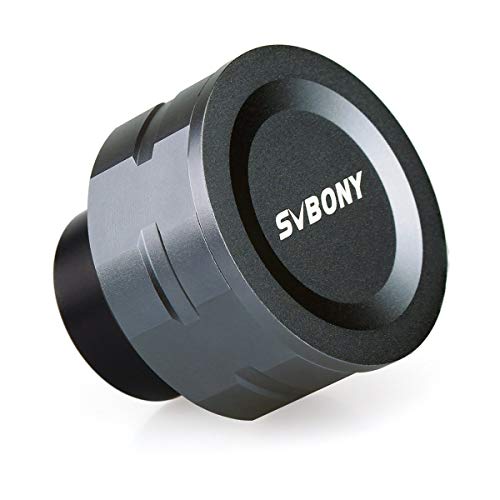
Best Beginner Planetary Camera – SV105 Telescope Camera
The SVBONY SV105 is a beginner-friendly alternative among compact telescope guide cameras, designed primarily for lunar, planetary, and terrestrial video rather than dedicated autoguiding. Its standard 1.25-inch format and plug-and-play operation make it simple to connect to a telescope and laptop or PC.
Best For: Beginners who want an affordable electronic eyepiece for recording the Moon, bright planets, and terrestrial targets.
Pros:
- IMX307 color sensor records up to 1920×1080 at 30 frames per second.
- Plug-and-play operation requires no driver, with support for Windows, Linux, and macOS software options.
- Standard 1.25-inch format and M28.5×0.6 thread support telescope filters and direct connection.
- Dark-light compensation helps improve image clarity in low-light conditions.
Cons:
- Designed for lunar and planetary imaging rather than dedicated autoguiding.
- Requires different capture software depending on the operating system.
- Compatible with Apple laptops running macOS, but not Apple phones or tablets.
The SV105 makes sense for entry-level observers who prioritize easy live viewing and planetary video over the specialized guiding connections found on dedicated guide cameras.
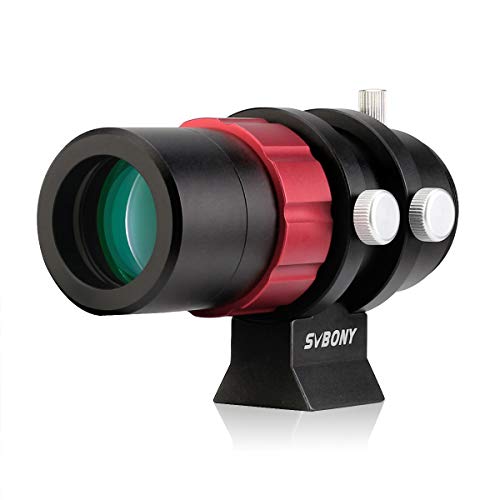
Best Mini Guide Scope – SV165 30mm Guide Scope
For a lightweight pairing with compact telescope guide cameras, the SVBONY SV165 offers a 30mm f/4 mini guide scope with a wide field of view. Its 1.25-inch and M42 interfaces are designed for compatibility with several mainstream autoguiding cameras, while the 45mm back-focus distance helps with setup and focusing.
Best For: Deep-sky imaging rigs that need a small guide scope with broad camera compatibility and a wide field for locating guide stars.
Pros:
- 30mm aperture and 120mm focal length provide a wide 2.86-degree field of view.
- 1.25-inch and M42 interfaces support compatible SVBONY, Orion, ZWO, and QHY guide cameras.
- 45mm back focus allows focus adjustment for compatible camera combinations.
- Fully multi-coated achromatic optics and nylon-tipped screws help protect the tube.
Cons:
- Some camera models may require additional accessories to reach focus.
- It cannot be used with a dielectric mirror star diagonal because it will not focus.
- The image is inverted when used with an eyepiece.
The SV165 is a sensible compact guide-scope choice when low weight, wide coverage, and compatibility with common autoguiding cameras are the main priorities.
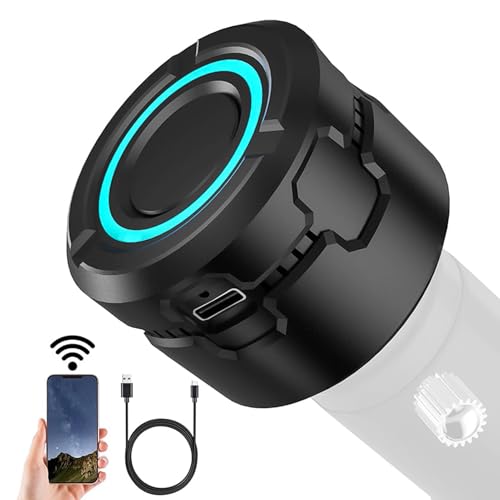
Best Portable WiFi Pick – Andoer Wireless Telescope Eyepiece
For beginners building a compact telescope guide cameras setup, the Andoer WiFi Electronic Eyepiece offers a simple way to view and record through a telescope without staying tied to a computer. Its 1.25-inch barrel, wireless connection, and lightweight design suit casual observing, travel, and outdoor use.
Best For: Beginners who want smartphone or tablet viewing, basic astrophotography, and a portable telescope camera for travel or bird watching.
Pros:
- Connects directly to a smartphone or tablet over WiFi for real-time viewing, photos, and video.
- Built-in 1600mAh rechargeable battery includes Type-C charging.
- Compact, lightweight design weighs 5.3 ounces and fits easily in a backpack.
- Works with telescopes using a 1.25-inch barrel.
Cons:
- Its basic beginner-oriented design may be less suitable for advanced imaging workflows.
- Requires a compatible 1.25-inch telescope interface.
The Andoer is a convenient choice when portability and wireless sharing matter more than a computer-based capture system. It is especially appealing for quick observations and casual recordings on the go.
Best High-Resolution Planetary Pick – Celestron NexImage 20
Among compact telescope guide cameras, the Celestron NexImage 20 is designed for detailed lunar, planetary, and filtered solar imaging. Its 20MP back-illuminated CMOS sensor, Region of Interest mode, and up to 90 frames per second make it a strong computer-based option for capturing and stacking Solar System footage.
Best For: Telescope users focused on high-resolution Moon and planetary imaging who also want built-in autoguiding support for deep-sky work.
Pros:
- 20MP AR2020 BSI CMOS sensor records images up to 5240 x 3840.
- Region of Interest cropping can increase frame rate and reduce file sizes.
- Supports up to 90 frames per second and includes iCap capture software.
- USB-C connectivity and built-in autoguiding support add versatility.
Cons:
- Requires a Windows PC for the listed computer compatibility and software workflow.
- Does not include image stabilization and is not water resistant.
- Solar use requires an appropriate filter.
The NexImage 20 is the most feature-rich choice here for dedicated Solar System imaging. Its ROI controls and high frame rate are particularly useful for planetary capture, while autoguiding support broadens its role beyond lunar and planetary targets.
Best Plug-and-Play USB Pick – SVBONY SV205 Telescope Camera
The SVBONY SV205 is a practical entry in compact telescope guide cameras for users who prefer a wired computer connection. Its 1.25-inch adapter, 7.05MP IMX415 color sensor, and plug-and-play operation support lunar, planetary, and terrestrial viewing with live display on a laptop or PC.
Best For: Beginners and hobbyists seeking a straightforward USB telescope camera for live computer viewing and moderate-resolution lunar or planetary video.
Pros:
- Plug-and-play operation is designed to work without an additional driver.
- 7.05MP IMX415 color CMOS sensor supports clear low-light imaging.
- Records up to 30 frames per second at 2K in MJPG format.
- Includes a 1.2m USB 3.0 cable, dust cover, and cleaning cloth.
Cons:
- It is wired and does not offer the WiFi connection of the Andoer model.
- Apple laptops require Astroamx Capture, and Apple phones or tablets are not supported.
- Requires a compatible 1.25-inch telescope interface or suitable adapter.
The SV205 balances a compact form factor with useful 2K video capability and broad computer compatibility across Windows, Linux USB 2.0, and Android. It is a sensible starting point for hands-on planetary and lunar camera work.
Complete Autoguiding Kit – SV905C Guide Camera Bundle
For beginners seeking compact telescope guide cameras, this SVBONY bundle combines the SV905C color autoguide camera, SV165 mini guide scope, and dovetail base in one setup. Its ST4 and USB 2.0 connections, 1.23MP sensor, and compatibility with common guiding software make it a practical starting point for long-exposure astrophotography.
Best For: Beginners and amateur astronomers who want a complete, compact autoguiding package for deep-sky imaging and faint-star tracking.
Pros:
- Includes the guide camera, 30mm F4 guide scope, and aluminum dovetail base.
- Supports PHD2, MDL, NINA, and SKY-X guiding software.
- Offers ST4 and USB 2.0 interfaces plus CS, C-mount, and 1.25-inch adaptation.
- The guide scope uses fully multi-coated optics and a 45mm back focus.
Cons:
- Not compatible with the ASI AIR system.
- At 630 g, the complete set may be heavier than a camera-only option.
This is the most turnkey choice in the group. It provides the key components for autoguiding, though buyers using ASI AIR should choose a different setup.
Planetary Imaging Pick – SV305C IMX662 Color Camera
The SV305C is a compact telescope camera suited to planetary, lunar, and electronically assisted astronomy rather than dedicated autoguiding. Its color IMX662 sensor, ROI controls, binning, and high-speed capture options give newcomers useful flexibility when recording bright, detailed targets.
Best For: Entry-level astrophotographers focused on lunar and planetary imaging or EAA.
Pros:
- Uses a 2.1MP back-illuminated IMX662 color sensor with 2.9μm pixels.
- Offers ROI and BIN2×2 modes for capture-rate and sensitivity adjustments.
- Includes planetary high-speed and long-exposure modes in SharpCap.
- Built-in image buffering helps reduce lost or damaged frames when USB transfer is interrupted.
Cons:
- It is primarily an imaging and EAA camera, not a complete guide-camera package.
- USB 2.0 may limit transfer performance compared with newer interfaces.
- The protective glass is removable, but the built-in UV/IR-cut filter is not.
Choose the SV305C when imaging versatility matters more than a dedicated guiding workflow. It is a capable entry-level camera for bright solar-system targets and EAA, but it does not include a guide scope or mounting base.
Wireless Observation Option – SC002 Digital Eyepiece Camera
The SC002 takes a different approach to compact telescope guide cameras: it is a wireless digital eyepiece for live viewing and recording, not a conventional autoguiding camera. Its broad 37–56mm compatibility, 1080p video, Wi-Fi control, and included 32GB card make it convenient for casual telescope observation and sharing.
Best For: Users who want wireless telescope viewing, basic recording, and smartphone control.
Pros:
- Fits telescopes, monoculars, and binoculars with 37–56mm eyepiece diameters.
- Records 1080p video at 25–30fps and provides 3x digital zoom.
- Supports Android, iOS, and HarmonyOS through the companion app.
- Includes a 1500mAh battery, 32GB TF card, and up to 3+ hours of recording.
Cons:
- It is not presented as a dedicated autoguiding camera and lacks listed ST4 guiding connectivity.
- Wireless range is limited to about 10m.
- Manual focus and digital zoom are less suited to precision astrophotography.
The SC002 is best viewed as a simple wireless observing camera. It is compact and easy to share with a phone, but buyers needing precise telescope guiding should select a purpose-built guide camera instead.
How We Picked These Compact Telescope Guide Cameras
We evaluated these Compact Telescope Guide Cameras by looking at the features that matter most in practical observing and imaging setups: sensor type and resolution, connection format, optical compatibility, focusing, wireless or USB operation, and intended use. Guide cameras are judged differently from planetary or general-purpose telescope cameras, so we considered whether each option is best suited to guiding, live viewing, lunar and planetary work, or higher-detail imaging.
We also included guide-scope bundles and camera-only models because a complete, usable setup often depends on more than the camera itself. A camera that fits a 1.25-inch focuser may still need suitable software, a guide scope, mounting hardware, or a compatible computer.
Quick Comparison
- Dedicated guiding: Look first at the SV905C models and the SV165 guide-scope combination.
- Small guide-scope optics: The SV165 provides a compact 30mm option, while the Astromania 60mm scope offers more aperture and a helical focuser.
- Lunar and planetary imaging: The Celestron NexImage 20 is purpose-built for Solar System targets.
- Higher-resolution capture: The SV205 offers a 7.05MP sensor, while the SV305C uses an IMX662 color sensor.
- Wireless viewing: The Andoer WiFi eyepiece and SV002 provide cable-free observing and recording.
Key Buying Factors for Compact Telescope Guide Cameras
Sensor and Guiding Performance
For guiding, resolution is only one part of the equation. Sensitivity, low-light performance, exposure control, and compatibility with guiding software are usually more important than having the highest pixel count. A monochrome sensor can be advantageous for guiding because it typically gathers usable luminance information efficiently, while color cameras are more convenient for general viewing and planetary imaging.
Mounting and Optical Compatibility
Check whether the camera uses a 1.25-inch nosepiece, a standard camera thread, or a bundled guide scope and dovetail base. Confirm that your telescope, guide scope, focuser, and mounting bracket can work together. A compact camera is not automatically lightweight enough for every finder shoe or guidescope mount.
Connection, Software, and Power
USB cameras generally offer a direct connection to a laptop or imaging computer, but you should verify operating-system and capture-software support before buying. Wireless eyepieces can simplify public viewing and casual observing, although they may not provide the same workflow or low-latency control as a wired guiding camera.
Intended Target
Guiding deep-sky exposures, recording planets, and streaming live views require different priorities. Choose a dedicated guide camera for mount corrections, a planetary camera for fast detailed video capture, or a wireless eyepiece for convenient display and sharing.
Who Should Buy Which Compact Telescope Guide Cameras?
Choose an SV905C-based option if you want a compact entry point for autoguiding and already have, or plan to add, a suitable guide scope. The bundle with the SV165 and dovetail base is more convenient when you need the core mounting pieces together.
Choose the SV165 or Astromania guide scope if your main need is the optical guide-scope portion of the system. The smaller SV165 favors portability, while the 60mm Astromania model may suit users who want a larger multi-use scope and helical focusing.
Choose a Celestron NexImage 20 for a straightforward lunar and planetary imaging setup. For more flexible color capture and higher-resolution experimentation, consider the SV205 or SV305C, provided your computer and software support the camera.
Choose the Andoer or SV002 wireless eyepiece when easy live viewing, recording, and sharing matter more than a traditional wired guiding workflow. Before ordering, confirm your telescope’s 1.25-inch fit and the camera’s app or device compatibility.