
A reliable guide scope can make a major difference in long-exposure astrophotography by helping your guiding camera track small movements more precisely. The best compact telescope guide scopes balance aperture, focal length, focusing control, weight, and mounting compatibility.
This roundup compares 10 options ranging from lightweight 30mm mini guide scopes to larger 70mm models, including designs with helical focusers and multi-use finder functionality.
Best 10 Compact Telescope Guide Scopes Picks for 2026
Best Compact Guide Scope for Wide Fields
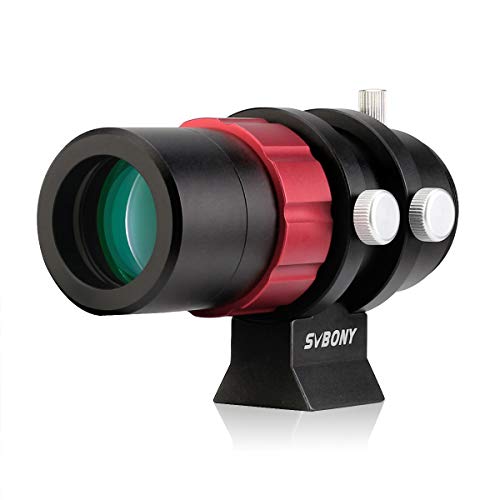
- Wide 2.86-degree field of view
- 1.25-inch and M42 camera interfaces
- 45mm back focus with adjustable rings
Best For: Wide-field guiding with compatible cameras
Best APO Guide Scope

- 50mm f/4.8 APO doublet
- ED glass for contrast-rich views
- Includes Vixen-style plate and finder stalk
Best For: Versatile guiding and optional astrograph use
Best Dual-Purpose Guide Scope
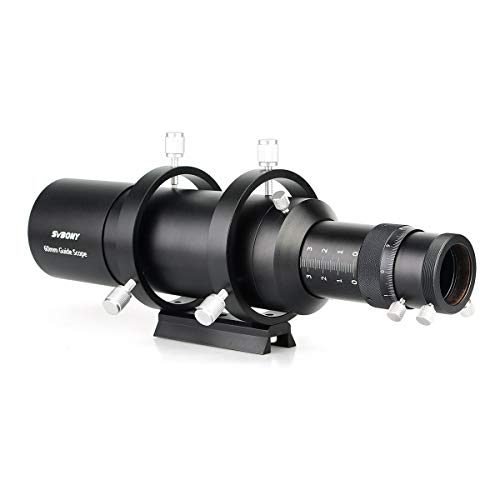
- 60mm aperture with helical focuser
- Focus adjustment does not rotate the field
- Can also work as a finder with an eyepiece
Best For: Guiding and occasional straight-through finding
Best Adjustable Mini Guide Scope

- Works with OTAs up to 700mm
- Scaled front focuser for repeatability
- Six-point ring supports alignment adjustment
Best For: Compact rigs needing adjustable focus and alignment
Precision Compact Guide Scope

- 40mm total focusing range with helical micro-focus
- 50mm fully multi-coated optics and 200mm focal length
- Includes clamps and Synta-style dovetail hardware
Best For: Portable guiding and visual object-finding
Wide-Field Compact Guide Scope

- 60mm aperture with 240mm focal length
- 45mm helical and drawtube focusing range
- T-threads, rings, and dovetail plate included
Best For: Larger astrophotography telescopes and wide guide-star views
Portable Compact Guide Scope
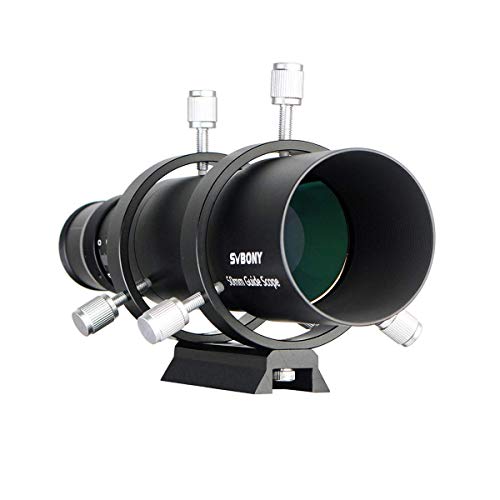
- 50mm fully multi-coated optics with a 3.4-degree field
- 8mm helical focus plus up to 30mm drawtube travel
- Includes guide rings, thumbscrews, and dovetail bar
Best For: Portable autoguiding setups needing flexible focus
Wide-Field Precision Pick
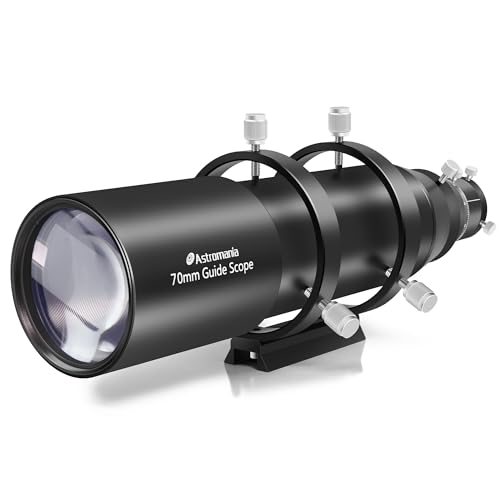
- 70mm fully multi-coated optics with 400mm focal length
- Worm focuser with micro-adjustment and compression ring
- Includes rings and Synta-style mounting plate
Best For: Astrophotographers wanting a larger-aperture guide/finder scope
Balanced Compact Kit

- 60mm aperture and 240mm focal length
- 48mm dual-helical focusing range
- Includes T-thread compatibility, rings, and dovetail plate
Best For: Users wanting one scope for finding objects and autoguiding
Lightweight Setup Choice

- Lightweight 50mm guide/finder design
- Helical focuser with direct T-thread camera attachment
- Includes rings, Teflon inlays, and dovetail bar
Best For: Mobile astrophotographers prioritizing low weight and flexible mounting
Best Compact Guide Scope for Wide Fields – SVBONY SV165 30mm
For a lightweight setup built around compact telescope guide scopes, the SVBONY SV165 30mm emphasizes a wide field of view, straightforward manual focusing, and broad camera compatibility. Its 45mm back focus and adjustable mounting rings make it practical for quickly locating guide stars.
Best For: Deep-sky astrophotographers using compatible 1.25-inch or M42 auto-guiding cameras and telescopes that benefit from a wide field.
Pros:
- Compatible with SV305C Pro, Orion, ZWO, QHY, and other compatible guiding cameras.
- F/4 optics and a 2.86-degree field of view help locate targets quickly.
- Fully multi-coated achromatic optics and nylon-tipped thumbscrews protect the tube.
- 45mm back focus supports precise focus adjustment.
Cons:
- Some cameras may require additional accessories for focusing.
- It cannot be used with a dielectric mirror star diagonal.
- Manual focusing requires adjustment during setup.
The SV165 is a compact, purpose-built choice when low weight and a generous field matter more than premium refractor performance. Confirm camera and focus compatibility before ordering.
Best APO Guide Scope – Sky-Watcher EvoGuide 50DX
The Sky-Watcher EvoGuide 50DX is a lightweight 50mm apochromatic doublet among compact telescope guide scopes. Its matched ED glass, 242mm focal length, and included mounting hardware suit guiding, visual observing, and optional astrograph use.
Best For: Users who want a more versatile 50mm guide scope with a Vixen-style plate, finder stalk, and the option to adapt it for astrophotography.
Pros:
- 50mm f/4.8 APO doublet uses matched ED glass for contrast-rich views.
- Includes a finder stalk, tube rings, and Vixen-style mounting plate.
- Built-in T-threads allow astrograph conversion with an optional adapter.
- 1.25-inch helical focuser supports manual focusing.
Cons:
- The optional astrograph adapter is not included.
- At 2.7 pounds, it is heavier than the smallest mini guide scopes.
- Its listed field of view is narrower than the SV165 30mm.
The EvoGuide 50DX is a strong all-around option when optical quality and mounting flexibility are priorities. Its higher weight may be less suitable for very small imaging rigs.
Best Dual-Purpose Guide Scope – SVBONY SV106 60mm
The SVBONY SV106 stands out among compact telescope guide scopes for its dual-purpose design. Its helical focuser provides precise, non-rotating focus adjustments for guide cameras, while an optional 1.25-inch eyepiece lets it function as a straight-through finder.
Best For: Astrophotographers who want one 60mm scope for guiding and occasional visual aiming or finding.
Pros:
- 60mm aperture offers a versatile guide-scope platform.
- Helical focuser preserves orientation while focusing.
- Provides 8mm of helical travel plus up to 35mm of drawtube back-travel.
- Compression ring and male T-threads support secure accessory attachment.
Cons:
- At 790g, it is relatively heavy for a compact guide scope.
- An eyepiece is required for finder-scope use and is not supplied in the listed contents.
- Manual focusing adds setup work.
The SV106 is appealing for users who value flexibility over minimum weight. Its generous focusing range can simplify camera setup, but check that your mount can handle its mass.
Best Adjustable Mini Guide Scope – SVBONY SV165 40mm
The SVBONY SV165 40mm is a compact telescope guide scope designed for optical tube assemblies with focal lengths up to 700mm. It combines a front focuser with a scale, threaded camera interfaces, and a six-point guide ring for adjustable alignment.
Best For: Imaging rigs using compatible guiding cameras and OTAs up to 700mm that need a compact scope with repeatable focusing and alignment control.
Pros:
- Suitable for telescopes with focal lengths within 700mm.
- Fully multi-coated achromatic optics provide clear, sharp views.
- Front focuser scale helps repeat focus settings.
- Six-point guide ring allows adjustment of guide-scope coaxiality.
Cons:
- The paired eyepiece may require focus adjustments or removal of the red locking ring.
- It is limited to the stated OTA focal-length range.
- Compatibility should be checked for cameras needing extensions or adapters.
This 40mm model is a practical middle ground between a tiny finder and a larger guide scope. Its focusing scale and adjustable ring are particularly useful when repeatable setup matters.
Precision Compact Guide Scope – Alstar 50mm Deluxe
For astrophotographers seeking compact telescope guide scopes, the Alstar 50mm combines a 200mm focal length with a fully multi-coated optical system. Its helical focuser, scalable drawtube, and included Synta-style dovetail hardware make it suitable for both guiding and visual object-finding.
Best For: Mobile astrophotography setups and users who want one compact scope for guiding and visual locating.
Pros:
- Helical focuser provides 40mm of total travel, including 10mm of micro-focusing adjustment.
- 50mm fully multi-coated objective offers a bright, wide-field view for guide-star acquisition.
- Includes pipe clamps and a Synta-style dovetail plate for flexible installation.
- All-metal housing and locking mechanism support stable, low-flexure operation.
Cons:
- Manual focusing requires initial setup and adjustment.
- Its 1.3-pound weight may be more than some minimalist guiding setups require.
The Alstar is a practical choice when precise focusing and broad compatibility matter more than having the lightest possible guide scope. Its dual finder-and-guide role adds useful versatility for portable observing.
Wide-Field Compact Guide Scope – Astromania 60mm
The Astromania 60mm is one of the more capable compact telescope guide scopes for setups that benefit from extra aperture and a wide field. It pairs 240mm optics with a fully multi-coated lens, a helical focuser, T-threads, and heavy-duty mounting hardware.
Best For: Astrophotographers using larger telescopes up to 1500mm focal length who want a versatile finder and autoguiding scope.
Pros:
- 60mm aperture and 240mm focal length provide a wide 2.7-degree field for locating guide stars.
- Helical focuser offers 45mm of adjustment, including a 10mm micro-focus range.
- Male T-threads support direct attachment of compatible autoguider cameras.
- Included rings feature Teflon inlays, knurled thumbscrews, and a Synta-style dovetail plate.
Cons:
- The larger 60mm design and heavy-duty hardware may add bulk to lightweight rigs.
- Compatibility is specifically described for cameras with female T-threads.
Choose the Astromania when a broad guide-star view, substantial focusing range, and secure camera connection are priorities. Its included mounting system also reduces the need to source basic installation parts separately.
Portable Compact Guide Scope – SVBONY SV106 50mm
The SVBONY SV106 is a straightforward option among compact telescope guide scopes, combining 50mm fully multi-coated optics with a 190mm focal length and a compact focusing system. Its helical focuser, telescoping drawtube, T-threaded collar, and included rings are designed for flexible autoguiding setups.
Best For: Users wanting a compact 50mm guide scope with adjustable focus and included aiming hardware.
Pros:
- 8mm helical focusing travel is supplemented by up to 30mm of drawtube back-travel.
- 50mm optics provide a 3.4-degree field of view for finding guide stars.
- Male T-threads allow secure attachment of compatible guide cameras.
- Includes two guide rings, six metal thumbscrews, and a 3.5-inch dovetail bar.
Cons:
- The supplied focuser has less helical travel than some larger guide-scope designs.
- Camera and accessory compatibility depends on the required T-thread or 1.25-inch connection.
The SV106 makes sense for buyers who value a compact footprint and flexible focusing over a larger aperture. Its generous field of view and included mounting bar make it a convenient addition to many portable imaging rigs.
Wide-Field Precision Pick – Astromania 70mm Guide Scope
For astrophotographers comparing compact telescope guide scopes, this 70mm Astromania model emphasizes a bright, wide field and flexible manual focusing. Its 400mm focal length can help keep numerous potential guide stars in view, while the included rings and Synta-style mounting plate simplify installation.
Best For: Astrophotographers who want a larger-aperture guide/finder scope with a wide field and precise helical focusing.
Pros:
- 70mm fully multi-coated optics with a 400mm focal length for bright, wide-field views.
- Built-in worm focuser includes a brass compression ring, thumbscrews, and micro-focusing control.
- Works with 1.25-inch eyepieces and autoguiding cameras.
- Includes matching pipe clamps and a Synta-style mounting plate.
Cons:
- At 2.5 pounds, it is heavier than the smaller guide-scope options in this group.
- Manual focusing requires setup and adjustment rather than a powered focus system.
This is the most substantial option here for users who prioritize aperture and a generous guide-star view. Choose it when the extra size and weight fit your astrophotography setup.
Balanced Compact Kit – Alstar 60mm Guide Scope
This Alstar 60mm model is a practical middle ground among compact telescope guide scopes. Its 240mm focal length and fully multi-coated optics provide a wide-field view, while the dual helical focuser supports fine adjustments for both guiding and visual finding.
Best For: Users seeking a compact, all-metal guide scope that can serve as both a finder and an autoguiding-camera platform.
Pros:
- 60mm aperture and 240mm focal length provide a bright, wide-field view.
- Dual helical focuser offers 48mm of total focusing range, including 10mm of micro-focus adjustment.
- Supports 1.25-inch eyepieces and T-thread camera attachment.
- Includes a Synta-style dovetail plate and matching pipe clamps.
Cons:
- The specifications list a 1.04-degree field of view, narrower than the other wide-field figures provided for this group.
- Manual focusing may require repeated adjustment when changing accessories.
With its 60mm aperture, compact 24cm tube, and included mounting hardware, the Alstar offers a versatile balance of portability and capability for visual locating or guiding.
Lightweight Setup Choice – Astromania 50mm Guide Scope
For a lighter approach to compact telescope guide scopes, this Astromania 50mm model combines a 200mm focal length with a helical focuser and included mounting hardware. It is designed for both visual finding and autoguiding, with direct T-thread attachment for compatible guide cameras.
Best For: Mobile astrophotographers who want a lighter guide/finder scope with flexible mounting and direct camera-thread compatibility.
Pros:
- Lightweight 50mm design listed at 1.3 pounds.
- Helical focuser supports precise adjustment while helping prevent camera or eyepiece rotation.
- Male T-threads enable direct attachment of compatible female-threaded guide cameras.
- Includes heavy-duty rings, Teflon inlays, and a Synta-style dovetail mounting bar.
Cons:
- Its 50mm aperture gathers less light than the 60mm and 70mm alternatives.
- Compatibility with direct camera attachment depends on the camera having matching female T-threads.
- The supplied specifications contain varying focal-length details, so buyers should confirm the current listing.
This is the most portable choice of the three and a sensible fit when minimizing equipment weight matters. Its included rings and direct T-thread option also make it convenient for a streamlined guiding setup.
How We Picked These Compact Telescope Guide Scopes
We focused on guide scopes that are practical for portable astrophotography setups and compatible with common guide cameras, mounting rings, dovetail systems, or finder shoes. The selection includes several aperture and focal-length classes so you can compare lightweight mini scopes with more versatile 50mm, 60mm, and 70mm instruments.
Key considerations included optical design, stated focal ratio, focusing mechanism, mounting convenience, likely portability, and whether a scope can also serve as a finder. Because real-world guiding depends on the camera, mount, software, and optical train, specifications should be checked against your existing equipment before purchase.
Quick Comparison
- Best for minimal weight: 30mm and 40mm mini guide scopes are suited to compact, portable rigs.
- Best all-around range: 50mm models offer a useful compromise between light gathering, reach, and size.
- Best for more flexibility: 60mm and 70mm scopes can provide additional focal length and finder utility, but add bulk.
- Best focusing control: Double-helical or adjustable helical focusers can make precise camera alignment easier.
- Best for dual use: Multi-use finder and guide scopes can reduce the number of accessories on your telescope.
Key Buying Factors for Compact Telescope Guide Scopes
Aperture and Focal Length
Larger aperture can improve star visibility, while focal length affects the guiding scale and field of view. A 30mm or 40mm scope may be sufficient for many short-focal-length imaging systems. Longer imaging telescopes or more demanding setups may benefit from a 50mm, 60mm, or 70mm guide scope, provided the mount can handle the added weight.
Focusing Design
Fixed or basic focus systems are often lighter and simpler. Helical focusers provide finer adjustment and can help achieve sharp guide-star images. Double-helical designs may offer more control, but they can increase cost and complexity. Check how the guide camera attaches and whether the focuser includes a reliable locking method.
Mounting and Flexure
A guide scope is only useful if it remains rigidly aligned with the imaging telescope. Confirm the included shoe, rings, dovetail, or mounting hardware matches your setup. Avoid loosely attached finder brackets for demanding long-exposure work, since flexure can create guiding errors even when the mount is operating correctly.
Weight and Balance
Compact scopes reduce strain on the equatorial mount and make balancing easier. Compare the complete operating weight, including rings, adapter, and guide camera—not just the optical tube. Portable rigs generally benefit from the lightest model that still provides suitable star availability and guiding scale.
Who Should Buy Which Compact Telescope Guide Scopes?
Choose a 30mm or 40mm mini scope if portability and low weight are your top priorities. A 50mm model is a sensible general-purpose choice for many beginner and intermediate imaging systems. Consider a 60mm scope when you want more finder versatility or additional optical reach without moving to a larger guide assembly. A 70mm model is better suited to users who value a wider range of guide-star options and do not mind extra size and weight.
Before buying, verify the guide camera thread, mounting standard, focal length, and available back focus. The best choice is not necessarily the largest scope; it is the model that provides dependable alignment and focusing without overloading or complicating your astrophotography rig.