
Finding the right microscope can turn curiosity into hands-on discovery. The best compound microscopes for children balance ease of use, clear optics, and sturdy construction.
Whether you’re shopping for a beginner STEM kit or a more capable school-ready model, this roundup highlights options that make learning science practical and fun.
Best 10 Compound Microscopes for Children Picks for 2026
Beginner STEM Kit
40X-1000X Compound Microscope for Kids
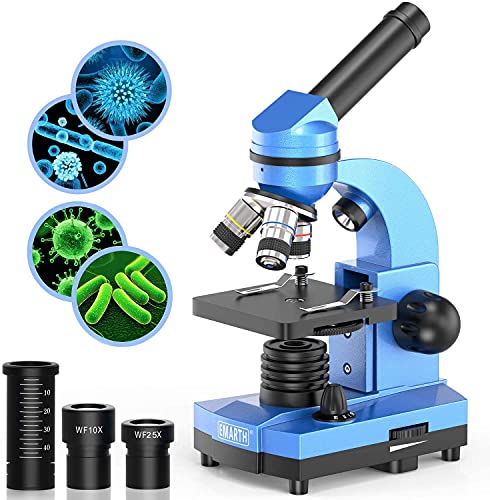
- 40X–1000X magnification range
- 52-piece kit with slides and tools
- Top and bottom LED illumination
Best For: Kids 8–12 and homeschool science
High-Power Learning Tool
100X-2000X Kids Microscope Kit

- 100X–2000X magnification range
- Dual LED lighting with top and bottom light
- Includes phone adapter and slide kit
Best For: Older kids and higher-detail beginner study
Complete Starter Set
100X-1200X Kids Microscope Kit

- 100X–1200X magnification range
- 58-piece kit with specimens and tools
- Color guide and carrying box included
Best For: Ages 5–12 and beginner hands-on science
High-Power Classroom Pick
Microscope for Students, School Lab & Home

- 40X-2500X magnification range
- Dual LED lighting for slides and opaque objects
- Phone holder and accessory kit included
Best For: older kids and students who want advanced viewing power
Beginner STEM Starter
Kids Microscope Kit with Slides and Tools

- Starter kit with prepared slides and tools
- Dual illumination for different specimen types
- Phone adapter included for easy sharing
Best For: young beginners ages 6-12 who want a complete kit
Rechargeable High-Magnification Pick
Compound Monocular Microscope with Phone Holder

- 40X-2000X magnification range
- Rechargeable USB-C battery for portable use
- Metal frame with dual lighting and slides
Best For: kids and beginners who want a sturdy rechargeable microscope
Easy-to-Use STEM Kit
National Geographic Kids Microscope Kit

- Up to 400x magnification
- LED lights above and below
- Includes slides, tools, and lab guide
Best For: Ages 6+ beginners who want an easy starter science kit
High-Power Beginner Option
HUTACT 40-2000X Compound Microscope

- 40X-1000X optical range
- Up to 2000X with 2X lens
- Metal body with achromatic glass lenses
Best For: Beginners and homeschool users who want higher magnification
Most Complete Slide Kit
Mileonaim 61-Piece Kids Microscope Kit

- 100X, 400X, and 1200X magnification
- 61-piece set with prepared and blank slides
- Includes tools and a carrying case
Best For: Kids ages 6-12 who want a full portable STEM kit
Beginner STEM Kit – 40X-1000X Compound Microscope for Kids
If you want compound microscopes for children that feel like a real science tool, this Emarth kit is a strong place to start. It offers 40X to 1000X magnification, LED illumination, and a metal frame, so kids can move beyond simple viewing and into basic biology observation with a more serious setup.
Best For: Kids ages 8–12, homeschool science, and beginner biology experiments.
Pros:
- 40X–1000X magnification for a wide range of beginner observations
- Includes 52 pieces with prepared slides, blank slides, and tools
- Top and bottom illumination helps with opaque and translucent specimens
- Metal construction and 6 color filters add stability and contrast
Cons:
- Batteries are not included
- May be more microscope than very young kids need
This is a practical pick for families who want a compound microscope that supports real learning rather than just play. The included kit and dual lighting make it easier for beginners to get started right away.
Portable Classroom Pick – 120X-1200X Beginner Microscope STEM Kit
For compound microscopes for children that balance ease of use with a broader magnification range, this AmScope kit is a solid choice. It provides 120X to 1200X magnification, LED lighting, a rotating color filter wheel, and a hard carrying case for organized beginner use.
Best For: Kids who want a more portable microscope kit with a wide magnification range.
Pros:
- Six magnification settings from 120X to 1200X
- LED light and rotating color filter wheel help with viewing
- 52-piece STEM kit supports hands-on learning
- Hard ABS case makes storage and transport easier
Cons:
- Monocular design is simpler than more advanced models
- Battery-powered setup may require extra maintenance
This kit is a good fit when you want a beginner-friendly compound microscope with classroom-style features and easy portability. The included case and accessories make it especially practical for repeat use at home or on the go.
High-Power Learning Tool – 100X-2000X Kids Microscope Kit
If you are comparing compound microscopes for children and want the highest magnification in this group, this PALOBIL kit stands out. It includes 100X to 2000X viewing, dual LED lighting, a metal frame, and a full accessory set, making it suitable for more ambitious beginner and student exploration.
Best For: Older kids, beginners, and families who want a higher-magnification compound microscope.
Pros:
- 100X–2000X magnification for detailed observation
- Dual LED lighting handles both opaque and translucent specimens
- Includes a phone adapter and beginner experiment kit
- Metal frame and sharp optics support stable viewing
Cons:
- Requires 3 AA batteries or the included AC adapter
- Accessory set may be more than very young children need
This is a strong option if you want a child-friendly microscope that can still reach advanced magnification levels. The added adapter and complete kit make it easier to document observations and start experimenting right away.
Complete Starter Set – 100X-1200X Kids Microscope Kit
For families shopping compound microscopes for children on a beginner-friendly budget, this Uarzt kit is designed to be ready out of the box. It offers 100X to 1200X magnification, LED lighting, a metal body, and a large set of slides and tools for guided science exploration.
Best For: Ages 5–12, home learning, and classroom-style beginner experiments.
Pros:
- 100X–1200X magnification covers common beginner use
- 58-piece kit includes prepared specimens, blank slides, and lab tools
- Colorful guide helps kids learn microscope basics step by step
- Compact metal-body design with LED light and carrying box
Cons:
- Requires 2 AA batteries, which are not included
- Smaller size may feel less substantial than larger models
This is a practical all-in-one choice for introducing kids to microscopy without extra purchases. The large accessory count and beginner guide make it especially useful for hands-on learning at home or in the classroom.
High-Power Classroom Pick – Microscope for Students, School Lab & Home
If you are comparing compound microscopes for children, this model stands out for its very high magnification range and classroom-style feature set. It is built to handle both slide viewing and opaque samples, making it useful for guided STEM activities at home or in school.
Best For: Older kids, students, and families who want a more advanced compound microscope with strong optics and broad viewing options.
Pros:
- 40X-2500X magnification with WF25X/10X eyepieces and 4X/10X/100X objectives.
- Dual LED illumination supports both translucent slides and opaque objects.
- Coarse/fine focusing helps with quick image finding and sharper detail.
- Includes a phone holder plus basic accessories for experiments and image capture.
Cons:
- The 100X objective and top-end magnification may be more than younger beginners need.
- Its more advanced setup may take a little more time to learn.
Overall, this is a strong pick if you want a child-friendly microscope that still feels close to a lab instrument. The included filters, dual lighting, and precision focusing make it especially versatile for observation and recording.
Beginner STEM Starter – Kids Microscope Kit with Slides and Tools
For families shopping for compound microscopes for children, this beginner kit is designed to make first observations easier. It combines a broad magnification range with prepared slides, a phone adapter, and multiple tools, so kids can start exploring the microscopic world right away.
Best For: Kids ages 6-12 who need a beginner-friendly microscope kit with lots of included accessories.
Pros:
- 40X-1600X capability with multiple objective lens settings for flexible viewing.
- Dual illumination works for both opaque and translucent specimens.
- Includes prepared slides, blank slides, droppers, tweezers, and other starter tools.
- Phone adapter and compact packaging add convenience for storage and sharing.
Cons:
- The listed notes mention 40X-1600X in the title, but the details list a lower maximum magnification.
- Best suited to guided beginner use rather than advanced microscopy.
This is a practical starter option if you want a science kit feel rather than just a bare microscope. The included accessories and easy-to-use lighting make it a good match for early STEM learning.
Rechargeable High-Magnification Pick – Compound Monocular Microscope with Phone Holder
This compound microscope is a strong choice for families wanting compound microscopes for children with a bit more flexibility and portability. It offers a rechargeable battery, dual illumination, and a metal frame, which makes it feel more substantial than many basic kid models.
Best For: Kids, beginners, and hobbyists who want a rechargeable microscope with a sturdy build and high magnification.
Pros:
- 40X-2000X magnification with wide-angle eyepieces and multiple objective lenses.
- Rechargeable USB-C battery supports up to 4 hours of use.
- Dual illumination includes mirror and adjustable LED lighting.
- Metal frame, phone holder, and pre-made slides add value for home or classroom use.
Cons:
- It is a monocular microscope, so it may be less comfortable for some users than binocular models.
- Higher magnification can take patience and practice for beginners to use well.
Overall, this model is appealing if you want a more durable, portable setup with built-in power and strong magnification. It balances educational features with practical extras that make it easy to start observing quickly.
Easy-to-Use STEM Kit – National Geographic Kids Microscope Kit
If you want compound microscopes for children that feel approachable right away, this National Geographic kit is built for that first hands-on science experience. It combines easy controls, top-and-bottom LED lighting, and a slide collection that helps kids start observing prepared specimens and simple at-home samples without much setup.
Best For: Young beginners ages 6+ who want a simple, guided microscope kit with prepared slides and starter science activities.
Pros:
- Large focus knobs, a soft-touch eyepiece, and an adjustable platform make specimen positioning easier.
- Three magnification levels and lights above and below help improve viewing flexibility.
- Includes 6 prepared plant slides, 6 rocks and minerals, and 6 blank slides for home prep.
- Comes with a pipette, specimen dish, tweezers, and a detailed lab guide with activities and stickers.
Cons:
- Maximum magnification is 400x, so it is less powerful than higher-spec beginner compound microscopes.
- Best suited to guided learning rather than advanced microscopy.
This is a strong pick if you care most about ease of use and a complete kid-friendly science kit. The included materials make it more than just a microscope, which can help keep children engaged as they learn the basics of observation.
High-Power Beginner Option – HUTACT 40-2000X Compound Microscope
For families comparing compound microscopes for children with more power, this HUTACT model stands out for its wide magnification range and metal build. It is designed to be easy enough for beginners while still offering the kind of optical flexibility that can support more detailed exploration.
Best For: Kids, beginners, and homeschool users who want a higher-magnification compound microscope with a more durable feel.
Pros:
- Offers 40X-1000X optical magnification, with up to 2000X using the 2X magnifying lens.
- Includes H10X and H25X eyepieces plus 4X, 10X, and 40X objective lenses.
- Comes with a 5-piece glass slide set so users can start exploring immediately.
- Aluminum alloy construction and achromatic glass lenses support stable, clear imaging.
Cons:
- Higher magnification may be more than many young children need for simple first use.
- Less explicitly kid-focused than some learning kits, so it may feel more like a hobby microscope.
This is a good choice if you want a beginner microscope that can grow with the user. The stronger optics and sturdier materials make it appealing for science education, while the included slide set keeps setup simple.
Most Complete Slide Kit – Mileonaim 61-Piece Kids Microscope Kit
If you are shopping for compound microscopes for children and want the most all-in-one setup, this Mileonaim kit is built around variety and hands-on learning. It combines multiple magnification levels, a large slide assortment, and a portable storage case so kids can move from observation to making their own slides.
Best For: Ages 6-12 who want a full STEM microscope kit with lots of slides, tools, and portable storage.
Pros:
- Includes 100X, 400X, and 1200X magnification options for different types of viewing.
- 61-piece set comes with 12 prepared slides, 32 blank plastic slides, and useful lab tools.
- Features a carrying case, making it easy to store and transport.
- Designed as a functional science lab for biology, botany, and family learning activities.
Cons:
- Plastic slides may be less durable than glass slides in some similar kits.
- Large accessory count may feel more involved than a simple entry-level microscope.
This kit is especially appealing if you want a richer activity set rather than just the microscope itself. The mix of prepared slides, blank slides, and tools makes it a strong option for children who like to experiment and create.
How We Picked the Best Compound Microscopes for Children
We focused on models that are genuinely beginner-friendly for home, classroom, and homeschool use. That means simple controls, kid-safe handling, useful starter accessories, and a design that can survive regular use.
We also looked for realistic magnification claims, usable included slides or specimen kits, and better-than-average lighting. For Compound Microscopes for Children, a stable stage and clear focus knobs matter more than extreme magnification numbers.
Quick Comparison: What Matters Most
In this category, the best value usually comes from a balanced kit rather than the highest magnification. Lower-to-mid magnification is often easier for children to use because specimens are brighter, easier to focus, and less likely to blur from tiny vibrations.
Starter kits with prepared slides are ideal for younger users, while more advanced sets with blank slides, accessories, and wider magnification ranges suit older kids who want to make their own samples.
Key Buying Factors for Compound Microscopes for Children
Magnification Range
Look for a range that supports both simple observation and more detailed viewing, but don’t overvalue very high numbers. Real-world image quality depends on optics, lighting, and stability as much as magnification.
Build Quality and Stability
Metal parts, a wider base, and smooth focus controls help children get clearer images with less frustration. Lightweight plastic models can be fine for younger kids, but they should still feel secure on a table.
Lighting and Slides
LED illumination is especially useful because it provides bright, consistent light and is easier for children to use. Prepared slides are great for beginners, while blank slides encourage experimentation and STEM learning.
Age and Skill Level
Younger children usually do best with simpler microscopes and fewer adjustments. Older children and beginners with a strong interest in biology may benefit from more features, a wider accessory set, and stronger magnification flexibility.
Who Should Buy Which Compound Microscopes for Children?
If you want an easy entry point for a young child, choose a basic kit with prepared slides and clear instructions. If you’re buying for a curious student who wants to explore independently, look for a sturdier compound microscope with more accessories and better optics.
For classrooms, homeschool science, or siblings sharing one device, prioritize durability, a useful slide set, and controls that multiple users can learn quickly. The best Compound Microscopes for Children are the ones they’ll actually use often, not just the ones with the biggest magnification claim.