
The best desktop laser engravers make it easier to personalize gifts, cut craft materials, mark coated metals, and create repeatable designs without investing in industrial equipment.
Our 2026 roundup compares 10 machines across diode, infrared, enclosed, portable, and camera-equipped designs so you can match features, safety, speed, and workspace requirements to your projects.
Best 10 Desktop Laser Engravers Picks for 2026
Best Dual-Laser Desktop Pick
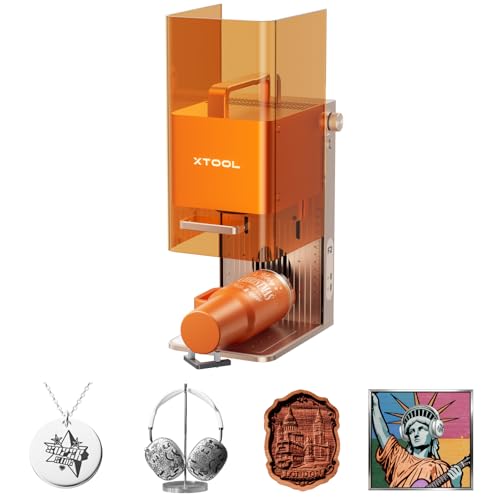
- 15W diode and 5W IR lasers
- 50MP camera for precise alignment
- Up to 6000 mm/s engraving speed
Best For: Fast, versatile personalization and small-batch work
Best Enclosed Modular Model

- Class 1 enclosed design
- Auto focus and smart camera
- Up to 15,000 mm/min speed
Best For: Guided, safety-focused home and classroom use
Best Portable Rotary Option

- Includes versatile electric roller
- Supports cylindrical and extended engraving
- Compact smartphone and PC control
Best For: Portable gifts, tumblers, and personalized items
Best Foldable Desktop Laser Engraver

- Foldable, space-saving design
- Mobile and desktop software support
- 12W laser with 200 × 150mm work area
Best For: Beginners and makers creating compact craft projects
Best Enclosed Desktop Laser Engraver

- Enclosed Class 1 design with safety features
- Up to 600 mm/s engraving speed
- Camera preview and automatic focusing
Best For: Small businesses and fast, guided production
Best Large-Format Desktop Laser Engraver

- 26 × 21-inch engraving bed
- 600 mm/s speed with 40W laser
- Offline touchscreen and dual-camera positioning
Best For: Larger projects, batch work, and small-business production
Best Compact Beginner Pick
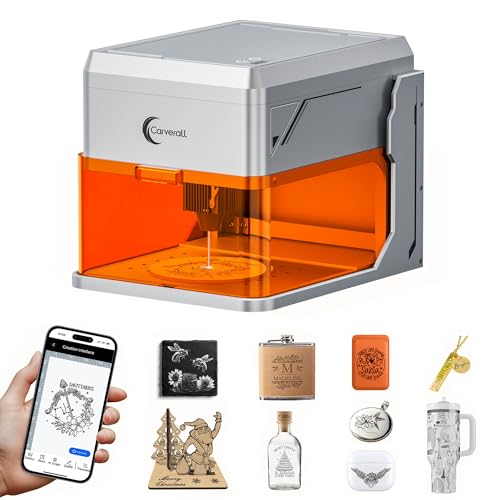
- Camera-guided design placement
- Enclosed Class 1 safety design
- Compact setup for small crafts
Best For: Beginners making pet tags, jewelry blanks, and other small projects
Best Large-Format Value

- 400-by-400mm work area
- USB, Wi-Fi, TF card, and app support
- Works with LightBurn and LaserGRBL
Best For: Makers handling larger flat projects and varied materials
Best High-Power Mini Pick
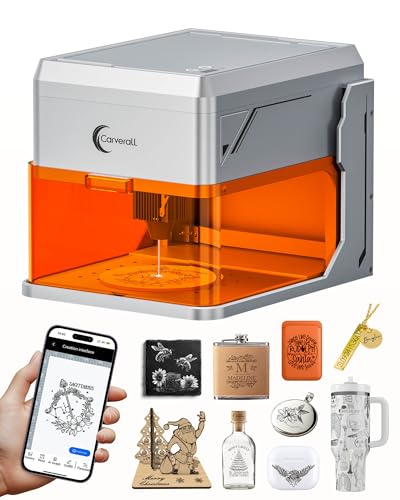
- Verified 12W-class cutting power
- Camera alignment and app control
- Enclosed Class 1 design with air assist
Best For: Small-batch makers needing portable, heavier-duty cutting
Best Dual-Laser Desktop Pick – xTool F2
The xTool F2 stands out among desktop laser engravers for its combination of a 15W diode laser and 5W infrared laser. It is built for fast, detailed work across more than 300 materials, with a camera-assisted workflow and enclosed design suited to indoor projects or small-batch customization.
Best For: Makers and small businesses needing fast engraving, metal color marking, 3D embossing, and portable on-site customization.
Pros:
- Dual lasers expand material and project versatility.
- Built-in 50MP camera supports alignment accuracy up to 0.1 mm.
- Engraving speeds reach up to 6000 mm/s, with batch-processing support through the Slide Extension.
- Fully enclosed, lightweight design includes a built-in fan and optional purifier support.
Cons:
- Additional accessories such as the Slide Extension, RA3, and purifier are optional.
- The machine is a Class 4 laser system, so users should follow appropriate operating and safety procedures.
The F2 is a strong choice when speed, camera alignment, and material range matter more than having the simplest low-cost setup. Its dual-laser configuration also gives it capabilities many single-laser desktop machines lack.
Best Compact Starter – ACMER S1
The ACMER S1 is a compact option for shoppers comparing desktop laser engravers for home crafting or beginner projects. Its 6000mW diode laser supports engraving and cutting on materials including wood, leather, acrylic, and ceramics, while the included software is designed to reduce the learning curve.
Best For: Beginners, hobbyists, and home users who want a lightweight machine with AI-assisted design tools.
Pros:
- Free ACMER Studio software includes AI tools for prompts and photo-based designs.
- Supports LightBurn and LaserGRBL on macOS, Windows, and Linux.
- 99% preassembled with a simple laser-head installation.
- Compact 130 x 130 mm working area and approximately 2 kg weight make it easy to store.
Cons:
- The 130 x 130 mm working area is smaller than that of many larger desktop engravers.
- Its 6000mW diode configuration is aimed at selected materials rather than broad metal engraving.
The S1 keeps the hardware and setup approachable while retaining useful software compatibility. It is particularly practical when workspace, portability, and ease of entry are more important than a large work area.
Best Enclosed Modular Model – Creality Falcon A1C
The Creality Falcon A1C is a fully enclosed desktop laser engraver designed for convenient, safety-focused operation. It combines a 10W diode module with auto focus, a smart camera, AI-enabled software, and support for quick-swapping compatible laser heads as your material needs change.
Best For: Beginners and families who want an enclosed machine with guided setup, visual positioning, and room to upgrade.
Pros:
- Class 1 enclosed design includes flame detection, tilt protection, and a USB safety lock.
- Auto focus and smart-camera preview simplify alignment and setup.
- Engraving speeds reach up to 15,000 mm/min.
- Compatible modules include 5W diode, 10W diode, and optional 1.2W IR laser heads.
Cons:
- Additional laser modules are sold separately.
- The included 10W diode module is intended for selected nonmetal materials; expanded metal capability requires the optional IR module.
- At 31.2 pounds, it is less lightweight than compact portable models.
The A1C is a compelling fit for users who prioritize enclosure and guided operation without giving up upgrade potential. Its modular design can make it a longer-term purchase as projects become more varied.
Best Portable Rotary Option – LaserPecker LP2
The LaserPecker LP2 takes a different approach to desktop laser engravers, emphasizing portability and handheld flexibility. Its included electric roller supports cylindrical, slab, and extended trolley engraving, making it useful for personalized items such as tumblers, pencils, and longer workpieces.
Best For: Portable personalization projects involving wood, leather, coated metal, and cylindrical objects.
Pros:
- Included electric roller enables 360-degree cylindrical engraving.
- Compact design connects to a smartphone or PC and supports handheld use.
- 0.05 mm compressed spot and three resolution options support detailed work.
- Extended modes can support engraving lengths up to 196 inches with a 4-inch width.
Cons:
- It cannot engrave pure or shiny metal and has limited metal capability.
- Light-colored or transparent materials may need black paint or spray before engraving.
- Wood cutting is limited to approximately 0.2-inch thickness, according to the supplied notes.
The LP2 is best viewed as a specialized portable engraver rather than an all-purpose cutter. Choose it for mobility and rotary personalization, but consider a different model if regular metal engraving is your priority.
Best Foldable Desktop Laser Engraver – Artilume T1 12W
The Artilume T1 is a practical choice among desktop laser engravers when workspace flexibility matters. Its foldable design, 12W laser, 200 × 150mm work area, and support for mobile and desktop software make it suitable for everyday crafting without taking over a workbench.
Best For: Beginners, hobby makers, and small-business users creating personalized gifts, signs, tags, coasters, and other compact projects.
Pros:
- Foldable design is easy to store and move between workspaces.
- Supports mobile app control plus compatible LightBurn and LaserGRBL software.
- 12W output handles detailed engraving and light cutting on materials such as wood, leather, acrylic, coated metal, paper, cardboard, and bamboo.
- Includes safety goggles, beginner materials, and setup accessories.
Cons:
- The 200 × 150mm work area is better suited to smaller projects than large signs or batch work.
- It requires careful ventilation, eye protection, and supervision during operation.
Choose the T1 if portability and an approachable setup are more important than maximum production capacity. Its compact work area and foldable frame make it a convenient desktop option for smaller creative projects.
Best Enclosed Desktop Laser Engraver – Creality Falcon A1 Pro 20W
The Creality Falcon A1 Pro is one of the more fully equipped desktop laser engravers for users who want an enclosed, largely pre-assembled machine. It combines a 20W blue laser, touchscreen and app control, automatic focusing, camera positioning, and speeds up to 600 mm/s.
Best For: Small businesses and experienced makers who need fast, enclosed engraving and cutting with guided positioning and minimal assembly.
Pros:
- Full enclosure, emergency stop, lid-open halt, smoke removal, and Class 1 safety design support a more contained workflow.
- Up to 600 mm/s speed can help with batch production.
- HD camera preview, AI vision, red-dot ranging, and autofocus simplify material positioning.
- Arrives 80% pre-assembled and includes touchscreen and app-based control.
Cons:
- The machine is substantially larger and heavier than compact open-frame desktop models.
- The optional 2W infrared module for high-precision metal and plastic engraving is sold separately.
- It is compatible only with 460 × 346mm honeycomb panels.
The Falcon A1 Pro is a strong fit when enclosure, automation, and speed take priority. Confirm that its footprint and honeycomb-panel requirement work for your setup, and budget separately if infrared engraving is important.
Best Large-Format Desktop Laser Engraver – Aliencell X1 40W
The Aliencell X1 is aimed at makers and small businesses that need more room and speed than typical desktop laser engravers provide. Its 26 × 21-inch bed, 40W laser, 600 mm/s operating speed, dual cameras, and standalone touchscreen support larger projects and offline workflows.
Best For: Small businesses and hobbyists producing larger pieces, batches, or projects involving wood, leather, acrylic, and metal.
Pros:
- Large 26 × 21-inch engraving bed accommodates bigger projects and batch work.
- High-speed motion, 20,000 mm/s² acceleration, and 20kHz frequency are designed for fast, clean results.
- Dual 8MP cameras, distortion correction, and cross-laser positioning help with accurate placement.
- Standalone Linux-based touchscreen operation allows offline use without a PC.
Cons:
- At 104.8 pounds, it is considerably less portable than smaller desktop machines.
- Its large footprint may require a dedicated, sturdy workspace.
- The supplied notes do not specify a compact or foldable storage design.
The X1 makes the most sense when work area, throughput, and standalone operation justify its size and weight. It is overbuilt for occasional small crafts but well matched to larger-format or repeat production work.
Best Compact Beginner Pick – Carverall A1 Pro 5W
For shoppers comparing desktop laser engravers, the Carverall A1 Pro 5W emphasizes easy positioning, compact size, and beginner-friendly controls. Its HD camera, material presets, app support, and enclosed Class 1 design make it practical for small crafts and home workshops.
Best For: Beginners making pet tags, bookmarks, jewelry blanks, and other small projects.
Pros:
- HD camera helps place designs accurately, with stated 0.01mm precision.
- Compact 3.94-by-3.94-inch work area and heights up to 10.63 inches.
- Includes free CutLabX software, AI design tools, app control, and offline batch operation.
- Fully enclosed Class 1 design includes tilt protection, a built-in air assist, and an exhaust fan.
Cons:
- The small work area is better suited to compact projects than large signs.
- The supplied 5W configuration is less powerful than the 12W model in this roundup.
- Optional accessories such as the IR head, air purifier, and roller add to the setup cost.
This is a strong choice when ease of use, safety, and a small footprint matter more than maximum cutting power. Its camera-based alignment and offline workflow are especially useful for repeat craft projects.
Best Large-Format Value – Longer Ray5 5W
The Longer Ray5 5W stands out among desktop laser engravers for its 400-by-400mm work area and flexible connectivity. It combines a 0.08-by-0.08mm laser spot, stated 0.01mm engraving accuracy, and support for USB, Wi-Fi, TF card, and app control.
Best For: Makers who need a larger work area for varied wood, leather, acrylic, glass, and metal projects.
Pros:
- Large 400-by-400mm working area accommodates bigger projects.
- Supports USB, TF card, Wi-Fi, and app connections, including offline use.
- Compatible with LaserGRBL and LightBurn.
- Includes emergency shutdown, motion protection, overheating detection, protective covers, and goggles.
Cons:
- The open-style desktop format may require more attention to workspace safety than a fully enclosed machine.
- Installation is required, unlike the no-assembly Carverall models.
- It lacks the camera-guided positioning and built-in air assist described for the Carverall units.
Choose the Ray5 when project size and connection flexibility are priorities. Its 400mm work area gives it a clear advantage for larger flat materials, while LightBurn and LaserGRBL support leave room for a more advanced workflow.
Best High-Power Mini Pick – Carverall A1 Pro 12W
For buyers who want compact desktop laser engravers with more cutting capacity, the Carverall A1 Pro 12W pairs a small footprint with verified 12.36–12.58W output. It adds camera positioning, app and AI controls, built-in air assist, and claimed cutting capability for thicker plywood and acrylic.
Best For: Small-batch makers who need a portable machine for heavier cutting and detailed custom work.
Pros:
- Verified 12W-class output is rated for cutting up to 12mm plywood and 8mm acrylic.
- HD camera, 0.01mm precision, material presets, and smart memory simplify repeat jobs.
- Fully enclosed Class 1 design includes tilt protection, air assist, and an exhaust fan.
- Supports CutLabX, mobile app control, AI-generated designs, LightBurn, and LaserGRBL.
Cons:
- The 3.94-by-3.94-inch work area limits the size of flat projects.
- The optional IR head and roller are sold separately.
- Higher power may be unnecessary for users focused only on light engraving.
This model is the better fit when a compact machine still needs substantial cutting power. It preserves the beginner-friendly camera and enclosed design of the lower-power version while offering more capacity for production-oriented craft work.
How We Picked the Best Desktop Laser Engravers
We focused on the features that matter most in real home, workshop, and small-business use: laser power, material compatibility, working area, focusing system, camera assistance, enclosure design, software controls, portability, and overall ease of use. We also considered whether each machine suits beginners, experienced makers, or users who need faster cutting and production workflows.
Because advertised laser output and supported materials can vary by configuration, confirm the current specifications, safety certifications, included accessories, and regional availability before ordering.
Quick Comparison
| Best For | Look For | Recommended Type |
|---|---|---|
| Beginner crafting | Auto focus, camera alignment, simple app controls | Compact enclosed or camera-equipped diode model |
| Wood and acrylic projects | Higher diode power, air assistance, reliable focus | 10W to 20W diode engraver |
| Metal marking | Infrared laser or compatible marking system | Dual-laser model with IR capability |
| Portable personalization | Compact frame, roller support, mobile controls | Handheld or portable engraver |
| Small-business production | Enclosure, camera workflow, speed, ventilation options | Higher-power enclosed machine |
Key Buying Factors for Desktop Laser Engravers
Laser Power and Material Range
Higher-power diode lasers generally cut wood, leather, cardboard, and some acrylic more effectively, while lower-power models can still deliver detailed engraving. If metal marking is important, look for an infrared laser or a system explicitly designed for coated or bare-metal work. Never assume a machine can safely cut a material without checking the manufacturer’s guidance.
Safety and Enclosure Design
An enclosed Class 1 design can simplify home use by reducing exposure to laser light and containing some smoke and debris. Open-frame machines may offer a larger or more flexible workspace, but they require stricter eye protection, ventilation, supervision, and workspace management. Avoid PVC, vinyl, and other materials that can release hazardous fumes.
Camera, Focusing, and Software
Built-in cameras, autofocus, and preview features help position artwork on irregular or valuable materials. App control is convenient for quick projects, while desktop software and offline operation may be better for advanced workflows or locations with limited connectivity. Check file compatibility and whether the preferred software works with your computer or phone.
Workspace, Speed, and Accessories
Measure the available work area before buying, including room for ventilation and cable routing. Claimed speeds are not the same as finished-project speed, which also depends on material, power, passes, and detail. Air assist, rotary rollers, honeycomb panels, filters, and extension kits can significantly affect the total cost and usefulness of a machine.
Who Should Buy Which Desktop Laser Engravers?
Choose a compact beginner model if you mainly want names, signs, ornaments, and occasional gifts. A 10W to 20W diode machine is a stronger fit for frequent wood and acrylic cutting, deeper engraving, and larger projects. Buyers who want to mark stainless-steel accessories, tools, or anodized items should prioritize a dual-laser system with infrared capability rather than relying on diode power alone.
For classrooms, shared homes, and enclosed workspaces, prioritize a fully enclosed design with clear safety controls. Mobile makers and personalization sellers may prefer a portable model with roller support. Finally, choose a faster, higher-power enclosed engraver when throughput, repeatability, and simpler material positioning matter more than the lowest purchase price.