
Choosing among electronics microscopes for hobbyists comes down to screen size, focus control, lighting, and how you plan to use it.
Whether you need a reliable soldering view, a sharper coin inspection setup, or a versatile handheld option, this guide helps you narrow the field fast.
Best 10 Electronics Microscopes for Hobbyists Picks for 2026
Editor’s Pick
Andonstar AD210 10.1 Inch LCD Digital Microscope

- 10.1-inch IPS screen with 1080P video and 12MP photos
- Metal stand supports 1cm to 26cm working distance
- Includes 32GB card, remote, and slide kit
Best For: all-purpose bench use for soldering, coins, and slides
Wireless Pick
Jiusion 4K WiFi USB Handheld Microscope

- 4K WiFi microscope with wireless phone viewing
- Compatible with iOS, Android, Windows, Mac, Linux, and Chrome OS
- Built-in LEDs, focus knobs, and stable stand
Best For: portable viewing across phones and computers
Premium Workstation
Andonstar AD249S-M Plus 3-Lens HDMI Microscope

- Three lenses cover soldering, coins, and slide viewing
- 2160P HDMI output for larger screens
- Includes helping hands, tool holder, mat, and SD card
Best For: serious bench work and multi-use inspection setups
Budget Display
Elikliv EDM4 LCD Coin Microscope

- 4.3-inch LCD with 720P HD imaging
- 8 adjustable LED lights and height-adjustable stand
- Rechargeable battery lasts up to 3 hours
Best For: affordable close-up viewing for coins and electronics
Portable LCD Pick
PalliPartners 4.3" HD Screen Digital Microscope

- 4.3-inch LCD with 1080p/720p viewing
- 50X-1000X magnification for hobby inspection
- Rechargeable battery and 32GB storage included
Best For: Portable coin, PCB, and general close-up observation
All-Purpose Repair Rig
Andonstar AD246S-M 3-Lens Digital Microscope

- Three lenses for soldering, coins, and slides
- 2160P recording with HDMI output
- Metal boom-arm stand for bench work
Best For: Mixed electronics repair and multi-purpose hobby inspection
Bench-View Favorite
TOMLOV DM9 7" LCD Coin and Soldering Microscope

- 7-inch LCD for easier long-session viewing
- 1200X magnification with 12MP capture
- Stable metal base and adjustable stand
Best For: Desktop inspection of coins, PCB details, and shared viewing
Compact USB Inspection Microscope
1080P USB Digital Microscope with Metal Stand
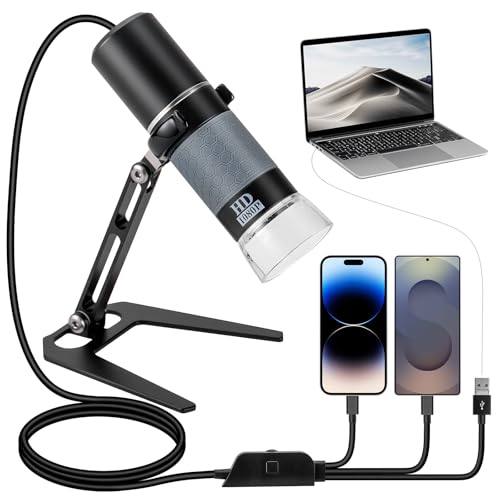
- 50X-1000X zoom with 1080P live viewing
- 4-in-1 cable supports phone, tablet, and computer use
- 8 adjustable LEDs and a metal stand for stable inspection
Best For: Hobbyists who want a portable, device-friendly inspection microscope
Big-Screen Coin and Repair Scope
TOMLOV DM9 Max 10.1" Microscope

- 10.1-inch IPS screen with wide viewing angle
- 5X-1500X zoom for coins, soldering, and watch work
- Remote control, PC output, and 10 LED lighting
Best For: Collectors and repair hobbyists who want a desktop microscope with a large screen
Budget LCD Coin Viewer
4.3" 1000X Digital Coin Microscope

- 4.3-inch 1080P LCD screen for comfortable viewing
- 50X-1000X magnification for coins and basic inspection
- Built-in storage plus rechargeable battery
Best For: Beginners and coin collectors who want a simple screen-based microscope
Editor’s Pick – Andonstar AD210 10.1 Inch LCD Digital Microscope
If you’re shopping for electronics microscopes for hobbyists, the Andonstar AD210 is a versatile desk-friendly option that covers soldering, coin collecting, and basic slide viewing in one kit. Its large 10.1-inch IPS screen, adjustable working distance, and included lighting make it easy to inspect small parts without crowding your bench.
Best For: Hobbyists who want an all-purpose microscope for electronics repair, coins, and occasional biology use.
Pros:
- Large 10.1-inch IPS display with 1080P video and 12MP photo capture
- Upgraded metal stand with up to 12.6-inch height and 1cm to 26cm working distance
- Three types of adjustable LED illumination for coins, soldering, and slides
- Includes 32GB card, remote, bottom light stage, and slide kit
Cons:
- Bulky setup compared with handheld microscopes
- More features than a simple inspection tool may need
Overall, the AD210 stands out as a flexible pick if you want one microscope that can handle both bench work and casual exploration. It is especially appealing when screen size, stand stability, and included accessories matter more than compact portability.
Wireless Pick – Jiusion 4K WiFi USB Handheld Microscope
For electronics microscopes for hobbyists who want flexibility, the Jiusion 4K handheld model is designed for both wireless mobile use and wired computer viewing. It’s a compact choice for checking circuit boards, coins, jewelry, skin, and other small subjects, with a stable stand and built-in LED lighting to help keep the image usable.
Best For: Hobbyists who want a portable microscope that works with phones and computers.
Pros:
- 4K 3840x2160P image output with WiFi wireless transfer
- Works with iOS, Android, Windows, Mac, Linux, and Chrome OS
- Built-in 8 LEDs plus focus and brightness adjustment knobs
- Includes a stable stand for steadier inspection
Cons:
- Zoom buttons only work on phones and tablets, not computers
- More limited magnification controls on PC use than mobile use
This is a practical pick if you value compatibility and portability over a big built-in display. It fits hobbyists who inspect small parts across different devices and want a microscope that can move easily between bench, laptop, and phone workflows.
Premium Workstation – Andonstar AD249S-M Plus 3-Lens HDMI Microscope
If you want electronics microscopes for hobbyists with more bench capability, the Andonstar AD249S-M Plus is built like a full workstation. Its three-lens design covers soldering, coins, and higher-magnification slide work, while the upgraded stand area, tool holder, helping hands, and included mat make it easier to keep repairs organized.
Best For: Hobbyists who need a feature-rich microscope station for soldering, inspection, and demonstrations.
Pros:
- Three interchangeable lenses for soldering, coins, and biological slides
- 2160P HDMI output for larger-screen viewing
- Upgraded boom-arm stand with extension base, tool holder, and helping hands
- Includes SD card, bottom light stage, slides kit, and multiple accessories
Cons:
- More complex and space-heavy than basic digital microscopes
- Lens changes and setup are less convenient than one-lens models
This model makes sense when your microscope needs go beyond casual viewing and into regular repair work. It offers a more capable station-style setup for users who want viewing flexibility, HDMI output, and a fuller accessory bundle in one package.
Budget Display – Elikliv EDM4 LCD Coin Microscope
The Elikliv EDM4 is a straightforward option in electronics microscopes for hobbyists who want a built-in screen without a lot of extra setup. With a 4.3-inch display, adjustable stand, and 8 LED lights, it is geared toward coin checks, circuit board inspection, and general close-up viewing from a compact footprint.
Best For: Hobbyists who want an affordable LCD microscope for coins, repairs, and casual inspection.
Pros:
- 4.3-inch LCD screen with 720P HD imaging
- 8 adjustable LED lights for low-light viewing
- Height-adjustable stand for easier focus and distance changes
- Rechargeable battery offers up to 3 hours of use
Cons:
- Smaller screen than larger benchtop microscopes
- Memory card is not included for photo and video capture
For users who want a simple monitor-style microscope with practical magnification and portable power, the EDM4 is easy to understand and easy to place on a desk. It suits hobbyists who prioritize convenience and a lower-profile setup over a larger display or more advanced workstation features.
Portable LCD Pick – PalliPartners 4.3" HD Screen Digital Microscope
If you want electronics microscopes for hobbyists that are easy to move around and simple to read, this PalliPartners model is built around a 4.3-inch LCD screen and a 50X-1000X range. It’s a practical pick for coin checks, circuit board inspection, small repairs, and general close-up viewing, especially when you want a self-contained microscope instead of relying on a computer.
Best For: Hobbyists who want a portable screen microscope for coins, PCB inspection, and casual close-up work.
Pros:
- 4.3-inch HD LCD screen with 1080p/720p support for direct viewing
- 50X-1000X magnification with 2.0MP camera technology
- Built-in rechargeable battery for 4-5 hours of use
- Includes 32GB microSD card for saving photos and videos
Cons:
- Not suitable for cell or medical use
- Smaller screen than larger desktop microscope models
This is a straightforward option if you value portability, onboard storage, and a simple hands-on setup. The metal bracket and adjustable LEDs make it more stable and useful for inspection tasks than a basic handheld magnifier.
All-Purpose Repair Rig – Andonstar AD246S-M 3-Lens Digital Microscope
For electronics microscopes for hobbyists who also solder, the Andonstar AD246S-M stands out with its three interchangeable lenses, HDMI output, and upgraded boom-arm stand. It’s designed for circuit board repair, phone work, coin viewing, and slide observation, making it a versatile bench tool when you want one microscope to handle multiple jobs.
Best For: Hobbyists who need a flexible microscope for soldering, electronics repair, and mixed-use bench work.
Pros:
- Three lenses support soldering, coins, and biological slide viewing
- 2160P video recording with HDMI output for larger-screen viewing
- Strong metal boom-arm stand suits soldering environments
- Includes remote control, slides, storage card, and other accessories
Cons:
- More complex setup than simpler single-screen microscopes
- Larger stand footprint may take up more bench space
This model is a strong fit if you want both inspection and soldering support in one package. The combination of lens options, measurement software compatibility, and stable mounting gives it broad appeal for serious hobby use.
Bench-View Favorite – TOMLOV DM9 7" LCD Coin and Soldering Microscope
The TOMLOV DM9 is a solid choice if you want electronics microscopes for hobbyists with a larger built-in display and a stable desktop setup. With a 7-inch LCD, 1200X magnification, and PC connection support, it’s geared toward coin detail work, PCB inspection, and other close-up tasks where comfortable viewing matters.
Best For: Hobbyists who want a larger screen microscope for coin details, small electronics, and shared viewing.
Pros:
- 7-inch LCD screen for comfortable, extended viewing
- 1200X magnification for fine surface and component detail
- 12MP camera with 1080P video and 16GB storage
- Metal base and adjustable stand provide stable positioning
Cons:
- Bench-style design is less portable than handheld units
- Best suited to stationary inspection rather than field use
This microscope works well when a bigger display and steadier platform matter more than compact size. The adjustable LEDs and gooseneck lights also make it easier to control glare on reflective parts like coins and solder joints.
Compact USB Inspection Microscope – 1080P USB Digital Microscope with Metal Stand
If you’re shopping for electronics microscopes for hobbyists, this Bysameyee USB model is a practical entry point for close-up inspection work. It offers 50X-1000X magnification, 1080P imaging, and broad device compatibility through a 4-in-1 cable, so it fits everything from quick circuit-board checks to casual collecting and STEM exploration.
Best For: Hobbyists who want a lightweight, computer- or phone-friendly microscope for general inspection and hands-on learning.
Pros:
- 1080P sensor delivers sharp, real-time viewing and recording.
- 4-in-1 USB cable works with USB-C, Lightning, Micro-USB, and USB-A devices with OTG support.
- Built-in 8 LED lights with adjustable brightness help keep samples evenly lit.
- Metal stand adds stability for hands-free viewing.
Cons:
- No controls on the microscope body itself; adjustments are handled through the cable.
- Requires OTG activation on compatible mobile devices.
This is a solid pick if you want an affordable, versatile microscope that stays simple to use. It’s especially appealing for hobbyists who value compatibility and straightforward image capture over a larger built-in display.
Big-Screen Coin and Repair Scope – TOMLOV DM9 Max 10.1" Microscope
For hobbyists who want a more comfortable viewing setup, this TOMLOV digital microscope stands out in electronics microscopes for hobbyists thanks to its large 10.1-inch IPS screen and 5X-1500X zoom range. It’s built for extended coin inspection, soldering, watch work, and other detail-heavy tasks, with PC output and onboard recording to support longer sessions.
Best For: Collectors and repair hobbyists who prefer a large built-in screen and a steadier desktop workflow.
Pros:
- 10.1-inch IPS display with a 178° viewing angle reduces eye strain.
- 5X-1500X zoom covers coins, soldering, watches, plants, and more.
- 10 LED lights, including side goosenecks, help light detailed work evenly.
- Wireless remote and 12.6-inch stand improve stability during capture and adjustment.
Cons:
- Larger footprint may be less convenient than a compact handheld scope.
- Designed more for desktop use than grab-and-go portability.
If you want a microscope that feels closer to a dedicated bench tool, this one is easy to live with. The screen, remote, and larger stand make it a strong fit for longer hobby sessions where comfort matters as much as magnification.
Budget LCD Coin Viewer – 4.3" 1000X Digital Coin Microscope
This AOPICK model is a straightforward choice for hobbyists who want an LCD-based option among electronics microscopes for hobbyists without moving to a larger desktop system. Its 4.3-inch screen, 50X-1000X magnification, and built-in storage make it useful for coin checks, simple electronics inspection, and casual specimen viewing.
Best For: Coin collectors and beginners who want a compact screen microscope with easy photo capture.
Pros:
- 4.3-inch 1080P LCD screen is easier on the eyes than eyepiece viewing.
- 50X-1000X magnification suits coin details, watch parts, and basic electronics checks.
- Built-in storage can save about 200 photos before needing a card.
- Rechargeable battery supports up to 3.5 hours of use.
Cons:
- TF card is not included if you want expanded storage.
- Not suitable for cell-level viewing.
For casual inspection and collecting, this microscope keeps things simple while still offering a screen and recording support. It makes the most sense if you want a portable, easy-to-use viewer rather than a more advanced bench instrument.
How We Picked the Best Electronics Microscopes for Hobbyists
We focused on the features that matter most for Electronics Microscopes for Hobbyists: image clarity, working distance, stability, screen usability, lighting quality, and ease of setup. We also looked for models that suit common hobby tasks like soldering, PCB inspection, coin collecting, and general macro viewing.
Quick Comparison
For bench work, larger LCD and HDMI microscopes are usually easier on the eyes and more practical for extended sessions. If you want portability or occasional computer-connected use, USB and handheld models are more flexible. Higher resolution helps, but only when paired with good optics, a steady stand, and adjustable illumination.
Key Buying Factors for Electronics Microscopes for Hobbyists
Display Type and Size
A bigger built-in screen can make solder joints, traces, and coin details easier to inspect without leaning in. HDMI and LCD models are better for shared viewing, while USB microscopes are a good fit if you prefer connecting to a monitor or computer.
Magnification and Real-World Clarity
Advertised magnification can be misleading. For most hobby use, the more important question is whether the microscope stays sharp at useful working distances. Look for smooth focusing and usable midrange magnification rather than chasing the highest number.
Lighting and Reflection Control
Adjustable LED lighting is essential. Electronics, shiny coins, and metal surfaces can produce glare, so brightness control and ring-style or side lighting can make a big difference in what you can actually see.
Stability and Stand Design
A rigid stand helps when you are soldering tiny components or inspecting fixed objects. If the base flexes or the arm drifts, fine detail work becomes frustrating quickly.
Connectivity and Workflow
If you plan to capture images, record video, or view on a larger monitor, check compatibility before buying. Some hobbyists prefer an all-in-one screen for simplicity, while others want USB or HDMI output for better workflow integration.
Who Should Buy Which Electronics Microscopes for Hobbyists?
If you are mainly soldering or repairing boards, choose a stable LCD or HDMI model with strong focus control and dependable lighting. Coin collectors may prefer a screen-first microscope with clearer image presentation and easy object positioning. Beginners and casual users often do best with a simpler USB or compact LCD model, while frequent users may want a larger display and a more refined stand for comfort during long sessions.
In short, the best choice depends less on maximum magnification and more on how comfortably the microscope fits your bench, your lighting conditions, and the kind of detail work you do most often.