
The best engineering building sets for middle school students turn abstract STEM concepts into projects they can build, test, adjust, and explain. This roundup compares structural engineering kits, working engine models, coding robots, construction sets, and robotics projects for different ages and skill levels.
Use the guide below to match each kit with the builder’s interests, workspace, patience, and need for guided instruction versus open-ended experimentation.
Best 10 Engineering Building Sets for Middle School Students Picks for 2026
Top Structural Exploration
Engino Structures, Buildings & Bridges
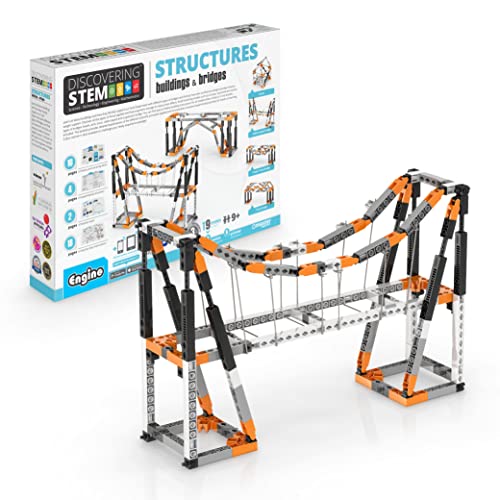
- Build nine structure and bridge models
- Includes theory, experiments, and a quiz
- Snap-fit parts enable complex 3D models
Best For: Ages 9+ exploring structural engineering through guided projects
Best Model Variety
Thames & Kosmos Structural Engineering

- Build 20 bridge and skyscraper models
- Includes over 285 interchangeable pieces
- Covers force, compression, tension, and load
Best For: Ages 8–14 ready for an intermediate structural challenge
Best Mechanical Coding Project
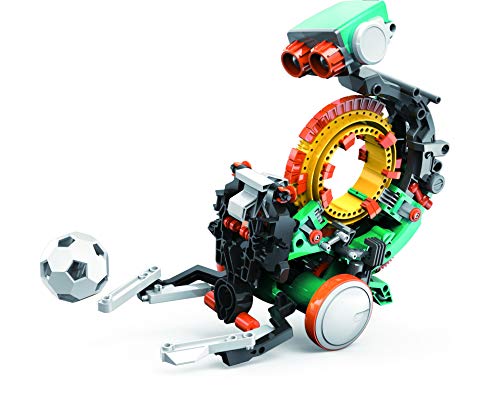
- Build and code a moving mechanical robot
- Performs actions such as lifting and drawing
- Designed for a multi-hour hands-on project
Best For: Ages 10+ interested in robotics, mechanics, and coding
Best for Younger Builders
Learning Resources City Engineering
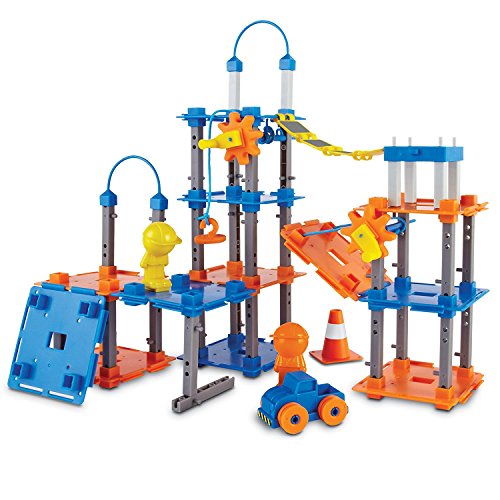
- Includes 89 city-themed building pieces
- Activity cards teach the design process
- Supports guided and open-ended construction
Best For: Ages 5–8 beginning to explore engineering design
Advanced Mechanical Build

- 703-piece realistic V8 engine build
- USB-powered motor with visible moving pistons
- Recommended for ages 14 and up
Best For: Older teens and car-focused engineering enthusiasts
Guided STEM Starter
National Geographic 4-Cylinder Engine Kit
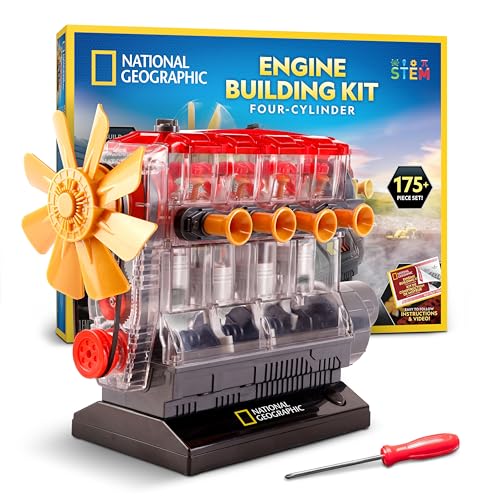
- 175-plus-piece clear working engine model
- Includes tools, instructions, and Learning Guide
- Recommended for ages 10 and up
Best For: Middle school beginners learning basic engine mechanics
Hands-On Metal Construction

- 236-piece metal construction kit
- Includes step-by-step assembly instructions
- No batteries required; supports creative builds
Best For: Young builders who enjoy flexible, collaborative construction
Architecture Explorer

- Builds more than 20 structure and building models
- Covers trusses, arches, domes, and steel frames
- Includes a 44-page full-color instruction manual
Best For: Students interested in architecture and structural engineering
Robotics Builder

- Builds and operates a motorized robotic arm
- Introduces circuits, motors, and mechanical movement
- Requires six AA batteries; no soldering needed
Best For: Students ready for a hands-on robotics and electronics project
Motion Lab

- Explores inertia, friction, and circular motion
- Builds six working physics models
- Includes theory, experiments, quizzes, and a 3D app
Best For: Students who learn best through physics experiments and working mechanisms
Top Structural Exploration – Engino Structures, Buildings & Bridges
For shoppers comparing engineering building sets for middle school students, this Engino kit focuses on structural concepts through hands-on construction. Builders can create nine models, including houses, pyramids, and several bridge designs, while exploring the principles behind each structure.
Best For: Curious learners ages 9 and up who want guided building projects with accompanying STEM explanations.
Pros:
- Offers nine real-world structure and bridge models.
- Includes instructions, theory pages, experiments, and a quiz.
- Snap-fit components support complex 3D construction.
- Designed by an engineer and teacher and used in schools and STEM programs.
Cons:
- The set focuses primarily on structures and bridges rather than a broad range of engineering fields.
- Its educational material may feel more involved than a simple building toy.
This is a strong choice when the goal is to connect building play with structural engineering principles. Its age range, guided resources, and multiple bridge models make it especially suitable for independent projects or science-fair preparation.
Best Model Variety – Thames & Kosmos Structural Engineering
This Thames & Kosmos set is a practical option among engineering building sets for middle school students who want variety and a more intermediate challenge. Its interchangeable pieces support 20 models, including bridges and skyscrapers, while the manual introduces forces, loads, compression, and tension.
Best For: Builders ages 8 to 14 who enjoy experimenting with structural models and mechanical physics.
Pros:
- Provides instructions for 20 different models.
- Includes more than 285 interchangeable building pieces.
- The 36-page illustrated manual combines assembly guidance with experiments.
- Teaches concepts such as force, load, compression, and tension.
Cons:
- The listed skill level is intermediate, so younger or less experienced builders may need support.
- The set is centered on structural engineering rather than general construction play.
With many pieces and model possibilities, this kit offers room to revisit the same concepts in different ways. It is a good fit for students ready for a structured, physics-oriented building experience.
Best Mechanical Coding Project – TEACH TECH Mech-5 Robot
For students interested in moving beyond static structures, the TEACH TECH Mech-5 adds mechanical engineering and basic coding to the engineering building sets for middle school students category. Builders assemble the robot and program actions by placing coding buttons on its mechanical coding wheel.
Best For: Future engineers ages 10 and up who want a multi-hour build with physical movement and introductory coding.
Pros:
- Builds a functioning robot rather than a static model.
- The coding wheel can control throwing, lifting, kicking, drawing, and other actions.
- Provides a hands-on introduction to mechanical engineering and coding basics.
- Detailed assembly instructions support an in-depth project.
Cons:
- Assembly requires patience and may take multiple hours.
- Requires two AAA batteries.
- It focuses on robotics and mechanical coding rather than buildings or bridges.
Mech-5 is best viewed as an adjacent engineering option for middle school students who prefer motion and programming. Its mission-based format gives the finished build an immediate purpose while reinforcing careful assembly and problem solving.
Best for Younger Builders – Learning Resources City Engineering
The Learning Resources City Engineering & Design Building Set introduces basic design challenges through towers, bridges, and city structures. While it is younger than most engineering building sets for middle school students, it can suit early learners or younger siblings who need an accessible entry point to engineering concepts.
Best For: Preschool and early elementary builders ages 5 to 8 practicing planning, problem solving, and creative construction.
Pros:
- Includes 89 pieces for city-themed building projects.
- Activity cards guide children through asking, imagining, planning, creating, and improving.
- Supports both guided challenges and open-ended construction.
- Requires no batteries and works for home, classroom, or homeschool use.
Cons:
- The recommended age range is 5 to 8, making it too basic for most middle school students.
- Its engineering concepts are introductory rather than advanced.
This set is a better match for younger children than for middle school coursework. Its design-process cards and approachable city theme make it useful for introducing engineering habits before moving to more complex structural kits.
Advanced Mechanical Build – V8 Engine Model Kit
For engineering building sets for middle school students who are ready for a more advanced challenge, this 703-piece V8 engine model focuses on realistic mechanical details and moving parts. Its transparent cylinder heads, simulated pistons, turbocharger, and USB-powered motor make the finished build especially engaging for older teens and experienced builders.
Best For: Older teens, adult hobbyists, and car enthusiasts interested in a detailed mechanical STEM project.
Pros:
- Features realistic V8 details, including visible piston movement and a turbocharger.
- USB charging motor lets the completed model run without batteries.
- Large 703-piece build supports creativity, logical thinking, and problem-solving.
- ABS construction is described as non-toxic, odor-free, and tested to ASTM and CPSIA standards.
Cons:
- The manufacturer recommends it for ages 14 and up, so it may be too advanced for younger middle school students.
- A USB power source is needed to operate the motor.
This is the most mechanically detailed option in the group, making it a strong choice for older students who want to see how engine components work together. Younger builders may need substantial adult guidance.
Guided STEM Starter – National Geographic 4-Cylinder Engine Kit
This National Geographic engine kit is a practical pick among engineering building sets for middle school students, with a 10-and-up recommendation and a guided assembly format. Builders assemble more than 175 pieces, then use three AA batteries to operate the clear model and watch its pistons, valves, and gears move.
Best For: Middle school-age beginners who want a structured introduction to engine mechanics and hands-on STEM learning.
Pros:
- Clear 4-cylinder design makes moving pistons, valves, and gears easy to observe.
- Includes 175-plus pieces, tools, illustrated instructions, and a Learning Guide.
- Recommended for ages 10 and up, fitting many middle school learners.
- Working motorized model encourages curiosity, construction skills, and problem-solving.
Cons:
- Three AA batteries are required and are not included.
- With more than 175 pieces, assembly may still require patience and adult help for some beginners.
With its age-appropriate recommendation, included tools, and learning materials, this is the most accessible engine-focused choice for a middle school student beginning to explore mechanical engineering.
Hands-On Metal Construction – 236-Piece Erector Set
For students who prefer open-ended building, this 236-piece metal Erector set is one of the more flexible engineering building sets for middle school students. It includes step-by-step instructions for model building, while the manual, no-battery format also leaves room for tinkering, collaboration, and creative designs.
Best For: Ages 8–12 and beginners who enjoy building vehicles and experimenting with metal construction pieces.
Pros:
- 236 metal pieces support multiple construction and car-model projects.
- Step-by-step instructions help young builders get started.
- Encourages fine motor skills, logical thinking, problem-solving, creativity, and teamwork.
- Manual operation requires no batteries.
Cons:
- The set does not include a motorized or moving engine demonstration.
- Open-ended assembly may be less immediately intuitive than a fully guided model.
This set is a good fit when the goal is broad construction practice rather than learning how one specific engine operates. Its metal parts and collaborative design make it useful for hands-on projects at home or in a classroom.
Architecture Explorer – Structural Design Model Kit
For shoppers comparing engineering building sets for middle school students, this architectural model kit offers a structured introduction to how buildings and structural elements work. Children can build more than 20 models, beginning with trusses, arches, and domes before moving to scaled-down real-world buildings.
Best For: Young builders interested in architecture, structural design, and open-ended STEM construction.
Pros:
- Supports 26 architectural and structural model builds.
- Introduces building materials, trusses, arches, domes, and steel-frame concepts.
- Includes a 44-page, full-color manual with guided exercises.
- Building pieces are compatible with other Thames & Kosmos engineering and physics kits.
Cons:
- The manufacturer-recommended age range is 8–14, so advanced middle school students may want additional challenges.
- The set focuses on plastic model construction rather than electronics or powered mechanisms.
This is a strong choice when the goal is to connect hands-on building with architectural thinking. Its guided progression and opportunities for original designs make it especially suitable for students who enjoy visualizing and testing structures.
Robotics Builder – DIY Mechanical Robot Arm Kit
For engineering building sets for middle school students who want to explore robotics, this kit combines wooden assembly with motors, circuit boards, and wiring. Building and operating the mechanical arm gives students a practical way to see how electronic circuits control movement.
Best For: Hands-on learners interested in robotics, mechanical engineering, circuits, and motorized projects.
Pros:
- Combines a 3D puzzle-style build with electrical engineering concepts.
- Includes motors, PCB microcontroller boards, wires, and the robot arm components.
- No soldering is required, making assembly more approachable.
- Encourages problem-solving, patience, logical thinking, and motor skills.
Cons:
- Requires six AA batteries, which are not included.
- The assembly may be challenging for younger or less experienced builders.
- The supplied notes do not specify the number of separate build models.
This kit is a good fit for students who want a project that does more than form a static model. The combination of construction, wiring, and mechanical movement can make basic robotics principles tangible, though adult guidance may be useful during assembly.
Motion Lab – Physics Laws Engineering Set
Among engineering building sets for middle school students, this Engino kit stands out for linking construction with experiments about inertia, friction, and circular motion. Students can build six working models, including a rocket launcher, crash test rig, and sharpening wheel, then reinforce the concepts through explanations, experiments, and a quiz.
Best For: Students who enjoy physics demonstrations, working mechanisms, and guided STEM experiments.
Pros:
- Explores three practical physics topics: inertia, friction, and circular motion.
- Offers six working model options.
- Includes theory, experiments, a quiz section, and easy-to-follow instructions.
- Provides an interactive 3D app for virtual building and is recommended for ages 9 and up.
Cons:
- The set is centered on a defined physics curriculum, offering less architectural freedom than open-ended building kits.
- The 3D app may not appeal to students who prefer entirely hands-on construction.
This is a practical pick for families or classrooms that want visible demonstrations of physics laws rather than construction alone. Its working models and supporting learning materials help turn abstract motion concepts into testable activities.
How We Picked These Engineering Building Sets for Middle School Students
We selected kits that offer meaningful hands-on construction rather than simple assembly alone. The lineup covers bridges, skyscrapers, architectural structures, engines, inertia and friction, coding, robotic arms, and traditional metal construction. We also considered age guidance, project variety, educational value, reusability, and how well each set supports independent or supervised learning.
Because middle schoolers vary widely in experience, the selection includes both structured builds with clear experiments and flexible kits that encourage design changes. Check the listed age range and expected build complexity before ordering.
Quick Comparison
| Best For | Look For | Featured Kit Types |
|---|---|---|
| Structural engineering | Load testing, balance, and design challenges | Bridge, skyscraper, and architecture sets |
| Mechanical science | Moving parts and visible mechanisms | Engine models and physics kits |
| Robotics | Motors, coding, and control | Coding robots and robotic arms |
| Open-ended building | Reusable components and creative designs | Metal and modular construction sets |
Key Buying Factors
Age, Difficulty, and Supervision
Age labels are useful starting points, but they do not measure every child’s building experience. Younger or first-time builders may do best with step-by-step instructions and shorter projects. More experienced students may prefer kits with multiple models, design challenges, or room for experimentation. Small parts, tools, wiring, and moving mechanisms may require adult supervision.
Learning Goals
Choose a structural kit for lessons about forces, stability, compression, tension, and load distribution. Engine and physics models are better for motion, friction, inertia, and mechanical systems. Coding robots and robotic arms add programming, motors, sequencing, and troubleshooting. A traditional construction set is a strong choice when creativity and repeated rebuilding matter most.
Project Variety and Durability
Multiple-model kits provide more opportunities to revisit concepts, while a single working model may deliver deeper focus. Look for sturdy connectors, parts that can be sorted easily, and instructions that explain why a design works. Confirm whether batteries, software, tools, or other accessories are sold separately.
Space and Completion Time
Large structures and robotic projects need a clear work surface and safe storage. Consider whether the student prefers short experiments or longer builds that can remain assembled. A kit that fits the available space is more likely to be used regularly.
Who Should Buy Which Engineering Building Sets for Middle School Students?
Choose bridge, skyscraper, or architectural engineering sets for students fascinated by buildings and real-world structures. Pick an engine model or physics-focused kit for learners who enjoy mechanisms and visible cause-and-effect. Coding robot and robotic-arm kits suit students interested in programming, automation, and technology.
For a child who wants freedom to invent, a reusable metal or modular construction set is usually the better fit. If you are buying for a classroom, club, or sibling group, prioritize broad age compatibility, durable parts, multiple projects, and instructions that support independent work. The best Engineering Building Sets for Middle School Students are the ones that match the learner’s interests while leaving enough challenge to encourage testing, rebuilding, and discovery.