
Preserving 35mm negatives is easier when you choose a scanner that matches your film collection, desired image quality, and editing workflow. The models in this roundup range from feature-rich standalone scanners to compact smartphone accessories.
Before buying, consider resolution, supported film formats, preview controls, file transfer, and whether you want a self-contained device or a portable setup. The guide below highlights the differences that matter most.
Best 10 Film Scanner for 35mm Negatives Picks for 2026
Best All-in-One Option

- 5-inch LCD with HDMI viewing
- Supports multiple film and slide formats
- Standalone scanning to up to 128GB SD cards
Best For: Quick, computer-free scanning across several film formats
Best Touchscreen Workflow
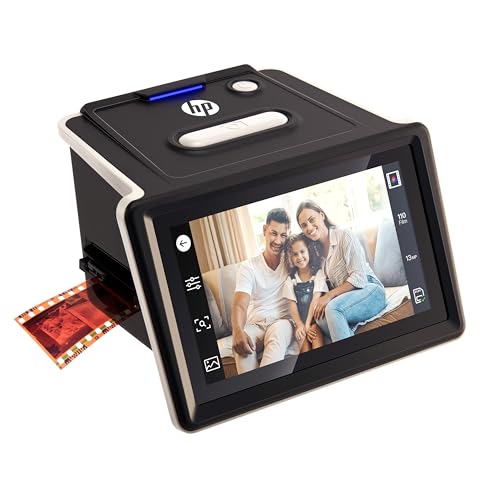
- 5-inch all-angle touchscreen
- Standalone scanning without a computer
- Supports 135, 126, and 110 formats
Best For: Touchscreen-controlled digitization of mixed film archives
Best Accessory Bundle
KODAK SCANZA Film & Slide Scanner
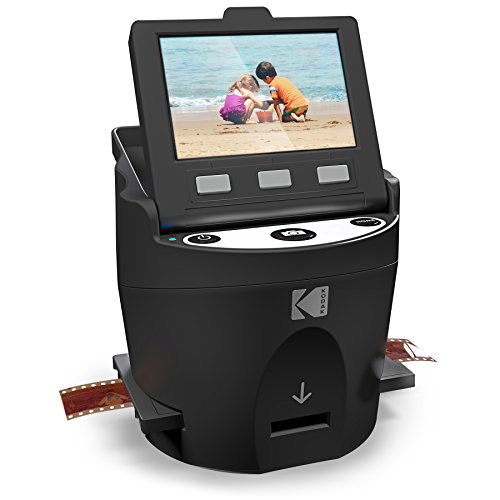
- Supports 35mm, 126, 110, Super 8, and 8mm
- Includes multiple adapters and essential cables
- One-touch scanning with a built-in LCD
Best For: Flexible scanning with a broad included accessory set
Best Smartphone-Based Option

- Digitizes 35mm and 120 film
- Adjustable 11-level LED backlight
- Universal phone clamp with wireless remote
Best For: Phone-camera digitization of 35mm and medium-format film
Best All-Around Choice
KODAK Slide N Scan Film & Slide Scanner
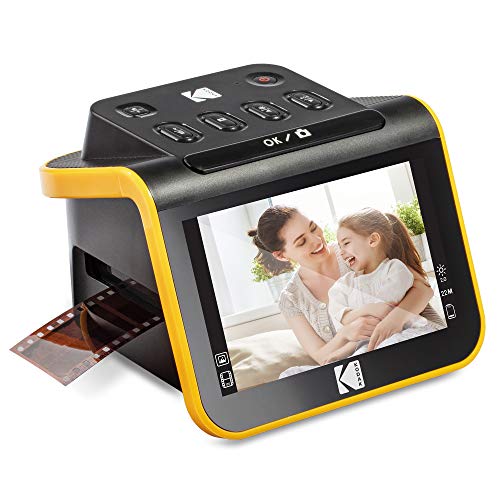
- 22MP scanning for 135 and other film formats
- 5-inch LCD with gallery mode
- One-touch editing and SD card saving
Best For: Casual users scanning mixed film collections
Best Complete Kit
DigitConvert Slide & Negative Film Scanner

- One-touch JPEG scanning
- 5-inch LCD and gallery mode
- Includes five adapters and 36-month warranty
Best For: Users seeking a ready-to-use desktop scanning kit
Best Portable Option
TCNEWCL Foldable 35mm Negative Scanner

- Foldable, travel-friendly design
- Uses a smartphone camera and LED backlight
- App supports basic editing and sharing
Best For: Travelers and occasional smartphone-based scanning
Best High-Resolution Pick
ClearScan MINI 16MP Film Scanner

- 16MP CMOS scanning for 135 and 126 film
- Built-in brightness and color adjustments
- Compact design with LCD preview
Best For: Users seeking higher-resolution standalone scans
Best Standalone Value

- Converts 35mm negatives and slides to JPEG
- No drivers or complex software required
- LCD preview plus included easy-load adapters
Best For: Beginners archiving family film at home
Best Portable Smartphone Option

- Uses a smartphone camera with LED backlight
- Supports color, B&W, negatives, and slides
- Foldable design includes battery and free app
Best For: Portable scanning and quick smartphone sharing
Best All-in-One Option – Magnasonic FS71
The Magnasonic FS71 is a practical film scanner for 35mm negatives when you want quick, standalone digitization with a large preview screen. It also handles 110, 126, and Super 8 negatives plus several slide formats, and saves JPEG files to an SD card.
Best For: Users who want broad format support, a large built-in display, and scanning without a computer.
Pros:
- Supports 35mm, 110, 126, and Super 8 negatives, plus 135, 126, and 110 slides.
- Large 5-inch LCD screen supports previewing and basic image adjustments.
- Scans in less than five seconds per image and saves to SD cards up to 128GB.
- Includes HDMI output for viewing scans on a TV or monitor.
Cons:
- SD card and HDMI cable are not included.
- Listed minimum system requirements specify Windows 7, which may not cover every setup.
Choose the FS71 if convenience and format flexibility matter more than using dedicated computer-based editing software.
Best Touchscreen Workflow – HP FilmScan HPFS500
The HPFS500 is a film scanner for 35mm negatives designed for a straightforward standalone workflow. Its 5-inch touchscreen lets you preview and edit images on the unit, while support for 135, 126, and 110 film makes it useful for mixed collections.
Best For: Users who prefer touchscreen controls and want to digitize negatives and slides without a computer.
Pros:
- Works as a standalone digitizer without requiring a computer during scanning.
- 5-inch all-angle LCD touchscreen provides direct preview and editing controls.
- Supports 135, 126, and 110 negatives and positive slides.
- Quick-load tray helps speed up larger scanning sessions.
Cons:
- Its 13MP CMOS sensor with 22MP interpolation is a different approach from higher-resolution sensor claims.
- SD card storage is listed, but an SD card is not supplied in the notes.
The HPFS500 is a sensible choice for hands-on operation, especially if your archive includes more than standard 35mm film.
Best Accessory Bundle – KODAK SCANZA Film & Slide Scanner
The KODAK SCANZA is a versatile film scanner for 35mm negatives that converts supported negatives and slides to JPEG files in seconds. It includes multiple inserts, cables, and a cleaning brush, making it a convenient choice for getting started with a varied film collection.
Best For: Buyers who want multiple adapters, included connection cables, and simple one-touch scanning.
Pros:
- Supports 35mm, 126, 110, Super 8, and 8mm negatives and slides.
- Includes multiple film inserts and adapters for flexible operation.
- Built-in 3.5-inch adjustable TFT LCD makes previewing straightforward.
- Includes HDMI, USB, AC, and video cables, plus a film-cleaning brush.
Cons:
- It does not convert film formats beyond those specifically listed.
- SD card is not included, though the unit supports cards up to 128GB.
- The included display is smaller than the 5-inch screens on some alternatives.
SC자는? The SCANZA stands out when included accessories and support for several small-format film types are priorities.
Best Smartphone-Based Option – JJC Mobile Film Digitizer
The JJC Mobile Film Digitizer takes a different approach to scanning: it uses your smartphone camera and an LED backlight to digitize 35mm and 120 film. For shoppers seeking a film scanner for 35mm negatives without a dedicated electronic scanner, this setup offers adjustable positioning and a detachable remote.
Best For: Smartphone users who want to digitize both 35mm and 120 film with a compact camera-based setup.
Pros:
- Supports both 35mm and 120 medium-format film.
- Adjustable LED backlight offers 11 brightness levels.
- Universal clamp fits phones from 2.2 to 3.5 inches wide.
- Includes a wireless remote for capturing images without touching the phone.
Cons:
- Requires a smartphone camera and a separate app; no software is provided.
- Image quality depends on the phone, its camera, and the capture setup.
- It is not a standalone scanner and has no listed computer connection.
The JJC is best viewed as a flexible phone-based digitizing rig rather than a traditional standalone scanner, particularly for users who also have 120 film.
Best All-Around Choice – KODAK Slide N Scan Film & Slide Scanner
If you want a straightforward film scanner for 35mm negatives, the KODAK Slide N Scan combines one-touch controls with a large 5-inch LCD. It can digitize 135 negatives and several other film formats, apply basic adjustments, and save files directly to an SD or SDHC card.
Best For: Families and casual users who want easy scanning, on-device previews, and support for multiple film formats.
Pros:
- 22MP scanning for 135, 110, and 126 negatives plus compatible slides
- Large 5-inch LCD with gallery mode for previewing and displaying photos
- One-touch editing includes color, brightness, resizing, and date/time options
- Includes film adapters, cleaning brush, USB cable, and HDMI cable
Cons:
- SD card is not included
- Requires Windows 7 or later according to the listed system requirements
The built-in screen and simple controls make this a convenient choice for scanning without complicated computer software. Its broad format support is useful if your collection includes more than standard 35mm film.
Best Complete Kit – DigitConvert Slide & Negative Film Scanner
This DigitConvert model is a practical film scanner for 35mm negatives when you want an all-in-one setup. It converts negatives and slides to JPEG files, offers one-touch operation, and includes adapters for several supported formats along with cables for computer and TV use.
Best For: Users who want a ready-to-use scanner with a large preview screen, broad adapter selection, and a long listed warranty.
Pros:
- Converts 135 negatives and multiple slide formats to digital JPEG files
- 5-inch LCD with wide viewing angle and gallery mode
- Supports SD cards up to 64GB in FAT32 or exFAT formats
- Includes five film adapters, HDMI and USB cables, power adapter, and a 36-month warranty
Cons:
- SD card is not included
- Must remain connected to a power source during use
- Files are transferred through a USB connection or viewed via HDMI rather than wirelessly
Its included accessories and simple menu reduce setup time, while HDMI output makes it suitable for sharing scanned images on a television. Keep in mind that this is a powered desktop-style device rather than a battery-operated scanner.
Best Portable Option – TCNEWCL Foldable 35mm Negative Scanner
The TCNEWCL is a compact alternative to a dedicated film scanner for 35mm negatives. Its foldable housing uses a built-in LED backlight and your smartphone’s camera to capture 35mm slides and negatives, with a companion app available for editing and sharing.
Best For: Travelers, occasional users, and anyone who prioritizes portability and low-cost smartphone-based scanning.
Pros:
- Foldable design stores easily and is convenient to carry
- Works with a smartphone rather than requiring a dedicated computer scanner
- Built-in LED backlight supports 35mm slides and film negatives
- Free app options support cropping, rotation, filters, color, contrast, and sharing
Cons:
- Captured image quality depends on the resolution and camera quality of your smartphone
- Supports 35mm film only, according to the supplied notes
- Requires a phone and app-based workflow
This is the most portable option of the three and can be useful for quick scans or sharing images directly from a phone. It is less suited to buyers who want dedicated high-resolution scanning hardware and a self-contained display.
Best High-Resolution Pick – ClearScan MINI 16MP Film Scanner
If you want a capable film scanner for 35mm negatives that remains compact and simple to operate, the BEONEGLOBAL ClearScan MINI is a practical choice. Its 16MP CMOS sensor, built-in editing tools, and SD-card storage make it useful for digitizing 135 and 126 film without requiring a computer during scanning.
Best For: Users who want higher-resolution standalone scans and convenient on-device adjustments.
Pros:
- Captures film and slides at up to 16MP with a 1/3-inch CMOS sensor.
- Front-facing controls and a 2.31-inch LCD support straightforward operation.
- Adjust brightness and color, or flip and rotate images before saving.
- Compact 10.08-ounce design is easy to carry.
Cons:
- SD card storage up to 32GB is supported, but the card is not included.
- Scanning is limited to the listed 126 and 135 film formats.
The ClearScan MINI stands out for its stated 16MP output and portable standalone workflow. It is a good fit for home archiving when you want more control than a basic entry-level digitizer provides.
Best Standalone Value – 35mm Film and Slide Scanner
For straightforward home archiving, this standalone film scanner for 35mm negatives converts negatives and slides to JPEG files without requiring special computer software or drivers. Its built-in screen, included adapters, and TV-out connection make it convenient for basic scanning and sharing.
Best For: Families and beginners who want an uncomplicated 35mm negative and slide digitizer.
Pros:
- Converts 35mm negatives and slides at 5MP or 10MP JPEG output.
- Plug-and-play design works without complex software installation.
- 2.4-inch LCD allows instant preview and brightness, flip, and mirror adjustments.
- Includes easy-load film and slide adapters for continuous feeding.
Cons:
- SD card up to 32GB is required for saving images and is not included.
- Its listed output options are lower than the 16MP model in this roundup.
- TV connection requires the appropriate video connection and compatible display.
This DigitConvert model emphasizes ease of use over advanced specifications. It is a sensible option for preserving family negatives and slides when simple controls and broad computer compatibility matter most.
Best Portable Smartphone Option – Mobile 35mm Film Scanner
If portability is your priority, this mobile film scanner for 35mm negatives uses your smartphone camera rather than a dedicated scanning sensor. Its foldable body, built-in LED backlight, phone holder, and companion app provide a lightweight way to digitize black-and-white film, color negatives, and slides.
Best For: Smartphone users who want a portable, cable-light way to scan 35mm film.
Pros:
- Works with a smartphone camera for quick scanning and sharing.
- Supports 35mm black-and-white film, color negatives, positives, and slides.
- Foldable, lightweight design includes a built-in battery and phone holder.
- Free app provides color and contrast adjustments without subscriptions.
Cons:
- Final image quality depends on the smartphone camera and setup.
- It is a mobile digitizer rather than a dedicated standalone film scanner.
- The supplied compatibility information is limited to mobile use.
The DigitPro M301 is best viewed as a convenient travel and occasional-use solution. It offers an accessible way to scan varied 35mm film formats, especially for users who already rely on their phone for editing and sharing.
How We Picked the Best Film Scanner for 35mm Negatives
We focused on scanners and digitizers that support 35mm film, then compared their advertised resolution, display and preview features, supported formats, connectivity, portability, and ease of use. The selection includes standalone units with built-in screens as well as mobile scanners that use a phone camera. Because image quality can vary with film condition, alignment, lighting, and the camera or sensor used, advertised megapixel counts should be treated as one factor rather than a guarantee of final results.
Quick Comparison
Standalone scanners from Magnasonic, HP, KODAK, and other brands are generally the simplest choice for processing a box of negatives. Many include a display, film holders, and direct storage or transfer features. Models supporting formats such as 110, 126, Super 8, or 8mm are useful if your archive goes beyond standard 35mm.
Mobile options from JJC, TCNEWCL, and similar listings are smaller and often less expensive. They typically use an LED backlight and a smartphone camera, making them convenient for occasional scans or travel. However, results depend heavily on phone camera quality, positioning, focus, and the companion app or capture process.
Key Buying Factors for a Film Scanner for 35mm Negatives
Resolution and Image Quality
Look beyond the headline megapixel number. A good scanner should provide even illumination, secure film alignment, and enough detail for your intended use. Basic models can work well for sharing online, while higher-resolution capture is preferable for printing or extensive restoration.
Film Compatibility
Confirm that the holder accepts your exact film type. Most choices here handle 35mm negatives, but some also support mounted slides, 110, 126, Super 8, or 8mm film. Check whether the device scans strips, individual frames, or both.
Workflow and Storage
A built-in LCD can make framing and reviewing images faster. Also check whether files transfer through USB, USB-C, HDMI, memory cards, or a computer connection. Direct saving is convenient when you want to scan without additional software.
Ease of Handling
Look for straightforward controls, stable film holders, and a light source that does not require frequent adjustment. Mobile scanners should fold or pack easily, but verify that your phone fits securely and that the setup does not block the camera.
Who Should Buy Which Film Scanner for 35mm Negatives?
Choose a standalone scanner with a screen if you have a large archive and want a more consistent, self-contained workflow. A model with broad format support is best for households with mixed film collections. Pick a compact mobile digitizer if portability, low storage space, and occasional scanning matter more than maximum consistency. For family photos intended for online sharing, an affordable 35mm-focused scanner may be sufficient; for enlargements or serious restoration, prioritize stable film positioning, stronger capture quality, and easy computer transfer.