
Old negatives and slides hold memories that are easy to overlook—and vulnerable to fading, dust, and physical damage. The right scanner can turn those originals into shareable, searchable digital images without requiring a professional lab for every batch.
This roundup compares 10 film and photo scanners across resolution, supported formats, ease of use, display options, and overall workflow. Whether you want detailed archival scans or a simple way to digitize family snapshots, the best choice depends on your film collection and how much control you want over image quality.
Best 10 Film Scanners for Digitizing Photos Picks for 2026
Best for Easy Film-to-Digital Transfers
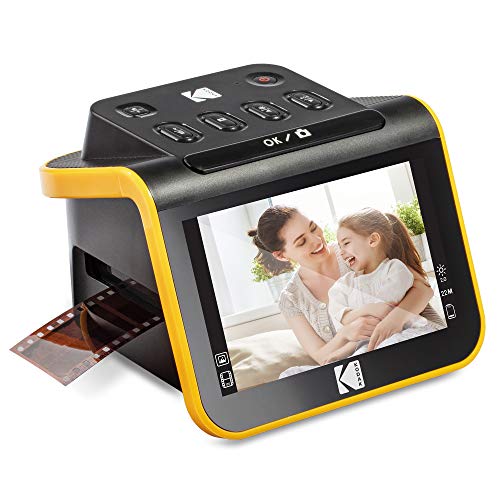
- Handles 135, 110, and 126 negatives plus 50mm slides
- 5-inch LCD for previews and basic edits
- Saves scans directly to an SD or SDHC card
Best For: Home users archiving mixed-format film without complicated software
Best for High-Resolution Photo Scanning

- 4800 dpi optical resolution for detailed scans
- Scans photos, artwork, books, and documents
- One-click Easy Photo Fix color restoration
Best For: Users digitizing printed photos and documents with a flatbed scanner
Best for Fast, Computer-Free Film Scanning

- Supports multiple film and slide formats, including Super 8
- Creates JPEG files in less than 5 seconds per photo
- 5-inch display and onboard adjustments eliminate computer setup
Best For: Fast home archiving with standalone controls and SD-card storage
Best for Photos and Documents

- 4800 x 4800 dpi scanning for detailed photos
- Single USB Type-C cable handles data and power
- Auto Scan and built-in PDF buttons simplify workflows
Best For: Compact home scanning of printed photos and documents
Best Standalone Option
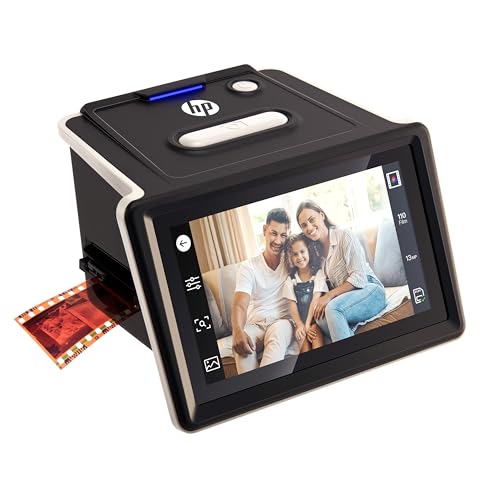
- Scans without a computer
- Supports 135, 126, and 110 formats
- 5-inch touchscreen and SD storage
Best For: Mixed film archives and computer-free scanning
Best Complete Kit
DigitPro Photo, Slide & Negative Scanner

- Scans film, slides, photos, and cards
- Includes 8GB SD card and accessories
- Large 5-inch screen with standalone operation
Best For: Family archives and versatile home digitizing
Best Compact Pick

- 16MP CMOS scanning
- Supports 126 and 135 film
- Lightweight with onboard editing
Best For: Portable scanning of 126 and 135 film
High-Resolution Pick

- 6400 dpi optical resolution with 48-bit color
- Built-in 35mm film and slide scanning
- Digital ICE helps reduce dust and scratches
Best For: Detailed home photo and film restoration
Portable Smartphone Pick

- Captures 35mm slides and negatives with a phone
- Foldable design for storage and travel
- LED backlight and app-based editing support
Best For: Casual, portable smartphone-based scanning
Standalone Versatility Pick

- Scans 135, 110, and slide film plus photos
- 5-inch LCD and computer-free operation
- Includes internal memory and an 8GB SD card
Best For: Multi-format family archiving without a computer
Best for Easy Film-to-Digital Transfers – KODAK Slide N Scan
The KODAK Slide N Scan is a practical choice among film scanners for digitizing photos when you want a dedicated device with a built-in viewing screen. It handles 135, 110, and 126 negatives plus 50mm slides, and saves JPEG files directly to an SD or SDHC card.
Best For: Families digitizing mixed-format slides and negatives without relying on complex computer software.
Pros:
- Supports 135, 110, and 126 negatives, along with 50mm slides
- Large 5-inch LCD screen supports previewing, editing, and gallery viewing
- Includes film adapters, a cleaning brush, USB cable, and HDMI cable
- Offers one-touch adjustments for color, brightness, date, and time
Cons:
- SD or SDHC card is required but not included
- Designed for film and slides rather than ordinary photo prints or documents
With broad format support and straightforward controls, this KODAK model is well suited to casual home archiving. Its integrated display and direct-to-card workflow make it convenient for users who want to scan without setting up a full desktop scanning station.
Best for High-Resolution Photo Scanning – Epson Perfection V19 II
The Epson Perfection V19 II is a versatile flatbed option among film scanners for digitizing photos, particularly if you also need to scan prints, artwork, books, or documents. Its 4800 dpi optical resolution is designed for detailed scans and enlargements, while USB power keeps the setup simple.
Best For: Home and office users scanning printed photos and documents who value high optical resolution and photo restoration tools.
Pros:
- Provides 4800 dpi optical resolution for detailed photo scans
- Scans photos, artwork, illustrations, books, and documents
- Easy Photo Fix can restore color to faded photos with one click
- Removable high-rise lid helps accommodate thicker materials
Cons:
- USB connection is required for operation
- Does not list dedicated negative or slide scanning support
This Epson is best viewed as a general-purpose flatbed photo scanner rather than a dedicated film-transparency unit. Choose it when your collection includes printed photographs and documents, and when resolution and restoration features matter more than direct film handling.
Best for Fast, Computer-Free Film Scanning – Magnasonic FS71
The Magnasonic FS71 is a convenient pick among film scanners for digitizing photos when speed and standalone operation are priorities. It converts several negative and slide formats into JPEG files, displays images on its 5-inch screen, and saves them to an SD card without requiring a computer or specialized software.
Best For: Users who want quick, simple scanning of 35mm, 110, 126, and Super 8 film at home.
Pros:
- Supports 35mm, 110, 126, and Super 8 negatives plus 135, 126, and 110 slides
- Scans photos in less than 5 seconds each according to the supplied product notes
- Works without a computer, drivers, or photo-editing software
- Includes brightness, RGB color, flip, and mirror adjustments
Cons:
- SD card is not included
- HDMI cable for TV or monitor viewing is not included
The FS71 combines broad format compatibility with a fast, self-contained workflow. Its 128GB SD-card support and onboard adjustments make it a strong choice for convenient batch scanning, provided you supply the necessary storage card.
Best for Photos and Documents – Canon CanoScan LiDE 400
Canon CanoScan LiDE 400 Slim Scanner, 7.7" x 14.5" x 0.4", Document & Photo Scanner, Black
Check Price On AmazonThe Canon CanoScan LiDE 400 is a slim flatbed option among film scanners for digitizing photos, especially for users who also need document scanning. It offers 4800 x 4800 dpi resolution, one-cable USB Type-C data and power, and image-enhancement features such as color restoration and dust removal.
Best For: Users who need a compact scanner for printed photos, letter-size documents, and searchable or editable PDFs.
Pros:
- 4800 x 4800 dpi resolution supports detailed photo scans
- USB Type-C cable carries both data and power
- Auto Scan mode detects what is being scanned
- Built-in PDF buttons support multi-page PDF creation
Cons:
- Supplied notes identify support for photos and documents, not film negatives or slides
- Requires a USB connection to operate
The LiDE 400 is a practical general-purpose flatbed rather than a dedicated transparency scanner. It makes the most sense for a mixed archive of printed photographs and paperwork, particularly when a slim design and PDF features are useful.
Best Standalone Option – HPFS500 Film & Slide Scanner
For shoppers comparing film scanners for digitizing photos, the HPFS500 stands out as a computer-free option. It supports several common film formats, offers touchscreen controls, and saves scans to an SD card for straightforward archiving.
Best For: Adults digitizing mixed collections of 135, 126, and 110 negatives and slides without relying on a computer.
Pros:
- Standalone workflow with no computer required during scanning
- Supports 135, 126, and 110 negatives and positive slides
- 5-inch all-angle touchscreen for previewing and editing
- 13MP CMOS sensor with 22MP interpolation
Cons:
- SD card storage is required for standalone use
- Computer compatibility starts with Windows 10 or macOS 10.15
The HPFS500 is a practical choice for larger or varied film archives, particularly when easy touchscreen operation and batch-friendly loading matter more than a computer-based scanning setup.
Best Complete Kit – DigitPro Photo, Slide & Negative Scanner
If you want film scanners for digitizing photos that also handle printed pictures and business cards, this DigitPro model is an all-in-one solution. Its large screen, included accessories, and direct SD-card workflow make it convenient for family archiving.
Best For: Families and gift buyers who want to convert negatives, slides, printed photos, and business cards with minimal setup.
Pros:
- Handles 35mm slides, 135 and 110 negatives, photos, and business cards
- 5-inch LCD screen for previewing and editing
- Works without a computer, software, or drivers
- Includes an 8GB SD card, holders, trays, cables, and cleaning brush
Cons:
- At 1.5 kg, it is heavier than the compact film-only options
- Its listed resolution is 1080P rather than a megapixel specification
The DigitPro offers the broadest media support of these options and is especially appealing when a ready-to-use bundle and three-year warranty are priorities.
Best Compact Pick – BEONEGLOBAL ClearScan MINI
Among film scanners for digitizing photos, the BEONEGLOBAL ClearScan MINI is a compact choice for 126 and 135 film. It combines a 16MP CMOS sensor with onboard editing controls and SD-card saving in a lightweight design.
Best For: Users who want a portable film digitizer with quick scanning and basic adjustments built into the device.
Pros:
- 16MP CMOS sensor for detailed scans
- Supports 126 and 135 film
- Adjusts brightness, color, orientation, and rotation onboard
- Lightweight design at 10.08 ounces
Cons:
- Its 2.31-inch LCD is smaller than the screens on the other listed models
- SD card is not included
- Film support is narrower than models that also scan printed photos or 110 film
The ClearScan MINI makes sense for straightforward 126 and 135 film projects, especially when portability and direct image adjustments are more important than a large preview screen.
High-Resolution Pick – Epson Perfection V550
For shoppers comparing film scanners for digitizing photos, the Epson Perfection V550 is a full-size option built for detailed home archiving. Its 6400 dpi optical resolution, built-in transparency unit, and Digital ICE technology support high-quality scans of 35mm slides, negatives, and photos.
Best For: Home users restoring and enlarging a broad collection of photos, slides, negatives, and documents.
Pros:
- 6400 dpi optical resolution and 48-bit color depth support detailed, vivid reproductions.
- Scans 35mm slides and negatives with a built-in transparency unit.
- Digital ICE helps reduce the appearance of dust and scratches on film.
- Can scan multiple photos at once and save them as separate files.
Cons:
- At 9.6 pounds, it is less portable than compact film digitizers.
- Uses a USB connection and requires a computer for operation.
- Its listed minimum system requirement is Windows 7.
The V550 is the strongest choice here for image quality and restoration features, particularly if you want to make enlargements or handle mixed photo, film, and document projects. Its larger desktop design is best suited to a dedicated scanning workspace.
Portable Smartphone Pick – TCNEWCL Mobile Film Scanner
If you want a simple way to start using film scanners for digitizing photos, the TCNEWCL mobile scanner offers a compact smartphone-based approach. Its built-in LED backlight works with a phone camera to capture 35mm slides and negatives, while the foldable design makes storage and travel easy.
Best For: Casual users who want an inexpensive, portable way to capture 35mm film with a smartphone.
Pros:
- Works with a smartphone rather than requiring a dedicated computer scanner.
- Foldable design saves space and supports convenient travel.
- Built-in LED backlight makes the capture process straightforward.
- A free app can help crop, rotate, filter, and adjust color and contrast.
Cons:
- Image quality is limited by the resolution of the smartphone camera.
- Supports 35mm slides and negatives only, according to the supplied details.
- It is listed at 300–400 dpi, below the resolution of dedicated flatbed models.
This is a convenient entry-level choice for quick sharing and casual archiving. It trades dedicated-scanner image quality for low weight, easy storage, and the convenience of using a phone you already own.
Standalone Versatility Pick – KEDOK 4-in-1 Film Scanner
For buyers seeking film scanners for digitizing photos without a computer, the KEDOK 4-in-1 scanner combines film, slide, photo, and business-card scanning. It includes a 5-inch LCD screen, internal memory, and an 8GB SD card for saving and previewing files directly on the unit.
Best For: Families and home archivists who want a standalone scanner for multiple media formats.
Pros:
- Scans 135 and 110 film, 135 slides, photos, and business cards.
- 22MP digital output and a large 5-inch LCD support direct viewing.
- Works without a computer and includes an 8GB SD card.
- Offers one-touch adjustments for film type, color, brightness, resolution, and date/time.
Cons:
- Its 2.2 kg weight makes it less portable than the smartphone-based option.
- The scanner uses 24-bit color depth, rather than the V550’s listed 48-bit depth.
- SD/SDHC storage is listed as supporting cards up to 32GB.
The KEDOK stands out for convenience and format flexibility. Its screen, included storage, and computer-free workflow make it practical for family collections, though users prioritizing advanced restoration or maximum color depth may prefer a dedicated flatbed scanner.
How We Picked These Film Scanners for Digitizing Photos
We focused on scanners that support at least one common film format, such as 35mm, 110, 126, slides, or negatives, while also including practical photo-scanning options. The selection covers dedicated standalone film converters, flatbed scanners with film capabilities, and compact mobile designs. We considered advertised optical resolution, sensor and output claims, included holders, preview screens, connection options, scanning speed, software workflow, and ease of handling older originals.
Resolution numbers are only one part of scan quality. Consistent film alignment, dust-free handling, exposure control, and the ability to make adjustments before saving can matter just as much—especially when working with faded or poorly exposed film.
Quick Comparison
- Standalone film scanners: Best for quickly converting batches of slides and negatives with minimal computer setup.
- Flatbed scanners: Better for prints, documents, and film when you want more control or larger scanning surfaces.
- High-resolution models: A stronger fit for enlargements, editing, and preservation projects, provided the rest of the workflow supports the claimed detail.
- Portable scanners: Convenient for occasional use, travel, or scanning a small personal collection.
Key Buying Factors for Film Scanners for Digitizing Photos
Film Format Compatibility
Check the exact formats supported before buying. Most family collections include 35mm film, but older cameras may use 110 or 126 cartridges. Some models also support mounted slides, while others are designed only for strips of negatives.
Resolution and Image Quality
Higher optical resolution can preserve more detail, but inflated interpolated numbers do not guarantee sharper scans. For casual sharing, a basic dedicated scanner may be sufficient. For cropping, printing, or restoration, prioritize genuine optical resolution, consistent focus, and manual exposure or color controls.
Workflow and Connectivity
A built-in LCD and memory-card workflow can make standalone models fast and approachable. USB-connected flatbeds usually offer more software control but require a computer. Consider where you will scan, how many images you have, and whether you want files ready to share immediately.
Handling, Holders, and Display
Good film holders help keep strips flat and aligned. A large preview screen is useful for checking framing, while HDMI output can help with viewing on a larger display. For delicate or dusty originals, look for a workflow that allows careful loading and repeated rescans without unnecessary handling.
Who Should Buy Which Film Scanners for Digitizing Photos?
Choose a standalone film scanner if your priority is speed and simplicity for a box of negatives or slides. These are generally the easiest option for casual home archiving.
Choose a flatbed scanner if you also need to scan prints, documents, artwork, or multiple photos. Epson and Canon-style flatbeds are more versatile, though they may take longer to set up and operate for film.
Choose a higher-resolution film-capable model if you plan to edit images, make larger prints, or preserve important originals. Verify the included software and supported film holders before relying on advertised resolution.
Choose a compact or mobile model for occasional scanning, limited storage space, or a small collection. These models trade some control for portability and convenience, so they are best when fast access matters more than maximum archival quality.