
Choosing from the many fpv controllers with hall gimbals can be overwhelming, especially when compatibility, gimbal feel, and radio features all matter at once.
This roundup focuses on controllers that offer smooth stick response, practical training value, and the best fit for different FPV pilots, from DJI users to multi-protocol flyers.
Best 10 Fpv Controllers with Hall Gimbals Picks for 2026
DJI Avata 2 Ready

- Lightweight body helps reduce hand fatigue
- Extended sticks improve fine stick inputs
- Manual mode supports advanced practice
Best For: DJI Avata 2 pilots who want a portable controller for precise flying
Hall Gimbal Radio
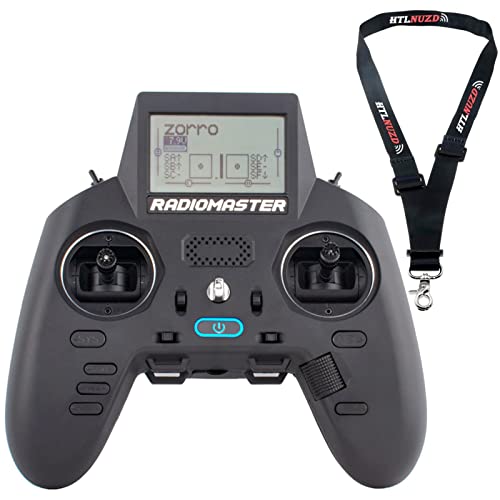
- Adjustable Hall gimbals with tunable travel
- External module bay supports Crossfire and ELRS
- USB-C charging and external battery support
Best For: Pilots who want a configurable FPV radio with Hall gimbals and module flexibility
Simulator Training Pick
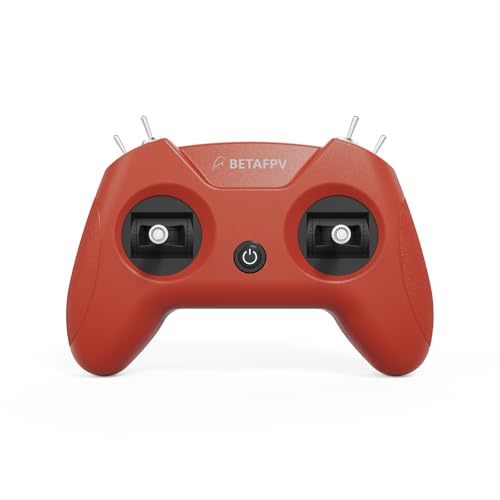
- Built specifically for simulator practice
- Broad support for major FPV sim platforms
- USB-C plug-and-play setup
Best For: Beginners who want an easy simulator controller for FPV training
DJI Ecosystem Choice

- Lightweight design with longer battery life
- Extended sticks help with precise control
- Works with several FPV simulators
Best For: DJI pilots who want a portable controller with Manual mode and sim support
Budget-Friendly 3.5-Inch Touchscreen Pick

- Hall gimbals with a 3.5-inch touchscreen.
- Press-fit attachment, no tools needed.
- Lightweight 50 g build for field use.
Best For: Pilots who want a lightweight Hall-gimbal controller with touchscreen control.
Official DJI Hall-Stick Controller

- Ergonomic design with Hall effect sticks.
- Supports Avata, Avata 2, FPV, and DJI goggles.
- Approx. 9 hours of operating time.
Best For: DJI pilots who want an official Hall-stick controller with broad ecosystem support.
High-Power ELRS Hall Radio

- Hall gimbals with ELRS 2.4G and EdgeTX.
- Built-in 500mW output with cooling fan.
- Multi-module support for added flexibility.
Best For: FPV pilots who want a feature-rich Hall-gimbal transmitter with ELRS support.
DJI Starter Pick
DJI FPV Remote Controller - Mode 2

- Ergonomic button-control layout
- Includes battery and supports the DJI FPV System
- Up to 10 meters of range
Best For: Pilots who want a simple DJI FPV controller with an easy, familiar feel
Portable DJI Option
DJI FPV Remote Controller 2 - Gray (Renewed)

- Lighter, smaller design
- Dual-band support for DJI FPV and Avata
- Mode 1 or Mode 2 flight modes
Best For: Pilots who want a compact renewed DJI controller with dual-band support
Long-Flight Pick
Original FPV Remote Controller 3 for DJI Avata 2 and Neo

- Up to 10 hours of battery life
- Normal, Sport, and Manual modes
- Wide DJI compatibility across drones and goggles
Best For: Pilots who want long runtime and Manual mode support in the DJI ecosystem
DJI Avata 2 Ready – Lightweight FPV Control
If you want fpv controllers with hall gimbals style precision in a simple, compact package, the DJI FPV Remote Controller 3 is built for DJI Avata 2 and DJI O4 systems. It focuses on lighter weight, longer battery life, and extended control sticks, making it a practical pick for longer sessions and more deliberate stick inputs.
Best For: DJI Avata 2 pilots and DJI users who want a lightweight controller with manual mode support.
Pros:
- Integrated antenna design for stable DJI O4 signal reception
- Lightweight build at about 240 grams for reduced fatigue
- About 10 hours of battery life for longer flying sessions
- Extended control sticks add 2 mm for finer control
Cons:
- Designed for DJI compatibility rather than universal FPV use
- Maximum supported range is listed at 10 meters in the details
This is a focused controller for DJI pilots who value portability, stick precision, and Manual mode access. If your setup is in the DJI ecosystem, it offers the most relevant mix of convenience and control.
Hall Gimbal Radio – Multi-Module FPV Transmitter
Among fpv controllers with hall gimbals, this HTLNUZD transmitter stands out for pilots who want modular flexibility and adjustable stick travel. It combines Hall gimbals with an external module bay, so it can work with Crossfire, ELRS, and other compatible modules while keeping a radio-style layout with a large screen and assignable controls.
Best For: FPV pilots who want a Hall gimbal radio with external module support and a configurable control layout.
Pros:
- Adjustable Hall gimbals with travel from 38° to 54°
- External module bay supports Crossfire, ELRS, and other compatible modules
- Large LCD screen and metal roller improve control and visibility
- USB-C charging plus support for external 2S battery power
Cons:
- More complex than a basic single-purpose controller
- Best suited to pilots who need module flexibility, not casual drone flying
This is the most adaptable option here if you want a transmitter that can grow with your FPV setup. The Hall gimbals, module bay, and physical customization features make it a strong choice for pilots who tune their gear heavily.
Simulator Training Pick – Beginner FPV Trainer
If you are looking for fpv controllers with hall gimbals for simulator practice, the BETAFPV LiteRadio 2 SIM is built specifically for training rather than live flying. It is designed to give beginners an authentic FPV feel on major simulator platforms, with plug-and-play USB-C connectivity and broad support across Windows, macOS, and Android.
Best For: Beginner FPV pilots who want a dedicated simulator controller for practice.
Pros:
- Built exclusively for simulator training
- Supports many platforms including DRL, Uncrashed, VelociDrone, and Phoenix RC
- Front-mounted Type-C port makes setup easy and reduces cable strain
- Pro-grade gimbal is tuned for precise simulator control
Cons:
- Not intended for real-world drone control
- Focused on simulator use rather than multi-purpose transmitter features
This is a smart entry point if your goal is to build stick skills before flying a drone. Its broad simulator compatibility and simple wired setup make it easy to use, especially for first-time FPV learners.
DJI Ecosystem Choice – FPV Remote 3
The DJI FPV Remote Controller 3 is a straightforward option for pilots already using DJI gear who want lighter handling and extended sticks. It supports DJI O4 video transmission, includes Manual mode for advanced practice, and also works with simulators like Liftoff, Uncrashed, DCL, and The Drone Racing League.
Best For: DJI pilots who want a compact controller with simulator compatibility and Manual mode.
Pros:
- Integrated antenna design for DJI O4 video transmission
- Lighter than its predecessor with longer operating time
- Extended control sticks add 2 mm for improved handling
- Compatible with multiple simulators for practice
Cons:
- Most useful inside the DJI ecosystem
- Stick feel may need adjustment with the included screwdriver
For DJI users, this controller balances portability, manual-flight capability, and simulator support in one package. It is especially appealing if you want a familiar upgrade path without moving outside the DJI ecosystem.
Budget-Friendly 3.5-Inch Touchscreen Pick – T15 2.4Ghz Grey
If you’re comparing fpv controllers with hall gimbals and want a compact, field-ready option, the T15 2.4Ghz Grey is built around practical basics. It pairs Hall gimbals with a 3.5-inch touchscreen, Bluetooth connectivity, and a press-fit attachment design, so it aims to keep setup simple while covering common RC drone layouts.
Best For: Pilots who want a lightweight Hall-gimbal controller with a touchscreen and simple no-tools attachment.
Pros:
- Hall gimbals add smoother stick control for FPV use.
- 3.5-inch touchscreen gives quick on-device control.
- Press-fit design means no tools are needed for attachment.
- Lightweight 50 g build and rugged construction suit field use.
Cons:
- Fitment depends on verifying shell dimensions first.
- Compatibility is tied to common arm and body layouts.
- Battery capacity is listed at 1 Ah, so runtime expectations should be modest.
Overall, this T15 model is a straightforward choice if you want hall gimbals plus touchscreen convenience without a complicated install. The tradeoff is that fitment needs to be checked carefully before buying.
Official DJI Hall-Stick Controller – DJI FPV Remote Controller 2
Among fpv controllers with hall gimbals, the DJI FPV Remote Controller 2 stands out for its ergonomic design and Hall effect control sticks. It is designed for DJI FPV ecosystems and supports Avata 2, Avata, DJI FPV, and multiple DJI goggles and air units, making it a focused option rather than a general-purpose radio.
Best For: DJI pilots who want an official controller with Hall effect sticks and broad DJI compatibility.
Pros:
- Hall effect control sticks are built into an ergonomic design.
- Supports DJI Avata 2, Avata, DJI FPV, and several DJI goggles/air units.
- Approx. 9-hour operating time is solid for sessions.
- Includes control sticks pair and comes from DJI with warranty coverage.
Cons:
- Compatibility is limited to DJI-supported devices.
- Maximum supported devices is listed as 1, so it is not a multi-model radio.
- Connectivity is listed as infrared, which may not suit buyers expecting a more general radio link.
This is the most polished option here if you fly within DJI’s ecosystem and want Hall sticks from the official brand. It is less appealing if you need a flexible controller for mixed-brand setups.
High-Power ELRS Hall Radio – Jumper T12 MAX 2.4G Hall
If you want fpv controllers with hall gimbals that lean more toward serious radio features, the Jumper T12 MAX 2.4G brings Hall gimbals, ELRS 2.4G, and EDGETX into one transmitter. It also adds a built-in 500mW module and a direct cooling fan, which makes it a more feature-rich pick for pilots who value radio flexibility.
Best For: FPV pilots who want a Hall-gimbal transmitter with ELRS, EdgeTX, and higher-power output.
Pros:
- Hall gimbals support smoother, wear-resistant stick input.
- Built-in ELRS 2.4G 500mW adds strong wireless capability.
- EDGETX and multi-module support increase radio flexibility.
- Direct cooling fan helps with heat dissipation.
Cons:
- At 2 pounds, it is heavier than compact controller options.
- The feature set may be more than casual pilots need.
- Detailed fit or ecosystem compatibility is not specified in the notes.
The T12 MAX is the most radio-focused option in this group, especially if you want ELRS and EdgeTX alongside Hall gimbals. It makes sense for pilots who prioritize control features over portability.
DJI Starter Pick – DJI FPV Remote Controller – Mode 2
If you’re looking at FPV controllers with hall gimbals for a DJI setup, the DJI FPV Remote Controller – Mode 2 is a straightforward option built for the DJI FPV System. It keeps the layout simple with button control, an ergonomic shape, and support for up to 10 meters of range, making it a practical choice for pilots who want a familiar DJI feel.
Best For: DJI FPV pilots who want a simple, ergonomic controller for the DJI FPV System.
Pros:
- Ergonomic design for more comfortable handling
- Includes a battery, so it’s ready to use out of the box
- Supports the DJI FPV System with up to 10 meters of range
- Uses a compact 10-button layout
Cons:
- Compatible with only one supported device
- Short range compared with many modern FPV controller setups
- Product notes do not highlight hall gimbals specifically
This is the most basic pick in the group: solid ergonomics, DJI-specific compatibility, and a no-frills control layout. It makes sense if you want a controller centered on the DJI FPV ecosystem rather than a feature-heavy universal option.
Portable DJI Option – DJI FPV Remote Controller 2 – Gray (Renewed)
For shoppers comparing FPV controllers with hall gimbals, the DJI FPV Remote Controller 2 is the more compact, lighter, and more portable option in this lineup. It supports two frequency bands, offers Mode 1 or Mode 2 flight setups, and works with the DJI FPV Drone and Avata, which makes it a flexible pick for pilots already inside DJI’s FPV ecosystem.
Best For: DJI FPV and Avata pilots who want a lighter controller with dual-band support.
Pros:
- Lighter and smaller than previous versions
- Supports 2.400-2.4835 GHz and 5.725-5.850 GHz bands
- Works with DJI FPV Drone and Avata
- Offers Mode 1 or Mode 2 flight modes
Cons:
- Renewed condition may not appeal to every buyer
- Compatibility is limited to supported DJI devices
- Notes do not specifically mention hall gimbals
This controller stands out for portability and dual-frequency support rather than extra features. If you want a compact DJI controller that still covers the basics for FPV flying, it’s an easy model to consider.
Long-Flight Pick – Original FPV Remote Controller 3 for DJI Avata 2 and Neo
If you’re shopping for FPV controllers with hall gimbals for extended flying sessions, this DJI FPV Remote Controller 3 is the most feature-rich option in the list. It supports a wide range of DJI gear, including Avata 2, Neo, Goggles 3, and O3/O4 Air Units, and adds Normal, Sport, and Manual modes for everything from practice to freestyle flight.
Best For: DJI pilots who want long battery life, broad compatibility, and Manual mode support.
Pros:
- Up to 10 hours of operating time on a full charge
- Supports Normal, Sport, and Manual (M-gear) modes
- Lightweight 240g build for longer sessions
- Compatible with a wide range of DJI devices and goggles
Cons:
- Designed for DJI’s ecosystem rather than universal use
- Uses Wi-Fi connectivity instead of a broader radio feature set in the notes
- Product notes do not specifically mention hall gimbals
Among these three, this model is the strongest choice for pilots who prioritize battery life and flight-mode flexibility. It makes sense for training and advanced flying, especially if you already use compatible DJI goggles and air units.
How We Picked the Best Fpv Controllers with Hall Gimbals
We prioritized stick precision, build quality, radio compatibility, ease of setup, and real-world value. For Fpv Controllers with Hall Gimbals, the biggest advantage is consistent input without the wear issues of traditional potentiometer gimbals, so we looked for models that use that benefit well rather than simply listing feature-heavy radios.
We also weighed whether each controller is suited to beginners, simulator practice, DJI ecosystems, or advanced multi-protocol flying. That helps narrow the field quickly if you already know your drone platform.
Quick Comparison: What Matters Most
If you want the simplest path, match the controller to your flying environment first. Simulator-focused users may prefer a lightweight, low-cost option. DJI pilots should check direct compatibility with their goggles and aircraft. Multi-module and ELRS users should look for flexible firmware, protocol support, and a layout that makes custom setup easy.
Battery life, ergonomics, and switch placement matter more than many buyers expect. A controller that feels comfortable after 20 minutes is often a better buy than one loaded with extra features you will never use.
Key Buying Factors for Fpv Controllers with Hall Gimbals
Protocol and Ecosystem Support
Make sure the controller works with your drone or simulator. Some controllers are tailored to DJI systems, while others are built for ELRS, multi-protocol, or mixed-use setups.
Gimbal Feel and Adjustment
Hall gimbals should deliver smooth centering and predictable resistance. Look for adjustable tension, stick travel tuning, and a shape that suits your grip style.
Training Vs. Flying Use
If you are learning, a lighter and simpler controller can be ideal. If you fly regularly, prioritize durability, more telemetry options, and better firmware support.
Power and Portability
Battery life, charging method, and size all affect convenience. A compact controller is easier to carry, while a larger one may offer better handling and a more premium control feel.
Who Should Buy Which Fpv Controllers with Hall Gimbals?
Beginners and simulator pilots should lean toward straightforward models that are easy to connect and comfortable to use for long sessions. DJI users should focus on native compatibility and dependable link performance. Advanced hobbyists will usually get the most value from flexible Fpv Controllers with Hall Gimbals that support ELRS or multi-protocol operation and offer deeper radio customization.
If you want the safest long-term purchase, choose the controller that matches your main flying platform today and still leaves room for future upgrades.