
If you want an FPV drone for freestyle, the best choice depends on where you fly, how much crash resistance you need, and whether you prefer a ready-to-fly kit or a bind-and-fly setup.
We focused on drones that make freestyle practice easier, with a mix of compact whoops, beginner bundles, and more capable systems for tighter control and smoother maneuvering.
Best 10 Fpv Drone for Freestyle Picks for 2026
Immersive Starter FPV

- Motion control keeps flying intuitive for beginners.
- Built-in prop guards improve durability and confidence.
- Supports easy flips, rolls, and 180° drifts.
Best For: New pilots who want an easy, immersive FPV freestyle setup.
Indoor Freestyle Trainer

- 80mm lightweight frame favors tight indoor freestyle.
- 0802 20000KV motors deliver strong punch-outs.
- Includes controller, 4 batteries, and charger.
Best For: Pilots practicing freestyle and racing skills indoors.
Ultralight Crash-Ready Freestyle
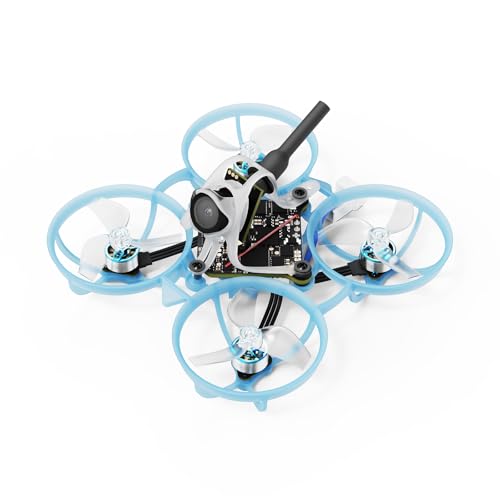
- Built for 1S freestyle with a reinforced frame.
- 0702 25000KV motors give responsive control.
- Crash-resistant FC and canopy improve durability.
Best For: Freestyle pilots who want an ultralight, crash-tolerant whoop.
Ultralight Freestyle Whoop
BETAFPV Air75 II Brushless Whoop

- 0802 22000KV motors aim for smooth, torque-rich freestyle handling
- Reinforced frame and FC design improve crash resistance
- Adjustable 15° to 45° camera angle supports varied flying
Best For: Pilots who want a compact freestyle whoop with durable parts and responsive control
Ultralight Indoor Precision
R8 ELRS Whoop Drone for Freestyle

- 26g 80mm whoop built for tight indoor control
- 0802 20000KV motors with Betaflight tuning
- Includes 2 batteries, charger, spare props
Best For: Experienced pilots practicing indoor freestyle and precision control
HD Indoor Line Finder

- 1080p at up to 120fps with 30ms latency
- 32g 1S whoop with 1102 22000KV motors
- Tough prop-guard frame with ELRS and charger
Best For: Pilots wanting a compact HD whoop for indoor freestyle training
Immersive Starter FPV – DJI Avata 2 Fly More Combo
If you want an fpv drone for freestyle that feels immediately approachable, the DJI Avata 2 Fly More Combo is built around simple motion control, built-in prop guards, and easy acrobatics. It’s aimed at new pilots who want the full FPV experience without a steep learning curve, while still giving you flips, rolls, and 180° drifts for expressive flying and 4K/60fps capture.
Best For: Beginners who want an immersive FPV setup with easy control and freestyle tricks.
Pros:
- Motion control makes flying feel natural and beginner-friendly.
- Easy flips, rolls, and 180° drifts help you learn freestyle moves quickly.
- Built-in propeller guards add durability and confidence in close flying.
- 4K camera and 155° field of view support wide, low-altitude footage.
Cons:
- Geared more toward entry-level FPV than a pure custom freestyle build.
- Single-battery combo gives less runtime than larger bundles.
- Requires DJI ecosystem compatibility for the included FPV experience.
The Avata 2 stands out if you want a practical path into FPV freestyle with less setup friction. It balances cinematic capture, durability, and easy handling better than most beginner-focused options.
Indoor Freestyle Trainer – R8 ELRS Whoop Drone
The R8 ELRS FPV Whoop Drone is a focused fpv drone for freestyle practice, especially if you want an indoor trainer with real power and responsive handling. Its lightweight 80mm frame, 0802 20000KV motors, Betaflight tuning, and included Radiomaster Pocket controller make it a ready-to-fly package for advancing basic skills into sharper freestyle moves.
Best For: Pilots who want a compact indoor freestyle and racing trainer with ELRS control.
Pros:
- Low-profile 80mm frame is designed for stability in sharp turns and gaps.
- 0802 20000KV brushless motors provide strong punch-outs and roll recovery.
- Includes Radiomaster Pocket controller plus 4 batteries and charger for quick setup.
- Betaflight-based tuning supports advanced practice and freestyle progression.
Cons:
- FPV goggles are not included, so the kit is not fully complete out of the box.
- Best suited to indoor or protected flying rather than larger open-area sessions.
- Requires your own transmitter battery.
This is a strong choice if your main goal is building freestyle reflexes in tight spaces. It offers a lot of power for a tiny whoop while keeping the package practical for training.
Micro HD Freestyle Kit – CADDXFPV Protos RTF
The CADDXFPV Protos FPV Drone RTF Kit is a compact fpv drone for freestyle pilots who want a tiny whoop with HD video and a complete box kit. At just 100g, it pairs a Walksnail Ascent VTX, a 160° lens, and 1080P/60FPS goggles for low-latency flying, while the manual mode lets you work on freestyle tricks as your skills grow.
Best For: Flyers who want a pocket-sized HD FPV kit for freestyle, training, and travel.
Pros:
- Small 100g frame makes it easy to carry and fly in more places.
- Manual mode supports freestyle practice, while other modes help beginners.
- Includes drone, goggles, controller, batteries, charger, and carry case.
- Fast charging and three batteries keep downtime low between flights.
Cons:
- RC control range is listed at about 150 m ± 50 m, which is modest.
- Designed more as a micro whoop than a full-size freestyle rig.
- Charging butler charger is excluded from the kit.
For pilots who want an all-in-one micro setup, the Protos offers a nice balance of convenience and progression. It’s especially appealing if you want HD FPV freestyle in a portable, low-drama package.
Ultralight Crash-Ready Freestyle – BETAFPV Air65 II
If you’re shopping for an fpv drone for freestyle with a lightweight, durable feel, the BETAFPV Air65 II is built specifically around 1S performance and repeated impacts. Its 0702 25000KV motors, 12A ESC, reinforced frame, and tuned freestyle focus make it a strong pick for smooth indoor and outdoor cinematic flying.
Best For: Freestyle pilots who want an ultralight whoop that can handle repeated crashes.
Pros:
- Designed specifically for freestyle with a balance of power and resilience.
- 0702 25000KV motors and 3-blade props support responsive flight.
- Reinforced frame, canopy, and FC mounting improve crash durability.
- Works for both indoor and outdoor flying with smooth low-throttle control.
Cons:
- Battery is not listed in the supplied details, so runtime depends on your setup.
- As an ultralight whoop, it is built for agility rather than long-range flying.
- Requires compatible FPV gear and radio setup beyond the drone hardware.
The Air65 II is a sensible choice if your freestyle style leans toward technical, close-quarters flying. It prioritizes durability and control, which matters a lot when you’re practicing hard and crashing often.
Beginner RTF Kit – BETAFPV Aquila16 FPV Kit with LiteRadio 2 SE
If you want an fpv drone for freestyle practice that also keeps things beginner-friendly, the BETAFPV Aquila16 FPV Kit is built for smooth learning rather than raw speed. It includes a brushless quadcopter, LiteRadio 2 SE transmitter with ELRS V3 firmware, and VR03 goggles with DVR recording, so you can practice, review, and improve without buying pieces separately.
Best For: First-time pilots who want an all-in-one FPV setup for indoor and outdoor practice.
Pros:
- Complete RTF kit with drone, transmitter, goggles, battery, and charger
- ELRS V3 transmitter supports simulator practice and firmware upgrades
- 3 flight modes plus 3 speed settings help new pilots progress gradually
- Turtle Mode helps recover after a crash without manual flipping
Cons:
- Position hold is only available in N mode
- Designed for beginner-friendly flying rather than high-aggression freestyle
- Camera cable may loosen after repeated crashes and need checking
This is the safer pick if you want a complete FPV starter kit with useful training features and a stable, manageable flight feel. It is more about building confidence than chasing advanced freestyle performance.
Ultralight Freestyle Whoop – BETAFPV Air75 II Brushless Whoop
For buyers searching for an fpv drone for freestyle in a compact whoop format, the BETAFPV Air75 II focuses on agility, torque, and crash resistance. It uses 0802 22000KV motors, a Matrix 5IN1 II FC with a 12A continuous/18A peak ESC, and a lightweight build aimed at smooth, cinematic flying with up to 7:30 flight time.
Best For: Pilots who want a small, durable freestyle whoop with responsive handling.
Pros:
- Optimized for freestyle with smooth control and low-end torque
- Matrix 5IN1 II FC and reinforced frame are built for crash resistance
- 12A continuous ESC helps deliver strong power output
- Adjustable camera angle from 15° to 45° supports different flying styles
Cons:
- Flight time is listed at up to 7:30, so it is still a small-battery whoop
- Ultralight design is best suited to compact freestyle rather than larger environments
The Air75 II is a focused pick if you want a tiny freestyle quad that emphasizes control, durability, and a smooth flying feel. It is less about a full kit and more about delivering a capable freestyle platform.
Ready-to-Fly Tiny Whoop – Tinyhawk Lite FPV Drone Kit
If you want an fpv drone for freestyle training in a small, easy-to-handle package, the Tinyhawk Lite is a ready-to-fly kit centered on real FPV performance. It uses true FPV video with low latency, includes goggles and a controller, and pairs that with Betaflight Configurator support so you can tune the drone as your skills improve.
Best For: Beginners who want a compact RTF kit that can grow with their flying skills.
Pros:
- Real FPV system with almost zero latency instead of WiFi-style delay
- Complete RTF kit includes goggles and remote control
- Betaflight Configurator allows tuning flight modes and responsiveness
- Light 75mm, ~37g design is easy to manage indoors or outdoors
Cons:
- Designed as a tiny whoop, so it is better for practice than aggressive freestyle
- Small frame size limits the scale of flying compared with larger quads
The Tinyhawk Lite stands out as a practical entry point if you want real FPV without a complicated setup. Its strength is simple, durable practice flying with enough tuning flexibility to keep it useful as you advance.
Ultralight Indoor Precision – R8 ELRS Whoop Drone for Freestyle
If you want an fpv drone for freestyle that favors control, tight lines, and indoor practice, the STARTFPV R8 is built around lightweight handling rather than big-air power. Its 80mm frame, 1S brushless setup, and Betaflight tuning make it a solid pick for pilots refining acro skills in small spaces.
Best For: Experienced FPV pilots who want a compact indoor trainer for freestyle practice, precision flying, and quick reactions.
Pros:
- Ultralight 80mm frame at just 26g for low inertia and agile movement.
- 0802 20000KV motors and a reported 1:4 thrust-to-weight ratio for strong punch-outs and recoveries.
- Matrix G4 5-in-1 FC with Betaflight presets, plus full PID, filter, and rate access for tuning.
- Includes 2 batteries, charger, spare props, and built-in ELRS 2.4G receiver for quick setup.
Cons:
- Radio and FPV goggles are not included.
- Battery life is only about 3 to 6 minutes per pack depending on flying style.
- Best suited to indoor and close-quarters flying rather than larger outdoor runs.
This is a practice-focused whoop for pilots who care about feel, tuning, and repeatable control. If your goal is to sharpen freestyle fundamentals indoors, the R8 is more about precision than spectacle.
HD Indoor Line Finder – Curve Micro 16 1S ELRS Whoop
For an fpv drone for freestyle that also gives you HD visibility, the CADDXFPV Curve Micro 16 leans into low-latency indoor flying with 1080p capture and a 120fps mode. Its 32g ultralight build, ELRS support, and tough one-piece whoop frame make it a practical choice for tight practice lines and repeated gate runs.
Best For: Pilots who want a compact HD whoop for indoor freestyle practice, quick reactions, and durable everyday training.
Pros:
- 1080p video at up to 120fps with a reported 30ms latency for cleaner reaction time.
- 32g 1S platform with 1102 22000KV motors and a 12A ESC for lively indoor movement.
- One-piece injection-molded whoop frame with full prop protection for taps and hard landings.
- Built-in ELRS 2.4GHz and included 6-channel Type-C charger for simple battery cycling.
Cons:
- Radio and goggles are not included.
- Designed around compatible Ascent goggles/VRX gear, so ecosystem matching matters.
- 1S flight time is about 6 minutes, so it remains a short-session practice drone.
This model stands out if you want digital-style clarity without giving up whoop agility. It’s a strong training tool for indoor freestyle pilots who value durability and fast visual feedback.
Beginner Freestyle Ready Kit – APEX FPV Drone with Goggles
If you’re looking for an fpv drone for freestyle and want the simplest possible start, the APEX kit is built around a ready-to-fly setup with goggles included. Its analog 5.8G system keeps latency low, and the three flight modes make it easier to progress from stable hovering to full manual acro.
Best For: New pilots who want a bundled FPV starter kit for beginner practice, basic aerobatics, and learning freestyle in manual mode.
Pros:
- Ready-to-fly kit with FPV goggles included, so you can start without building a separate setup.
- B/H/A flight modes cover beginner stabilization, smoother transitions, and full manual freestyle.
- Comes with 3 batteries for about 15 to 18 minutes of total flying time.
- Analog 5.8G FPV offers near-zero latency for responsive control.
Cons:
- Analog video is standard definition and can show normal snow or scan lines.
- Remote control uses Wi-Fi per the supplied details, so it is not a high-end hobby radio package.
- Heavier and less specialized than a tiny whoop built purely for indoor freestyle practice.
The APEX is the most beginner-friendly option here because it removes a lot of setup friction. If you want an all-in-one FPV introduction that can still grow into manual freestyle, this kit is easy to recommend.
How We Picked the Best Fpv Drone for Freestyle
For this roundup, we prioritized models that suit freestyle flying rather than only cinematic cruising. That means strong handling, responsive control, practical flight-ready bundles, and frames or builds that can handle repeated takeoff, landing, and occasional impact. We also looked at whether each option is approachable for newer pilots or better suited to someone ready for more precise stick work.
Quick Comparison
The group splits into three broad categories: ready-to-fly kits with goggles and radios, ultralight whoops for indoor or small-space freestyle, and more advanced bind-and-fly or digital-view setups for pilots who already have gear. If you want the simplest path, choose a complete kit. If you already own goggles and a transmitter, a BNF model can offer better value and a more focused freestyle build.
Key Buying Factors for an Fpv Drone for Freestyle
Size and Flying Environment
Smaller whoops are easier to fly indoors, in backyards, or around tight obstacles. Larger or more powerful setups can feel more stable outdoors and in open spaces, but they typically need more room and more pilot skill.
Camera and Video Link
For freestyle, a clear, low-latency feed matters more than high-resolution recording alone. Analog and digital systems each have tradeoffs: digital can look cleaner, while analog is often lighter and can be more affordable. Choose the system that fits your existing gear and budget.
Flight Feel and Power
Look for enough thrust to recover quickly from mistakes and maintain control through rolls, dives, and split-S turns. Ultralight builds can be nimble, but heavier or more powerful models may feel more planted when you are learning cleaner lines.
Durability and Parts Support
An Fpv Drone for Freestyle should be easy to repair. Frames, props, motors, and ducts should be simple to replace, and parts availability matters if you plan to practice often.
Battery and Bundle Value
RTF and kit packages can save time and money if you are starting from scratch. Check how many batteries are included, what charger is bundled, and whether the radio and goggles are useful beyond the first setup.
Who Should Buy Which Fpv Drone for Freestyle?
Beginners should lean toward complete RTF kits with goggles and a controller, since they remove a lot of setup friction. Indoor and close-quarters pilots should prioritize lightweight whoops with strong protection and predictable handling. Pilots who already own FPV gear should look for BNF or drone-only options with the control system and video link that match their setup. If your goal is to learn smooth freestyle lines with minimal hassle, pick the most complete bundle that still fits your flying space and experience level.