
Choosing the right fpv drone for indoor flying comes down to safety, stability, and control in tight spaces. The best picks are small, responsive, and easy to recover when you bump a wall or furniture.
Below, we focus on drones and kits that make indoor flying more manageable for beginners and more fun for experienced pilots, with a mix of ready-to-fly options, brushless whoops, and camera-equipped models.
Best 10 Fpv Drone for Indoor Flying Picks for 2026
Beginner Indoor FPV Starter Kit
BETAFPV Cetus Lite Ready-to-Fly Kit

- Altitude hold helps stabilize indoor hovering.
- Includes VR02 goggles and LiteRadio 1.
- Prop guards and PA12 frame improve crash protection.
Best For: New pilots wanting a complete indoor FPV starter kit
Performance Tiny Whoop
STARTFPV R8 ELRS Indoor Freestyle

- 80mm ultralight frame with duct guards.
- 1:4 thrust-to-weight ratio for punchy indoor flying.
- BNF setup with Betaflight tuning and ELRS receiver.
Best For: Experienced pilots wanting a fast indoor freestyle whoop
Beginner Brushless Whoop Kit

- Altitude hold makes indoor hovering easier.
- Three flight modes support beginner-to-advanced progression.
- Includes goggles, transmitter, batteries, and charger.
Best For: Beginners wanting a complete indoor FPV learning kit
Screen-Controller Camera Drone
HD Indoor Beginner Drone with Screen

- Built-in 4.3-inch controller display.
- Optical flow helps stabilize indoor hovering.
- Obstacle avoidance supports safer casual flights.
Best For: Beginners wanting a screen-equipped indoor camera drone
Premium FPV Bundle
DJI Neo 2 Motion Fly More Combo with Goggles N3

- 151g compact drone with full propeller guards
- Includes RC Motion 3, Goggles N3, and 3 batteries
- Palm takeoff, gesture control, and obstacle sensing
Best For: Indoor FPV buyers who want an all-in-one, safety-focused DJI bundle
Ultralight Freestyle Whoop
BETAFPV Air65 II Ultralight FPV Whoop
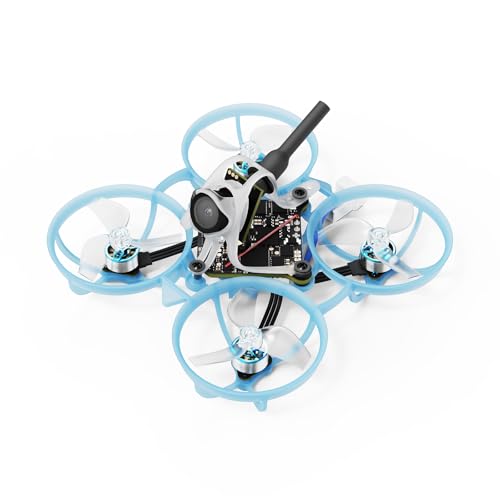
- 1S brushless whoop built for indoor freestyle
- Reinforced frame, canopy, and durable FC mounting
- 0702 25000KV motors with 12A ESC for responsive control
Best For: Indoor freestyle pilots who want a crash-resistant ultralight whoop
Screen-Controller Indoor Pick
FPV Drone with HD Camera Screen Remote Controller
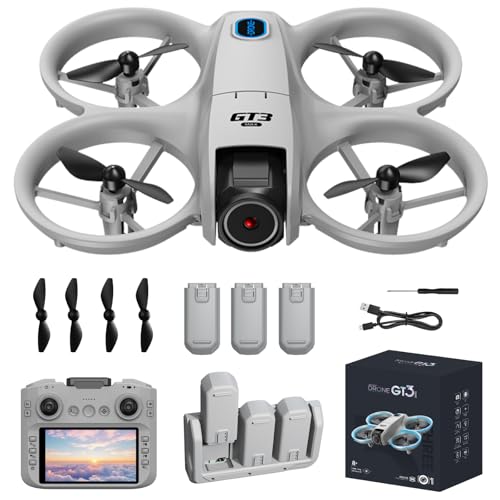
- Built-in 4.3-inch screen controller
- Optical flow positioning for stable indoor hovering
- Obstacle avoidance and beginner controls
Best For: Beginners who want a simple indoor drone with no phone required
Pro-Grade Tiny Whoop
BETAFPV Air75 II Brushless Whoop Quadcopter

- Ultra-light brushless whoop for indoor spaces
- Reinforced frame and canopy improve crash resistance
- Strong 0802 motors and 12A ESC for performance
Best For: Experienced pilots who want a durable, high-output indoor whoop
Beginner Indoor FPV Starter Kit – BETAFPV Cetus Lite Ready-to-Fly Kit
If you want an fpv drone for indoor flying that feels beginner-friendly from the first battery, the BETAFPV Cetus Lite kit is built around simple control and added protection. Altitude hold helps keep the drone steady, while the included VR02 goggles make it easy to see the flight from the pilot’s perspective.
Best For: New pilots who want a ready-to-fly indoor FPV kit with goggles, a transmitter, and stabilizing features.
Pros:
- Altitude hold supports steady hovering indoors for easier learning.
- Includes VR02 FPV goggles for an immersive first-person view.
- Propeller guards and a durable PA12 frame add protection during crashes.
- Supports FPV simulator practice with LiteRadio 1.
Cons:
- Uses Frsky D8 by default, so protocol setup may be needed for binding.
- Designed mainly for beginners, not advanced freestyle flying.
- Range is listed at 80 meters, which is more than enough for indoor use but not a long-range setup.
For indoor learning, this kit focuses on safety, hover assistance, and a complete out-of-box experience. It’s a practical choice if you want to practice FPV without assembling a separate radio and goggles setup.
Performance Tiny Whoop – STARTFPV R8 ELRS Indoor Freestyle
For pilots looking for an fpv drone for indoor flying with more speed and tuning headroom, the STARTFPV R8 is aimed at experienced users. Its lightweight 80mm frame, 1S brushless power, and Betaflight-based setup are designed for precision, agility, and fast indoor freestyle.
Best For: FPV pilots who already have a transmitter and goggles and want an indoor whoop for freestyle, racing, and tuning.
Pros:
- Very light 80mm frame with duct guards for tight indoor control.
- 1:4 thrust-to-weight ratio and 0802 20000KV motors support strong punch-outs.
- Betaflight tuning with accessible PID, filter, and rate settings.
- Includes 2 batteries, charger, and spare props for immediate indoor sessions.
Cons:
- BNF format means you must supply your own ELRS transmitter and 5.8GHz goggles.
- More suited to pilots with existing FPV experience than absolute beginners.
- Flight time is modest at about 3 to 6 minutes per battery.
The R8 is a strong pick if you want an indoor whoop that rewards skill and tuning rather than hand-holding features. It’s built more for performance practice than casual hovering.
Beginner Brushless Whoop Kit – BETAFPV Cetus Pro FPV Kit
The BETAFPV Cetus Pro is an fpv drone for indoor flying that balances beginner-friendly stabilization with brushless performance. Its altitude hold, self-protection features, and three flight modes make it a flexible option for learning indoors while still leaving room to grow into faster flying.
Best For: Beginners who want a complete FPV kit with goggles, transmitter, and stabilization for indoor practice.
Pros:
- Altitude hold in N mode helps the quad hover steadily indoors.
- Three flight modes and three speed levels support progression.
- Self-protection and emergency landing features help reduce crash stress.
- Includes VR02 goggles, transmitter, batteries, charger, and storage bag.
Cons:
- Altitude hold is only available in N mode.
- Uses Frsky D8 protocol on the included transmitter.
- Bulkier than a bare whoop-only setup because it’s a full kit.
This kit is a good fit if you want one purchase that covers flying, viewing, charging, and practice. It offers a safer indoor learning curve without sacrificing the ability to move into sport and manual flying later.
Screen-Controller Camera Drone – HD Indoor Beginner Drone with Screen
If you’re shopping for an fpv drone for indoor flying with a simpler screen-based setup, this RC quadcopter focuses on easy viewing and assisted control. The 4.3-inch controller display, optical flow positioning, and obstacle avoidance are designed to make indoor hovering and casual flying more manageable.
Best For: Beginners who want a camera drone with a built-in screen and indoor stability features.
Pros:
- 4.3-inch HD screen controller removes the need for a smartphone.
- Optical flow positioning helps stabilize flight in indoor spaces.
- Obstacle avoidance adds an extra layer of collision reduction.
- One-touch takeoff/landing and speed modes keep operation simple.
Cons:
- Not a true FPV racing or freestyle whoop.
- Feature-heavy design may be more than needed for basic practice flying.
- Indoor performance depends on optical flow and obstacle sensing rather than specialized FPV gear.
This model is best viewed as an easy-entry camera drone with indoor-friendly stabilization rather than a performance FPV machine. It works well if you want a screen-in-controller experience for casual indoor flying and simple aerial photos.
Premium FPV Bundle – DJI Neo 2 Motion Fly More Combo with Goggles N3
If you’re shopping for an fpv drone for indoor flying, the DJI Neo 2 Motion Fly More Combo is aimed at buyers who want a compact, easy-to-handle setup with a strong safety focus. Its full propeller guards, palm takeoff and landing, and included Goggles N3 make it a practical pick for controlled FPV sessions at home, while the 151g body keeps it light and portable.
Best For: Flyers who want a beginner-friendly indoor FPV bundle with motion control, goggles, and extra batteries.
Pros:
- Full-coverage propeller guards are included for safer indoor use.
- Palm takeoff and gesture control make launching and basic control simple.
- Includes RC Motion 3, Goggles N3, three batteries, and a charging hub.
- Omnidirectional obstacle sensing adds an extra layer of flight awareness.
Cons:
- The full bundle is more expensive than a bare drone-only setup.
- Some advanced features may be more than a casual indoor flyer needs.
Overall, this is a polished FPV package for indoor practice and short creative flights, especially if you want a safer, all-in-one path into immersive flying.
Ultralight Freestyle Whoop – BETAFPV Air65 II Ultralight FPV Whoop
The BETAFPV Air65 II is a strong fpv drone for indoor flying if your priority is a lightweight whoop that can handle tight spaces and repeated crashes. It combines a reinforced frame and canopy with 0702 25000KV motors, a 12A ESC, and 1219S 3-blade props for smooth, low-throttle control that suits indoor freestyle.
Best For: Pilots who want an ultralight 1S whoop for indoor practice and freestyle flying.
Pros:
- Ultralight 1S whoop design is built for tight indoor spaces.
- Reinforced frame, canopy, and 3-point FC mounting improve crash resilience.
- 0702 25000KV motors and 12A ESC support energetic FPV performance.
- Optimized for smooth, cinematic low-throttle flying.
Cons:
- It is more of a freestyle platform than a ready-to-fly camera bundle.
- Requires more hands-on FPV setup and piloting experience than camera drones.
If you want a nimble indoor whoop for practicing lines, touching up freestyle skills, or flying in small rooms, the Air65 II is the most specialized option here.
Easy Immersive Starter Kit – DJI Neo Motion Fly More Combo with Goggles N3
For shoppers looking for an fpv drone for indoor flying, the DJI Neo Motion Fly More Combo offers an easy entry point with full-coverage propeller guards and motion-control FPV extras. At 135g, it stays light and portable, while palm takeoff, controller-free flying options, and subject tracking make it simple to use in and around the house.
Best For: Indoor flyers who want an approachable, lightweight FPV-ready DJI drone with extra batteries.
Pros:
- Full-coverage propeller guards support safer indoor flying.
- 135g lightweight body is easy to carry and handle.
- Includes DJI RC Motion 3, Goggles N3, three batteries, and a charging hub.
- Palm takeoff, subject tracking, and QuickShots simplify use.
Cons:
- Designed as a versatile camera drone, not a dedicated indoor whoop racer.
- Some features are more useful for casual filming than tight-space freestyle.
This combo works well if you want a simple, immersive drone package for indoor practice and occasional FPV-style flights without building out a separate setup.
Beginner-Friendly Analog FPV – APEX FPV Drone Kit with 120° Wide FPV Goggles
If you want an fpv drone for indoor flying that’s geared toward first-time pilots, this ready-to-fly kit keeps the setup simple. The drone comes pre-tuned, includes goggles with a 120° field of view, and uses low-latency analog transmission for responsive control.
Best For: New FPV pilots who want a simple, immersive starter kit with goggles and multiple batteries.
Pros:
- Ready to fly and pre-calibrated, with no soldering or complex setup.
- Altitude hold and beginner mode help make indoor practice less stressful.
- Includes 3 batteries for up to 15-18 minutes of total flight time.
- Three flight modes support progression from beginner to manual acro.
Cons:
- Analog video is standard definition, so image quality is not HD.
- Some snow noise and scan lines are normal with analog FPV transmission.
- Best suited to beginner freestyle rather than advanced indoor racing.
This is a practical pick if you value easy onboarding and immersive FPV goggles over premium image quality. For indoor flying, the stabilization features and low-latency feel are the main advantages.
Screen-Controller Indoor Pick – FPV Drone with HD Camera Screen Remote Controller
For an fpv drone for indoor flying with simple controls and a built-in display, this mini quadcopter is designed to reduce setup friction. The 4.3-inch screen remote lets you view the live feed and flight data without needing a phone, while optical flow positioning helps it hover steadily in GPS-free indoor spaces.
Best For: Beginners who want an easy indoor drone with a screen controller, stable hovering, and basic smart features.
Pros:
- 4.3-inch screen controller removes the need for a smartphone.
- Optical flow positioning supports stable indoor hovering.
- Obstacle avoidance helps reduce bump risks around furniture.
- One-touch takeoff/landing, headless mode, and gravity sensing make it beginner-friendly.
Cons:
- It is focused on easy flying and photography rather than serious FPV performance.
- Some features are better suited to casual indoor and backyard use than open-area flying.
- Dynamic light and smart shooting features may matter more to hobby users than core pilots.
This model stands out for convenience and stability, which are exactly what many indoor flyers need. If you want a low-effort drone for casual flying and simple aerial shots, it fits that brief well.
Pro-Grade Tiny Whoop – BETAFPV Air75 II Brushless Whoop Quadcopter
If you’re shopping for an fpv drone for indoor flying with a more performance-focused feel, the Air75 II is built as a lightweight brushless whoop. Its ducted frame, reinforced canopy, and strong power system are aimed at durability and precise control in a compact form factor.
Best For: Experienced pilots who want a lightweight indoor whoop with strong power and crash resistance.
Pros:
- Ultra-lightweight whoop design is well suited to tight indoor spaces.
- Reinforced frame and canopy are built for repeated impacts.
- 0802 brushless motors and 12A continuous ESC deliver strong performance.
- Adjustable camera angle supports dialing in your indoor flying setup.
Cons:
- More oriented toward performance pilots than absolute beginners.
- No ready-to-fly bundle details are provided in the supplied notes.
- Its racing-focused tuning may be more than casual flyers need indoors.
This is the most performance-driven option in the group, so it makes sense if you already know you want a durable indoor whoop with real speed potential. It is less about convenience and more about capable, repeatable FPV handling.
How We Picked the Best Fpv Drone for Indoor Flying
We prioritized compact size, low-risk prop protection, stable handling, beginner-friendly control options, and overall value. For an Fpv Drone for Indoor Flying, small frame size and predictable throttle response matter more than raw speed.
We also looked for kit completeness, battery flexibility, available goggles or screen viewing, and whether the drone is better suited to learning, casual flying, or more aggressive freestyle indoors.
Quick Comparison
If you want the easiest start, bundled kits with goggles and a controller reduce setup friction. If you want better performance, ultralight brushless whoops usually offer sharper control and more durability. Camera-focused mini drones are better if your goal is smooth indoor video and simple navigation.
Key Buying Factors for Fpv Drone for Indoor Flying
Size and Weight
Smaller drones are safer and easier to control indoors. Ultralight whoops and micro quads are less likely to damage walls, furniture, or the drone itself.
Prop Protection and Frame Design
Full or partial prop guards are important in tight rooms. A ducted design can help protect both the drone and nearby objects during beginner mistakes.
Flight Stability
Look for good throttle resolution, stable hover characteristics, and responsive but not overly twitchy controls. Features like optical flow can help with position holding on camera-oriented models.
Viewing System
FPV goggles give the most immersive experience, while screen-equipped controllers are easier for casual flyers. Pick the one that matches your comfort level and intended use.
Battery Life and Charging
Indoor sessions are often short and frequent, so extra batteries matter. A kit with multiple batteries can improve practice time more than a slightly faster drone.
Who Should Buy Which Fpv Drone for Indoor Flying?
Beginners: Choose a complete kit with goggles, controller, and protected props for the smoothest learning curve.
Freestyle pilots: Go for an ultralight brushless whoop if you want sharper response and better indoor maneuverability.
Camera-first buyers: Pick a mini drone with stabilization, optical flow, or obstacle-aware features if you care more about easy flying than FPV racing style.
Mixed-use shoppers: If you want one drone for both indoor practice and occasional outdoor use, look for a compact model with enough power to handle light wind while still remaining controllable indoors.
In the end, the best choice depends on whether you value training, portability, video quality, or precise control in confined spaces. For most buyers, the safest bet is a lightweight kit that keeps indoor flying simple and forgiving.