
Choosing the right goggles can make a bigger difference in racing than almost any other FPV upgrade. The best set gives you low latency, a clear picture, and a comfortable fit that holds up through long sessions.
Below, we compare 10 of the best FPV goggles for racing in 2026 across analog and digital setups, so you can match your goggles to your drone, budget, and flying style.
Best 10 Fpv Goggles for Racing Picks for 2026
Digital Immersion Pick

- 1920 × 1080 LCD display
- Portable with built-in controls
- 256 GB memory storage capacity
Best For: Pilots who want a compact digital goggles setup with a sharp 1080p display.
Premium HD Racing Choice

- Dual 1920×1080 OLED displays
- Low latency down to 22 ms
- Built-in DVR with microSD support
Best For: Digital FPV racers using Walksnail Avatar HD who want high-resolution OLED viewing.
Analog-Friendly Racing Pick

- 5.8GHz 48CH diversity receiver
- 800×480 16:9 LCD screen
- Supports eyeglasses and DVR recording
Best For: Analog racers who want a comfortable box-style headset with diversity reception.
Budget HD Upgrade
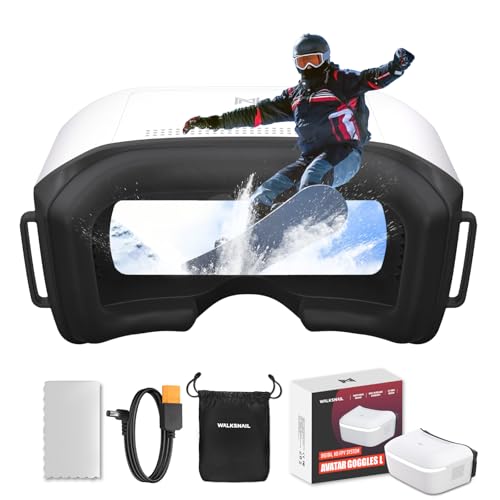
- 1080p/60fps on 4.5-inch LCD
- Latency as low as 32 ms
- Built-in DVR with Micro SD support
Best For: Budget-minded pilots using Walksnail Avatar HD who want clearer digital viewing.
Digital Entry Choice
Walksnail Ascent HD FPV Goggles

- 4.5-inch 1080P screen with 58° FOV.
- 32ms latency supports responsive flying.
- DVR recording and 2S–6S power input add convenience.
Best For: Beginners in the Walksnail Ascent ecosystem who want a digital FPV upgrade.
Universal View Option

- Patented unibody lens aims for a clearer view.
- Wide compatibility with many camera drones.
- Comfort features include padding and adjustable straps.
Best For: Pilots wanting a versatile smartphone-based viewing headset for many drones.
HD Comfort Pick
BETAFPV VR04 HD 1080P Goggles for P1 Air Unit

- 1920×1080 LCD with 60fps recording
- Glasses-friendly fit with soft padding
- Up to 3 hours of use with included batteries
Best For: Racers and whoop pilots who want comfortable HD goggles with DVR
Analog Budget DVR Pick
Speedybee EV800D 5.8G FPV Goggles

- Built-in DVR for flight recording
- Dual antennas for steadier reception
- Auto-search helps find channels fast
Best For: Analog racers wanting a low-friction goggle with DVR
HD Replay Value Pick
BETAFPV VR04 HD Goggles with DVR
- 1080p LCD with DVR record-and-replay
- Includes two 2600mAh batteries
- Compatible with P1 Air Unit and Meteor75 Pro P1
Best For: Pilots wanting HD goggles with DVR and flexible power options
Digital Immersion Pick – DJI FPV Goggles V2
If you want fpv goggles for racing with a polished digital feel, the DJI FPV Goggles V2 offer a 1920 × 1080 LCD display, built-in controls, and a portable design. They’re aimed at pilots who want an immersive view and a straightforward headset for compatible DJI FPV use.
Best For: Pilots who want a compact digital goggles setup with a sharp 1080p display and built-in controls.
Pros:
- 1920 × 1080 LCD display for a clear viewing experience
- Portable design with built-in controls
- Includes Wi‑Fi connectivity and 256 GB memory storage capacity
- Lightweight at 420 g for a full-feature headset
Cons:
- Compatibility is tied to the supported DJI/Meta ecosystem noted in the listing
- Not a box-style headset if you prefer a larger eyeglass-friendly form factor
For racing pilots who prioritize a compact digital headset, this model focuses on screen clarity and convenience rather than broad universal compatibility. It’s a practical pick if you already fly in the supported system and want an immersive, ready-to-use goggles experience.
Premium HD Racing Choice – Walksnail Avatar HD Goggles X
For fpv goggles for racing in a digital HD setup, the Walksnail Avatar HD Goggles X stand out with dual 1920×1080 OLED displays, up to 1080P/100FPS support, and a 50° field of view. They’re built for pilots who want a sharp, responsive feed and features that support longer sessions and flexible installation.
Best For: Digital FPV racers using Walksnail Avatar HD who want high-resolution OLED viewing and low-latency performance.
Pros:
- Dual 1920×1080 OLED displays with up to 1080P/100FPS support
- Average latency as low as 22 ms and up to 50 Mbps bitrate
- Built-in DVR with microSD support up to 256 GB
- HDMI in/out, AV input, and optional analog expansion support
Cons:
- Designed for Walksnail Avatar HD VTX kits only
- Battery is not included
- Not compatible with Walksnail Ascent or third-party digital systems
This is a strong choice if your racing setup is already built around Walksnail and you want a modern goggles platform with deep feature support. The low latency, OLED panels, and modular compatibility make it especially appealing for pilots who care about image quality and system flexibility.
Analog-Friendly Racing Pick – SKYZONE Cobra SD Goggles
If you’re shopping for fpv goggles for racing and prefer a classic analog setup, the SKYZONE Cobra SD gives you a 5.8GHz 48-channel diversity receiver and an 800×480 16:9 LCD screen. It’s designed to keep the feed stable and easy to use, with enough room for pilots who wear glasses.
Best For: Analog racers who want a comfortable box-style headset with diversity reception and eyeglass support.
Pros:
- 5.8GHz 48CH diversity receiver for stronger signal selection
- 800×480 LCD with native 16:9 aspect ratio
- Spacious design supports eyeglasses
- Built-in DVR and easy shuttle-wheel navigation
Cons:
- Lower screen resolution than digital HD goggles
- Uses a box-goggle form factor, which is larger than compact headsets
This model makes sense if you want a practical analog racing goggle with comfortable wear and simple controls. It focuses on reliable reception and usability rather than high-end digital image quality.
Budget HD Upgrade – Walksnail Goggles L
For buyers comparing fpv goggles for racing on a tighter budget, the Walksnail Goggles L offers a 1080p/60fps view on a 4.5-inch LCD with low-latency digital performance. It’s a good fit for pilots who want a clearer image than analog and can work within the Walksnail Avatar HD ecosystem.
Best For: Budget-minded pilots using Walksnail Avatar HD who want clearer digital viewing without stepping up to a premium headset.
Pros:
- 1080p/60fps display on a 4.5-inch 1920 x 1080 LCD
- Average latency as low as 32 ms with up to 50 Mbps bitrate
- Built-in DVR with Micro SD support up to 256 GB
- 6V-25.2V input supports 2S-6S batteries
Cons:
- Only works with Walksnail Avatar HD system air units
- No HDMI input
- External battery and Micro SD card are not included
This is the most value-focused option in the group if you want digital clarity and don’t need the extra features of a higher-end headset. Just make sure your build uses Avatar HD before buying, because compatibility is narrow.
Analog Racing Pick – 5.8G FPV Goggles with Dual Antennas
If you want fpv goggles for racing that stay simple, lightweight, and focused on analog compatibility, this Speedybee headset is built around the basics that matter on track. It offers a 3.0-inch 480×320 LCD, dual antennas for stronger reception, and RaceBand 40-channel auto-search support for quick setup.
Best For: Analog pilots, RC racers, and hobbyists who want a compact entry-level goggle with DVR support.
Pros:
- Dual antennas help improve signal stability for racing use.
- RaceBand 40-channel coverage with auto-search makes tuning faster.
- Built-in battery and low power draw support longer sessions.
- DVR record and AV input/output add useful flexibility.
Cons:
- 480×320 display is modest compared with higher-end digital goggles.
- Designed for analog FPV only.
Overall, this is a practical, no-frills option for pilots who value reliable analog performance over premium screen specs. Its compact size and low power use make it a sensible choice for track days and portable flying.
Digital Entry Choice – Walksnail Ascent HD FPV Goggles
For fpv goggles for racing in a digital system, the Walksnail Ascent focuses on clear image quality, low latency, and easy setup. It pairs a 4.5-inch 1080P screen with a 58° field of view, 32ms average latency, and digital transmission up to 4KM.
Best For: Beginner and hobbyist pilots using the Walksnail Ascent ecosystem who want an affordable digital upgrade.
Pros:
- 1080P display with a wide 58° FOV improves immersion.
- 32ms latency is fast enough for responsive flying.
- Supports DVR recording with microSD cards up to 256GB.
- Flexible 2S–6S power input makes powering it easier.
Cons:
- Only compatible with the Walksnail Ascent system.
- Battery is not included.
- Does not support video input or Apple iOS connection.
This is a strong pick if you are entering digital FPV and want a cleaner image than analog without overcomplicating the setup. Just make sure your gear matches the Ascent ecosystem before buying.
Universal View Option – DroneMask 2 FPV Goggles
If you are comparing fpv goggles for racing but need something that works with a camera drone and smartphone setup, the DroneMask 2 takes a different approach. It uses a patented unibody lens, lightproof screen-access holes, and adjustable focal length to create an immersive viewing experience while keeping compatibility broad.
Best For: Drone pilots who want a versatile headset for many camera drones and smartphone-based FPV viewing.
Pros:
- Patented unibody lens is designed for a clearer, more immersive view.
- Lightproof screen-access holes let you adjust settings mid-flight.
- Compatible with a wide range of camera drones and smartphones.
- Comfort features include soft padding, breathable fabric, and adjustable headstraps.
Cons:
- Heavier than the other options at 1.3 kg.
- Relies on a smartphone and standard controller.
- Not a dedicated racing goggle system.
The DroneMask 2 makes the most sense for pilots who want flexibility more than race-specific performance. It is a strong all-around viewing tool, but those chasing racing-first specs will likely prefer a more specialized headset.
HD Comfort Pick – BETAFPV VR04 HD 1080P Goggles for P1 Air Unit
If you want fpv goggles for racing that lean toward clear HD viewing and all-day comfort, the BETAFPV VR04 HD is built around a 4.5-inch 1080p LCD, glasses-friendly fit, and simple record-and-replay use. It’s a practical choice for pilots who want an immersive digital-style viewing setup without adding extra recording gear.
Best For: Racers and whoop pilots who want a comfortable HD goggle with built-in recording and P1 Air Unit support.
Pros:
- 1920×1080 display with 60fps recording for crisp flight footage
- Glasses-friendly interior, PU face padding, and silicone nose bridge for comfort
- Supports up to 3 hours of use with the included batteries
- Compatible with P1 Air Unit builds and bind-and-fly whoops like the Meteor75 Pro P1
Cons:
- MicroSD card is not included
- Designed around P1 Air Unit use, so it’s less universal than analog options
Overall, this model makes sense if you value comfort, onboard DVR, and a cleaner HD experience more than pure plug-and-play analog versatility.
Analog Budget DVR Pick – Speedybee EV800D 5.8G FPV Goggles
For fpv goggles for racing on an analog setup, the EV800D is a straightforward value option with a 5-inch screen, dual-antenna reception, and built-in DVR. It’s aimed at pilots who want real-time viewing, simple channel searching, and a ready-to-use package for drone, RC car, or airplane FPV.
Best For: Analog racers who want an affordable goggle with DVR, auto-search, and dual-antenna reception.
Pros:
- Built-in DVR for recording flights and runs
- Dual antenna reception for more stable signal performance
- Auto-search and key frequency search make tuning quicker
- Includes battery, antennas, charger cable, AV cable, and protective case
Cons:
- 800×480 screen resolution is modest compared with higher-end displays
- Best suited to analog FPV systems rather than digital builds
In practical terms, the EV800D is a strong pick if your racing setup is analog and you want a simple, feature-packed goggle without paying for extras you may not need.
HD Replay Value Pick – BETAFPV VR04 HD Goggles with DVR
If you’re comparing fpv goggles for racing and want HD viewing plus quick replay, the BETAFPV VR04 HD offers a 4.5-inch 1080p LCD, DVR function, and support for record-and-replay footage. It also keeps the fit and power flexibility of the VR04 line, making it a useful option for pilots who fly whoops or P1 Air Unit setups.
Best For: Pilots who want an HD goggle with built-in DVR, long-session comfort, and P1 Air Unit compatibility.
Pros:
- 1080p LCD screen with 60Hz refresh for clear viewing
- DVR support for record-and-replay flight footage
- Includes two 2600mAh batteries and can run up to about 3 hours
- Works with P1 Air Unit VTX and bind-and-fly whoops like the Meteor75 Pro P1
Cons:
- MicroSD card is not included
- Battery life is listed at about 2 hours in the details section, so real runtime may vary
This is a sensible middle-ground choice if you want HD goggles with DVR and don’t mind staying within the BETAFPV/P1 ecosystem.
How We Picked the Best Fpv Goggles for Racing
We focused on the features that matter most for Fpv Goggles for Racing: low-latency performance, image clarity, receiver quality, compatibility with common analog and digital systems, comfort, and value. We also considered whether each option suits new pilots, seasoned racers, and budget-minded buyers.
Quick Comparison
As you compare models, think first about your video system. Analog goggles remain popular for fast response and lower cost, while digital goggles can deliver a sharper image and a more immersive view. From there, compare field of view, screen or display quality, receiver support, DVR usefulness, and whether the goggles fit well with glasses or offer enough adjustment for long heats.
Key Buying Factors for Fpv Goggles for Racing
Latency
For racing, lower latency is the top priority. Even a small delay can affect gate timing, line choice, and recovery after a mistake.
Compatibility
Make sure the goggles match your air unit, VTX, or receiver setup. A great display is not useful if it cannot connect to your current system.
Display Quality and FOV
A clearer image helps with split-second decisions, while the right field of view balances immersion and situational awareness. Larger screens can feel cinematic, but some racers prefer a tighter view for easier target tracking.
Comfort and Fit
Racing sessions can run long, so weight, face foam, strap stability, and eyeglass support all matter. A comfortable fit reduces fatigue and helps you stay focused.
DVR and Receiver Features
Built-in DVR can help with review and tuning, while diversity receivers and strong antenna support can improve reception in challenging environments. For Fpv Goggles for Racing, these extras can be very useful, but they should not come at the expense of core performance.
Who Should Buy Which Fpv Goggles for Racing?
If you fly analog and want a proven, race-ready setup, prioritize low-latency goggles with solid receiver performance. If you want the sharpest image and already fly a compatible digital system, choose a digital model that balances resolution with response time. New pilots and budget shoppers may prefer simpler, lower-cost goggles that still deliver reliable reception and easy setup. Pilots who wear glasses should look closely at fit and eye relief before buying.
The best choice is the one that fits your video system, your budget, and the way you race. Focus on practical performance first, and you’ll end up with goggles that help you fly faster and more confidently.