
Choosing the right FPV goggles can make a bigger difference than almost any other drone upgrade. The best pair should match your video system, fit comfortably for long sessions, and keep latency low enough for confident flying.
In this roundup, we focus on the top options across digital and analog setups, from premium micro-OLED models to budget-friendly headset-style picks.
Best 10 Fpv Goggles Picks for 2026
Flagship Digital FPV

- 1080p Micro-OLED display
- O4 HD transmission with low latency
- Real View PiP plus adjustable diopters
Best For: DJI pilots wanting premium digital FPV and safety features
Budget HD Upgrade
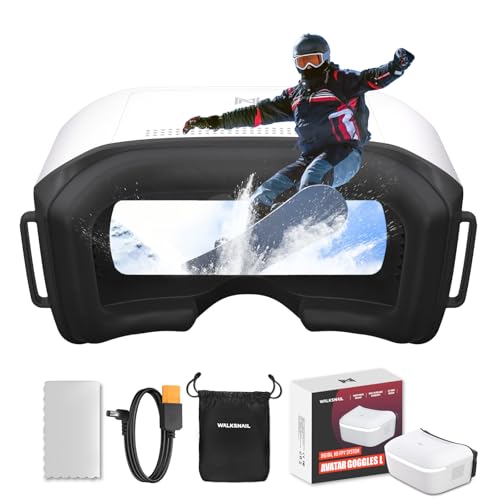
- 1080p/60fps display on a 4.5-inch screen
- Head tracking for fixed-wing and RC use
- Built-in DVR with microSD recording
Best For: Walksnail users seeking an affordable digital upgrade
Premium Digital View

- Dual OLED displays at up to 1080P/100FPS
- 22ms average latency with HDMI in/out
- Built-in DVR, head tracking, and wireless sharing
Best For: Advanced Walksnail pilots wanting a premium digital goggle platform
Walksnail HD Pick
Recon HD Walksnail FPV Goggles

- 1080p 4-inch TFT display
- Works with Walksnail Avatar VTXs
- Built-in DVR and USB-C output
Best For: Walksnail pilots who want a simple HD goggle with DVR
Universal Drone View

- Patented unibody lens design
- Works with many camera drones
- Adjustable fit with screen-access holes
Best For: Drone owners who want a phone-based headset for broad drone compatibility
Budget HD Choice
BETAFPV VR04 1080P FPV Goggles

- 4.5-inch 1080p LCD display
- Records 1080P@60fps to microSD
- Includes two batteries and glasses-friendly fit
Best For: Pilots who want HD goggles with recording and flexible power
Analog FPV Starter Pick

- Built-in DVR records flights in MP4.
- Dual antennas help steady the signal.
- 5-inch screen with auto-search tuning.
Best For: Analog pilots who want a simple DVR headset
Premium Immersive Pick
DJI Goggles 1080p HD FPV Headset

- Dual 1080p screens for sharp HD viewing.
- Head tracking and HDMI input add flexibility.
- Up to 6 hours of battery life.
Best For: DJI pilots who want a premium HD headset
Ready-to-Fly Bundle Pick
DJI Avata 2 Combo with Goggles N3

- Includes DJI Goggles N3 and RC Motion 3.
- Easy motion control suits new pilots.
- 4K/60fps camera with 155° field of view.
Best For: Beginners wanting a complete DJI FPV bundle
Flagship Digital FPV – DJI Goggles 3 with O4 HD
If you want premium fpv goggles for a DJI-based setup, the Goggles 3 focus on image quality, comfort, and safety features. The Micro-OLED display, O4 HD transmission, and Real View PiP make them a strong choice for pilots who want an immersive feed without losing awareness of their surroundings.
Best For: DJI pilots who want high-end digital FPV with strong transmission, comfort, and situational awareness.
Pros:
- 1080p Micro-OLED screen with up to 100 Hz refresh for a crisp viewing experience
- O4 HD transmission with low latency and high bitrate support on compatible DJI aircraft
- Real View PiP lets you check surroundings without taking the goggles off
- Built-in comfort features include adjustable diopters, defogging, and an integrated headband battery
Cons:
- Not compatible with DJI RC Motion 2 or DJI FPV Remote Controller 2
- Works within the DJI ecosystem, so it is not a universal FPV goggles option
- Higher-end feature set may be more than casual pilots need
Overall, these are a polished digital FPV option for DJI flyers who value clarity and convenience. If your drone and controller match the supported ecosystem, the Goggles 3 deliver one of the most refined viewing experiences here.
Budget HD Upgrade – Walksnail Goggles L 1080p
These fpv goggles are aimed at pilots who want a clearer digital picture without jumping straight into the most expensive setup. The 1080p/60fps LCD, long-range-rated link, and head tracking make them appealing for fixed-wing, freestyle practice, and RC vehicles that benefit from a wider, more responsive view.
Best For: Cost-conscious pilots using Walksnail Avatar HD gear who want digital clarity and head tracking.
Pros:
- 1080p/60fps image on a 4.5-inch screen for a cleaner digital view than analog
- Head tracking support adds flexibility for fixed-wing aircraft and RC applications
- Built-in DVR with microSD support up to 256GB for recording and replay
- 6V-25.2V input supports 2S-6S batteries for field use
Cons:
- Only works with Walksnail Avatar HD air units
- No analog video support and no HDMI input
- External battery and microSD card are not included
In practice, the Goggles L make sense if you already run Walksnail and want an affordable digital step up. They are less versatile than some competitors, but the feature mix is solid for the price class.
Analog Starter Set – Speedybee 5.8G Analog Goggles
If you need straightforward analog fpv goggles for drones, cars, or airplanes, this Speedybee model keeps things simple. The built-in battery, dual antennas, and 40-channel RaceBand support are geared toward reliable live video and easy setup for hobby use.
Best For: Analog FPV beginners and hobbyists who want a compact all-in-one headset with dual antennas.
Pros:
- Dual antennas help improve reception and signal stability
- 40-channel RaceBand support with auto-search for easier tuning
- Built-in battery and low power draw support longer sessions
- Compact 3-inch 480×320 screen with real-time video return and DVR
Cons:
- Analog-only design limits image quality compared with digital systems
- Small 3-inch display is less immersive than larger goggle options
- More basic feature set than higher-end digital FPV goggles
This is a practical pick for pilots who want an entry-friendly analog headset rather than a digital ecosystem. It covers the essentials well and should suit casual flying, track use, and budget-minded setups.
Premium Digital View – Walksnail Avatar HD Goggles X
For pilots comparing high-end fpv goggles, the Goggles X stand out for sharp OLED visuals, very low latency, and broad feature support. They combine 1080P/100FPS display performance with HDMI in/out, AV input, head tracking, and wireless feed sharing for a more flexible digital setup.
Best For: Experienced Walksnail Avatar HD pilots who want premium image quality, low latency, and flexible connectivity.
Pros:
- Dual 1920×1080 OLED displays with up to 1080P/100FPS for crisp, smooth visuals
- Low latency averaging as low as 22ms with up to 50Mbps bitrate
- HDMI in/out, AV input, and optional analog expansion for wider compatibility
- Built-in DVR, head tracking support, and wireless goggles-to-goggles sharing
Cons:
- Designed for Walksnail Avatar HD VTX kits only
- Battery is not included
- Some features, like analog expansion, require extra accessories
These goggles are best viewed as a premium, feature-rich digital platform rather than a universal headset. If you are already invested in Walksnail, the mix of display quality and connectivity is impressive.
Walksnail HD Pick – Recon HD Walksnail FPV Goggles
If you want fpv goggles built around Walksnail compatibility, the Fat Shark Recon HD is a focused HD option with a 1080p TFT display, 44-degree field of view, and built-in DVR controls. The molded headset design and adjustable headband aim to keep the fit practical for longer sessions, while the USB-C video output adds a useful connection option.
Best For: Pilots flying Walksnail Avatar VTX setups who want a straightforward HD goggle with DVR and USB-C support.
Pros:
- 1920×1080 4-inch TFT screen for HD viewing
- Compatible with Walksnail Avatar VTXs
- Includes DVR record button and 5-way OSD navigation
- Adjustable headband and molded headset design
Cons:
- Compatibility is limited to Walksnail transmitters
- 44-degree FOV is narrower than some immersive goggles
- Screen size may feel compact for users wanting a larger display
The Recon HD keeps the feature set targeted and practical rather than overloaded. If your build already centers on Walksnail, it offers a clean path to HD fpv goggles with recording and easy on-head use.
Universal Drone View – DroneMask 2 FPV Goggles
The DroneMask 2 is a broader-use option for fpv goggles, designed to work with camera drones that use a smartphone and standard controller. Its patented unibody lens is built for a clear immersive view, while the lightproof screen-access holes let you adjust settings without pulling the headset off mid-flight.
Best For: Drone flyers who want a phone-based headset for a wide range of GPS camera drones and casual FPV viewing.
Pros:
- Patented unibody lens for an immersive single-view experience
- Compatible with many camera drones, including DJI, Autel, Potensic, Fimi, and more
- Lightproof screen-access holes make in-flight adjustments easier
- Adjustable focal length and headstraps support comfort and fit
Cons:
- Requires a smartphone and standard controller
- Uses HDMI connectivity rather than a dedicated FPV VTX system
- Bulkier than compact goggles built for racing or freestyle drones
DroneMask 2 makes the most sense if you want a flexible viewing headset rather than a purpose-built racing goggle. It is a practical pick for drone owners who value compatibility, comfort, and a big-screen style experience.
Budget HD Choice – BETAFPV VR04 1080P FPV Goggles
The BETAFPV VR04 is a practical fpv goggles option for pilots who want HD viewing, recording, and comfort features in one package. It uses a 4.5-inch 1920×1080 LCD panel, supports 1080P@60fps recording to microSD, and includes glasses-friendly interior space with PU face padding for longer wear.
Best For: Pilots who want HD goggles with record-and-replay support, flexible power options, and eyewear-friendly comfort.
Pros:
- 1920×1080 LCD screen with 60Hz refresh rate
- Supports 1080P@60fps recording to microSD cards up to 1TB
- Includes two 2600mAh batteries and up to 3 hours runtime
- Glasses-friendly interior with PU face padding and silicone nose bridge
Cons:
- Compatibility is centered on the P1 Air Unit and specific whoop setups
- SD card is not included
- Display is 4.5 inches, which may not suit users wanting a larger screen
VR04 stands out as a straightforward HD goggle for pilots who care about recording flights as well as watching them. With battery power included and support for direct 2-6S whoop battery input, it is a convenient option for mixed flying setups.
Analog FPV Starter Pick – EV800D 5-Inch DVR Goggles
If you want budget-friendly fpv goggles for analog flying, the EV800D focuses on the essentials: a 5-inch 800×480 LCD, built-in DVR, and dual-antenna reception. It’s a practical option for pilots who want live video, simple channel finding, and the ability to record flights without adding extra gear.
Best For: Analog FPV flyers who want an affordable all-in-one headset with DVR and easy channel scanning.
Pros:
- Built-in DVR lets you record flights in MP4 format.
- Dual antenna setup is designed for more stable reception.
- Auto-search and key frequency search make tuning channels simpler.
- 5-inch bright LCD gives you a larger viewing area for immersion.
Cons:
- Designed for analog FPV use rather than digital systems.
- Uses a lower-resolution 800×480 screen compared with premium goggles.
- Battery charger cable is included, but an adapter is not.
The EV800D is a straightforward choice if you value recording and usability over high-end display specs. For analog pilots, it covers the core fpv goggles features without trying to be more than it is.
Premium Immersive Pick – DJI Goggles 1080p HD FPV Headset
The DJI Goggles are built for pilots who want a more immersive fpv goggles experience with dual 1920 x 1080 HD screens and support for 1080p/30 fps or 720p/60 fps viewing. With HDMI input, touchpad controls, and head tracking, this headset is aimed at users who want a polished, high-end viewing setup.
Best For: DJI drone owners and experienced users who want a premium HD FPV headset with long battery life.
Pros:
- Dual 1080p screens deliver a sharp HD viewing experience.
- Head tracking control adds an interactive flight feel.
- HDMI input and 3.5mm audio jack expand connectivity options.
- Up to 6 hours of battery life supports longer sessions.
Cons:
- Made for professional use, so it may be more than casual pilots need.
- Support is tied to specific DJI aircraft series.
- Bulkier than simpler budget goggles at about 1 kg.
These goggles are a strong fit if you already fly compatible DJI aircraft and want a more refined cockpit-style view. They trade simplicity for a fuller feature set and higher-resolution display quality.
Ready-to-Fly Bundle Pick – DJI Avata 2 Combo with Goggles N3
For buyers looking at fpv goggles as part of a complete flying setup, the DJI Avata 2 Fly Smart Combo includes the drone, DJI RC Motion 3, and DJI Goggles N3. The package is built around an immersive first-person view, easy motion control, and a 4K ultra-wide camera, making it appealing for users who want a streamlined way to get airborne.
Best For: Beginners and content creators who want an all-in-one DJI FPV package with goggles included.
Pros:
- Includes DJI Goggles N3 and RC Motion 3 in the box.
- Motion control is designed to be intuitive and beginner-friendly.
- 4K/60fps footage with a 155° FOV supports wide, immersive capture.
- Built-in propeller guards add durability and safety.
Cons:
- It’s a full drone combo, not just goggles alone.
- Best suited to the DJI ecosystem and its included controls.
- Focused on simplified flying, so advanced pilots may want more customization.
This bundle makes sense if you want to skip piecing together a separate FPV setup. It delivers the goggles, controller, and drone together for a fast path into immersive flying and easy POV content capture.
How We Picked These Fpv Goggles
We selected models based on video quality, compatibility, comfort, latency, viewing experience, and overall value. Because Fpv Goggles are tied closely to your drone and video link, the most important factor is whether the goggles work with your existing system.
We also looked at practical details that matter in real use: screen resolution, field of view, diopter support, battery design, DVR features, and whether the headset is a good fit for casual flying or more serious immersive sessions.
Quick Comparison
Digital goggles generally offer the sharpest image and best long-range experience, while analog models remain attractive for lower cost and broad compatibility. If you want the cleanest picture and own a supported digital ecosystem, premium goggles are the strongest choice. If you fly older analog gear or want an affordable entry point, a simpler 5.8GHz option may be the better match.
Key Buying Factors for Fpv Goggles
Video System Compatibility
Start with the link type: analog, DJI, Walksnail, or another digital platform. Some goggles are ecosystem-specific, while others are more flexible. Buying the wrong system can mean poor performance or no usable signal at all.
Display Quality and Field of View
Sharper panels, higher refresh rates, and a balanced field of view improve immersion without making the image feel cramped or blurry. More FOV is not always better if comfort or edge clarity suffers.
Comfort and Fit
Weight distribution, face padding, and strap stability matter during longer flying sessions. Adjustable diopters or lens support can also reduce the need for aftermarket fixes.
Latency and DVR Features
Lower latency is essential for racing and fast freestyle. Built-in DVR is useful for reviewing flights, troubleshooting video issues, and capturing crashes or signal dropouts.
Power and Portability
Check whether the goggles use built-in batteries or external packs, and how long they last. Portability matters if you travel often or want a simple grab-and-go setup.
Who Should Buy Which Fpv Goggles?
Choose premium digital Fpv Goggles if you want the best image quality, immersive flight, and modern ecosystem support. Pick an analog model if you already own 5.8GHz gear or want the most affordable route into FPV. If you value comfort and easier setup, headset-style or hybrid-looking options can be a smart middle ground for casual pilots and drone camera users.