
Gesture controlled humanoid robots can turn playtime into an interactive STEM experience, blending motion, voice, coding, and hands-on learning in one device.
From kid-friendly toys to advanced education kits, this 2026 roundup highlights the best options for different ages, skill levels, and budgets.
Best 10 Gesture Controlled Humanoid Robots Picks for 2026
Advanced AI Builder Pick
Tonybot Ultimate AI Humanoid Robot Kit

- 17DOF humanoid with walking, dancing, kicking, and self-stand-up
- AI vision and voice modules add face recognition and tracking
- Arduino, Python, and Scratch support for flexible learning
Best For: Advanced STEM and AI robotics projects
Kid-Friendly Gesture Robot
KingsDragon Gesture RC Robot for Kids

- Hand gesture and infrared remote control
- Records and replays up to 50 actions
- Obstacle avoidance and light-up eyes
Best For: Young kids who want interactive gesture-based play
Educational ROS Platform
HIWONDER AiNex ROS Humanoid Robot Kit

- ROS-based humanoid with Raspberry Pi 5 support
- 24 servos, inverse kinematics, and gait planning
- HD camera with vision recognition and tracking
Best For: Robotics education and AI vision learning
Feature-Packed Big Robot
VATOS Extra Large Gesture Voice Robot

- Gesture sensing plus 2.4GHz remote and voice control
- Programs up to 30 commands for repeat play
- Extra-large 15.4-inch size with LED eyes
Best For: Kids who want a big interactive robot with multiple control modes
Advanced ROS Platform

- ROS-based humanoid robot for Raspberry Pi 5
- 24 DOF servos with inverse kinematics gait
- App, wireless handle, and PC control options
Best For: Tech hobbyists and programmers seeking a configurable humanoid robot
Best for Everyday Use
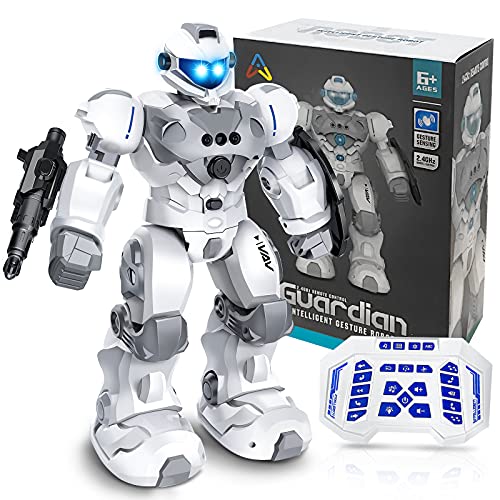
- Gesture sensing and remote control operation
- Programmable movement sequences via remote
- USB rechargeable with LED eyes and sound
Best For: Kids ages 6-10 who want an interactive STEM robot toy
Interactive Motion Robot
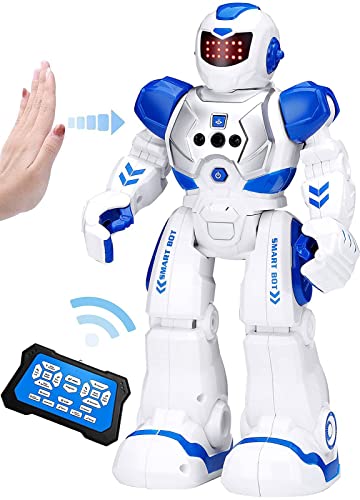
- Hand gesture or remote control operation
- Records up to 50 moves for programming
- Sings, dances, talks, and avoids obstacles
Best For: Kids 6+ who want a fun gesture-controlled robot with music and movement
Talking Gesture Bot
VATOS Smart Talking Voice Remote Robot

- Gesture sensing and remote control
- Voice response, repeat-back, and storytelling
- Programmable moves with LED expressions
Best For: Interactive play for younger kids who like talking and gesture-based robot toys
Multi-Mode Companion
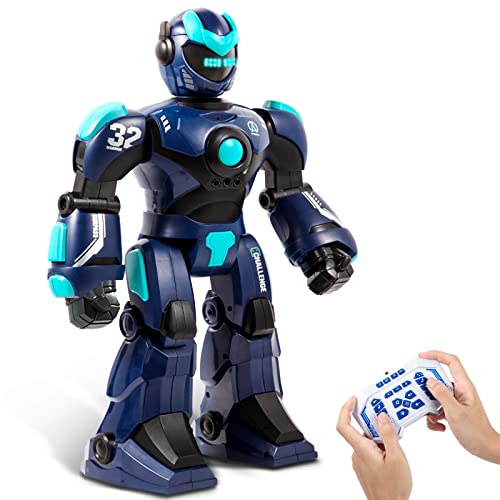
- Gesture, voice, and remote control modes
- Walking, dancing, singing, and storytelling
- Rechargeable battery with safety-tested ABS build
Best For: Kids who want a larger robot toy with multiple control methods and lots of activities
Smart Learning Bot
Ruko 6088 Programmable Gesture Robot

- Four control methods including gesture sensing
- 200 editable program icons plus app learning
- Rechargeable with up to 120 minutes of play
Best For: Early STEM-focused play for younger kids who like coding-style customization
Advanced AI Builder Pick – Tonybot Ultimate AI Humanoid Robot Kit
If you want gesture controlled humanoid robots that go beyond basic remote play, Tonybot Ultimate kit is built for hands-on learning and advanced demos. This ESP32-powered robot combines 17 servos, AI vision, voice interaction, and multi-language programming so it can walk, dance, kick, self-stand, and support more complex AI projects.
Best For: Advanced STEM learners, adult hobbyists, and educators who want an AI-capable humanoid robot with coding depth.
Pros:
- 17DOF humanoid design with smooth walking, dancing, kicking, and automatic stand-up
- AI vision and voice modules support face recognition, target tracking, line following, and voice control
- Compatible with Arduino, Python, and Scratch for flexible learning paths
- Includes sensors and expansion support for broader AI development
Cons:
- Geared toward advanced users rather than casual toy-level use
- Ultimate AI model functions are only included in the Ultimate Kit
Overall, Tonybot is the most feature-rich option here if your priority is a programmable humanoid platform with gesture-like motion, AI interaction, and room to expand into serious robotics projects.
Kid-Friendly Gesture Robot – KingsDragon Gesture RC Robot for Kids
For families shopping gesture controlled humanoid robots for younger kids, the KingsDragon RC Robot keeps things simple, colorful, and interactive. It responds to both infrared remote commands and hand gestures, and it adds programmable action playback, light-up eyes, and obstacle avoidance for more varied play.
Best For: Kids ages 3+ who want an easy-to-use gesture robot toy with basic programming.
Pros:
- Supports hand gesture control plus infrared remote control
- Can record and replay up to 50 actions for simple programming play
- Includes obstacle avoidance, auto display, and bright blue LED eyes
- Rechargeable design helps avoid frequent battery replacements
Cons:
- More of a toy robot than an advanced humanoid platform
- Playtime is about 60 minutes per charge
This is a good pick if you want an approachable gesture-sensing robot that focuses on fun, movement, and basic coding-style interaction rather than deep robotics features.
Educational ROS Platform – HIWONDER AiNex ROS Humanoid Robot Kit
If you are comparing gesture controlled humanoid robots for education, the HIWONDER AiNex is aimed squarely at serious robotics learning. Built on ROS with Raspberry Pi 5, it combines 24 intelligent servos, inverse kinematics gait planning, an HD camera, and mechanical hands to support lifelike motion and AI vision projects.
Best For: Adult learners, classrooms, and robotics builders who want a ROS-based humanoid platform.
Pros:
- ROS and Raspberry Pi 5 foundation for advanced robotics study
- Inverse kinematics and gait planning support flexible movement and turning
- AI vision recognition and tracking via machine vision and OpenCV
- Multiple control options include app, wireless handle, and PC software
Cons:
- Designed for educational use, not casual toy play
- Requires time and technical comfort to get the most from its features
AiNex stands out when the goal is learning robotics, AI, and programming through a more capable humanoid platform rather than simply buying a gesture toy.
Feature-Packed Big Robot – VATOS Extra Large Gesture Voice Robot
Among gesture controlled humanoid robots for kids, the VATOS Extra Large RC Robot adds a bigger body, voice commands, and programmable actions for more engaging play. It can move by remote control or gestures, plus it can sing, dance, tell stories, and repeat up to 30 programmed commands.
Best For: Families looking for a large, feature-packed robot toy with gesture, voice, and programming modes.
Pros:
- Supports 2.4GHz remote control, gesture sensing, and voice control
- Programmable with up to 30 recorded commands
- Extra-large 15.4-inch size with bright LED eyes and expression changes
- Rechargeable battery and included USB charging cable
Cons:
- Still a toy robot, so it lacks advanced humanoid robotics features
- About 60 minutes of playtime per charge
VATOS is a strong pick if you want a big, attention-grabbing interactive robot that blends gesture play with voice prompts and simple programming.
Advanced ROS Platform – AiNex Smart Robot
If you’re comparing gesture controlled humanoid robots with real development potential, AiNex stands out for its ROS-based build, Raspberry Pi 5 support, and 24 DOF movement. It is aimed at users who want more than a simple toy, with AI vision, inverse kinematics, and multiple control options for hands-on experimentation.
Best For: Tech hobbyists, adult learners, and programmers who want a configurable humanoid robot platform.
Pros:
- Built on ROS and designed for Raspberry Pi 5 with 24 intelligent servos.
- Supports multiple control methods, including app, wireless handle, and PC software.
- Includes AI vision recognition, object tracking, and OpenCV-based functionality.
- Uses inverse kinematics and gait planning for more flexible movement.
Cons:
- Geared toward advanced users rather than casual plug-and-play buyers.
- Requires a Raspberry Pi 5 8GB setup, which adds to the total investment.
- More focused on learning and experimentation than simple kid-friendly play.
This is a strong pick if you want a programmable humanoid robot that emphasizes motion control, vision features, and platform flexibility. It is best viewed as a serious robotics kit with gesture-style and software-driven control options rather than a basic novelty robot.
Best for Everyday Use – VAV Programmable RC Robot
For shoppers focused on gesture controlled humanoid robots for kids, this VAV robot covers the basics well. It responds to hand gestures and remote commands, adds programmable actions, and includes lights and sound features that make it more engaging for play and STEM learning.
Best For: Kids ages 6 to 10 who want an interactive robot toy with gesture control and simple programming.
Pros:
- Responds to gesture commands as well as the included remote controller.
- Lets kids program movement sequences through the remote.
- USB rechargeable design with about 60 minutes of play after charging.
- LED eyes, voice, and accessory-style details add to the presentation.
Cons:
- Built primarily as a kid’s toy, not a robotics learning platform.
- Play time is limited compared with toys that offer longer runtime.
- Best suited for tabletop-style play rather than more advanced use.
This model makes sense if you want a lively, rechargeable robot that combines gesture sensing with easy programming features. It is a practical gift choice when the goal is interactive fun and a light introduction to STEM concepts.
Interactive Motion Robot – KingsDragon Gesture Robot
Among gesture controlled humanoid robots for younger users, this KingsDragon model focuses on interactive movement, sound, and simple programming. It can be driven by hand gestures or remote control, and it adds singing, dancing, and obstacle detection for more active play.
Best For: Kids ages 6 and up who want a gesture-controlled robot with music, dancing, and basic programming features.
Pros:
- Controlled by hand gestures or the included remote.
- Can record up to 50 moves for programmable play.
- Sings, dances, talks, and includes volume control.
- Collision detection sensors help it avoid obstacles while moving.
Cons:
- More of an entertainment robot than a deeper learning tool.
- Smaller size may feel less substantial than larger models.
- Charging and runtime are solid, but still suited to casual play.
This is a good fit if you want a lively robot that mixes gesture control with music and motion. It offers enough programming to keep play interesting, while staying simple enough for kids to use right away.
Talking Gesture Bot – VATOS Smart Talking Voice Remote Robot
If you want a gesture controlled humanoid robot for younger kids, this VATOS model mixes voice response, gesture sensing, programmable moves, and playful expressions in one easy-to-handle toy. It is built around interactive features like repeat-back speech, dancing, storytelling, and obstacle avoidance, so it offers more than just basic remote control play.
Best For: Kids who want an interactive robot with voice, gesture, and simple programming features.
Pros:
- Gesture sensing lets kids direct movement with simple hand motions.
- Voice command, repeat-back, and remote control add more ways to play.
- Programmable actions, movable joints, and two walking styles increase variety.
- Touch-sensitive chest, LED lighting, and eye expressions make it feel lively.
Cons:
- It is designed as a toy robot, so it is not a full-featured educational platform.
- Best suited to younger children rather than advanced robotics users.
This is a strong pick if your priority is entertaining, easy-to-use interaction rather than complexity. The mix of gesture control, talking, dancing, and storytelling makes it feel engaging right away, especially for gift buyers looking for a lively kid-friendly robot.
Multi-Mode Companion – HPROMOT RC Gesture Robot Toy
This HPROMOT option fits shoppers looking for gesture controlled humanoid robots with multiple ways to steer the action. It supports remote control, gesture control, and voice control, while also adding walking, dancing, singing, dialogue, and storytelling for a fuller play experience.
Best For: Families who want a big, multi-function robot toy with gesture, voice, and remote modes.
Pros:
- Three control modes make it flexible and easy for kids to use.
- Built-in dialogue, music, dancing, and storytelling boost engagement.
- Rechargeable battery support makes charging straightforward.
- ABS construction is described as non-toxic, eco-friendly, and safety tested.
Cons:
- The remote requires 2 AA batteries, which are not included.
- Its larger size may take up more storage space than smaller robot toys.
Overall, this is a practical all-around choice if you want lots of modes without overcomplicating the experience. The blend of gesture control and classic robot entertainment features makes it appealing as a gift and as a hands-on companion toy.
Smart Learning Bot – Ruko 6088 Programmable Gesture Robot
The Ruko 6088 stands out among gesture controlled humanoid robots because it combines four control methods with app-based learning and a strong programming focus. It responds to remote control, app control, gravity-sensitive control, and infrared gesture sensing, while also offering editable actions, expressions, music, and STEM-style quizzes.
Best For: Kids ages 3-6 who want an interactive robot with programming and learning features.
Pros:
- Four control methods give kids plenty of ways to interact.
- 200 editable program icons and a 50-function remote button support creativity.
- App quizzes and popular science content add learning value.
- Rechargeable design offers up to 120 minutes of play after a 2-hour charge.
Cons:
- Its learning features are best suited to families interested in app-based play.
- Designed for ages 3-6, so older kids may outgrow it quickly.
For buyers who want more than a novelty robot, this model offers the most structured learning angle in the group. The combination of gesture sensing, programming, and educational app content makes it a strong pick for early STEM play.
How We Picked the Best Gesture Controlled Humanoid Robots
We focused on gesture control reliability, build quality, age suitability, battery life, programmability, and overall value. For kids, we favored simple controls, durable shells, and engaging features like singing, dancing, and voice response. For education-focused models, we prioritized DOF count, software support, AI vision, and expansion potential.
Quick Comparison
In this group, some models are best for younger children who want easy remote and gesture play, while others are better suited to older students, hobbyists, and classroom use. Entry-level options are usually lighter and more entertainment-focused, while advanced Gesture Controlled Humanoid Robots may offer ROS support, Raspberry Pi compatibility, and deeper programming control.
Key Buying Factors for Gesture Controlled Humanoid Robots
Control Methods
Look for the mix that fits the user: gesture sensing, remote control, app control, voice commands, or coding tools. The more ways a robot can be controlled, the more useful it is over time.
Programming and STEM Features
If the goal is learning, check for Scratch, Python, Arduino, or ROS support. These features matter more than flashy actions because they help users progress from simple play to real coding and robotics concepts.
Movement and Degrees of Freedom
Higher DOF counts generally mean more expressive movement, but only if the robot is stable and well-supported. For younger users, a simpler design can be easier to enjoy and maintain.
Age, Safety, and Durability
Choose a model that matches the child’s age and the expected level of supervision. Smaller kids need robust construction and straightforward controls, while older users can handle more complex setup and programming.
Who Should Buy Which Gesture Controlled Humanoid Robots?
Parents buying a gift should usually choose an easy-to-use toy robot with gesture sensing, fun sounds, and a rechargeable battery. Teachers, students, and makers should lean toward advanced Gesture Controlled Humanoid Robots with coding support, AI vision, and flexible hardware platforms. If you want the widest long-term value, pick a model that balances interactive play today with upgradeable software or programming tools for tomorrow.