
The best laptops for programming in 2026 balance processor performance, memory, storage, display quality, keyboard comfort, and dependable battery life. The right choice depends on whether you write web apps, compile large projects, run containers, build for mobile platforms, or need GPU power for AI and game development.
This roundup compares 10 practical options across several budgets and workloads, including Windows business laptops, a new MacBook option, and a performance-focused gaming laptop.
Best 10 Laptops for Programming Picks for 2026
Best 2-in-1 Powerhouse

- 8-core Ryzen 7 processor for demanding multitasking
- 16GB RAM and 1TB SSD
- 16-inch touch display with Windows 11 Pro
Best For: Flexible coding and business productivity
Best Portable Mac

- Lightweight 2.71-pound aluminum design
- A18 Pro chip with macOS and AI support
- Up to 16 hours of battery life
Best For: Portable programming and Apple ecosystem users
Best Business Workhorse

- Ryzen 7 processor with 8 cores and 16 threads
- 16GB RAM, 1TB SSD, and 500GB external drive
- Memory supports expansion up to 64GB
Best For: Developer, education, and business workloads
Best for GPU Development

- Core i7-14650HX with 16 cores
- RTX 5060 Laptop GPU with 8GB graphics memory
- 165Hz display and advanced cooling
Best For: Game development, 3D work, and GPU-heavy coding
Reliable Workhorse
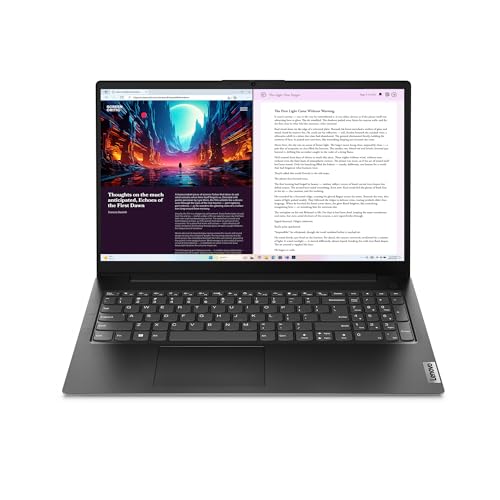
- Ryzen 5 7430U and 512GB SSD
- 15.6-inch anti-glare FHD IPS display
- Business security and broad connectivity
Best For: Everyday coding, office work, and lightweight development
Upgrade-Friendly Performer
NIMO 15.6-inch AI-Creator Laptop

- Ryzen 5 6600H with 16GB DDR5 RAM
- 1TB SSD with substantial upgrade room
- Fingerprint reader and backlit keyboard
Best For: Multitasking developers and students with growing storage needs
Balanced Productivity Pick
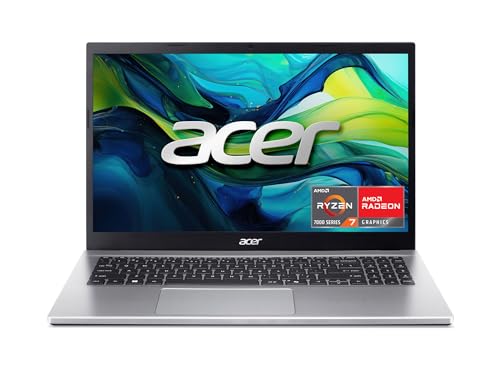
- Ryzen 7 7730U with 16GB RAM
- FHD IPS display with 300 nits brightness
- Wi-Fi 6, USB-C, and HDMI 2.1
Best For: Students and everyday programmers seeking balanced performance
Best Performance Value

- 32GB RAM for extensive multitasking
- Ryzen 7 with 8 cores and 16 threads
- 1TB PCIe SSD and Windows 11 Pro
Best For: Developers needing substantial memory and storage
Best Large-Screen Pick

- Large 17.3-inch anti-glare display
- 16GB RAM and 512GB SSD
- Full-size keyboard with numeric keypad
Best For: Desk-based coding and split-screen workflows
Best Connectivity Choice

- Ryzen 5 with 6 cores and 12 threads
- RJ45 Ethernet plus Wi-Fi 6
- 16GB RAM and 512GB NVMe SSD
Best For: Developers needing wired networking and Windows 11 Pro
Best 2-in-1 Powerhouse – Lenovo IdeaPad Ryzen 7 8845HS
For shoppers comparing laptops for programming, this Lenovo IdeaPad stands out with an eight-core Ryzen 7 8845HS processor, 16GB of memory, and a 1TB SSD. Its 16-inch 1920×1200 touchscreen provides extra vertical workspace for code, documentation, and multitasking.
Best For: Programmers who want strong multitasking performance, a large touch display, and a flexible 2-in-1 design.
Pros:
- Ryzen 7 8845HS offers 8 cores, 16 threads, and speeds up to 5.1GHz.
- 16GB LPDDR5 RAM and a 1TB SSD support development tools and large projects.
- Useful productivity features include a backlit keyboard, numeric keypad, fingerprint reader, and Windows 11 Pro.
- Includes two USB-C ports, two USB-A ports, HDMI, and a microSD card reader.
Cons:
- Integrated Radeon 780M graphics are less suited to graphics-intensive workloads than a dedicated GPU.
- At 6 pounds, it is relatively heavy for a portable programming laptop.
This is a practical choice for coding, business work, and content creation when screen space and connectivity matter more than maximum portability or dedicated graphics.
Best Portable Mac – Apple MacBook Neo 13-inch
Among laptops for programming, the MacBook Neo is a lightweight option for developers who value portability and battery life. Its A18 Pro chip, macOS, 13-inch Liquid Retina display, and advertised battery life of up to 16 hours suit coding on campus, in cafés, or while traveling.
Best For: Students and developers who prefer macOS, a compact design, and long battery life for everyday programming tasks.
Pros:
- Portable 2.71-pound aluminum design with up to 16 hours of battery life.
- A18 Pro chip supports everyday assignments, AI tools, and macOS applications.
- Liquid Retina display supports 1 billion colors, with a 1080p FaceTime HD camera for calls.
- Works closely with iPhone through features such as device handoff and iPhone control.
Cons:
- 8GB unified memory and 256GB SSD provide less headroom than the higher-capacity Windows options here.
- The 13-inch screen offers less workspace for side-by-side code and documentation.
- macOS may not suit developers who require Windows-specific tools or workflows.
The MacBook Neo is most compelling when mobility, battery endurance, and the Apple ecosystem are priorities; users working with large local projects should consider its 8GB memory and 256GB storage carefully.
Best Business Workhorse – Lenovo ThinkPad E16 Ryzen 7
This ThinkPad E16 is a strong contender among laptops for programming when practical business features and expandable memory matter. It combines an eight-core Ryzen 7 7735HS processor with 16GB DDR5 RAM, a 1TB NVMe SSD, an additional 500GB external hard drive, and a 16-inch anti-glare display.
Best For: Developers, students, and hybrid workers who need a roomy display, business security features, and broad connectivity.
Pros:
- Ryzen 7 7735HS provides 8 cores, 16 threads, and speeds up to 4.75GHz.
- 16GB DDR5 memory is listed as upgradeable to 64GB.
- Includes a 1TB PCIe NVMe SSD plus a 500GB external hard drive.
- Offers Wi-Fi 6E, Ethernet, HDMI 2.1, USB-C, USB-A, fingerprint login, and IR facial recognition.
Cons:
- Integrated Radeon 680M graphics are not intended for demanding GPU-focused development or gaming.
- The included external hard drive is less convenient than internal solid-state storage for frequently used projects.
With its upgradeable memory, anti-glare WUXGA screen, and business-oriented security, the ThinkPad E16 is a sensible long-term development machine for office, education, and hybrid-work setups.
Best for GPU Development – ASUS ROG Strix G16 RTX 5060
For programming that involves game development, 3D work, or GPU-accelerated tools, the ASUS ROG Strix G16 brings more graphics capability than typical productivity laptops. Its Intel Core i7-14650HX processor, RTX 5060 Laptop GPU with 8GB graphics memory, 16GB DDR5 RAM, and 1TB Gen 4 SSD provide a performance-focused foundation.
Best For: Developers who need dedicated graphics for game engines, 3D projects, AI experimentation, or gaming alongside coding.
Pros:
- Core i7-14650HX has 16 cores and speeds up to 5.2GHz.
- Dedicated RTX 5060 graphics with 8GB memory support GPU-intensive workloads.
- Fast 1TB PCIe Gen 4 SSD and 16GB DDR5-5600 memory provide responsive development performance.
- 16-inch 165Hz, 3ms display, Wi-Fi 7, and advanced vapor-chamber and tri-fan cooling support demanding use.
Cons:
- Its 2.65kg weight and gaming-oriented design make it less convenient for daily commuting.
- The supplied battery-life detail lists 2 hours, which is a limitation for unplugged work.
- Windows 11 Home is less business-focused than Windows 11 Pro.
The ROG Strix G16 is overpowered for basic web development, but its dedicated GPU and high-performance cooling make it the more suitable pick when programming overlaps with graphics-heavy creation or gaming.
Reliable Workhorse – Lenovo V15 Gen 4
The Lenovo V15 Gen 4 is a practical choice among laptops for programming when you need dependable everyday performance, a comfortable 15.6-inch FHD screen, and useful business-focused features. Its Ryzen 5 7430U processor, 8GB of RAM, and 512GB SSD are suited to coding, office work, web browsing, and general multitasking.
Best For: Students, home-office users, and programmers working with lightweight to moderate development tools.
Pros:
- Ryzen 5 7430U processor with integrated AMD Radeon graphics supports everyday multitasking.
- 15.6-inch anti-glare FHD IPS display offers 300 nits brightness and a spacious workspace.
- Wide connectivity includes USB, USB-C, HDMI, Ethernet, Wi-Fi 6, and an audio jack.
- Privacy shutter, TPM 2.0, and durability testing add useful business-oriented protection.
Cons:
- 8GB of RAM may feel limiting for large projects, virtual machines, or heavy multitasking.
- Integrated graphics are not intended for demanding 3D development or gaming workloads.
For programmers who prioritize practicality and connectivity over premium extras, the V15 Gen 4 offers a sensible foundation. Consider a higher-memory model if your workflow involves containers, emulators, or multiple demanding applications.
Upgrade-Friendly Performer – NIMO 15.6-inch AI-Creator Laptop
The NIMO 15.6-inch AI-Creator Laptop stands out among laptops for programming with 16GB of DDR5 RAM, a 1TB PCIe SSD, and a six-core Ryzen 5 6600H processor. That combination provides useful headroom for coding, multitasking, large files, and sustained daily workloads.
Best For: Students, developers, and entry-level creators who need strong multitasking performance and generous storage.
Pros:
- Six-core, 12-thread Ryzen 5 6600H processor boosts up to 4.5GHz for demanding daily work.
- 16GB DDR5 RAM and a 1TB SSD are well suited to development tools and larger projects.
- Dual SO-DIMM slots and an M.2 2280 slot provide upgrade room up to 64GB RAM and 4TB SSD.
- Backlit keyboard, fingerprint reader, numeric keypad, HDMI, and DisplayPort improve usability.
Cons:
- Integrated Radeon 660M graphics are better suited to light visual work than demanding GPU development.
- The 15.6-inch design is less portable than a smaller programming laptop.
With more memory and storage than many entry-level options, this NIMO model is a compelling fit for developers who expect their workload to grow. Its upgrade paths further improve its long-term flexibility.
Balanced Productivity Pick – Acer Aspire Go 15
The Acer Aspire Go 15 is a balanced option among laptops for programming, pairing an eight-core Ryzen 7 7730U processor with 16GB of memory and a 512GB PCIe Gen4 SSD. Its 15.6-inch FHD IPS display and Wi-Fi 6 connectivity make it suitable for coding, research, streaming, and everyday productivity.
Best For: Students and general-purpose programmers who want strong everyday performance with a clear, spacious display.
Pros:
- Ryzen 7 7730U processor and 16GB RAM support multitasking across development and productivity apps.
- 512GB PCIe Gen4 SSD offers responsive storage for applications and project files.
- 15.6-inch 1080p IPS display includes a narrow-bezel design, 300 nits brightness, and blue-light reduction.
- USB-C, HDMI 2.1, Wi-Fi 6, Ethernet, and Copilot support add convenience.
Cons:
- Integrated Radeon graphics are not designed for demanding 3D workloads or GPU-intensive development.
- 512GB of storage may fill quickly with large datasets, virtual machines, or multiple toolchains.
The Aspire Go 15 offers a strong middle ground for programming and general use, especially if you value memory capacity and a full-size display. Developers with unusually large local environments may want more storage.
Best Performance Value – HP 255 G10 Ryzen 7 Laptop
For developers who need plenty of memory for coding tools, browsers, and virtual workspaces, this HP 255 G10 is a capable choice among laptops for programming. Its Ryzen 7 processor, 32GB of RAM, and 1TB SSD are well suited to multitasking, while Windows 11 Pro adds business-oriented management and security features.
Best For: Programmers who prioritize multitasking capacity, storage, and Windows 11 Pro features.
Pros:
- 32GB RAM supports multiple applications and browser tabs.
- Ryzen 7 7730U offers 8 cores and 16 threads for demanding everyday workloads.
- 1TB PCIe SSD provides fast booting and ample project storage.
- Includes HDMI, USB-C, Wi-Fi 6, and a numeric keypad.
Cons:
- Integrated Radeon graphics are intended for general productivity rather than graphics-intensive development or gaming.
- The display is rated at 250 nits and 45% NTSC, so color and brightness are modest.
This is the strongest all-around option in the group for developers who regularly run several tools at once. Its 32GB memory and 1TB SSD provide useful headroom, while the 15.6-inch FHD IPS screen keeps the setup practical for daily coding.
Best Large-Screen Pick – HP 17.3-Inch Ryzen 5 Laptop
The large 17.3-inch screen makes this HP a comfortable option for coding with documentation, terminals, and editors visible together. As one of the laptops for programming in this roundup, it combines a Ryzen 5 processor, 16GB of RAM, a 512GB SSD, and a full-size keyboard with a numeric keypad.
Best For: Students and home-office programmers who prefer a spacious display and full-size keyboard.
Pros:
- 17.3-inch Full HD anti-glare display provides ample workspace.
- 16GB RAM and a 512GB SSD cover common programming and productivity needs.
- Full-size keyboard includes a 10-key numeric pad.
- Advertised battery life is up to 12 hours, with HP Fast Charge.
Cons:
- Its larger 17.3-inch chassis is less compact than the 15.6-inch alternatives.
- Graphics are integrated, limiting suitability for graphics-heavy workloads.
- The supplied specifications list a native resolution of 1600 x 900 despite describing the display as FHD, so buyers should verify the exact configuration.
This model favors screen real estate over portability. It is a sensible fit for programmers who work mostly at a desk and want room for multiple windows, though the configuration details should be confirmed before purchase.
Best Connectivity Choice – Lenovo V15 Ryzen 5 Laptop
The Lenovo V15 is a practical, business-focused option for programming with a 15.6-inch FHD display, 16GB of RAM, and a 512GB NVMe SSD. Its Ryzen 5 5500U processor handles everyday development tasks, while the built-in RJ45 Ethernet port and Windows 11 Pro make it useful in office or lab environments.
Best For: Programmers who want wired networking, Windows 11 Pro, and a straightforward 15.6-inch setup.
Pros:
- Six-core, 12-thread Ryzen 5 5500U supports everyday coding and multitasking.
- 16GB RAM and 512GB PCIe NVMe SSD provide a balanced development configuration.
- Includes RJ45 Ethernet, HDMI, USB-C, two USB-A ports, and Wi-Fi 6.
- Windows 11 Pro includes business administration and security features.
Cons:
- It has less RAM and storage than the HP 255 G10.
- Integrated Radeon graphics are not designed for graphics-intensive workloads.
- The listed model is from 2023, so it may not offer the newest platform features.
The Lenovo V15 is a well-rounded pick when connectivity matters as much as core performance. It provides the essential memory and storage for many programming workflows, plus Ethernet for reliable wired access.
How We Picked These Laptops for Programming
We focused on the specifications that most affect everyday development: CPU performance, RAM capacity, SSD storage, display usability, keyboard layout, upgrade potential, operating system, and overall value. Models with at least 16GB of memory generally receive preference because modern IDEs, browsers, local databases, emulators, and containers can quickly consume 8GB.
We also included varied hardware rather than selecting only the fastest laptop. A lightweight business model may be better for coursework and web development, while a laptop with a high-performance processor or discrete GPU can be more suitable for compiling large projects, virtualization, 3D work, or machine-learning experimentation.
Quick Comparison
| Best For | Recommended Configuration | Why It Matters |
|---|---|---|
| Everyday coding | Ryzen 5 or equivalent, 16GB RAM, 512GB SSD | Good balance for editors, browsers, office work, and common development tools |
| Heavy multitasking | Ryzen 7 or Core i7, 16GB to 32GB RAM, 1TB SSD | Better for containers, virtual machines, large projects, and multiple applications |
| AI, game, and graphics work | High-performance CPU with a dedicated RTX GPU | Provides substantially stronger graphics and parallel-computing performance |
| Portable Apple development | Modern Apple silicon with sufficient unified memory | Useful for macOS, iOS, and Apple-platform workflows |
| Large-screen productivity | 15.6-inch or 17.3-inch FHD display with a numeric keypad | Offers more workspace, though usually with greater weight |
Key Buying Factors for Laptops for Programming
Processor
Prioritize a recent Ryzen 5, Ryzen 7, Core i5, Core i7, or Apple silicon chip. More cores help with compilation, code indexing, rendering, and virtual machines, while newer architectures can improve efficiency and battery life. Check sustained performance rather than relying only on a maximum boost-clock number.
RAM and Storage
Choose 16GB RAM for a comfortable general-purpose setup and 32GB if you routinely use Docker, virtual machines, Android Studio, data tools, or large local projects. A 512GB SSD is a sensible minimum; 1TB gives more room for SDKs, repositories, virtual environments, and media. Confirm whether memory is upgradeable before buying.
Display, Keyboard, and Ports
A sharp FHD display is adequate for most coding, but a taller or higher-resolution panel can reduce scrolling. Look for a comfortable keyboard, useful key travel, and a layout that suits your workflow. USB-C, USB-A, HDMI, Wi-Fi 6 or newer, and an Ethernet port can reduce the need for adapters.
Operating System and Battery
Windows offers broad compatibility and hardware variety, macOS is essential for native Apple development, and Linux compatibility should be checked before purchasing. Battery claims vary by workload, so treat them as estimates. Performance laptops with discrete graphics typically run warmer and have shorter unplugged endurance.
Who Should Buy Which Laptops for Programming?
Students and first-time developers should look for an affordable 15.6-inch model with 16GB RAM and an SSD, such as the Lenovo V15, Acer Aspire Go, or NIMO configuration. Business users who value Windows Pro, connectivity, and a practical keyboard should consider the Lenovo ThinkPad E16, Lenovo IdeaPad 2-in-1, or HP 255 G10.
Choose a 32GB HP 255 G10 when multitasking and storage capacity matter more than portability. The larger HP 17-inch model suits buyers who want a spacious screen and numeric keypad. Developers seeking maximum graphics capability for game development, CUDA workloads, or creative applications should choose the ASUS ROG Strix G16. For macOS and Apple-platform development, the 2026 MacBook Neo is the most natural fit, provided its memory and software requirements match your workflow.