
Choosing among the best laptops for video editing means balancing processor performance, memory, storage, display quality, portability, and price. The right model should handle your current editing software smoothly while leaving enough headroom for larger projects and higher-resolution footage.
This roundup compares 10 laptops suited to different editing needs, including lightweight everyday systems, large-screen Windows machines, and AMD-powered creator laptops with generous RAM and SSD storage.
Best 10 Laptops for Video Editing Picks for 2026
Best Apple Pick

- M5 chip with 16GB memory and 512GB SSD
- 13.6-inch Liquid Retina display
- Up to 18 hours of battery life
Best For: Mobile creators and Apple users
Best Expandable Windows Option

- Ryzen 7 8745HS with Radeon 780M graphics
- 32GB RAM and 1TB PCIe 4.0 SSD
- Upgradeable RAM, dual SSD slots, and USB4
Best For: Windows creators planning future upgrades
Best Everyday Budget Pick

- Intel Core 3 100U with 16GB DDR5
- 15.6-inch Full HD IPS display at 120Hz
- SD card slot and broad port selection
Best For: Light editing, schoolwork, and everyday use
Best Large-Screen Value
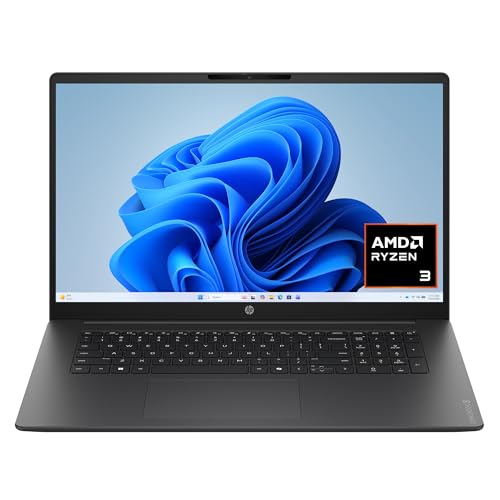
- 17.3-inch Full HD IPS display
- 512GB NVMe SSD for project storage
- Up to 14 hours and 15 minutes of battery life
Best For: Home users making simple edits on a large screen
Best Balanced Creator Laptop
NIMO 15.6" AI Creator Gaming Laptop

- Ryzen 5 6600H with 16GB DDR5
- 512GB PCIe 4.0 SSD
- Broad port selection and 2-year warranty
Best For: Creators and remote workers needing balanced editing performance
Best for Everyday Use

- 17.3-inch matte Full HD display
- Ryzen 5 7520U and 512GB SSD
- Windows 11 Pro with privacy camera
Best For: Large-screen editing and business productivity
Balanced Creator Pick

- Ryzen 5 6600H with 16GB DDR5 RAM
- 512GB SSD with substantial upgrade room
- Best suited to light editing and multitasking
Best For: Students and entry-level creators
Performance-Focused Choice

- Ryzen 9 8945HS processor with 8 cores
- 32GB RAM and 1TB SSD included
- Large display for editing timelines and panels
Best For: Power users and moderate video editing
Best Simple Pick

- 32GB DDR5 RAM for smooth multitasking
- 1TB SSD with expansion up to 4TB
- 17.3-inch anti-glare Full HD IPS display
Best For: Light editing and large-screen productivity
Best Apple Pick – MacBook Air M5
For shoppers seeking laptops for video editing in a highly portable package, the 2026 MacBook Air combines the M5 chip, 16GB unified memory, and a 512GB SSD with a sharp 13.6-inch Liquid Retina display. Its long battery life and macOS workflow make it well suited to editing on the move, though the compact screen may feel limiting for complex timelines.
Best For: Students, mobile creators, and Apple users who want a lightweight laptop for editing and everyday creative work.
Pros:
- M5 chip, 16GB unified memory, and 512GB SSD support responsive creative workflows.
- 13.6-inch Liquid Retina display supports 1 billion colors for detailed photo and video viewing.
- Up to 18 hours of battery life and a 2.71-pound design suit mobile work.
- Two Thunderbolt 4 ports support external displays and accessories.
Cons:
- The 13.6-inch display provides less workspace than a larger editing laptop.
- Storage is limited to 512GB for large media libraries.
The MacBook Air is a strong portability-first choice for video editing, especially if you value battery endurance, a quality display, and Apple device integration over maximum screen size or internal storage.
Best Expandable Windows Option – NIMO AI Creator Laptop
The NIMO AI Creator Laptop is one of the more flexible laptops for video editing in this group, pairing a Ryzen 7 8745HS processor with 32GB of DDR5 RAM and a 1TB PCIe 4.0 SSD. Its integrated Radeon 780M graphics are suited to mainstream creative software, while USB4 and upgradeable storage give the system room to grow.
Best For: Windows creators who need generous memory, substantial storage, and upgrade options for evolving editing workloads.
Pros:
- Ryzen 7 8745HS and Radeon 780M graphics support creative software and 4K rendering tasks.
- 32GB RAM and a 1TB PCIe 4.0 SSD provide useful capacity for multitasking and media files.
- RAM can be upgraded to 64GB, with dual SSD slots for additional storage.
- USB4 supports an external GPU connection for expanded performance potential.
Cons:
- The 15.6-inch display is Full HD rather than a higher-resolution editing panel.
- Integrated graphics may be less suitable for especially demanding effects-heavy projects than a dedicated GPU.
With its strong memory and storage configuration, this NIMO model is a practical workstation-style pick for editors who prioritize flexibility and upgradeability over a premium display or discrete graphics.
Best Everyday Budget Pick – Dell Pro 15.6-Inch Laptop
The Dell Pro is an everyday Windows laptop that can handle basic video editing alongside browsing, schoolwork, and office tasks. Its Intel Core 3 100U processor, 16GB DDR5 memory, SD card slot, and Full HD display make it practical for light projects, but the 256GB SSD and integrated Intel UHD Graphics place clear limits on larger editing workloads.
Best For: Students and home users doing occasional or entry-level video editing rather than demanding production work.
Pros:
- 16GB DDR5 memory supports smooth everyday multitasking.
- SD card slot simplifies transfers from cameras and other media devices.
- 15.6-inch Full HD IPS display has a 120Hz refresh rate and anti-glare finish.
- HDMI, USB-C, USB-A, and Wi-Fi 6 provide versatile connectivity.
Cons:
- 256GB storage can fill quickly with video footage and project files.
- Integrated Intel UHD Graphics are better suited to light editing than demanding rendering.
- The supplied notes describe a non-backlit keyboard.
This Dell makes sense when video editing is an occasional requirement rather than the main workload. Plan on using external storage for larger media collections and simpler timelines.
Best Large-Screen Value – HP OmniBook 3 17.3-Inch
The HP OmniBook 3 offers a spacious 17.3-inch Full HD IPS display, 512GB SSD, and a comfortable desktop-style viewing area for basic editing and media work. As a choice among laptops for video editing, it is best matched with casual projects because its Ryzen 3 processor, 8GB RAM, and Radeon 610M integrated graphics are entry-level.
Best For: Home users who want a large screen for simple edits, streaming, and general computing.
Pros:
- Large 17.3-inch Full HD IPS display offers wide viewing angles and a spacious workspace.
- 512GB PCIe NVMe SSD provides useful storage for applications and project files.
- Up to 14 hours and 15 minutes of claimed battery life supports extended use.
- FHD camera with HDR auto-switch and noise reduction helps with video calls.
Cons:
- 8GB onboard RAM is modest for multitasking and more complex editing projects.
- Ryzen 3 30 and Radeon 610M graphics are intended for everyday use and casual editing.
- The 17.3-inch chassis is less convenient for frequent travel than a compact laptop.
The OmniBook 3 prioritizes screen size and everyday comfort. It is a reasonable entry-level option for straightforward edits, but demanding creators should look for more memory and stronger graphics.
Best Balanced Creator Laptop – NIMO 15.6" AI Creator Gaming Laptop
If you need laptops for video editing that balance everyday portability with capable performance, this NIMO model is a practical option. Its Ryzen 5 6600H processor, 16GB of DDR5 memory, Radeon 660M integrated graphics, and 512GB PCIe 4.0 SSD are suited to editing workflows, AI tools, multitasking, and light gaming.
Best For: Content creators, remote workers, and students who want upgradeable memory, useful connectivity, and a mid-size Full HD display.
Pros:
- Ryzen 5 6600H and 16GB DDR5 support multitasking and rendering.
- 512GB PCIe 4.0 SSD provides quick storage and boot performance.
- Includes HDMI 2.0, two USB-C ports, three USB-A ports, and a Micro SD reader.
- Includes a 2-year warranty, 90-day returns, and USA-based support.
Cons:
- Radeon 660M is integrated graphics, so demanding workloads may benefit from a dedicated GPU.
- The 15.6-inch display is Full HD rather than a higher-resolution panel.
This NIMO is a well-rounded choice for buyers who prioritize memory, storage, ports, and warranty coverage in a video editing laptop without moving to a larger 17.3-inch design.
Best for Everyday Use – HP 17.3" FHD Ryzen 5 Laptop
For shoppers comparing laptops for video editing, this HP emphasizes screen space and business-friendly features. The 17.3-inch matte Full HD display gives you a broad workspace, while the Ryzen 5 7520U, 8GB LPDDR5 memory, and 512GB SSD cover everyday editing, productivity, and streaming needs.
Best For: Business users, students, and home editors who prefer a large display, numeric keypad, Windows 11 Pro, and straightforward peripheral connectivity.
Pros:
- Large 17.3-inch anti-glare 1920×1080 display offers generous workspace.
- Ryzen 5 7520U supports efficient multitasking and runs at up to 4.3GHz.
- Windows 11 Pro, Wi-Fi 6, Bluetooth 5.3, HDMI, and USB-C add practical flexibility.
- Includes a privacy-shutter camera, numeric keypad, mouse, and tablet stand.
Cons:
- 8GB of memory is less generous for heavier editing projects than 16GB configurations.
- Integrated AMD Radeon graphics are better suited to lighter editing than demanding effects work.
- The 17.3-inch form factor weighs 4.6 pounds and is less compact for travel.
The HP makes the most sense when a spacious editing workspace and business features matter more than maximum graphics performance or compact portability.
Best for Demanding Workloads – NIMO 17.3" AI Gaming Laptop
Among laptops for video editing, this NIMO is the performance-focused pick. Its 54W Ryzen 7 8745HS processor, Radeon 780M graphics, 16GB DDR5 memory, and 1TB PCIe 4.0 SSD are designed for demanding multitasking, AI tools, and 4K editing workflows, with USB4 support for a future external GPU setup.
Best For: Freelance editors, researchers, and creators who need strong processor performance, abundant storage, upgrade paths, and a large display.
Pros:
- Ryzen 7 8745HS provides 54W performance for heavier creative workloads.
- 16GB DDR5 RAM and a 1TB PCIe 4.0 SSD provide useful working capacity.
- Memory can expand to 64GB, and the system supports dual SSDs.
- USB4 enables a potential external GPU upgrade, while the 2-year warranty adds reassurance.
Cons:
- Radeon 780M is integrated graphics, so a demanding workflow may eventually require an external GPU.
- The larger 17.3-inch chassis is less convenient for frequent travel.
- The notes describe support for up to 4K resolution, but do not specify the panel’s native resolution.
This is the strongest fit of the three for buyers who expect heavier editing and want room to expand, especially if USB4 external-GPU support and upgradeable storage are priorities.
Balanced Creator Pick – NIMO 15.6 AI Creator Laptop
For shoppers comparing laptops for video editing, this NIMO model offers a practical entry-level setup with a six-core Ryzen 5 6600H processor, 16GB of DDR5 memory, and a 512GB SSD. Its integrated Radeon 660M graphics are better suited to light editing and everyday media work than demanding professional projects.
Best For: Students, remote workers, and entry-level creators handling light video editing, photo work, multitasking, and media playback.
Pros:
- Ryzen 5 6600H provides 6 cores, 12 threads, and boost speeds up to 4.5GHz for sustained everyday workloads.
- 16GB DDR5 RAM and a 512GB PCIe SSD support responsive multitasking and large-file handling.
- Dual SO-DIMM slots and an M.2 2280 slot allow upgrades up to 64GB RAM and 4TB SSD.
- Includes a 2-year manufacturer warranty and a 90-day return window.
Cons:
- Integrated Radeon 660M graphics are intended for light editing rather than demanding effects or high-end production.
- The 15.6-inch Full HD display provides useful workspace but does not offer a larger 17.3-inch editing area.
This is a sensible choice when portability, upgrade room, and everyday responsiveness matter more than dedicated graphics performance. It can handle light editing workflows, but demanding editors should consider a laptop with stronger graphics hardware.
Performance-Focused Choice – NIMO 17.3 Gaming Laptop
Among laptops for video editing, this NIMO model stands out for its Ryzen 9 8945HS processor, 32GB of DDR5 RAM, and 1TB SSD. The large 17.3-inch Full HD display gives editors more room for timelines and panels, while Radeon 780M integrated graphics support creative work and gaming.
Best For: Video editors and power users who prioritize processor performance, abundant memory, large-screen workspace, and upgrade flexibility.
Pros:
- Ryzen 9 8945HS offers 8 cores and boost speeds up to 5.2GHz for demanding multitasking and editing workloads.
- 32GB DDR5 RAM and a 1TB SSD provide strong starting capacity for creative applications and project files.
- 17.3-inch Full HD display creates a spacious workspace for timelines, spreadsheets, and media.
- User-replaceable memory and storage, plus USB4 and 100W USB-C PD charging, improve long-term flexibility.
Cons:
- Radeon 780M graphics are integrated, so this is not a substitute for a laptop with a dedicated editing GPU.
- The larger design weighs 5.6 pounds, making it less convenient than a smaller travel-focused laptop.
The Ryzen 9 platform and 32GB of memory make this the strongest performance-oriented option in the group. Its integrated graphics may limit especially demanding workloads, but the large display and upgradeable design are valuable for serious multitasking and lighter-to-moderate editing.
Best Simple Pick – NIMO 17.3 Ryzen 5 Laptop
This NIMO is one of the more practical laptops for video editing when screen space and memory capacity are priorities. It combines a Ryzen 5 6600H processor with 32GB of DDR5 RAM, a 1TB SSD, and a 17.3-inch Full HD IPS display for everyday editing, media organization, and multitasking.
Best For: Students, business users, and creators who want a roomy display, ample RAM, and storage for light editing projects.
Pros:
- 32GB DDR5 memory supports smoother multitasking with editing tools, video calls, and many browser tabs.
- 1TB PCIe SSD offers useful space for Windows, applications, and media projects, with expansion up to 4TB.
- 17.3-inch anti-glare Full HD IPS display provides more comfortable room for split-screen work and editing interfaces.
- Includes fingerprint login, a physical webcam shutter, 100W PD charging, and a 2-year warranty.
Cons:
- Ryzen 5 6600H is capable but less powerful than the Ryzen 9 processor in the higher-end NIMO option.
- Integrated Radeon 660M graphics make it better for light editing than complex, GPU-intensive projects.
- Wi-Fi 5 is less current than the Wi-Fi 6E connectivity offered by the other NIMO model.
This model offers a useful balance of memory, storage, and screen size for creators working on lighter projects. It is particularly appealing if a large editing workspace matters more than maximum processor or graphics performance.
How We Picked These Laptops for Video Editing
We focused on the hardware most likely to affect real editing work: CPU performance, available RAM, SSD capacity, graphics capability, display size, operating system, and overall flexibility. Video editing workloads vary widely, so this list includes portable systems for 1080p projects alongside larger Windows laptops better suited to multitasking, long timelines, and demanding creator workflows.
We also considered practical specifications such as memory configurations, screen resolution, storage capacity, integrated graphics, charging convenience, and whether a laptop offers enough performance headroom for future projects. Specifications can vary by configuration, so verify the exact listing before buying.
Quick Comparison
| Best For | What to Look For |
|---|---|
| Portable editing | Efficient processor, 16GB memory, sharp display, and low weight |
| 1080p content creation | Modern multi-core CPU, 16GB RAM, and a 512GB or larger SSD |
| 4K projects and multitasking | 32GB RAM, eight or more CPU cores, and fast, expandable storage |
| Large timelines and previews | 17-inch display, capable integrated graphics, and strong sustained performance |
| Budget editing | At least 16GB RAM where possible; avoid prioritizing screen size over core performance |
Key Buying Factors for Laptops for Video Editing
Processor and Sustained Performance
Video editing benefits from multiple CPU cores, especially during exports, transcoding, effects processing, and background tasks. Newer Ryzen 7, Ryzen 9, and Apple silicon systems generally provide more editing headroom than entry-level processors. A strong burst speed is useful, but sustained cooling also matters during long renders.
Memory and Storage
Sixteen gigabytes of RAM is a practical starting point for basic and intermediate editing. Choose 32GB if you regularly edit 4K footage, use complex effects, or keep multiple applications open. An SSD makes project loading and media access much faster than traditional hard drives, while 1TB provides more breathing room than 256GB or 512GB.
Graphics and Display
Integrated graphics can handle many 1080p workflows and lighter 4K projects, but demanding effects, color work, and accelerated exports may benefit from stronger graphics hardware. A sharp, accurately colored display is important when judging detail and color. Consider an external calibrated monitor for professional finishing.
Ports, Battery, and Workflow
Check for USB-C, USB-A, HDMI, fast external-drive support, and convenient connectivity for cameras and accessories. Battery life and weight matter if you edit away from a desk, while a larger 17-inch screen can make timelines easier to manage at home.
Who Should Buy Which Laptops for Video Editing?
Choose a lightweight Apple laptop if portability, quiet operation, and efficient everyday editing matter most. Pick a 16GB AMD creator model for a balanced option suited to school, social video, and 1080p production. A 32GB, 1TB configuration is the better choice for frequent 4K editing, large media libraries, and heavy multitasking. If you want a spacious built-in workspace, select a 17.3-inch model, but remember that larger laptops are less convenient to carry. Entry-level 8GB systems are best reserved for basic cuts, proxies, and occasional editing rather than demanding professional timelines.