
The best laser engravers can turn wood, acrylic, leather, coated metal, and other materials into signs, gifts, prototypes, and sellable products. The right choice depends on more than laser power: work area, enclosure, software, material compatibility, and safety features all matter.
This roundup compares 10 laser engravers across beginner-friendly DIY machines, enclosed craft systems, high-speed models, and dual-laser platforms. Use the buying guide below to narrow the list by project type, budget, and expected workload.
Best 10 Laser Engravers Picks for 2026
Best High-Power Pick

- 40W laser with a spacious 23.93-by-15.16-inch bed
- Rotary bundle and AutoPassthrough support oversized projects
- Enclosed Class 1 design with beginner-friendly software
Best For: Large signs, tumblers, batch work, and guided workflows
Best for Metal and Production

- 20W fiber and 20W diode lasers in one machine
- Engraves metals plus wood, acrylic, leather, glass, and more
- Supports 3D embossing and camera-assisted batch work
Best For: Metal customization, retail personalization, and production workflows
Best Flexible DIY Value

- 400-by-400mm work area for larger DIY projects
- USB, TF card, Wi-Fi, app, and offline control options
- Compatible with LaserGRBL and LightBurn
Best For: DIY makers seeking flexible controls and a roomy workspace
Best Compact Hobby Pick

- 5.5W laser with a 300-by-300mm working area
- Air-assist-ready design and fine-focus compression optics
- Wi-Fi, TF card, LaserGRBL, and LightBurn support
Best For: Hobby projects and small-batch work in a compact footprint
Best Dual-Laser Pick
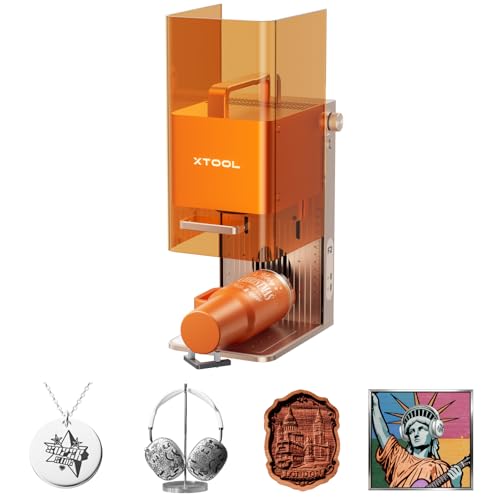
- 5W IR plus 15W diode versatility
- 50MP camera for precise placement
- Up to 6000mm/s for batch work
Best For: On-site customization and small-batch production
Best Value Cutting Option

- 12W laser for engraving and cutting
- 300 × 300mm working area
- Works with three major software options
Best For: DIY projects, signs, and small businesses
Best Color-Crafting Machine
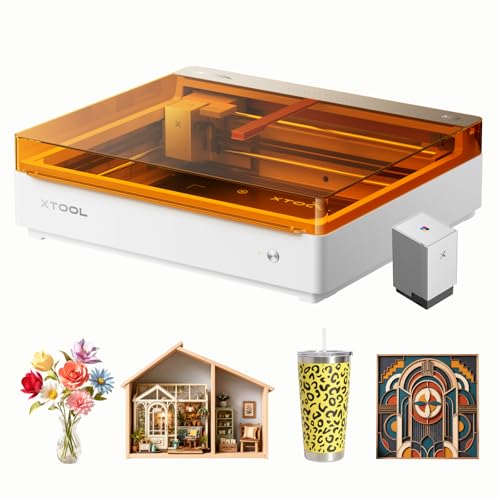
- CMYK printing plus laser functions
- Dual cameras for guided placement
- Class 1 enclosed home-friendly design
Best For: Colorful crafts, personalized gifts, and home-based creators
Best for Fast, High-Power Cutting

- 20W output with speeds up to 400mm/s
- 400×365mm work area for varied projects
- Supports LightBurn and LaserGRBL
Best For: Fast cutting, detailed engraving, and small-business production
Best Beginner-Friendly Compact Pick

- 10W output with a near-A4 work area
- Free app, offline, LightBurn, and LaserGRBL control
- One-touch focus and 15,000mm/min speed
Best For: Home crafting, small businesses, and first-time users
Best for Large, Precise Engraving
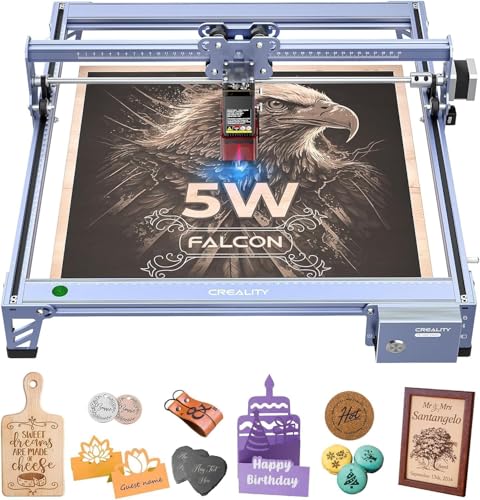
- 400×415mm work area for larger projects
- 0.06×0.06mm compression spot for fine detail
- 10,000mm/min speed with offline usage
Best For: Large-format wood, leather, acrylic, and glass projects
Best High-Power Pick – xTool S1 40W Rotary Bundle
For shoppers seeking capable laser engravers for large projects, the xTool S1 combines a powerful 40W laser, a spacious 23.93-by-15.16-inch bed, and speeds up to 600mm/s. Its enclosed Class 1 design and rotary bundle also make it a practical choice for tumblers, signs, wood, acrylic, and select metal projects.
Best For: Large projects, batch engraving, tumblers, and buyers who want guided software and enclosed operation.
Pros:
- 40W output can cut up to 18mm cherry wood in a single pass, according to the supplied specifications.
- Large work area and AutoPassthrough support projects up to 118 inches long.
- Auto-focus, material settings, tutorials, and AI-assisted design support beginners.
- Enclosed Class 1 construction includes flame sensors, lid-open protection, and an emergency stop.
Cons:
- At 86.8 pounds, it is substantially heavier than the other listed machines.
- The larger enclosed design requires more workspace than compact desktop engravers.
The xTool S1 is the most productivity-focused option here, especially for makers who need power, capacity, rotary capability, and a more approachable setup. It is a strong fit when project size and safety features matter more than portability.
Best for Metal and Production – xTool F1 Ultra Dual Laser
Among these laser engravers, the xTool F1 Ultra stands out for combining 20W fiber and 20W diode lasers. It is designed for fast, detailed work across metals and nonmetal materials, with 3D embossing, deep engraving, a 16MP camera, and speeds up to 10,000mm/s.
Best For: Metal customization, detailed 3D engraving, retail personalization, and high-throughput desktop production.
Pros:
- Fiber laser handles metals such as stainless steel, brass, titanium, gold, silver, and copper.
- Diode laser works with wood, acrylic, leather, glass, rubber, fabric, and more.
- Supports 3D embossing, deep engraving, and HD photo engraving within a 220-by-220mm area.
- Camera-assisted production features can recognize shapes and help automate batches.
Cons:
- The Auto Conveyor for expanded 220-by-500mm production is sold separately.
- It is a Class 4 laser, so its safety and workspace requirements are more demanding than enclosed Class 1 options.
- Its specialized capabilities may be excessive for basic hobby engraving.
The F1 Ultra is the premium specialist in this group. Its dual-laser setup makes it particularly compelling for businesses and creators working with metal, detailed personalization, or repeat production rather than occasional simple projects.
Best Flexible DIY Value – Longer Ray5 10W
The Longer Ray5 is a flexible choice for shoppers comparing laser engravers with a generous work area and multiple control options. Its 10W module, 400-by-400mm workspace, touchscreen, Wi-Fi, USB, TF card, and app support make it suitable for both connected and offline projects.
Best For: DIY makers who want a roomy work area, offline operation, and compatibility with LaserGRBL or LightBurn.
Pros:
- 400-by-400mm working area accommodates larger projects than many compact engravers.
- Dual-beam technology provides a 0.06-by-0.06mm laser spot and speeds up to 10,000mm/min.
- Supports USB, TF card, Wi-Fi, app control, and offline engraving.
- Safety features include emergency stop, motion protection, heat protection, a cover, and goggles.
Cons:
- The 10W output is less powerful than the 40W xTool S1 and the F1 Ultra’s listed laser systems.
- Setup and operation are more hands-on than enclosed, heavily automated alternatives.
- The supplied title and notes cite cutting capabilities, but actual results will vary by material and settings.
The Ray5 balances workspace, connectivity, and maker-friendly flexibility. It is a sensible middle-ground option for users who value control choices and a larger open-frame work area over turnkey automation.
Best Compact Hobby Pick – Twotrees TTS-55 Pro
The Twotrees TTS-55 Pro is one of the more compact laser engravers in this roundup, while still offering a 300-by-300mm working area and up to 30,000mm/min engraving speed. Its 5.5W laser, air-assist-ready nozzle, wireless control, and LightBurn compatibility suit hobbyists and small project work.
Best For: Hobbyists and small businesses working on wood, leather, acrylic, paper, and similarly sized projects.
Pros:
- Compact 5.5W design supports engraving and cutting on multiple materials.
- Air-assist support and compression optics are intended to improve cut cleanliness and detail.
- Offers Wi-Fi, mobile or web control, TF card offline engraving, and compatibility with LightBurn.
- Specifications include cutting up to 5mm plywood, 3mm acrylic, and 0.7mm leather.
Cons:
- Lower laser power limits cutting depth compared with the higher-powered machines here.
- The 300-by-300mm work area is smaller than the Longer Ray5 and xTool S1 areas.
- Air-assist hardware is supported, but the notes do not clearly state that a complete air-assist pump is included.
The TTS-55 Pro is a practical entry-level option for smaller projects and makers who want modern connectivity without moving to a larger machine. Its compact footprint and software support are appealing, though its lower power favors lighter-duty work.
Best Dual-Laser Pick – xTool F2 5W IR & 15W Diode
For shoppers comparing laser engravers for metal marking, detailed engraving, and small-batch personalization, the xTool F2 stands out for its dual-laser design. Its 5W IR laser handles vivid color marking on metal, while the 15W diode supports 3D embossing and thicker-material cutting.
Best For: On-site customization, small businesses, and makers who need fast work across varied materials.
Pros:
- Dual 5W IR and 15W diode lasers support more than 300 materials.
- Built-in 50MP camera provides up to 0.1 mm alignment accuracy.
- Speeds up to 6000mm/s and optional batch-processing accessories improve productivity.
- Fully enclosed, portable design with built-in ventilation is suited to indoor and on-site use.
Cons:
- Optional accessories such as the rotary module, slide extension, and purifier add to the cost.
- The compact work area may be limiting for larger projects.
- Its Class 4 laser classification requires careful safety practices.
The xTool F2 is a strong choice when speed, portability, camera-assisted placement, and metal color marking matter more than a large work area. It arrives assembled and includes material presets, making setup relatively straightforward.
Best Value Cutting Option – ACMER S2 12W
The ACMER S2 is one of the more flexible laser engravers for makers who want a generous workspace and genuine cutting capability without committing to a more specialized system. Its 12W laser supports engraving and multi-pass cutting across more than 100 materials.
Best For: DIY makers, personalized gifts, signs, and small-business projects requiring a 300 × 300mm workspace.
Pros:
- True 12W laser power can cut up to 15mm paulownia wood and 12mm black acrylic with multiple passes.
- 0.01mm positioning accuracy and a 0.08 × 0.08mm spot support fine details.
- Compatible with ACMER Studio, LightBurn, and LaserGRBL on Windows, macOS, and Linux.
- Expandable with rotary modules, risers, air assist, and other accessories.
Cons:
- Deeper cuts may require multiple passes rather than a single pass.
- Optional expansion accessories increase the overall investment.
- It is an open-style setup with an anti-UV shield, so placement and operating safety remain important.
Choose the ACMER S2 if workspace and software flexibility are priorities. It offers a practical platform for detailed flat work today while leaving room to add rotary or cutting accessories later.
Best Color-Crafting Machine – xTool M2 10W with CMYK
Among laser engravers for home crafting and personalized products, the xTool M2 is distinctive because it combines a 10W diode laser with a full-color CMYK inkjet module. That combination supports printing, cutting, and engraving on materials such as cardstock, felt, leather, and wood in one enclosed workflow.
Best For: Home crafters, DIY makers, sticker and gift creators, and users building a personalization side hustle.
Pros:
- Combines CMYK color printing, laser cutting, and engraving in one machine.
- Dual cameras and the Place & Go workflow help reduce placement guesswork and material waste.
- Class 1 enclosed design supports safer home use.
- xTool Studio includes templates and an integrated AI image generator for beginner-friendly projects.
Cons:
- The machine is substantially heavier than compact desktop alternatives at 43.3 pounds.
- The optional 3W IR module is sold separately.
- The combined printer-and-laser setup may be more capability than users seeking engraving only need.
The xTool M2 makes the most sense for creators who want full-color output alongside laser work. Its enclosed Class 1 design and guided software are particularly appealing for home users, while the combined workflow can simplify personalized product production.
Best for Fast, High-Power Cutting – ATOMSTACK A20 Pro V2
For shoppers comparing laser engravers for faster cutting and detailed personalization, the ATOMSTACK A20 Pro V2 combines a 20W output with engraving speeds up to 400mm/s. Its 400×365mm work area supports projects involving wood, acrylic, metal, and leather.
Best For: Makers and small businesses that prioritize high-power cutting, speed, and a medium-size work area.
Pros:
- 20W output and speeds up to 400mm/s for efficient engraving and cutting.
- Supports wood, acrylic, metal, leather, and personalized products.
- Integrated linear-guide structure, limit switches, and cross-line light support precise work.
- Works with ATOMSTACK software, LightBurn, and LaserGRBL.
Cons:
- The removable protective cover and included safety glasses still require careful operating practices.
- Its 400×365mm work area may not suit especially large projects.
The A20 Pro V2 is a strong choice when cutting power and throughput matter most. Lifetime technical support, a one-year warranty, and a stated laser lifespan of up to 10,000 hours add reassurance for regular use.
Best Beginner-Friendly Compact Pick – Carverall K15 Pro
If you want laser engravers that are approachable for home crafting, the K15 Pro pairs a compact near-A4 work area with free software, wireless app control, and offline operation. Its verified 10.36–10.58W output is designed for engraving and cutting a broad range of materials.
Best For: Beginners, home crafters, and small businesses working on signs, coasters, gifts, and branded merchandise.
Pros:
- Assembles with six screws and includes safety glasses, materials, and tools.
- 11.8×7.9-inch work area fits common projects while remaining compact.
- Supports wireless app control, TF-card offline jobs, LightBurn, and LaserGRBL.
- One-touch focusing, 0.01mm precision, and speeds up to 15,000mm/min support detailed work.
Cons:
- The included 10W diode setup is not the same as the optional IR head for bare-metal work.
- Rotary, air-pump, honeycomb, and other accessories may require additional purchases.
The K15 Pro stands out for its guided setup, flexible controls, and manageable footprint. It is particularly practical for users who want to start with wood and acrylic, then expand capabilities with optional upgrades.
Best for Large, Precise Engraving – Creality Falcon 5W
Among laser engravers for larger-format projects, the Creality Falcon 5W offers a 400×415mm working area and a fine 0.06×0.06mm compression spot. Its 10,000mm/min speed and offline capability make it suited to repeated work on wood, leather, acrylic, glass, and other supported materials.
Best For: Makers who need a roomy work area, fine detail, and support for larger individual pieces.
Pros:
- 400×415mm work area accommodates larger materials in one setup.
- 0.06×0.06mm spot size supports detailed engraving and accurate cutting.
- Up to 10,000mm/min speed helps with higher-volume tasks.
- Eye-protective cover and active-stop function provide added safety features.
Cons:
- The 5W output is lower than some higher-powered laser engravers.
- Rotary roller and raisers for cylindrical or taller items are optional upgrades.
The Falcon 5W is a sensible fit when workspace and precision are more important than maximum laser power. Its large bed, offline use, and upgrade path make it flexible for detailed craft projects and larger designs.
How We Picked These Laser Engravers
We selected machines across several common use cases rather than ranking laser power alone. Our comparison considers diode, infrared, and fiber capabilities; cutting and engraving performance; work-area size; operating speed; camera assistance; enclosure and safety design; offline controls; and the materials each machine is intended to handle. We also included options for beginners, hobbyists, crafters, and small businesses.
Specifications can vary by configuration, so verify the included laser module, accessories, software compatibility, ventilation requirements, and warranty before ordering.
Quick Comparison
| Best For | Look For | Models to Consider |
|---|---|---|
| General crafting and signage | Enclosed design, camera alignment, and a medium-to-large bed | xTool S1, ACMER S2, ATOMSTACK A20 PRO V2 |
| Metal marking | IR or fiber capability and suitable metal presets | xTool F1 Ultra, xTool F2 |
| Color and mixed-media projects | Dual lasers, color marking, or inkjet integration | xTool F2, xTool M2 |
| DIY experimentation | Open-frame access, offline controls, and replaceable modules | LONGER Ray5, Twotrees TTS-55 Pro, K15 Pro, Creality Falcon |
Key Buying Factors for Laser Engravers
Laser Type and Power
Diode lasers are versatile for wood, leather, cardboard, and many opaque materials. Higher optical power generally improves cutting capability, but it does not guarantee better engraving detail. IR and fiber systems are more appropriate for many metal-marking applications, while dual-laser machines can broaden material compatibility.
Work Area and Speed
Choose a bed large enough for your typical projects, not just occasional oversized pieces. Advertised speed is useful for production workflows, but real results depend on material, passes, focus, acceleration, and image complexity.
Safety and Ventilation
An enclosed Class 1 design can simplify home or studio use, especially when paired with an exhaust system. Open-frame machines require more careful access control, eye protection, fire supervision, and smoke ventilation. Never assume a laser is safe simply because it is marketed for beginners.
Setup and Workflow
Built-in cameras, autofocus, touchscreens, and offline operation can reduce setup time. Also check whether the machine works with your preferred design software and whether rotary attachments, air assist, honeycomb beds, or replacement lenses are included or sold separately.
Who Should Buy Which Laser Engravers?
- Choose an enclosed xTool or similar system if you prioritize convenience, alignment tools, and a cleaner home-studio workflow.
- Choose a dual-laser or IR/fiber model if marking metal, coated products, or varied materials is central to your work.
- Choose a higher-power diode machine if you mainly cut and engrave wood, leather, acrylic, and other common craft materials.
- Choose an open-frame DIY model if you want lower entry cost, hands-on setup, modular upgrades, and experimentation.
- Choose a camera- or printer-assisted craft machine if precise placement, color effects, or repeatable personalization matters more than maximum cutting depth.
Before buying, match the machine to your materials, available workspace, ventilation plan, and production volume. A well-supported machine with appropriate safety equipment is usually a better long-term choice than a more powerful model that is difficult to operate safely.