
The right lighting can make a classroom feel more comfortable, readable, and focused, but choosing useful measurement or visual-management tools requires looking beyond brightness alone.
This roundup compares 10 selected options, including a true lux meter and several visual classroom aids, so teachers and administrators can match the product to their specific needs.
Best 10 Light Meters for Classrooms Picks for 2026
Best Measurement Pick
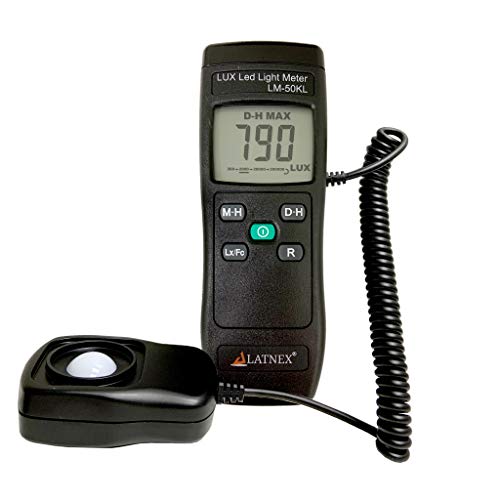
- Measures 200–200,000 lux or foot-candles
- Supports LED and fluorescent sources
- Includes sensor cable and calibration certificate
Best For: Checking classroom illumination levels
Best Decorative Accent

- Colorful pencil-shaped LED design
- Runs on batteries or USB power
- Safe-to-touch tabletop accent light
Best For: Desk decor and ambient classroom lighting
Best Reusable Noise Display

- Includes five LED voice-level indicators
- Magnetic, tear-resistant PVC poster
- Large 23.6-by-13.8-inch classroom display
Best For: Reusable visual noise management
Color-Coded Classroom Management

- Includes five puck lights and six detachable charts
- Colorful visual cues for classroom noise management
- Requires three AA batteries per light
Best For: Flexible elementary classroom voice-level displays
Rainbow Wall Display

- Includes 12 posters, five push lights, and adhesive dots
- PET-coated posters resist moisture and tearing
- Quick, no-drill installation on smooth surfaces
Best For: Bright multi-area classroom voice-level reminders
Complete Noise Cue Kit

- Includes five tap lights, 12 posters, and banners
- Adhesive setup needs no wiring or drilling
- Each light requires three AAA batteries
Best For: Ready-to-use tap-activated classroom noise cues
Yellow Pencil Voice-Level Kit

- Includes five LED lights and 10 level cards
- Pencil-themed visual classroom management design
- Approximately 2–3 hours of use per charge
Best For: Teachers wanting a playful rechargeable voice-level display
Pastel Rainbow Magnetic Chart

- Five LED lights with interchangeable magnetic strips
- Laminated pieces support repeated classroom use
- Pastel design fits whiteboards and magnetic displays
Best For: Flexible visual voice-level management on magnetic surfaces
Retro Magnetic Voice Chart

- Five LED lights with interchangeable magnetic strips
- Retro design suits classrooms and music rooms
- Rearrangeable pieces support changing activities
Best For: Bright magnetic volume reminders for flexible learning spaces
Best Measurement Pick – LATNEX LM-50KL Light Meter
For classrooms that need actual illumination readings rather than decorative lighting, the LATNEX LM-50KL is the most measurement-focused option here. It measures LED, fluorescent, and other visible light from 200 to 200,000 lux or foot-candles, making it a practical choice when evaluating classroom lighting conditions.
Best For: Teachers, facility staff, and school teams checking light levels in classrooms, libraries, offices, or other learning spaces.
Pros:
- Wide 200–200,000 lux or foot-candle measurement range
- Works with LED, fluorescent, and other visible light sources
- Large digital LCD, data hold, low-battery, and overload indicators
- Includes a 1.5-meter sensor cable, carrying case, battery, calibration certificate, and one-year warranty
Cons:
- Measures illumination; it is not a classroom display or decorative lamp
- Not waterproof
If your priority is documenting or comparing classroom brightness, this is the clear specialist pick. The extended sensor cable and included calibration certificate add useful practicality for repeated school assessments.
Most Colorful Visual Aid – Voice Level Poster and Puck Lights
This set is not a light meter for classrooms in the technical sense, but it uses five puck lights and color-coded posters to create a visible voice-level management system. The separated signs can be arranged around a classroom, bulletin board, or activity area.
Best For: Elementary classrooms and teachers who want a colorful, movable visual cue for managing student noise.
Pros:
- Includes five voice-level charts and five puck lights
- Separate pieces can be posted in different locations or rearranged
- Colorful printed design communicates appropriate sound levels visually
- Suitable for classrooms, libraries, offices, and homeschool spaces
Cons:
- It monitors voice levels visually rather than measuring light or sound numerically
- Paper-based poster components may be less durable than PVC signage
- Adhesive dots are included, but wall mounting still requires setup
Choose this set when classroom management and visual engagement matter more than technical measurement. Its modular layout is useful for activity stations or teachers who frequently move between spaces.
Best Decorative Accent – Lumoonosity Pencil Neon Lamp
The Lumoonosity Pencil Neon Lamp is a decorative classroom lighting accent rather than a measuring instrument. Its colorful pencil shape adds ambient LED light to a teacher’s desk, reading corner, study area, or display space without producing the technical readings expected from a true light meter.
Best For: Teachers and students who want portable, colorful accent lighting for desks, study areas, or classroom decor.
Pros:
- Distinctive pencil-shaped design suited to school environments
- LED construction is designed for extended use without becoming hot to the touch
- Can run from batteries or a USB power source
- Compact tabletop format measures approximately 3.35 by 11.42 inches
Cons:
- Designed for decoration and ambient lighting, not illumination measurement
- Not waterproof
- Provides accent light rather than broad classroom lighting
This is a fun supplement for a classroom desk or study nook, especially where portability and appearance are important. For evaluating whether a room is adequately lit, pair it with a dedicated meter such as the LATNEX.
Best Reusable Noise Display – PJT LED Voice Level Lights
The PJT LED Voice Level Lights combine illuminated indicators with a large classroom rules poster to provide an immediate visual cue for noise control. Like the other management displays in this roundup, it is not a technical light meter, but it can help teachers establish consistent voice expectations.
Best For: Classrooms, tutoring centers, after-school programs, and activity areas needing a large reusable voice-level display.
Pros:
- Combines five voice-level lights with a matching chart poster
- LED indicators and color coding give students quick visual feedback
- Tear-resistant PVC poster has a magnetic backing for repositioning
- Large 23.6-by-13.8-inch format is easy to see
Cons:
- Manages classroom noise rather than measuring illumination
- Larger wall display requires more mounting space than smaller posters
- The supplied notes do not specify battery or power details for the lights
For teachers who want a durable, prominent behavior-management display, this is the strongest fit among the visual noise tools listed. Its magnetic backing is especially useful when classroom layouts change.
Color-Coded Classroom Management – Interactive Voice Level Chart
For teachers comparing light meters for classrooms, this set combines five interactive puck lights with separated, color-coded voice-level charts. The wall-mounted pieces can be arranged around the room and used as a visual aid for instruction and noise management.
Best For: Elementary classrooms, libraries, offices, and homeschooling spaces that need flexible voice-level reminders.
Pros:
- Includes five puck lights and six detachable voice-level charts.
- Colorful designs make different noise levels easy to distinguish.
- Durable PVC and cardstock construction is designed for repeated school-year use.
- Separate charts can be posted in different classroom locations.
Cons:
- Batteries are not included; each light requires three AA batteries.
- The set is a visual noise-management aid rather than a measured sound-level meter.
This is a practical choice when you want a customizable classroom display with illuminated cues. Its main limitation is that it communicates preset voice levels instead of measuring decibels.
Rainbow Wall Display – Bright Voice Level Chart Set
This 17-piece set is a colorful option among light meters for classrooms, pairing five push lights with two sets of voice-level posters. Adhesive pads support quick installation on smooth surfaces without wiring or drilling.
Best For: Middle and high school classrooms, therapy rooms, preschools, and home offices seeking a bright, decorative noise-level system.
Pros:
- Includes 12 level posters, five push lights, and adhesive dots.
- Thick, PET-coated cardboard posters are waterproof, easy to clean, and tear-resistant.
- Push lights can be mounted quickly on smooth surfaces without drilling.
- Rainbow styling adds a decorative element to classroom management.
Cons:
- Lights require adhesive support if the magnetic mounting is not secure.
- Manual sorting may result in missing or incorrect pieces, so the package should be checked on arrival.
- Batteries are not specified as included in the supplied notes.
The large poster quantity makes this useful for creating multiple visual reminders, while the bright presentation can help reinforce classroom routines. Verify the contents before use and plan for extra mounting support if needed.
Complete Noise Cue Kit – LED Voice Level Lights
Designed as a ready-to-install visual system, this set offers five LED tap lights alongside 12 voice-level posters and banner titles. For shoppers researching light meters for classrooms, it provides preset visual cues rather than electronic sound measurement.
Best For: Educators who want a complete, tap-activated noise-management display with included mounting supplies.
Pros:
- Includes lights, posters, banner titles, light-ring stickers, and adhesive dots.
- Tap lights measure approximately 2.75 inches and are sized for student interaction.
- Plastic lights and PVC-laminated paper posters are made for daily classroom use.
- Adhesive installation is simple and requires no wiring or drilling.
Cons:
- Batteries are not included; each light requires three AAA batteries.
- It indicates selected voice levels visually but does not measure actual sound levels.
This kit stands out for its complete contents and straightforward installation. It is a good fit for teachers who want students to respond to visible, touch-activated cues without adding a separate sound-monitoring device.
Yellow Pencil Voice-Level Kit – Rechargeable Tap Lights
If you need light meters for classrooms that help students monitor speaking volume, this yellow pencil-themed kit provides a simple visual system. It includes a title card, 10 level indicator cards, and five rechargeable push lights for classroom noise management.
Best For: Teachers seeking a playful voice-level display for elementary through high school classrooms.
Pros:
- Includes five LED push lights, a title card, and 10 level indicator cards.
- Pencil-themed design supports classroom decoration and visual routines.
- Rechargeable lights provide approximately 2–3 hours of continuous use per charge.
- Suitable for kindergartens, preschools, primary schools, middle schools, and high schools.
Cons:
- Charging takes about two hours.
- Continuous runtime is limited to approximately 2–3 hours per charge.
- The system is designed for noise-level guidance rather than measuring decibels.
This is a practical choice when you want an engaging, easy-to-understand visual reminder instead of a numerical sound meter. Its rechargeable lights and multiple level cards make it flexible for everyday classroom routines.
Pastel Rainbow Magnetic Chart – Reusable LED Voice Levels
For classrooms using light meters for classrooms as visual behavior cues, this pastel rainbow magnetic chart offers a reusable way to show expected speaking levels. The set combines five LED lights, interchangeable magnetic strips, and a magnetic title sign.
Best For: Teachers who want a colorful, rearrangeable voice-level system for classrooms, homeschool spaces, libraries, or tutoring rooms.
Pros:
- Includes five soft magnets, five LED lights, five interchangeable noise-level strips, and one title sign.
- Magnetic pieces can be moved or rearranged on compatible surfaces.
- Laminated signs feature clear printing for repeated use.
- Pastel rainbow styling works with bulletin boards, whiteboards, and classroom walls.
Cons:
- Requires a magnetic surface for the lights and strips to attach securely.
- Provides visual voice-level reminders rather than measured sound readings.
- The set includes five lights, so it may not suit displays requiring more indicators.
The main advantage is flexibility: teachers can swap the magnetic strips to match different activities, from independent work to group time. It is a good fit for buyers prioritizing reusable organization and approachable classroom decor.
Retro Magnetic Voice Chart – Five-Light Classroom Display
This retro magnetic display is a visual alternative to conventional light meters for classrooms, using five LED button lights and interchangeable voice-level strips to guide student volume. Its colorful design is intended for classrooms, music rooms, libraries, daycare settings, and tutoring spaces.
Best For: Teachers and music educators who want a bright magnetic voice-level reminder for varied learning activities.
Pros:
- Includes five LED lights, five magnetic voice strips, and a “Voice Levels” title sign.
- Pieces can be moved, replaced, or rearranged on compatible magnetic surfaces.
- Laminated signs and durable magnetic components support repeated daily use.
- Retro styling and glowing lights help draw attention to classroom expectations.
Cons:
- Requires a magnetic surface such as a whiteboard or filing cabinet.
- It communicates expected voice levels but does not provide numeric decibel readings.
- The five-strip layout may offer less granularity than a system with more levels.
Choose this kit if visual engagement matters as much as classroom organization. The magnetic format makes it easy to adapt the display for reading, group work, centers, or music activities without permanently fixing the arrangement.
How We Picked These Light Meters for Classrooms
We evaluated the selected products by considering their classroom usefulness, ease of operation, portability, visibility, power requirements, and the type of problem each one addresses. The LATNEX LM-50KL is the only conventional light-measuring instrument in this selection, offering lux and foot-candle readings for objective assessment. The other products are primarily visual noise-level displays and classroom management tools, so they should not be treated as substitutes for a calibrated light meter.
For schools, practical setup matters as much as specifications. Products that are easy to see from across a room, simple for students to understand, and quick to reset can be valuable during daily instruction.
Quick Comparison
| Product type | Best for | What to check |
|---|---|---|
| Digital lux meter | Measuring actual classroom illumination | Lux and foot-candle range, accuracy, calibration documentation |
| Voice-level light chart | Visual noise monitoring | Light visibility, sound activation, controls, and power source |
| Push-light poster | Low-tech classroom routines | Button layout, mounting method, and battery access |
| Decorative LED classroom light | Visual cues or room ambiance | Brightness, USB or battery operation, and student visibility |
Key Buying Factors for Light Meters for Classrooms
Measurement Accuracy and Range
If you need to verify whether desks, reading areas, or display boards receive adequate light, choose a dedicated lux meter with a stated measurement range and documented calibration. Take readings at student desk height and in several parts of the room rather than relying on one measurement.
Visibility and Classroom Size
For visual noise tools, select displays that can be seen from the back of the classroom. Bright colors and clear level labels help students understand expectations quickly, while magnetic or wall-mountable designs make repositioning easier.
Power and Maintenance
Check whether the product uses replaceable batteries, USB power, or both. Battery-powered items are easier to place, but they require regular checks. Also confirm whether lights, sound sensors, or buttons can be adjusted to avoid distractions.
Durability and Setup
Classroom equipment should withstand frequent handling. Look for sturdy housings, secure stands, reliable adhesive or magnetic mounting, and controls that teachers can operate without interrupting a lesson.
Who Should Buy Which Light Meters for Classrooms?
Choose the LATNEX LM-50KL if you need actual illumination readings for comfort, accessibility, energy-use checks, or facilities planning. Choose a voice-level chart with lights if your main goal is helping students regulate conversation volume. Push-light posters are a good fit for teachers who prefer simple, tactile routines without relying on automatic sound detection. Decorative LED options may suit a reading corner, study area, or classroom where a highly visible visual cue is more important than measurement.
Before buying, identify whether you are measuring light or managing noise. That distinction will help you select a useful tool rather than assuming every illuminated classroom product is a light meter.