
The best light meters make it easier to measure brightness consistently instead of relying on visual judgment or a camera’s estimate. This roundup compares 10 options across photography, workplace checks, LED testing, and general indoor use.
We focused on measurement range, display usability, sensor design, portability, and practical features so you can choose a meter that fits your workflow and budget.
Best 10 Light Meters Picks for 2026
Best Value Range
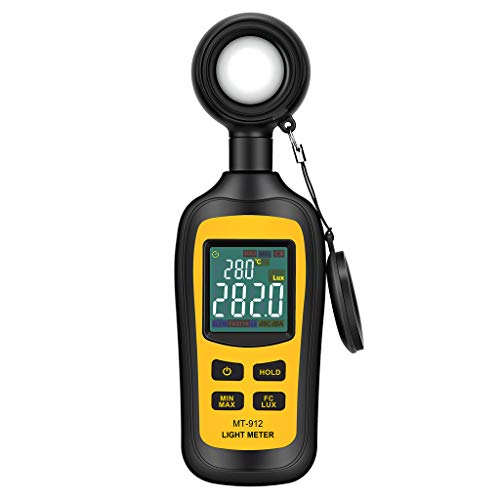
- 0–200,000 lux measurement range
- MIN/MAX, data hold, and temperature readings
- Compact design with two-year warranty
Best For: Everyday home, office, factory, and set-design light checks
Professional Pick

- Dedicated illuminance testing instrument
- Portable 10.6-ounce listed weight
- Uses one 9V battery
Best For: Buyers seeking a Fluke-branded light meter
Most Versatile
TS-710 Rotating-Sensor Light Meter

- Lux and foot-candle measurement up to 200,000 lux
- 180° rotating probe with backlit display
- Adds temperature, humidity, MIN/MAX, and hold
Best For: Plant, home, office, workshop, and vehicle-lighting checks
Best for Photography
L-308X-U Flashmate Exposure Meter

- Ambient and electronic flash exposure readings
- Photo, Cine, and HD Cine modes
- Pocket-sized 3.52-ounce design
Best For: Still photography, DSLR/mirrorless video, and cinema exposure control
Best LED Light Meter

- Measures LED light up to 400,000 lux
- Supports multiple common light sources
- Includes Min/Max/Avg and Data Hold
Best For: LED lighting checks and general-purpose measurements
Best for Plant Lighting

- Covers 0–200,000 lux
- Samples readings twice per second
- Offers FC/LUX conversion and PEAK mode
Best For: Plant lighting and everyday indoor or outdoor checks
Best Wide-Range Light Meter
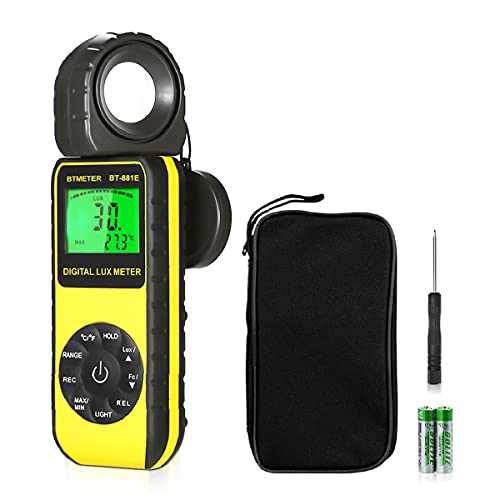
- Measures up to 300,000 lux
- Rotating sensor improves viewing angles
- Stores 33 readings for comparison
Best For: Wide-range testing and multi-location comparisons
Professional Pocket Pick
UNI-T UT383 Digital Light Meter

- Measures up to 199,900 lux and 18,500 FC
- Backlit display with 0.5-second sampling
- Compact design with hold and max/min modes
Best For: Portable general-purpose light measurements
Wide-Range Value Meter
S8608 Digital Illuminance Tester

- Measures visible brightness up to 200,000 lux
- Automatically switches measurement range
- Includes three AAA batteries and backlight
Best For: Routine indoor and outdoor brightness checks
Grow-Light Specialist

- Measures up to 200,000 lux and 20,000 FC
- Fast two-readings-per-second display with bar graph
- Includes batteries, accessories, and two-year warranty
Best For: Grow lights, photography, and workplace lighting checks
Best Value Range – Handheld 200,000-Lux Meter
This compact digital light meter is a practical choice for checking brightness across homes, offices, factories, and set-design environments. It measures from 0 to 200,000 lux and also records ambient temperature, making it useful for general illumination checks.
Best For: Buyers who want broad lux coverage, basic logging features, and a lightweight meter for everyday lighting inspections.
Pros:
- Measures luminosity from 0 to 200,000 lux and ambient temperature.
- Offers MIN/MAX readings, data hold, auto power-off, and low-battery indication.
- Compact, lightweight design with a two-year warranty.
- Specified accuracy is ±3% rdg ±8 digits below 10,000 lux and ±4% rdg ±10 digits above 10,000 lux.
Cons:
- The display is described as a four-digit color LCD, which may provide less viewing area than larger-screen alternatives.
- The notes do not specify additional measurement units beyond lux.
Choose this model if wide-range lux measurement and straightforward controls matter more than specialized photography or cine exposure features.
Professional Pick – Fluke 941 Illuminance Tester
The Fluke 941 is a dedicated illuminance tester from Fluke, making it a straightforward option for shoppers seeking a branded light meter for brightness testing. Its compact listed dimensions and 10.6-ounce weight support portable use.
Best For: Users who prioritize the Fluke brand and want a dedicated illuminance meter with a portable form factor.
Pros:
- Made by Fluke, a recognized test-equipment brand.
- Designed specifically as a light meter and illuminance tester.
- Compact listed dimensions of 11.42 × 6.3 × 2.9 inches.
- Weighs 10.6 ounces and uses one 9V battery.
Cons:
- The supplied specifications do not state the measurement range or accuracy.
- The notes do not list functions such as data hold, temperature measurement, or MIN/MAX recording.
This is the most brand-focused option in the roundup, but shoppers who need a specific lux range or extra features should verify the full specifications before buying.
Most Versatile – TS-710 Rotating-Sensor Light Meter
The TopTes TS-710 is one of the more versatile light meters here, combining lux and foot-candle readings with a rotating sensor, temperature and humidity measurements, and a backlit display. Its 0.1 to 200,000 lux range suits plant, home, office, workshop, and vehicle-lighting checks.
Best For: Users who need flexible measurement angles, dual light units, and extra environmental readings for varied indoor and outdoor tasks.
Pros:
- Measures 0.1–200,000 lux and 0.1–20,000 foot candles with stated 3% rdg + 5 dgt accuracy.
- 180-degree rotating probe and fast 0.5-second sampling support measurements from multiple angles.
- Backlit 2.25-inch LCD is designed for easier viewing in low light.
- Also measures ambient temperature and humidity, with MAX/MIN, data hold, and auto shutoff.
Cons:
- The temperature sensor adapts to new environments over time, so immediate readings may require a settling period.
- Its three AAA batteries may require more replacements than a meter using a single battery.
With its broad range, rotating probe, and added temperature and humidity functions, the TS-710 is a strong all-around choice for lighting diagnostics and plant-area checks.
Best for Photography – L-308X-U Flashmate Exposure Meter
The Sekonic L-308X-U is a specialized light meter for photographers and videographers rather than general illumination checks. It measures ambient and electronic flash exposure, supports incident and reflected readings, and provides dedicated Photo, Cine, and HD Cine modes.
Best For: Still photographers, DSLR and mirrorless videographers, and cinema users who need exposure readings tied to shutter speeds, frame rates, or shutter angles.
Pros:
- Provides ambient and flash exposure readings accurate to one-tenth of a stop in full-stop mode.
- Supports corded and cordless flash measurement in Photo Mode.
- HD Cine and Cine modes accommodate frame rates and shutter angles for video exposure control.
- Pocket-sized design measures 4.3 × 2.5 × 0.9 inches and weighs 3.52 ounces.
Cons:
- Its photography and cinema focus may be unnecessary for basic room-brightness measurements.
- The listed flash shutter-speed span is narrower than the ambient span.
Choose the L-308X-U when exposure control is the priority; for general plant, office, or household lux testing, a dedicated illuminance meter may be more suitable.
Best LED Light Meter – Triplett LT80
The Triplett LT80 is a versatile choice among light meters, especially when you need to measure LED illumination alongside common indoor and industrial light sources. It combines a broad 400,000-lux range with useful functions for comparing readings over time.
Best For: LED lighting checks, facility maintenance, and users who want minimum, maximum, and average readings.
Pros:
- Measures white LED light up to 400,000 lux (40,000 foot-candles).
- Also supports fluorescent, metal halide, high-pressure sodium, and incandescent sources.
- Min/Max/Avg function helps review changing light levels.
- Data Hold, a 9,999-count LCD, and disable-able auto power-off add convenience.
Cons:
- Requires two AAA batteries.
- Its 5.6-ounce body is compact, but the listed dimensions are relatively long for a handheld meter.
Choose the LT80 if LED compatibility and built-in statistical readings matter more than a specialized peak-recording feature. Its silicon photodiode sensor and filter make it a practical general-purpose option.
Best for Plant Lighting – Dr.meter 1330B-V
The Dr.meter 1330B-V is one of the more straightforward light meters for checking illumination in homes, offices, factories, and plant-growing areas. Its 0–200,000-lux range, quick sampling, and selectable measurement units make routine readings simple.
Best For: Indoor and outdoor light checks, plant-growing environments, and users who prefer quick FC/LUX switching.
Pros:
- Measures illumination from 0 to 200,000 lux.
- Fast response provides readings twice per second.
- Switches between foot-candles and lux.
- PEAK mode records the highest light pulse, and a low-battery alert helps with maintenance.
Cons:
- Uses a 9V battery rather than AAA batteries.
- The supplied notes do not list a data-hold memory set or rotating sensor.
This meter is a sensible pick when speed, unit flexibility, and peak capture are priorities. It is particularly suited to comparing sunlight or grow-light intensity without requiring a more specialized instrument.
Best Wide-Range Light Meter – BTMETER 881E
The BTMETER 881E stands out among light meters for its exceptionally wide 0.01–300,000-lux range and fast response. A rotating sensor and 33-reading memory make it convenient for checking lights from different angles and comparing measurements in homes, offices, gardens, aquariums, and other settings.
Best For: Wide-range illumination testing, angled measurements, and users who need stored readings for comparison.
Pros:
- Measures from 0.01 to 300,000 lux, with 0.01 resolution.
- Samples two to three times per second for a response of about 0.4 seconds.
- Rotating sensor turns up to 270 degrees for easier positioning.
- Stores 33 readings and includes a relative measuring mode.
Cons:
- Accuracy varies by range, from the listed ±4%/±0.5% F.S. to ±5%/±10 digits.
- The supplied notes do not specify the included battery type.
The 881E is a strong fit when measurement range and flexible positioning are more important than basic simplicity. Its memory and relative mode are useful for comparing light levels across multiple locations.
Professional Pocket Pick – UNI-T UT383 Digital Light Meter
The UNI-T UT383 is a compact choice for shoppers comparing light meters for photography, offices, household checks, agriculture, and other everyday applications. It measures from 0 to 199,900 lux or 0 to 18,500 FC, with a 0.5-second sampling time and a large backlit display.
Best For: Portable light-intensity checks across home, office, photography, agriculture, and industrial settings.
Pros:
- Wide 0–199,900 lux measurement range with lux and FC units
- Compact 5-ounce design with a large backlit LCD
- Includes data hold, maximum/minimum readings, overload indication, and auto shutdown
- Offers stated accuracy of ±(4% + 8)
Cons:
- The supplied notes do not specify included batteries
- The stated accuracy is less precise than some newer alternatives in this roundup
Choose the UT383 if you want a lightweight, straightforward meter with broad applications and useful memory features. Its compact size makes it especially convenient for routine inspections and on-location photography work.
Wide-Range Value Meter – S8608 Digital Illuminance Tester
The S8608 is a practical option for comparing light meters when you need a broad measurement range and simple controls. It measures visible brightness up to 200,000 lux or 18,500 FC, automatically changes range, and uses a large screen for easier viewing.
Best For: Indoor and outdoor brightness checks in homes, schools, hospitals, factories, airports, and similar locations.
Pros:
- Measures up to 200,000 lux with automatic range conversion
- Supports both lux and FC illuminance units
- Includes maximum/minimum readings, data hold, backlight, and auto power-off
- Three AAA batteries are included for ready-to-use operation
Cons:
- The supplied notes do not provide a specific accuracy rating
- Its application notes emphasize general brightness measurement rather than specialized analysis features
This meter stands out for its broad range and uncomplicated feature set. It is a sensible fit for routine brightness surveys where a readable display, automatic ranging, and included batteries matter more than advanced measurement controls.
Grow-Light Specialist – POROMETISTO LT01 Light Meter
The POROMETISTO LT01 is one of the more versatile light meters for users who want a wide range, quick readings, and a visual bar graph. It measures 0–200,000 lux or 0–20,000 FC with stated accuracy of ±(3% + 5 lux), making it suitable for grow-light placement, photography, offices, warehouses, and outdoor lamp checks.
Best For: Plant lighting, photography studios, low-light work areas, and users who want included batteries and warranty coverage.
Pros:
- Wide 0–200,000 lux and 0–20,000 FC range
- Stated accuracy of ±(3% + 5 lux) under standard incandescent lamps
- Backlit digital display plus analog bar graph with two readings per second
- Includes two AAA batteries, sensor cap, lanyard, and a two-year warranty
Cons:
- The supplied details list the battery requirement as two AA batteries while also stating that two AAA batteries are included
- The package is larger and heavier than the UNI-T model
The LT01 is a strong choice when visual changes in light matter, thanks to its analog bar graph and fast sampling. Its stated accuracy, included accessories, and two-year warranty also add appeal for plant, studio, and workplace lighting tasks.
How We Picked the Best Light Meters
We compared these Light Meters by looking at the features that matter during real measurements: stated lux range, foot-candle support, sensor placement, display readability, response controls, portability, and intended use. We also considered whether each model is better suited to photography, facilities work, lighting installation, or occasional household checks.
A broad range is useful, but it does not automatically mean greater accuracy. For dependable results, look for a clear display, a sensor that can be positioned without blocking the light, and controls that make it easy to hold or record stable readings.
Quick Comparison
| Best For | What to Prioritize | Most Relevant Features |
|---|---|---|
| Photography | Exposure control and portability | Incident/reflected readings, flash or cine modes |
| Workplace and facilities checks | Repeatable readings | Wide lux range, clear display, hold function |
| LED and indoor lighting tests | Sensor flexibility | Rotating or remote sensor, high-range measurement |
| Occasional home use | Simple operation and value | Large screen, automatic range, compact design |
Key Buying Factors for Light Meters
Measurement Range and Units
Check the meter’s minimum and maximum lux readings against your application. Dim rooms and studio scenes need useful low-light sensitivity, while daylight, commercial lighting, and high-output LEDs may require measurements approaching 200,000 lux. Foot-candle support is helpful when specifications or workplace standards use FC rather than lux.
Sensor Design and Positioning
A rotating or separated sensor can make it easier to measure light at awkward angles, inside workspaces, or around fixtures. For photography, incident measurement is valuable because the sensor can evaluate light falling on the subject; general-purpose meters often measure illuminance at the target surface instead.
Display and Controls
Prioritize a readable LCD, backlighting when working in dark spaces, automatic or manual ranging, and a data-hold function. A maximum or minimum reading feature can help identify fluctuations, while an auto power-off setting preserves battery life.
Accuracy and Intended Use
For casual checks, a budget digital lux meter may be sufficient. Professional photographers, lighting technicians, and safety inspectors should verify accuracy specifications, calibration information, and the relevant measurement standard before relying on readings for critical decisions.
Who Should Buy Which Light Meters?
Photographers and videographers: Choose a dedicated exposure meter such as the Sekonic L-308X-U when incident, reflected, flash, or cine measurements are more important than maximum lux range.
Facilities teams and technicians: Look for a durable handheld meter with a broad range, stable readings, readable controls, and useful hold or peak functions. Fluke, Triplett, BTMETER, and comparable professional-style units are natural candidates to evaluate.
Lighting installers and LED testers: A model with a high 200,000-lux range and a flexible or rotating sensor can simplify measurements around fixtures and bright sources.
Home users, students, and hobbyists: Favor a compact meter with automatic ranging, a large display, and straightforward controls. Paying for advanced photography modes is unnecessary unless you plan to meter exposure manually.