
Artificial skyglow can wash out stars, reduce contrast, and make deep-sky imaging more difficult. The right filter can improve separation between celestial targets and background brightness, provided it matches your camera, lens, telescope, and target.
This roundup compares 10 light pollution filters for astrophotography, including natural-night, CLS, UHC, and dual-band designs in several popular sizes. Use the guide below to narrow your choice by equipment compatibility and imaging goals.
Best 10 Light Pollution Filters for Astrophotography Picks for 2026
Best Overall for Camera Lenses

- Targets yellow-orange city-light wavelengths
- Boosts star-to-sky contrast
- Slim frame for wide-angle lenses
Best For: 67mm DSLR and mirrorless camera lenses
Best Budget Telescope UHC
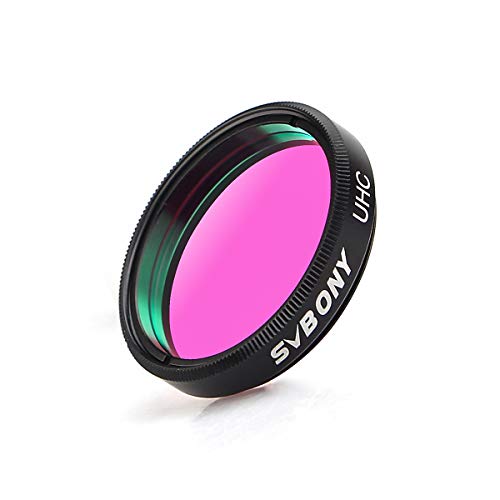
- Reduces selected artificial-light wavelengths
- Darkens backgrounds around emission nebulae
- Fits standard 1.25-inch accessories
Best For: City and suburban telescope observing
Best Neutral Color Rendering
K&F Concept 67mm Natural Night Filter

- Reduces pollution with no stated color cast
- Ultra-slim frame limits vignetting
- Water-, oil-, and scratch-resistant coatings
Best For: 67mm lenses and natural-looking night images
Best for Deep-Sky Narrowband Imaging
SVBONY SV220 2-inch Dual-Band Filter

- Passes OIII and H-Alpha emission lines
- 7nm bands reject skyglow and stray light
- Designed for compatible color-camera setups
Best For: Deep-sky nebula astrophotography with color cameras
Reliable Visual Contrast
Celestron UHC/LPR 1.25" Filter
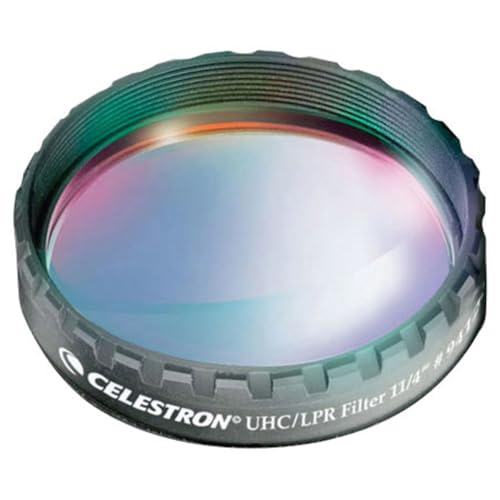
- Reduces selected artificial-light wavelengths
- Enhances nebula contrast and sky darkness
- Multi-coated 1.25-inch optical glass
Best For: Visual telescope observing with 1.25-inch equipment
Fast Lens Swaps
NiSi JetMag Pro Natural Night Filter

- Reduces yellow and orange city-light casts
- Magnetic, tool-free filter changes
- Nano-coated, slim optical-glass design
Best For: JetMag Pro 67MAG night photography systems
Emission-Line Focus
SVBONY CLS 1.25" Light Pollution Filter
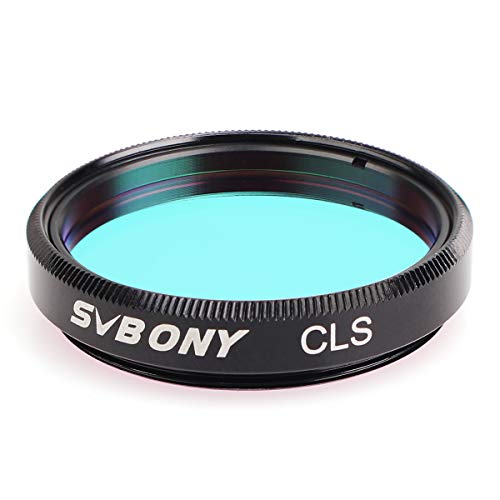
- 90% transmission of major nebula lines
- Suppresses specified sodium and mercury wavelengths
- Works with color CCDs and unmodified DSLRs
Best For: Urban deep-sky visual and color-camera imaging
Ultra-Slim Camera Pick
K&F CONCEPT 77mm Natural Night Filter
- Reduces light pollution for clearer night skies
- Slim frame helps limit wide-angle vignetting
- 28-layer protective coating and no color cast
Best For: 77mm camera lenses used for night-sky photography
City Telescope Contrast Pick
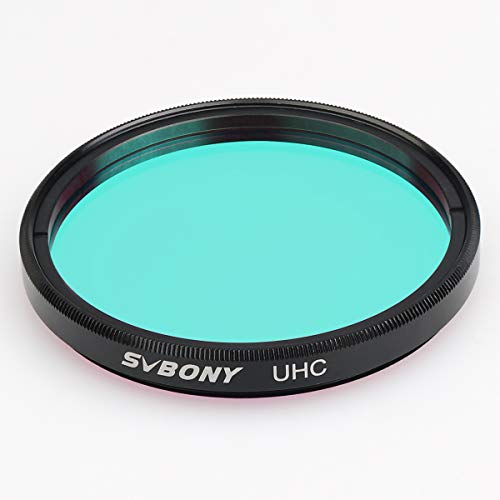
- Designed for 2-inch telescope accessories
- Reduces light pollution and improves contrast
- Includes optical glass, aluminum frame, and storage box
Best For: Deep-sky telescope observation and astrophotography
Urban Night Photography Pick
Walking Way Natural Night Filter

- Targets common urban light sources and haze
- 28-layer coating resists water, scratches, and oil
- Designed for clear, natural-looking 58mm lens images
Best For: 58mm lenses used for urban night scenes and astrophotography
Best Overall for Camera Lenses – Hoya Starscape 67mm Filter
The Hoya Starscape is a practical choice for photographers seeking light pollution filters for astrophotography with a standard 67mm lens thread. Its Didymium glass targets yellow-orange wavelengths associated with sodium and mercury-vapor lighting, helping reduce skyglow in night landscapes and wide-angle astro shots.
Best For: DSLR and mirrorless photographers capturing Milky Way scenes, auroras, urban nightscapes, and time-lapses with compatible 67mm lenses.
Pros:
- Reduces unwanted yellow-orange light from common city lighting.
- Enhances star-to-sky contrast while preserving landscape color.
- 97%+ light transmission and multicoating help limit reflections and flare.
- Slim aluminum frame is designed to minimize vignetting on wide lenses.
Cons:
- Only fits lenses with a 67mm filter thread.
- Designed for camera lenses rather than telescope eyepieces.
Choose this filter when you want a dedicated, screw-in solution for urban night photography and astrophotography. The 67mm compatibility and low-profile frame make it especially convenient for wide-angle setups.
Best Budget Telescope UHC – SVBONY 1.25-inch UHC Filter
For telescope owners comparing light pollution filters for astrophotography, this SVBONY UHC model offers a compact 1.25-inch format for reducing artificial-light wavelengths. It is intended to darken the sky background and improve the contrast of emission nebulae from city, suburban, or darker observing locations.
Best For: Telescope users with 1.25-inch eyepieces who want a versatile UHC filter for nebula viewing and astrophotography.
Pros:
- Selective wavelength reduction helps suppress artificial skyglow.
- Improves emission-nebula contrast in light-polluted areas.
- Works for both celestial observation and astrophotography.
- Optical glass and a sturdy aluminum frame provide a practical build.
Cons:
- Limited to telescopes and accessories using a 1.25-inch thread.
- Not water resistant.
- Its UHC design is primarily suited to emission nebulae rather than general camera-lens scenes.
This is a sensible entry-level telescope filter when your main goal is improved nebula contrast without moving to a larger 2-inch format. Confirm that your eyepiece or accessory accepts standard 1.25-inch filters before buying.
Best Neutral Color Rendering – K&F Concept 67mm Natural Night Filter
The K&F Concept Natural Night filter is a strong option for photographers who want light pollution filters for astrophotography without an obvious color cast. Its 67mm screw-in design reduces urban skyglow while using AGC optical glass and extensive coatings to support clear night city and star images.
Best For: Photographers using 67mm lenses who prioritize neutral color, a slim profile, and weather-resistant protection.
Pros:
- Designed to reduce light pollution while maintaining natural-looking color.
- Ultra-slim 0.15-inch frame helps minimize wide-angle vignetting.
- 28-layer coatings on both sides resist water, oil, and scratches.
- AGC optical glass supports high-definition images.
Cons:
- Compatible only with lenses using a 67mm filter diameter.
- Provides general pollution reduction rather than specialized narrowband nebula filtering.
Consider this model if you frequently switch between night cityscapes and star shots and want a clear, neutral presentation. Its slim construction is particularly useful for wide-angle and telephoto lenses with a 67mm thread.
Best for Deep-Sky Narrowband Imaging – SVBONY SV220 2-inch Dual-Band Filter
The SVBONY SV220 takes a more specialized approach to light pollution filters for astrophotography by passing OIII and H-Alpha emission lines through a 7nm dual-band design. It is built for deep-sky imaging with color CMOS, CCD, and digital cameras, including setups used under city light or a full moon.
Best For: Deep-sky astrophotographers using compatible color cameras and telescopes with a 2-inch, M48-threaded filter system.
Pros:
- Targets OIII at 500.7nm and H-Alpha at 656.3nm.
- Blocks artificial-light interference and skyglow for stronger nebula contrast.
- Over 94% transmission and out-of-band rejection support detailed images.
- Waterproof optical glass and an anodized aluminum frame suit regular imaging use.
Cons:
- Not intended for visual astronomy or solar imaging.
- Not suitable for telescopes with a focal ratio of f/4 or less.
- Requires a compatible 2-inch/M48 filter system and camera setup.
This is the most specialized option in the group, aimed at emission-nebula imaging rather than general night photography. Check your telescope focal ratio, camera type, and filter-thread compatibility carefully before purchase.
Reliable Visual Contrast – Celestron UHC/LPR 1.25" Filter
The Celestron UHC/LPR filter is a straightforward option for anyone comparing light pollution filters for astrophotography and visual telescope use. Its 1.25-inch threaded format selectively reduces some artificial-light wavelengths while aiming to provide a darker sky background and improved nebula contrast.
Best For: Visual observers and telescope or camera setups using a standard 1.25-inch or 31.75mm thread.
Pros:
- Designed to reduce selected wavelengths produced by artificial lighting.
- Can enhance nebula contrast and create a darker-looking sky background.
- Uses multi-coated optical glass with a high-transmission optical coating.
- Backed by a 2-year limited warranty.
Cons:
- Limited to 1.25-inch or 31.75mm-compatible equipment.
- Positioned primarily for visual use rather than a specialized imaging workflow.
This is a practical, conventional choice when you want a threaded LPR filter for visual observing and occasional compatible camera use without moving to a magnetic system.
Fast Lens Swaps – NiSi JetMag Pro Natural Night Filter
The NiSi JetMag Pro Natural Night filter suits photographers seeking light pollution filters for astrophotography with a compatible magnetic lens setup. It is designed to reduce yellow and orange casts from streetlights, neon, and city lighting while supporting quick, tool-free filter changes.
Best For: Astrophotographers, night-landscape shooters, and urban photographers already using the NiSi JetMag Pro 67MAG system.
Pros:
- Reduces unwanted yellow and orange color casts from artificial lighting.
- Magnetic attachment enables fast, tool-free filter swaps.
- Nano-coated optical glass is designed to reduce reflections and improve light transmission.
- Slim aluminum frame helps limit vignetting, while the coating repels water, dust, and oil.
Cons:
- Requires a separately sold 67MAG magnetic adapter ring.
- Cannot mount directly to a camera lens.
- Compatible specifically with the JetMag Pro magnetic filter system.
This filter is compelling for users invested in NiSi’s magnetic workflow, especially when fast changes and cleaner night colors matter more than universal lens compatibility.
Emission-Line Focus – SVBONY CLS 1.25" Light Pollution Filter
The SVBONY CLS filter is a budget-minded option among light pollution filters for astrophotography, with a 1.25-inch format suited to deep-sky visual and imaging applications. Its design emphasizes transmission of major nebula emission lines while suppressing specified artificial-light wavelengths.
Best For: Urban deep-sky observing and imaging with color CCD cameras or unmodified DSLRs.
Pros:
- Claims 90% transmission of key nebula lines, including H-alpha, OIII, SII, and H-beta.
- Designed to reduce specified sodium and mercury artificial-light wavelengths.
- Suitable for color CCD cameras, unmodified DSLRs, and deep-sky visual astronomy.
- Ion-assisted coating technology is intended to improve durability and scratch resistance.
Cons:
- Uses a 1.25-inch format, limiting compatibility with larger filter systems.
- Not water resistant.
- Its broadband CLS approach may be less specialized than a narrowband filter for particular emission targets.
For observers and photographers working under urban skies, the SVBONY offers a clearly specified emission-line transmission profile and broad compatibility with common color imaging equipment.
Ultra-Slim Camera Pick – K&F CONCEPT 77mm Natural Night Filter
For photographers seeking light pollution filters for astrophotography with a 77mm lens thread, this K&F CONCEPT model is designed to reduce pollution while preserving clear, high-definition night images. Its ultra-slim frame is especially practical for wide-angle and telephoto lenses.
Best For: Camera-based night-sky, cityscape, and star photography using compatible 77mm lenses.
Pros:
- Reduces light pollution for clearer night skies.
- Ultra-slim 0.15-inch frame helps avoid vignetting.
- 28-layer coating is waterproof, oil-resistant, and scratch-resistant.
- AGC optical glass is designed for high definition without a color cast.
Cons:
- Compatible with cameras using a 77mm lens thread only.
- It is a camera filter, not a 2-inch telescope filter.
This is a well-rounded option when maintaining a natural-looking image and minimizing vignetting are priorities. Confirm your lens thread size before ordering.
City Telescope Contrast Pick – SVBONY 2-inch UHC Filter
This SVBONY UHC model is among the light pollution filters for astrophotography designed for 2-inch telescope eyepieces and accessories. It is intended to improve contrast and produce sharper, clearer views during city or suburban observation.
Best For: Deep-sky observation and astrophotography with compatible 2-inch telescope equipment.
Pros:
- Designed to reduce light pollution in urban and suburban settings.
- Improves image contrast for sharper, clearer views.
- Uses optical glass with an aluminum frame.
- Includes a plastic storage box and supports an M48×0.75 threaded interface.
Cons:
- Compatible with 2-inch telescope eyepieces and accessories, not standard camera lens threads.
- The supplied specifications list no coating and no water resistance.
- Its transmission design does not transmit H-alpha and higher wavelengths.
Choose this filter if your setup accepts 2-inch telescope accessories and your main goal is improved contrast under light-polluted skies. Check both the diameter and M48×0.75 thread compatibility first.
Urban Night Photography Pick – Walking Way Natural Night Filter
The Walking Way Natural Night Filter is a practical choice among light pollution filters for astrophotography when you use a compatible 58mm camera lens. It targets urban light sources and haze while supporting night-sky, star-trail, aurora, and cityscape photography.
Best For: 58mm camera lenses used for urban night photography, star trails, and astrophotography.
Pros:
- Designed to reduce light from streetlamps, neon signs, and billboards.
- HD neodymium glass is designed for clear images and natural colors.
- 28 layers of coatings provide water repellence, scratch resistance, and oil resistance.
- Includes a protective case for storage.
Cons:
- Compatible with cameras using a 58mm filter thread; verify the lens marking before purchase.
- Its supplied size information is specific to 58mm lenses, limiting cross-compatibility.
- The notes do not specify a slim-frame design for controlling vignetting.
This filter stands out for photographers working around city lighting who want added protection and reduced unwanted illumination. Confirm that your lens barrel shows the 58mm symbol before ordering.
How We Picked These Light Pollution Filters for Astrophotography
We selected filters that represent the main approaches to controlling skyglow: broadband natural-night filters for general imaging, CLS and UHC filters for contrast improvement, and narrowband or dual-band models for emission nebulae. We also considered optical format, advertised coatings, common telescope and camera compatibility, and the practical trade-offs between preserving star color and increasing target contrast.
Because results depend heavily on the type of light pollution, camera spectrum, focal ratio, and target, no single filter is best for every setup. Always verify thread diameter, filter thickness, and whether your camera is modified or stock before buying.
Quick Comparison
| Filter type | Best suited to | Main advantage | Important limitation |
|---|---|---|---|
| Natural night or broadband | Starscapes, galaxies, and general night photography | More natural color and broad compatibility | Less dramatic contrast under severe skyglow |
| CLS | Wide-field astrophotography and brighter skies | Reduces portions of common artificial-light emissions | Can shift color and require correction |
| UHC | Emission nebulae | Improves nebula-to-background contrast | Not ideal for every galaxy, star cluster, or landscape |
| Dual-band or narrowband | Emission nebulae with a compatible camera | Strong isolation of key emission wavelengths | Restricts the field of targets and may reduce natural star color |
Key Buying Factors
Filter Format and Size
Match the filter to your system first. Telescope filters commonly use 1.25-inch or 2-inch cells, while camera filters may use screw-in sizes such as 58mm, 67mm, or 77mm. Step-up rings can help consolidate lens sizes, but check for vignetting and confirm that the filter will clear the lens mount or adapter.
Choose the Right Spectral Design
Natural-night and broadband filters are generally the most versatile for landscapes, Milky Way scenes, and targets where color balance matters. CLS and UHC products are more contrast-oriented. Narrowband and dual-band filters are typically strongest for hydrogen- and oxygen-rich emission nebulae, especially when used with a cooled or modified camera, but they are less suitable for galaxies and ordinary star fields.
Coatings, Color, and Exposure
Multicoatings can reduce reflections and support transmission, but they do not eliminate every flare or ghosting risk. A filter may also alter white balance, require longer exposures, or make focusing more demanding. Plan to calibrate color during processing and test the filter on your specific lens or telescope before an important session.
Target and Sky Conditions
Filters cannot remove all skyglow, moonlight, haze, or gradients. They work best when paired with careful framing, dark-sky travel when possible, accurate flats, and gradient correction. Research the dominant lighting in your location and compare test exposures with and without the filter.
Who Should Buy Which Light Pollution Filters for Astrophotography?
Choose a natural-night or broadband filter if you shoot a mix of starscapes, Milky Way landscapes, and deep-sky targets and want relatively natural color. Choose CLS or UHC if moderate light pollution is reducing contrast and your main targets benefit from selective transmission. Choose a 7nm dual-band or similar narrowband option if emission nebulae are your priority and your camera and telescope support the required format.
For telescope users, select 1.25-inch models for compatible smaller eyepieces and accessories, while 2-inch filters are often more convenient for larger visual or imaging trains. Camera owners should prioritize exact thread size, optical clearance, and whether the filter can be shared across lenses. When uncertain, a versatile natural-night filter is usually the safer first purchase; specialized UHC or dual-band models make more sense as a second filter for a defined target list.