
Light pollution can wash out faint nebulae, reduce contrast, and make deep-sky imaging more difficult—especially from suburban or urban locations. The right filter can improve the balance between the night sky and your subject, but performance depends on your camera system, optics, and the specific light sources nearby.
This roundup compares 10 light pollution filters for deep sky imaging, including didymium, broadband, UHC/LPR, and neutral night designs in several common sizes. Use the guide below to narrow your options by compatibility, imaging goals, and observing conditions.
Best 10 Light Pollution Filters for Deep Sky Imaging Picks for 2026
Best Camera-Lens Pick

- Reduces yellow-orange urban skyglow
- 97%+ transmission with multicoating
- Slim frame for wide lenses
Best For: 67mm camera lenses and wide-field night photography
Best Telescope UHC Option
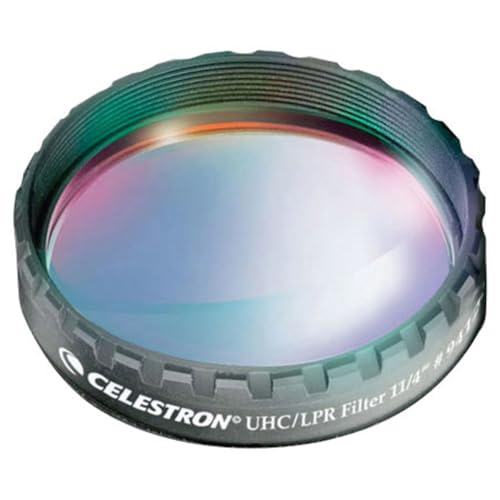
- Selectively reduces artificial-light wavelengths
- Enhances nebula contrast
- High-transmission optical coating
Best For: 1.25-inch telescope and compatible camera systems
Best for Smaller Telescopes
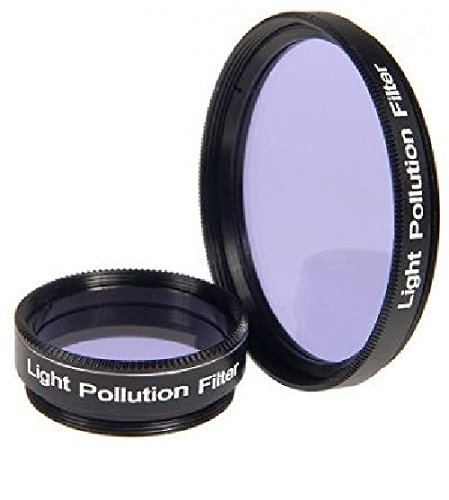
- Blocks common light-pollution sources
- Works across telescope apertures
- Includes a storage case
Best For: 2-inch telescope setups, especially instruments up to 114mm
Best Slim Camera Filter
K&F Concept 58mm Natural Night

- Slim frame helps reduce vignetting
- 28-layer protective coatings
- Designed for no-color-cast results
Best For: 58mm camera lenses and wide-angle night photography
Urban Deep-Sky Contrast

- Passes major Ha, OIII, SII, and H-beta nebula lines
- Targets selected sodium and mercury light-pollution wavelengths
- Works with color CCD cameras and unmodified DSLRs
Best For: Urban deep-sky imaging with compatible 2-inch equipment
Flexible Nightscape Control
K&F Concept Natural Night Filter

- Reduces common light-pollution wavelengths
- Uses thin, coated 100x100mm optical glass
- Fits compatible Lee, Cokin, Nisi, and other holders
Best For: Holder-based astrophotography and night landscapes
Compact Lens-Based Sky Reduction
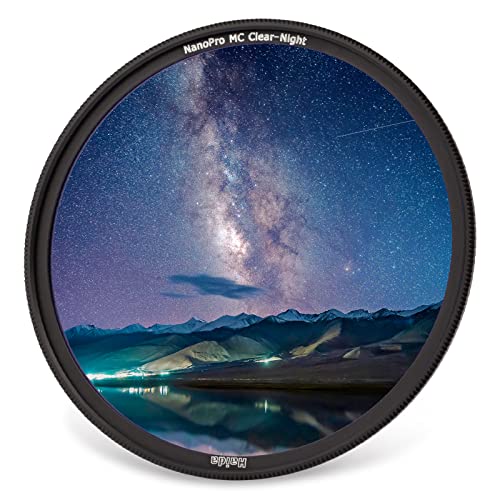
- Absorbs yellow light from sodium-vapor lamps
- Uses multicoated optical glass with Nano coating
- Slim 3.07mm aluminum frame includes a case
Best For: 52mm-thread camera lenses used for night-sky photography
Urban Sky Clarity
Walking Way Natural Night Filter

- Reduces urban light pollution and haze
- Neodymium glass with 28-layer multi-coating
- 67mm screw-in design with storage case
Best For: Urban astrophotography and night-sky photography
Broadband Night Detail
Haida Clear-Night Didymium Filter

- Broadband reduction for clearer night skies
- Nano multi-coated optical glass
- Double-threaded 58mm frame for stacking
Best For: 58mm lenses and stackable night-photography setups
Natural Sky Balance

- Broadband reduction designed to limit skyglow
- Aims to preserve the overall color spectrum
- 67mm double-threaded frame with case
Best For: 67mm night-sky setups seeking natural color balance
Best Camera-Lens Pick – Hoya Starscape 67mm
For photographers seeking light pollution filters for deep sky imaging, the Hoya Starscape 67mm is a practical screw-in option for compatible camera lenses. Its Didymium glass is designed to reduce yellow-orange skyglow while maintaining high light transmission for night and astrophotography work.
Best For: DSLR or mirrorless photographers using 67mm-thread lenses for wide-angle astrophotography, night cityscapes, auroras, or time-lapse work.
Pros:
- Reduces yellow-orange wavelengths associated with sodium and mercury vapor lighting.
- Enhances star-to-sky contrast and preserves landscape color in long exposures.
- Multi-coated glass provides 97%+ light transmission and helps reduce reflections and flare.
- Low-profile frame is designed to limit vignetting on wide lenses.
Cons:
- Limited to lenses with a 67mm filter thread.
- Designed for camera lenses rather than telescope eyepiece systems.
The Hoya is a strong choice when your imaging setup uses 67mm lenses and you want a lightweight filter that can stay mounted during wide-field night photography.
Best Telescope UHC Option – Celestron 1.25-inch UHC/LPR
The Celestron UHC/LPR is a telescope-oriented choice among light pollution filters for deep sky imaging. It selectively reduces wavelengths associated with artificial lighting and is designed to provide a darker sky background and enhanced nebula contrast.
Best For: Telescope users with a standard 1.25-inch or 31.75mm filter thread who want a filter suitable for visual use and compatible camera setups.
Pros:
- Targets selected wavelengths produced by artificial light.
- Designed to enhance nebula contrast and darken the sky background.
- High-transmission optical coating supports efficient light passage.
- Includes a two-year limited warranty.
Cons:
- Only fits 1.25-inch or 31.75mm filter-thread systems.
- Not water resistant.
- Its supplied notes emphasize visual use, so imaging buyers should verify system compatibility.
Choose this Celestron when your telescope uses 1.25-inch accessories and nebula contrast is a priority, particularly for observing from areas affected by artificial lighting.
Best for Smaller Telescopes – Sky-Watcher 2-inch Filter
The Sky-Watcher 2-inch Light Pollution Filter is a straightforward telescope accessory for reducing common sources of skyglow. It works across telescope apertures and is especially recommended in the supplied notes for smaller telescopes up to 114mm.
Best For: Telescope users with 2-inch accessory compatibility, especially those using smaller instruments up to 114mm in diameter.
Pros:
- Blocks common causes of light pollution.
- Works with telescopes of all apertures.
- Particularly recommended for smaller telescopes up to 114mm.
- Includes a storage case.
Cons:
- Requires a 2-inch-compatible telescope or accessory holder.
- Not water resistant.
- The supplied notes provide fewer coating and imaging-specific details than some alternatives.
This Sky-Watcher filter is worth considering if your telescope accepts 2-inch filters and you want a simple, case-supplied option for managing common urban skyglow.
Best Slim Camera Filter – K&F Concept 58mm Natural Night
The K&F Concept 58mm Natural Night Filter is a camera-lens option for photographers comparing light pollution filters for deep sky imaging. Its ultra-slim design targets reduced vignetting, while the supplied notes describe multicoated optical glass intended to reduce pollution without adding a color cast.
Best For: Camera users with 58mm-thread lenses who need a slim filter for night city, star, and wide-angle photography.
Pros:
- Reduces light pollution for clearer-looking night skies.
- Ultra-slim 0.15-inch frame helps avoid vignetting.
- 28-layer coatings provide waterproof, oil-resistant, and scratch-resistant protection.
- AGC optical glass is designed to deliver high definition without a color cast.
Cons:
- Compatible only with lenses using a 58mm filter thread.
- More camera-lens focused than telescope-accessory oriented.
- Filter weight is listed as 3.52 ounces, which may matter for lightweight setups.
The K&F Concept is a useful fit for 58mm camera systems where slim construction, protective coatings, and neutral-looking night images are important buying considerations.
Urban Deep-Sky Contrast – SVBONY CLS 2-Inch Filter
The SVBONY CLS Filter is a practical option among light pollution filters for deep sky imaging when you use a color CCD camera, an unmodified DSLR, or a 2-inch telescope setup. Its multilayer-coated optical glass is designed to pass key nebula wavelengths while reducing selected artificial-light bands.
Best For: Urban deep-sky imaging with color CCD cameras, unmodified DSLRs, or compatible 2-inch telescope accessories.
Pros:
- Designed for high transmission of major nebula lines, including Ha, OIII, SII, and H-beta.
- Specifies low transmission for selected sodium and mercury light-pollution wavelengths.
- Ion-assisted deposition coating is intended to improve durability and scratch resistance.
- Coating stability is designed to resist central-wavelength deviation from temperature changes.
Cons:
- Its 48.5mm thread and 2-inch format require compatible equipment or adapters.
- It is not water resistant.
- As a broadband CLS filter, it is aimed at reducing selected artificial light rather than eliminating all skyglow.
This filter stands out for its stated nebula-line transmission and compatibility with color cameras and unmodified DSLRs. Confirm the thread and holder requirements before ordering, especially if your imaging setup uses a different filter format.
Flexible Nightscape Control – K&F Concept Natural Night Filter
The K&F Concept 100x100mm Neutral Night Filter is a flexible choice among light pollution filters for deep sky imaging and night photography. Its square optical-glass design is made for compatible filter holders and is intended to reduce common artificial-light wavelengths while preserving scene color and improving contrast.
Best For: Astrophotography and night landscapes using a 100x100mm holder or compatible 52mm-to-82mm lens-filter system.
Pros:
- Designed to block common light-pollution wavelengths and improve contrast and clarity.
- Double-sided nanometer coatings are described as waterproof and scratch resistant.
- Thin 2mm AGC optical glass is specified to produce no color cast.
- Compatible with listed 52mm, 55mm, 58mm, 62mm, 67mm, 72mm, 77mm, and 82mm systems and several holder brands.
Cons:
- The square 100x100mm format requires a suitable holder rather than a standard threaded mount alone.
- It may add holder setup complexity compared with a round screw-in filter.
- Compatibility depends on matching both the lens thread and holder system.
Choose this model when you value a square filter format and broad holder compatibility. Its waterproof, scratch-resistant coating claims and no-color-cast design make it especially practical for outdoor night scenes, provided your holder setup is supported.
Compact Lens-Based Sky Reduction – Haida Clear-Night 52mm
The Haida Clear-Night 52mm Filter is a compact option among light pollution filters for deep sky imaging when your camera lens has a 52mm front thread. It is designed to absorb yellow light associated with sodium-vapor lamps, helping reduce artificial illumination in night-sky images while retaining optical clarity and color fidelity.
Best For: Camera lenses with a 52mm thread used for night-sky, star, and nighttime landscape photography.
Pros:
- Targets yellow sodium-vapor light, a common urban artificial-light source.
- Optical glass and multicoating are designed for clarity, color fidelity, and reduced reflections.
- Nano coating helps water and oil bead for easier cleaning.
- Ultra-slim 3.07mm aluminum-alloy ring keeps the filter lightweight and includes a storage case.
Cons:
- It fits cameras and lenses with a 52mm thread only.
- The supplied notes do not describe it as water resistant.
- Its light-pollution reduction specifically emphasizes sodium-vapor wavelengths, so results depend on the local lighting environment.
This is a straightforward screw-in choice for photographers already using 52mm lenses. Verify the lens thread before buying, and consider a step-up ring if you need to use the filter on a larger compatible lens.
Urban Sky Clarity – Walking Way Natural Night Filter
For photographers comparing light pollution filters for deep sky imaging, the Walking Way Natural Night Filter is a 67mm screw-in option designed to reduce the visual impact of streetlamps, neon signs, billboards, and urban haze. Its neodymium optical glass and multi-coating are aimed at maintaining clear, vivid results for night-sky and city photography.
Best For: Urban astrophotography, star trails, auroras, and cityscape shooting with compatible 67mm lenses.
Pros:
- Designed to reduce urban light pollution and improve night-sky contrast.
- Neodymium glass is specified for high light transmission and true-to-life color.
- Features 28 layers of anti-reflective, anti-fingerprint, water-repellent, scratch-resistant, and oil-proof coatings.
- Includes a protective case and screws directly onto compatible lenses.
Cons:
- Only compatible with lenses using a 67mm filter thread.
- Its benefits are primarily described for urban night photography rather than all deep-sky conditions.
The Walking Way is a practical choice when you need a 67mm filter for mixed urban night work. Confirm the lens thread size before purchasing, especially since the supplied listing includes both 67mm and 77mm references.
Broadband Night Detail – Haida Clear-Night Didymium Filter
The Haida Clear-Night Didymium Filter is a compact option among light pollution filters for deep sky imaging, with a broadband design intended to reduce light pollution for clearer night skies. Its 58mm thread, nano multi-coated optical glass, and double-threaded frame make it suitable for compatible camera lenses and filter setups.
Best For: Photographers using 58mm lenses who want a broadband light-pollution filter with stacking and hood compatibility.
Pros:
- Designed to reduce light pollution while photographing the sky and stars.
- Nano multi-coated optical glass supports the filter’s night-photography design.
- Double-threaded frame allows filter stacking and use with hoods or caps.
- Includes a storage case and has a listed waterproof rating.
Cons:
- Compatible devices are limited to cameras with a 58mm filter thread.
- The supplied notes do not specify a coating for scratch or fingerprint resistance.
Choose the Haida if your lens uses a 58mm thread and you value a stackable frame. Its broadband format and included case make it a focused, straightforward option for night-sky photography.
Natural Sky Balance – ICE LiPo Didymium Filter
ICE LiPo Didymium Filter Broadband Light Pollution Reduction for Night Sky/Star Optical Glass (67mm)
Check Price On AmazonThe ICE LiPo Didymium Filter is a 67mm broadband option for photographers evaluating light pollution filters for deep sky imaging. It is designed to reduce skyglow without changing the entire color spectrum, using didymium optical glass in a double-threaded aluminum-alloy frame.
Best For: Night-sky photographers with 67mm lenses who want broadband light-pollution reduction and the ability to stack filters or attach accessories.
Pros:
- Designed to reduce light pollution and block skyglow.
- Broadband effect is intended to avoid changing the entire color spectrum.
- Double-threaded frame supports filter stacking, hoods, and caps.
- Includes a storage case and uses didymium optical glass.
Cons:
- Compatible with cameras using a 67mm filter size.
- The supplied notes list no coating, so there are fewer stated surface-protection features.
The ICE LiPo is a sensible fit when maintaining a more natural overall color spectrum is important. Verify your lens thread and consider the uncoated construction when planning handling and storage.
How We Picked the Best Light Pollution Filters for Deep Sky Imaging
We selected filters across several common formats and use cases, including telescope-mounted 1.25-inch and 2-inch filters, camera-lens screw-in filters, and 100x100mm square filters. We also considered filter type, optical construction, coating claims, intended use, and compatibility with astrophotography equipment.
Because no filter removes every kind of artificial skyglow, the strongest choice depends on your location and target. Broadband and didymium filters are generally versatile for cameras and wide-field scenes, while UHC/LPR filters are more selective and may be better suited to emission nebulae when used with compatible equipment.
Quick Comparison
| Filter style | Best suited to | Important consideration |
|---|---|---|
| Broadband or didymium | General night-sky and wide-field imaging | Usually preserves a natural-looking color balance |
| UHC/LPR | Emission nebulae and telescope viewing | Can alter color and is less universal for broadband targets |
| Neutral night | Camera lenses and mixed artificial lighting | Check spectral performance and lens-thread size |
| Square filter | Lens systems using a holder | Requires a compatible holder and adapter |
Key Buying Factors for Light Pollution Filters for Deep Sky Imaging
Compatibility and Size
Match the filter to the equipment where it will be installed. Telescope filters commonly use 1.25-inch or 2-inch formats, while camera filters usually screw into a lens’s front thread. A square filter needs a holder, and step-up or step-down rings may introduce vignetting or prevent the lens hood from being used.
Filter Type and Target
Broadband filters are a practical starting point for galaxies, star fields, and general night-sky photography. Didymium designs are often aimed at reducing the visual impact of common light sources while retaining a comparatively natural scene. UHC/LPR filters make a more selective choice for emission nebulae, but they can produce stronger color shifts and are not equally useful for every deep-sky subject.
Color, Transmission, and Processing
Filters can change white balance, reduce overall exposure, or create color casts. Check whether the filter is intended for visual observing, modified cameras, or full-spectrum imaging. Plan to shoot RAW and correct the color balance during processing rather than relying only on automatic white balance.
Optical Quality and Coatings
Multicoating can help reduce reflections and preserve transmission, particularly when bright stars or nearby lights are in the frame. Look for clear specifications about optical glass, coating, thread quality, and edge construction. Also inspect the filter carefully for dust, scratches, or reflections before a long imaging session.
Who Should Buy Which Light Pollution Filters for Deep Sky Imaging?
Choose a 1.25-inch or 2-inch telescope filter if your setup uses a standard eyepiece or filter drawer and you want a straightforward fit. A broadband or didymium camera filter is a better match for wide-angle lenses and general night-sky work. Consider a UHC/LPR model when emission nebulae are your main targets and your telescope or camera system can accommodate its narrower response. A square neutral-night filter makes sense if you already use a square-holder system across multiple lenses.
Finally, treat any light pollution filter as a contrast aid rather than a substitute for dark skies, careful exposure control, calibration frames, and post-processing. Compare the listed size and intended application before ordering, and prioritize a filter that fits your existing optics without adapters whenever possible.