
Urban glow can wash out stars, flatten contrast, and make deep-sky imaging more difficult. The right light pollution filter can reduce distracting wavelengths and help your camera or telescope reveal more structure.
This roundup compares 10 options, from natural-night and broadband filters to narrowband designs for emission nebulae. Match the filter format, optical behavior, and imaging goals to your setup before buying.
Best 10 Light Pollution Filters Picks for 2026
Best for Camera-Based Astro Shots

- Reduces yellow-orange city skyglow
- Didymium glass boosts star contrast
- Slim frame suits wide lenses
Best For: 52mm camera lenses and night-sky photography
Best for Nebula Viewing
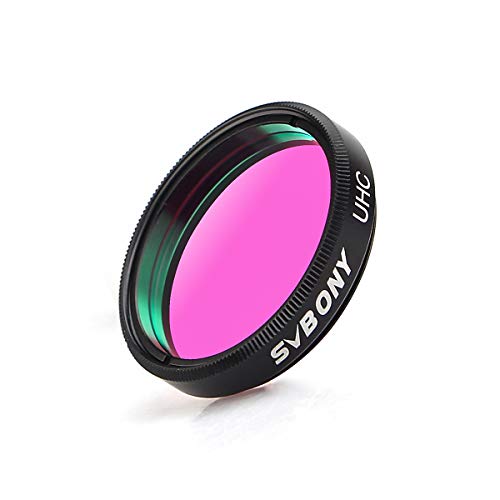
- Improves emission-nebula contrast
- Fits standard 1.25-inch eyepieces
- Useful from city and suburban skies
Best For: Telescope nebula observation and astrophotography
Best for Natural Night Colors
K&F Concept 67mm Natural Night

- Reduces pollution without stated color cast
- Ultra-slim frame helps prevent vignetting
- 28-layer protective coatings
Best For: 67mm lenses and natural-looking night photography
Best for Deep-Sky Imaging
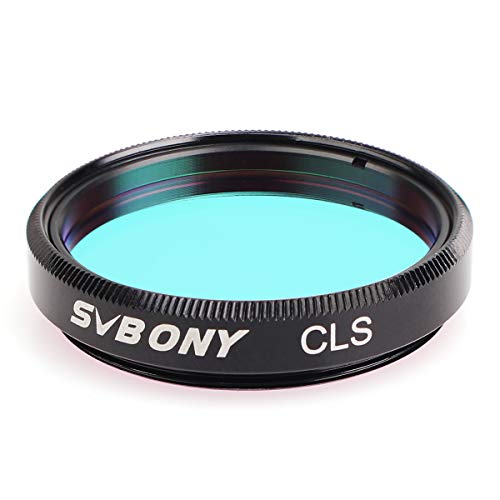
- Suppresses sodium and mercury wavelengths
- Transmits key nebula emission lines
- Works with color CCDs and unmodified DSLRs
Best For: Urban deep-sky astrophotography
Best Compact Option
Haida Clear-Night NanoPro 52mm
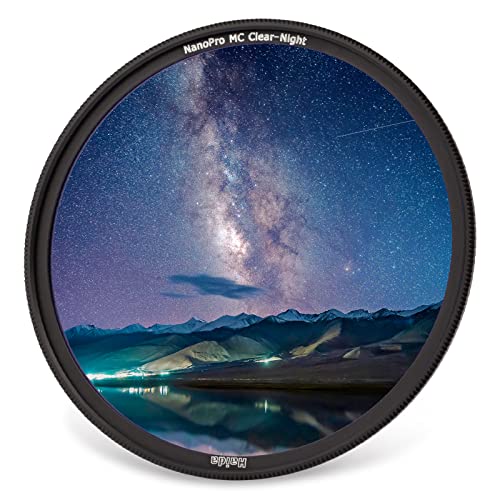
- Targets yellow artificial light from sodium-vapor lamps
- Optical glass with multilayer and Nano coatings
- Slim aluminum ring with storage case
Best For: 52mm lenses used for urban night-sky photography
Best Astrophotography Bandpass

- Multi-bandpass design for astrophotography
- About 90% transmission at major nebula lines
- Black-anodized aluminum cell helps reduce reflections
Best For: 2-inch astrophotography setups targeting nebulae
Best for Large Lenses
Walking Way Natural Night 67mm

- Reduces urban lighting and haze for night scenes
- Neodymium glass supports light transmission and color
- 28-layer coating is water-, scratch-, and oil-resistant
Best For: 67mm lenses used for cityscapes and astrophotography
Best Dual-Band Choice
Optolong L-eNhance 2-inch Filter

- Targets H-Alpha, H-Beta, and O-III lines
- Up to 90% maximum transmission
- Made for DSLR and color-camera imaging
Best For: Color-camera nebula imaging under bright skies
Best Broadband Option
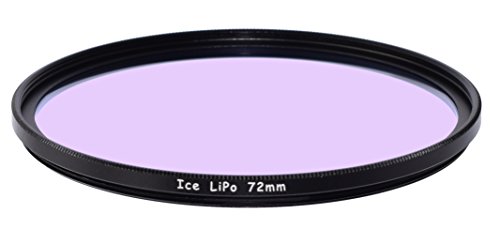
- Reduces skyglow while preserving overall color
- Double-threaded for stacking accessories
- Includes a storage case
Best For: Broadband night-sky photography
Best for Heavy Light Pollution
Optolong L-Ultimate 2-inch Filter
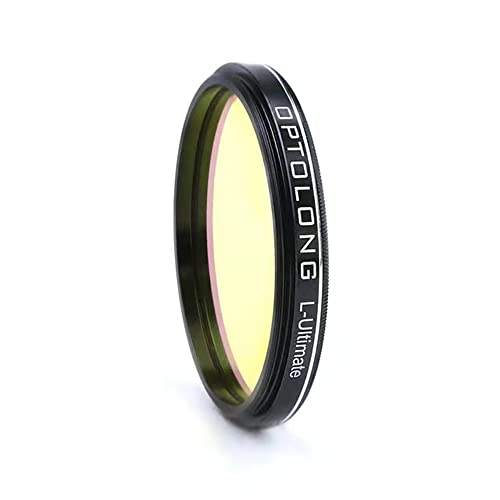
- Dual 3nm H-Alpha and O-III bandpasses
- Designed for darker backgrounds and higher contrast
- Optimized to reduce bright-star halos
Best For: Emission-nebula imaging under severe skyglow
Best for Camera-Based Astro Shots – Hoya Starscape 52mm
For photographers comparing light pollution filters, the Hoya Starscape 52mm is a screw-in option designed to reduce yellow-orange skyglow from sodium and mercury-vapor lighting. Its Didymium glass and multi-coating aim to improve star-to-sky contrast while preserving landscape color.
Best For: DSLR or mirrorless users with 52mm lens threads photographing stars, auroras, time-lapses, and urban night scenes.
Pros:
- Reduces unwanted yellow-orange wavelengths and city skyglow.
- Didymium glass supports richer contrast and celestial detail.
- 97%+ light transmission and multi-coating help limit reflections and flare.
- Slim aluminum frame is designed to minimize vignetting on wide lenses.
Cons:
- Compatible only with lenses using 52mm filter threads.
- Designed for photography rather than telescope eyepieces.
This is a focused choice for camera users who want in-camera night-sky improvement without a bulky filter frame. Confirm your lens thread size before buying.
Best for Nebula Viewing – SVBONY 1.25-Inch UHC Filter
This SVBONY UHC filter is a practical telescope accessory for observers seeking light pollution filters that darken the sky background and improve emission-nebula contrast. It uses optical glass in a standard 1.25-inch threaded barrel.
Best For: Telescope users viewing nebulae from city, suburban, or moderately light-polluted skies, with some astrophotography use.
Pros:
- Designed to selectively reduce wavelengths associated with artificial lighting.
- Darkens the sky background and improves emission-nebula contrast.
- Fits standard 1.25-inch eyepieces and compatible accessories.
- Optical glass and an aluminum frame provide a compact, sturdy design.
Cons:
- Limited to 1.25-inch telescope accessories.
- Not water resistant.
- Its main benefit is for nebula contrast rather than general daytime photography.
Choose this model when your priority is visual or photographic nebula observation through a telescope. It is especially straightforward for setups already using 1.25-inch eyepieces.
Best for Natural Night Colors – K&F Concept 67mm Natural Night
The K&F Concept 67mm is among the light pollution filters aimed at camera users who want clearer night skies without a noticeable color cast. Its ultra-slim frame and multi-layer protection make it suitable for wide-angle and telephoto lenses with 67mm threads.
Best For: Night cityscapes, star shots, and landscape photography with 67mm camera lenses where maintaining natural color is important.
Pros:
- Reduces light pollution while targeting clear, natural-looking night skies.
- AGC optical glass is specified to avoid color cast.
- Ultra-slim 0.15-inch frame helps avoid vignetting.
- 28-layer coatings add waterproof, oil-resistant, and scratch-resistant protection.
Cons:
- Compatible with 67mm lens diameters only.
- Camera-focused design may not suit telescope eyepieces.
This filter stands out for photographers who prioritize neutral color and a low-profile fit. Check both the 67mm thread size and your lens’s clearance before purchasing.
Best for Deep-Sky Imaging – SVBONY 1.25-Inch CLS Filter
This SVBONY CLS filter is designed for deep-sky work, making it a targeted option among light pollution filters for suppressing common artificial-light wavelengths. It retains major nebula emission lines and is listed for color CCD cameras and unmodified DSLRs.
Best For: Urban or suburban deep-sky astrophotography with compatible color CCD cameras, unmodified DSLRs, or 1.25-inch telescope systems.
Pros:
- Suppresses listed sodium and mercury artificial-light emission lines.
- Transmits 90% of specified nebula emission lines, including H-alpha, OIII, SII, and H-beta.
- Suitable for color CCD cameras and unmodified DSLRs.
- Ion-assisted coating is designed for scratch resistance and wavelength stability.
Cons:
- Not water resistant.
- Compatibility is centered on 1.25-inch systems and listed camera types.
- Specialized deep-sky performance may be less relevant for ordinary night photography.
Consider this model when preserving nebula signal is more important than a general-purpose camera filter. Its stated passband and off-band specifications make it a specialized choice for light-polluted deep-sky imaging.
Best Compact Option – Haida Clear-Night NanoPro 52mm
If you need light pollution filters for a compatible 52mm lens, the Haida Clear-Night NanoPro is a compact option for night-sky photography and video. It is designed to reduce the appearance of artificial illumination, including yellow light associated with sodium-vapor lamps.
Best For: Photographers using 52mm-thread lenses for urban night scenes, stars, and sky video.
Pros:
- Designed to reduce the appearance of urban light pollution and artificial illumination.
- Optical glass and multilayer anti-reflection coatings support clarity and color fidelity.
- Nano coating improves water- and oil-beading for easier cleaning.
- Ultra-slim 3.07mm aluminum alloy ring and included plastic case keep the setup lightweight and portable.
Cons:
- Compatible only with lenses using a 52mm filter thread.
- Not water resistant.
The Haida is a practical choice when a slim, portable filter is important. Confirm the lens thread size before ordering, since the filter is specifically made for 52mm lenses.
Best Astrophotography Bandpass – Optolong L-Pro 2-Inch
The Optolong L-Pro is one of the more specialized light pollution filters here, built as a multi-bandpass filter for astrophotography. Its design uses sharp roll-offs at major light-pollutant emission lines while maintaining high transmission at important nebula emission lines.
Best For: Astrophotographers using a standard 2-inch filter setup who want targeted light-pollution reduction and strong nebula transmission.
Pros:
- Multi-bandpass design is intended specifically for astrophotography.
- Sharp roll-off at light-pollutant emission lines helps target unwanted sources.
- Approximately 90% transmission at major nebula emission lines.
- Multi-layer anti-reflection coating and black-anodized aerospace-grade aluminum cell help control reflections.
Cons:
- Its 2-inch, 48mm thread format may not fit every camera or telescope setup.
- Not water resistant.
Choose the L-Pro when astrophotography performance and emission-line control matter more than general-purpose portability. Check that your equipment accepts a 2-inch filter with a 48mm thread.
Best for Large Lenses – Walking Way Natural Night 67mm
For photographers seeking light pollution filters for larger lenses, the Walking Way Natural Night Filter uses HD neodymium glass to reduce unwanted city lighting and haze. Its 67mm format suits compatible lenses used for night photography, cityscapes, star trails, and other sky-focused subjects.
Best For: 67mm lenses used for urban night scenes, star trails, auroras, and astrophotography.
Pros:
- Designed to reduce light from streetlamps, neon signs, billboards, and urban haze.
- HD neodymium glass is specified for high light transmission and true-to-life color.
- 28 anti-reflective and anti-fingerprint coating layers provide water repellence, scratch resistance, and oil resistance.
- Includes a protective case and is designed to screw securely onto compatible lenses.
Cons:
- Compatible only with lenses using a 67mm filter thread.
- The larger filter size may be less compact than smaller-format alternatives.
The Walking Way is a versatile pick for photographers who need a 67mm filter for both urban scenes and sky subjects. Verify the lens barrel’s 67mm marking before purchase.
Best Dual-Band Choice – Optolong L-eNhance 2-inch Filter
Optolong 2" L-Enhance Dual Narrowband Light Pollution Filter (H-Alpha and H-Beta/O-III)
Check Price On AmazonFor astrophotographers seeking light pollution filters for DSLR, color CMOS, or CCD imaging, the Optolong L-eNhance uses dual-band transmission to target key nebula emission lines while reducing the effect of bright skies. Its 2-inch format and M48x0.75mm threading suit compatible filter setups.
Best For: Imaging emission nebulae with compatible DSLR, color CMOS, or CCD cameras in light-polluted areas.
Pros:
- Designed to isolate H-Alpha, H-Beta, and Oxygen III emission lines.
- Up to 90% maximum transmission.
- Claims more than 99% blocking of light-pollution lines.
- Uses multiple anti-reflective coatings.
Cons:
- Designed for imaging rather than general visual observing.
- Requires a compatible 2-inch, M48x0.75mm filter connection.
- Not water resistant.
The L-eNhance is a practical middle ground for color-camera nebula imaging: more selective than a general broadband filter while retaining the convenience of a dual-band design. Check your camera and filter-thread compatibility before buying.
Best Broadband Option – ICE LiPo Didymium 72mm Filter
ICE LiPo Didymium Filter Broadband Light Pollution Reduction for Night Sky/Star Optical Glass (72mm)
Check Price On AmazonThe ICE LiPo is one of the more flexible light pollution filters for photographers who want broadband reduction without changing the entire color spectrum. Its 72mm didymium optical-glass construction is paired with a double-threaded frame for stacking compatible filters, hoods, or caps.
Best For: Broadband night-sky photography where maintaining the overall color spectrum is important.
Pros:
- Designed to reduce skyglow without changing the entire color spectrum.
- Double-threaded frame supports filter stacking and compatible accessories.
- Includes a storage case.
- Uses didymium optical glass and an aluminum-alloy frame.
Cons:
- Its 72mm size requires matching lens or accessory compatibility.
- No coating is listed in the supplied specifications.
- Broadband reduction is less selective than a dual-band emission-line filter.
This filter is a sensible choice when a natural broadband look and accessory flexibility matter more than highly selective nebula isolation. Confirm the 72mm thread requirement and your stacking setup before purchasing.
Best for Heavy Light Pollution – Optolong L-Ultimate 2-inch Filter
The Optolong L-Ultimate is a highly selective option among light pollution filters, using dual 3nm bandpasses to transmit H-Alpha and O-III emission lines. By excluding other light-pollution emission lines, it is designed to produce darker backgrounds and stronger contrast for compatible astrophotography cameras.
Best For: DSLR, color CMOS, mono CMOS, or CCD imaging of emission nebulae in heavily light-polluted locations.
Pros:
- Uses dual 3nm bandpasses for H-Alpha and O-III.
- Designed to create darker sky backgrounds and improve image contrast and signal-to-noise ratio.
- Optimized for reduced halos around bright stars.
- Compatible with 2-inch camera filter setups.
Cons:
- Its narrow transmission is specialized for emission-line nebula imaging.
- Requires a compatible 2-inch, 48mm-thread setup.
- No warranty is listed in the supplied details.
The L-Ultimate prioritizes maximum selectivity over broadband versatility, making it the strongest fit here for emission-nebula imaging under severe skyglow. Its narrow dual-band design should be matched with a suitable camera and imaging target.
How We Picked These Light Pollution Filters
We organized this selection around the main ways astrophotographers manage artificial skyglow: broadband natural-night filters, visual UHC and CLS filters, and dual- or narrowband filters for emission nebulae. We also considered thread or barrel size, stated coating and glass construction, intended use, and compatibility with common telescope, camera, and lens setups.
Because no filter removes every type of light pollution, the best choice depends on your target, sensor, optics, and local lighting. Filters can improve contrast, but they cannot replace dark skies, accurate exposure, good focusing, or effective calibration.
Quick Comparison
| Filter category | Best suited to | Typical strength |
|---|---|---|
| Natural-night or didymium | Landscape, wide-field, and general night-sky imaging | Moderate color correction and glow reduction |
| CLS or UHC | Visual observing and broad emission-nebula work | Contrast enhancement with a wider passband |
| L-Pro-style broadband | Color cameras and mixed deep-sky targets | Balanced suppression with more natural color |
| Dual narrowband | Emission nebulae under suburban or urban skies | Strong isolation of H-alpha, H-beta, and O-III |
Key Buying Factors for Light Pollution Filters
Choose the Right Filter Type
Natural-night and didymium models are often the most versatile for lenses, landscapes, and broad night-sky scenes. CLS and UHC filters are more selective and can make nebulae stand out, especially during visual observing. Dual-band designs provide stronger contrast for emission nebulae but are less appropriate for galaxies, star clusters, or ordinary daytime photography.
Check Size and Mounting
Confirm whether you need a threaded camera filter, a 1.25-inch eyepiece filter, or a 2-inch telescope filter. A filter that is optically suitable but physically incompatible will not help. For camera lenses, verify the front thread diameter and account for step-up rings, vignetting, and filter-stacking clearance.
Consider Color and Transmission
More aggressive filters may produce a stronger color cast or require longer exposures. Review the filter’s transmission bands and intended targets, then plan to correct color in processing. Multicoatings and optical-glass quality can help preserve contrast and reduce reflections, but they do not eliminate flare from bright nearby lights.
Match the Filter to Your Sky and Camera
Light pollution varies by location and lighting technology. Broadband filters may offer limited benefits beneath modern broad-spectrum LEDs, while narrowband filters can still work well on suitable emission nebulae. Monochrome and one-shot-color cameras also respond differently, so use the manufacturer’s target and camera guidance as a starting point.
Who Should Buy Which Light Pollution Filters?
- For wide-field night landscapes: Choose a natural-night or didymium filter in the correct lens size.
- For visual telescope observing: Consider a 1.25-inch UHC or CLS filter for a practical contrast boost.
- For general deep-sky imaging with a color camera: A balanced broadband option such as an L-Pro-style filter is the more flexible choice.
- For emission nebulae in bright suburbs: Choose a dual narrowband or dual-bandpass filter, provided your telescope, camera, and target are compatible.
- For larger telescope accessories: Look for a 2-inch format and confirm the filter can be installed without causing clearance or vignetting problems.
Before checkout, compare the filter’s diameter, passband, target recommendations, and return policy. The best Light Pollution Filters are those that fit your equipment and improve the specific subjects you photograph most often.