
A good monopod gives your camera extra stability without the bulk and setup time of a tripod. For travel, sports, wildlife, and event photography, the best lightweight camera monopods balance portability, height, load capacity, and quick handling.
This roundup compares 10 aluminum and carbon-fiber options, from compact travel models to taller, more supportive designs for DSLR and mirrorless kits.
Best 10 Lightweight Camera Monopods Picks for 2026
Best Travel Value
Manbily A-555L Lightweight Monopod

- 1.1-pound aluminum build
- 15.4-pound load capacity
- Converts to a walking stick
Best For: Travel and outdoor photography
Best Carbon-Fiber Build

- Carbon-fiber construction
- 22-pound stated payload
- Four-section quick adjustments
Best For: Photography and videography
Best Multi-Mode Option

- Weighs about 0.83 pounds
- Folds to about 16.9 inches
- Supports several outdoor modes
Best For: Travel and hiking kits
Best Compact Carbon-Fiber Pick
SIRUI P-326 Compact Carbon Monopod
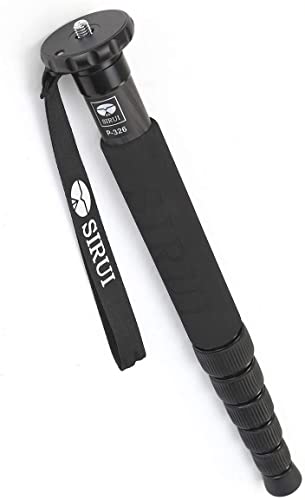
- 400-gram carbon-fiber build
- 15-inch folded size
- 22-pound stated recommendation
Best For: Compact travel photography
Best All-Terrain Value
K&F CONCEPT 63-Inch Aluminum Monopod

- Reaches 63 inches and supports up to 22 pounds
- Folds to about 17 inches for travel
- Rubber foot and metal spike support varied terrain
Best For: Outdoor photographers needing compact, adaptable support
Best Lightweight Travel Pick
Manfrotto Element MII Aluminum Monopod

- Weighs 0.5 kg and folds to 43 cm
- Supports up to 15 kg
- Twist locks and convertible mounting screw speed setup
Best For: Travel photographers carrying compact or DSLR kits
Best Feature-Rich Video Support
IFOOTAGE Cobra 3 Carbon Fiber Monopod
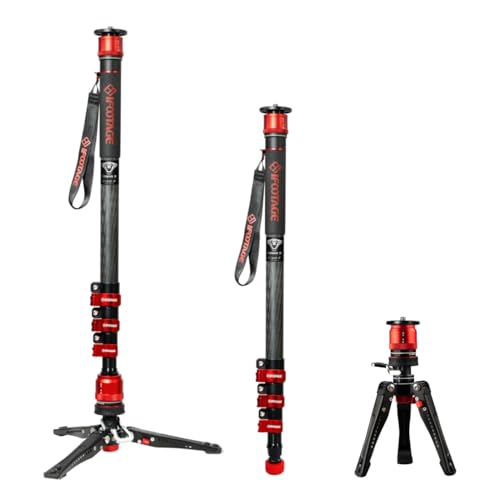
- Carbon fiber weighs 2.8 pounds
- Pedal lock enables fast 360-degree positioning
- Integrated feet and 3-in-1 design add stability and versatility
Best For: Event, sports, wildlife, and video shooting
Best All-Terrain Pick

- 17.6-pound maximum load
- 0.88-pound aluminum build
- Interchangeable rubber and spike feet
Best For: Outdoor creators and travel photographers
Best Carbon Fiber Option
LEOFOTO MP-284C Carbon Fiber Monopod

- 65-inch maximum height
- Carbon fiber construction
- 18-kilogram stated weight limit
Best For: Tall, portable setups with long warranty coverage
Best Budget Travel Pick

- 0.59-pound travel-friendly weight
- Folds to 16.75 inches
- 5-pound load limit with carry pouch
Best For: Light camera kits, hikes, and carry-on travel
Best Travel Value – Manbily A-555L Lightweight Monopod
For photographers comparing lightweight camera monopods, the Manbily A-555L stands out as a compact aluminum option with a 15.7-inch folded length, 61-inch maximum height, and 1.1-pound weight. Its six-section design and quarter-turn locks make it practical for travel, sports, wildlife, and outdoor shooting.
Best For: Travelers and outdoor photographers who want a monopod that can also function as a walking stick.
Pros:
- Folds to 15.7 inches and weighs 1.1 pounds.
- Supports up to 15.4 pounds.
- Includes reversible 1/4-inch and 3/8-inch mounting screws, phone holder, handle, and carrying case.
- Convertible rubber and metal feet suit different surfaces.
Cons:
- Aluminum construction is heavier than the lightest carbon-fiber alternatives.
- It is not water resistant.
The Manbily offers a strong combination of portability, load capacity, and versatility. The walking-stick conversion is especially useful for hiking, while the compact folded size makes it easy to pack.
Best Carbon-Fiber Build – Manfrotto 290 Carbon Monopod
The Manfrotto 290 is a dependable choice among lightweight camera monopods, pairing a 1.1-pound carbon-fiber body with a 59.4-inch maximum height. Its four-section design supports quick height changes and a stated 22-pound load capacity for photography and videography.
Best For: Photographers and videographers who prioritize a carbon-fiber build and high stated payload capacity.
Pros:
- Carbon-fiber construction weighs 1.1 pounds.
- Supports up to 22 pounds.
- Four leg sections allow rapid height adjustments.
- Includes rubber leg warmers and an angled wrist strap.
Cons:
- Its 19.29-inch folded length is less compact than several alternatives.
- It is not water resistant.
The 290 emphasizes support and handling rather than the smallest packed size. It is a solid fit when a lightweight carbon-fiber monopod with a generous payload rating matters most.
Best Multi-Mode Option – ULANZI TB12 61-Inch Monopod
The ULANZI TB12 is one of the more travel-friendly lightweight camera monopods, weighing about 0.83 pounds and folding to roughly 16.9 inches. It extends to 61 inches, supports up to 11.02 pounds, and offers monopod, selfie-stick, walking-stick, hiking-stick, and trekking-pole modes.
Best For: Travelers and hobbyist photographers who want one compact pole for several outdoor uses.
Pros:
- Weighs approximately 0.83 pounds and fits into a 20-inch carry-on.
- Extends from 16.9 to 61 inches across five sections.
- Supports cameras up to 11.02 pounds.
- Offers multiple shooting and outdoor-use modes.
Cons:
- Its load capacity is lower than the Manfrotto and Manbily options.
- It is not water resistant.
The TB12 is appealing when low carry weight and flexibility are more important than maximum support. Its multiple modes make it particularly convenient for travel and hiking kits.
Best Compact Carbon-Fiber Pick – SIRUI P-326 Compact Carbon Monopod
SIRUI Camera Monopod P-326 6 Section Carbon Fiber Compact Lightweight Travel Monopod
Check Price On AmazonThe SIRUI P-326 is a compact carbon-fiber choice for shoppers seeking lightweight camera monopods. Its six-section 8X carbon-fiber design weighs 400 grams, folds to 15 inches, reaches 60.6 inches, and has a stated maximum weight recommendation of 22 pounds.
Best For: Photographers who want a very compact carbon-fiber monopod with a high stated weight recommendation.
Pros:
- Lightweight 400-gram carbon-fiber construction.
- Folds to 15 inches while extending to 60.6 inches.
- Six sections support a compact packed size.
- Includes reversible 1/4-inch and 3/8-inch mounting screws, wrist strap, and hand grip.
Cons:
- Its six-section design involves more sections to adjust than a four-section model.
- It is not water resistant.
The P-326 balances an unusually short folded length with carbon-fiber weight savings and a substantial stated capacity. It is a strong option for photographers who pack frequently and still want generous support.
Best All-Terrain Value – K&F CONCEPT 63-Inch Aluminum Monopod
For photographers seeking lightweight camera monopods with flexible height and reliable footing, the K&F CONCEPT MS16 offers a practical aluminum design that reaches 63 inches while folding to 17 inches. Its five-section construction, dual-purpose foot, and convertible mounting interfaces make it adaptable for travel and outdoor shooting.
Best For: Outdoor photographers who need a compact monopod for mixed hard and soft terrain.
Pros:
- Extends to 63 inches and supports up to 22 pounds.
- Folds to about 17 inches for easier transport.
- Metal spike and rubber foot options suit different surfaces.
- Includes 1/4-inch and 3/8-inch interfaces for cameras and gimbals.
Cons:
- Aluminum construction may be less light than comparable carbon-fiber designs.
- It is not rated as water resistant.
The MS16 is a versatile pick when terrain compatibility and compact storage matter most. The wrist strap and anti-slip padding add carrying convenience, while the five-section design supports quick height changes.
Best Lightweight Travel Pick – Manfrotto Element MII Aluminum Monopod
The Manfrotto Element MII is a strong choice among lightweight camera monopods for photographers who prioritize portability without giving up substantial load capacity. It weighs 0.5 kg, reaches 159 cm, folds to 43 cm, and uses five twist-lock sections for quick setup.
Best For: Travel photographers using compact cameras, mirrorless models, or DSLRs with heavier zoom lenses.
Pros:
- Lightweight aluminum build weighs 0.5 kg.
- Supports up to 15 kg for heavier camera and lens combinations.
- Five twist-lock sections enable fast height adjustments.
- Convertible 1/4-inch and 3/8-inch screw accommodates different mounting setups.
Cons:
- Aluminum construction may not be as light as carbon fiber.
- It is not rated as water resistant.
With its compact folded length, wrist strap, and high stated payload, the Element MII balances backpack-friendly portability with support for demanding camera setups. It is especially appealing for hobbyists who want a straightforward travel monopod.
Best Feature-Rich Video Support – IFOOTAGE Cobra 3 Carbon Fiber Monopod
The IFOOTAGE Cobra 3 C180F-P stands out among lightweight camera monopods for its carbon-fiber construction, integrated feet, and pedal-operated locking system. It reaches 71 inches, supports up to 17.6 pounds vertically, and adds quick-release and 3-in-1 functionality for demanding video and stills work.
Best For: Event, sports, wildlife, and video shooters who need fast repositioning and a stable base.
Pros:
- Carbon-fiber construction keeps weight to 2.8 pounds.
- Pedal lock allows hands-free 360-degree swiveling and quick positioning.
- Lengthened feet create a base about 13.4 inches wide when open.
- Functions as a monopod, tabletop mini tripod, stabilizer extension, or hiking stick.
Cons:
- Its 27-inch collapsed length is less compact than the shorter aluminum models here.
- The integrated foot system creates a larger setup than a simple single-pole monopod.
- It is not rated as water resistant.
The Cobra 3 is the most specialized option in this group. Its pedal lock, automatic quick-release plate, adjustable base damping, and included carry bag favor shooters who value speed, stability, and multi-use flexibility over minimum packed size.
Best All-Terrain Pick – NEEWER TP41 Travel Monopod
For photographers seeking lightweight camera monopods with outdoor flexibility, the NEEWER TP41 combines a compact aluminum design with interchangeable rubber and steel spike feet. It supports up to 17.6 pounds while weighing just 0.88 pound, and its four height settings extend to 61 inches.
Best For: Travel photographers, vloggers, and outdoor creators who need adaptable footing and broad camera compatibility.
Pros:
- Supports cameras and equipment up to 17.6 pounds.
- Folds to 17.3 inches and weighs 0.88 pound for easy transport.
- Includes a dual 1/4-inch and 3/8-inch screw adapter.
- Interchangeable rubber feet and steel spikes suit indoor and outdoor surfaces.
Cons:
- It is not water resistant.
- Height adjustment is limited to four listed positions.
The TP41 stands out among lightweight camera monopods for its combination of high load capacity, compact folding size, and interchangeable feet. It is a practical choice when one monopod needs to handle varied shooting locations.
Best Carbon Fiber Option – LEOFOTO MP-284C Carbon Fiber Monopod
The LEOFOTO MP-284C is one of the lightweight camera monopods to consider when a tall working height and carbon fiber construction matter. Its four-section design reaches 65 inches, folds to 21 inches, and has an 18-kilogram weight limit according to the supplied specifications.
Best For: Photographers who want a tall carbon fiber monopod with a carry case and a high stated weight limit.
Pros:
- Carbon fiber construction with a listed lightweight design.
- Extends to 65 inches and folds to 21 inches.
- Four leg sections provide adjustable working height.
- Includes a nylon carry case with shoulder strap and a 10-year manufacturer warranty.
Cons:
- The supplied notes do not state a precise item weight in a consistent unit.
- It does not include detailed foot or terrain features in the supplied information.
The MP-284C is a strong fit for buyers prioritizing carbon fiber, reach, and long-term warranty coverage. Its 65-inch maximum height is useful for elevated camera positioning, while the included case simplifies transport.
Best Budget Travel Pick – Altura Photo 62-Inch Monopod
The Altura Photo 62-Inch Monopod is a compact choice among lightweight camera monopods, weighing 0.59 pound and collapsing to 16.75 inches. Its four-section aluminum pole supports up to 5 pounds and includes a universal mount, carry pouch, foam grip, and wrist strap.
Best For: Casual photographers and hikers who want an inexpensive, compact monopod for lighter DSLR or mirrorless setups.
Pros:
- Weighs 0.59 pound and folds to 16.75 inches.
- Extends to 62 inches with four sections.
- Includes a 1/4-inch mount and 3/8-inch screw adapter.
- Features a foam grip, wrist strap, carry pouch, and retractable leg spike.
Cons:
- The 5-pound weight limit is lower than the other listed options.
- The supplied details identify the material as rubber, which may be less informative about the pole construction.
With its low weight, short folded length, and included accessories, the Altura Photo is well suited to everyday travel and hiking. Choose it when portability is more important than supporting heavier cameras or video rigs.
How We Picked the Best Lightweight Camera Monopods
We focused on monopods that are genuinely practical to carry and quick to deploy. The selection includes compact six-section designs, four-section models with greater rigidity, and taller options for photographers who need comfortable eye-level shooting. We also considered material, folded size, stated load capacity, locking system, grip design, wrist straps, and included accessories.
Carbon fiber generally reduces weight and helps damp vibration, while aluminum models often offer strong value and solid durability. Because camera bodies and lenses vary widely, published capacity should be treated as a guideline rather than a reason to overload a monopod.
Quick Comparison
| Best For | What to Look For |
|---|---|
| Travel and everyday carry | Short folded length, low weight, compact sections, and a carrying bag |
| Sports and wildlife | Rigid construction, sufficient height, dependable locks, and a comfortable grip |
| Large DSLR or telephoto lenses | Higher load rating, thicker tubes, and a stable base or foot design |
| Budget-conscious buyers | Aluminum construction, simple controls, and useful included accessories |
Key Buying Factors for Lightweight Camera Monopods
Weight and Folded Size
The lightest model is not always the best choice. Check the folded length against your backpack or carry-on, then make sure the monopod remains comfortable to hold during a long shoot. More sections can shorten the packed size, but they may introduce additional joints and slightly reduce rigidity.
Material and Stability
Aluminum monopods are typically affordable and durable. Carbon-fiber models can be lighter and more comfortable in cold conditions, though they usually cost more. For long lenses, prioritize tube rigidity and a secure camera connection over minimum weight.
Height and Locking Mechanism
Choose a maximum height that lets you frame comfortably without constantly bending. Twist locks pack cleanly and can be fast to operate, while lever locks make it easy to see whether each section is secure. Either system can work well when properly tightened.
Mount, Grip, and Support Features
Confirm that the mounting thread matches your camera or head, and look for a rubberized grip, wrist strap, or walking-stick-style handle if you shoot on the move. A rubber foot can improve control on hard surfaces, but a monopod is still not a hands-free substitute for a tripod.
Who Should Buy Which Lightweight Camera Monopods?
Travel photographers should favor a compact, lightweight design that fits easily into luggage. Sports and wildlife photographers may prefer a taller, stiffer monopod with fast locks and enough capacity for a telephoto setup. Mirrorless users can often choose a lighter aluminum or carbon-fiber model, while photographers carrying a full-frame DSLR and large lens should select a sturdier option with generous capacity.
If you are unsure, prioritize the total weight of your camera-and-lens combination, then choose a monopod rated comfortably above it. That approach gives Lightweight Camera Monopods enough reserve capacity for safer, steadier shooting without adding unnecessary bulk.