
Light pollution can wash out stars, shift color, and reduce contrast in both astrophotography and visual observing. The right filter can help, but performance depends on the filter design, lens or telescope compatibility, and the type of artificial light around you.
This roundup compares 10 lightweight light pollution filters across camera-threaded, square, and telescope formats. Use the guide below to narrow your choices by equipment, portability, and the kind of night-sky detail you want to preserve.
Best 10 Lightweight Light Pollution Filters Picks for 2026
Best Lightweight Camera Filter
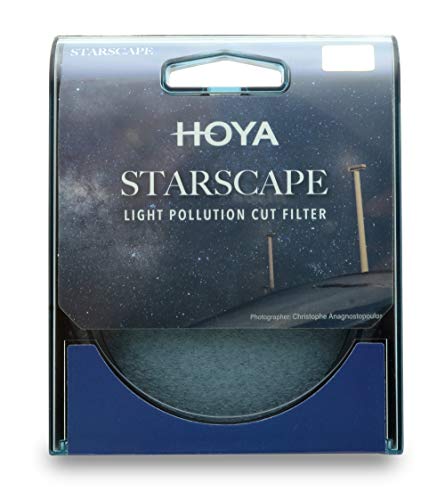
- Reduces yellow and green street-light cast
- Natural color and improved contrast
- Low-profile design for compatible wide lenses
Best For: 49mm camera lenses used for night photography
Best Lightweight Telescope Filter
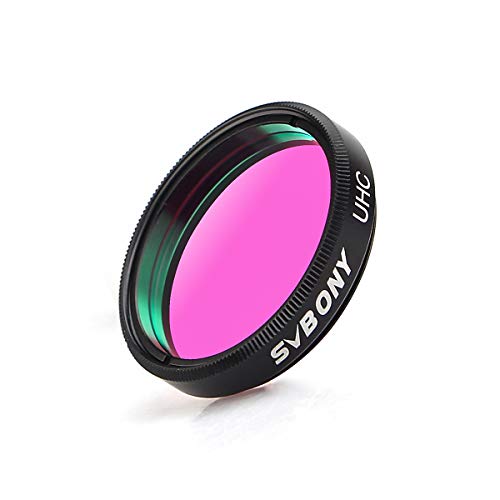
- Selectively reduces artificial-light wavelengths
- Darkens skies and boosts nebula contrast
- Fits standard 1.25-inch telescope accessories
Best For: City and suburban telescope observation
Best Slim Night-Sky Filter
K&F Concept 49mm Natural Night

- Reduces pollution for clearer night skies
- 0.15-inch slim frame helps limit vignetting
- Multi-coated glass with no-color-cast design
Best For: 49mm lenses used for cityscapes and star shots
Best Broadband Astronomy Filter
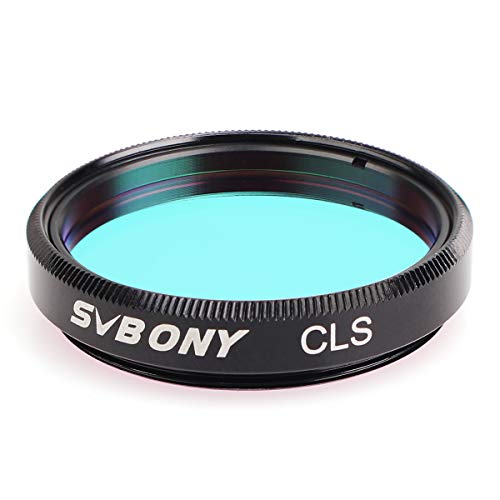
- Suppresses major artificial-light pollution lines
- Maintains listed transmission of nebula lines
- Designed for CCD cameras and unmodified DSLRs
Best For: Urban deep-sky viewing and astrophotography
Best Lightweight Pick
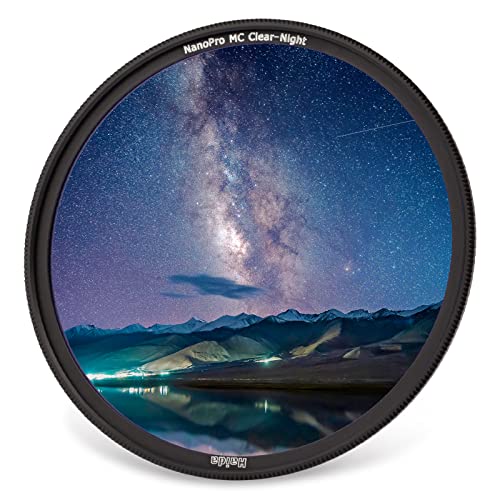
- Slim 3.07mm aluminum frame
- Reduces artificial yellow light
- Nano-coated optical glass
Best For: 58mm night-sky and star photography
Best Astrophotography Option

- Multi-bandpass astrophotography design
- About 90% nebula-line transmission
- Black anodized aluminum cell
Best For: 2-inch astrophotography setups
Best Coating Package
Walking Way Natural Night 52mm Filter

- Neodymium optical glass
- 28-layer protective coating system
- Designed for urban night photography
Best For: 52mm cityscape and astrophotography
Visual Telescope Value
Celestron UHC/LPR 1.25-inch Filter
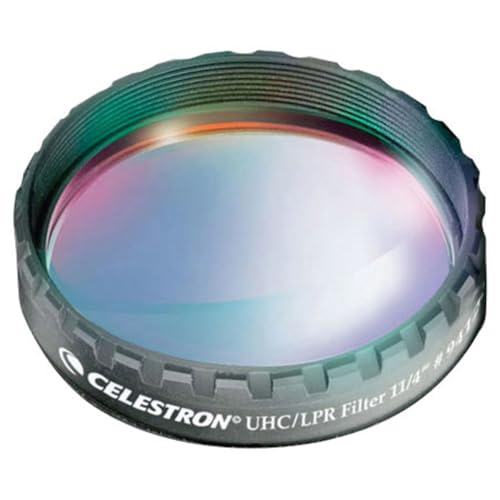
- Reduces selected artificial-light wavelengths
- Enhances nebula contrast and sky background
- Lightweight, multi-coated optical glass
Best For: Visual observing through compatible 1.25-inch telescopes
Large-Format Night Photography
K&F Concept X PRO Natural Night Filter

- 100x100mm square optical glass format
- Targets common light-pollution wavelengths
- Waterproof, scratch-resistant nano coating
Best For: Night photography with the K&F X-PRO holder
Compact Camera Pick

- Blocks common yellow and orange wavelengths
- Designed for night scenes and astrophotography
- Waterproof, scratch-resistant Nano coating
Best For: Compact cameras and phones using NiSi P1-series holders
Best Lightweight Camera Filter – Hoya Starscape 49mm
For photographers seeking lightweight light pollution filters, the Hoya Starscape offers a compact way to reduce the yellowish and greenish cast commonly associated with street lighting. Its 49mm low-profile frame suits compatible wide and super-wide angle lenses.
Best For: Camera users with a 49mm lens thread who want more natural night colors and improved contrast.
Pros:
- Reduces yellowish and greenish color cast from street lights
- Supports natural color reproduction and improved overall contrast
- Compatible with wide and super-wide angle lenses
- Low-profile frame helps maintain a slim setup
Cons:
- Limited to lenses with a 49mm filter thread
- Not water resistant
With its optical-glass construction, multi-coating, and 0.15 g listed weight, this is a particularly travel-friendly option for compatible camera lenses.
Best Lightweight Telescope Filter – SVBONY 1.25-inch UHC Filter
Among lightweight light pollution filters for telescopes, this SVBONY UHC model is designed to selectively reduce wavelengths associated with artificial lighting. It darkens the sky background and improves emission-nebula contrast for city, suburban, and dark-sky viewing.
Best For: Telescope users and astrophotographers using standard 1.25-inch eyepieces or accessories.
Pros:
- Reduces selected artificial-light wavelengths
- Improves emission-nebula contrast and sky-background darkness
- Works for visual observation and astrophotography
- Optical glass lens with multi-coating and aluminum frame
Cons:
- Designed for 1.25-inch telescope accessories rather than camera lens threads
- Not water resistant
At 40 g, this filter remains relatively easy to carry while adding a standard threaded UHC option to a telescope kit. Its included transparent case also helps with storage.
Best Slim Night-Sky Filter – K&F Concept 49mm Natural Night
The K&F CONCEPT Clear Natural Night Filter is a strong fit for photographers comparing lightweight light pollution filters for night cityscapes and star shots. Its 0.15-inch ultra-slim frame is designed to help avoid vignetting, while the optical glass is specified to produce no color cast.
Best For: Photographers with 49mm camera lenses who prioritize a slim, durable filter for night scenes.
Pros:
- Reduces light pollution for clearer night skies
- Ultra-slim frame helps avoid vignetting on wide-angle and telephoto lenses
- 28 multi-layer coatings support water, oil, and scratch resistance
- AGC optical glass is specified as having no color cast
Cons:
- Limited to cameras with a 49mm filter thread
- Listed as a clear filter, so the visual effect may be subtler than specialized nebula filters
This model stands out for photographers who want a slim 49mm option with protective coatings and a neutral rendering goal, particularly when using lenses where vignetting is a concern.
Best Broadband Astronomy Filter – SVBONY 1.25-inch CLS Filter
This SVBONY CLS filter is aimed at astronomers seeking lightweight light pollution filters for deep-sky imaging and observation. Its broadband design targets major artificial-light pollution lines while maintaining high transmission of listed nebula emission lines.
Best For: Color CCD cameras, unmodified DSLRs, and 1.25-inch telescope setups used in urban environments.
Pros:
- Designed to suppress major sodium and mercury light-pollution lines
- Lists 90% transmission of key nebula emission lines
- Suitable for color CCD cameras and unmodified DSLRs
- Ion-assisted coating technology supports scratch resistance and wavelength stability
Cons:
- Primarily intended for astronomical imaging and viewing rather than general camera-lens use
- Not water resistant
With its 1.25-inch format and 0.04 kg listed weight, this filter is a practical portable choice for urban astrophotography when preserving nebula transmission is important.
Best Lightweight Pick – Haida Clear-Night 58mm Filter
If you need lightweight light pollution filters for everyday night photography, the Haida Clear-Night Filter is a practical option for compatible 58mm lenses. Its slim aluminum frame is designed to reduce the appearance of artificial light, including yellow illumination associated with sodium-vapor lamps.
Best For: Night-sky, star, and nighttime video work with cameras using a 58mm filter thread.
Pros:
- Designed to reduce the appearance of urban light pollution.
- Optical glass supports clarity and color fidelity.
- Multi-coated surfaces include a Nano coating for easier cleaning.
- Ultra-slim 3.07mm aluminum frame helps keep the filter lightweight.
Cons:
- Compatible only with lenses using a 58mm filter thread.
- Not water resistant, according to the supplied specifications.
The Haida is a straightforward choice when portability and a slim profile matter. Confirm the lens thread size before ordering, then use the included plastic case for storage and transport.
Best Astrophotography Option – Optolong L-Pro 2-Inch Filter
The Optolong L-Pro is one of the more specialized lightweight light pollution filters for astrophotography. Its multi-bandpass design uses precise roll-off at light-pollution emission lines while maintaining approximately 90% transmission at major nebula emission lines.
Best For: Astrophotographers using a standard 2-inch, 48mm-thread filter setup.
Pros:
- Multi-bandpass design is intended for astrophotography.
- Sharp roll-off targets light-pollutant emission lines.
- Approximately 90% transmission at major nebula emission lines.
- Multi-layer anti-reflection coating helps manage reflections.
Cons:
- Its 2-inch format may not fit every camera lens setup.
- Not water resistant, according to the supplied specifications.
Choose the L-Pro when emission-line handling and nebula transmission are higher priorities than general-purpose use. Its CNC-machined aerospace-grade aluminum cell also has a black anodized finish designed to help extinguish reflections.
Best Coating Package – Walking Way Natural Night 52mm Filter
The Walking Way Natural Night Filter combines a compact 52mm format with coated optical glass for photographers seeking lightweight light pollution filters. It is designed to reduce unwanted city light and haze while supporting night-sky, cityscape, architectural, and star-trail photography.
Best For: Urban night photography and astrophotography with compatible 52mm lenses.
Pros:
- Designed to reduce light from streetlamps, neon signs, and billboards.
- HD neodymium glass is specified for light transmission without chromatic aberration.
- 28 layers of anti-reflective and protective coatings are water repellent, scratch resistant, and oil proof.
- Includes a protective case for storage.
Cons:
- Compatible with 52mm lens threads, so it requires a precise size match.
- The supplied title references 52mm, while the product notes also contain an inconsistent 77mm fit instruction; verify the actual lens thread carefully.
This filter is appealing if surface protection and easy maintenance are important alongside light-pollution reduction. Check the lens barrel markings before purchase, especially because the supplied fit information is inconsistent.
Visual Telescope Value – Celestron UHC/LPR 1.25-inch Filter
For telescope users comparing lightweight light pollution filters, the Celestron UHC/LPR is a compact 1.25-inch option designed to reduce selected wavelengths from artificial lighting. Its purpose is to provide a darker sky background and improve nebula contrast during visual observing.
Best For: Visual telescope observing with standard 1.25-inch or 31.75mm filter threads.
Pros:
- Designed to reduce wavelengths associated with artificial light.
- Supports enhanced nebula contrast and a darker sky background.
- Multi-coated optical glass with high-transmission coating.
- Lightweight design at approximately 0.03 kg.
Cons:
- Limited to compatible 1.25-inch or 31.75mm threaded equipment.
- Primarily specified for visual use rather than a broad camera-filter system.
This is a straightforward choice for observers who want a lightweight filter dedicated to visual telescope work. Confirm your eyepiece or accessory thread size before buying.
Large-Format Night Photography – K&F Concept X PRO Natural Night Filter
The K&F Concept X PRO is a square-format choice for photographers seeking lightweight light pollution filters for night scenes or astrophotography. Its 100x100mm, 2mm-thick optical glass is made for the K&F X-PRO holder and is designed to reduce common light-pollution wavelengths while preserving scene color.
Best For: Night photography and astrophotography with the K&F CONCEPT X-PRO filter holder.
Pros:
- Blocks common light-pollution wavelengths to improve contrast and clarity.
- Designed to avoid vignetting and unwanted color cast.
- 36-layer double-sided nano coating is waterproof and scratch-resistant.
- Compatible with multiple lens sizes through the X-PRO holder, from 52mm to 82mm.
Cons:
- Requires the K&F CONCEPT X-PRO filter holder.
- Not a direct screw-in filter for lenses.
Choose this model when you already use the X-PRO holder or want a square filter workflow across several supported lens sizes. Its protective coating is useful for outdoor night shooting.
Compact Camera Pick – NiSi P1 Natural Night Filter
For compact cameras and mobile phones, the NiSi P1 Natural Night is a lightweight light pollution filter made for the P1 system. It blocks common yellow and orange light wavelengths and is intended for night scenes and astrophotography.
Best For: Compact cameras and mobile phones used with NiSi P1, P2, or P49 filter holders.
Pros:
- Designed to remove yellow and orange wavelengths from common light sources.
- Suitable for night scenes and astrophotography.
- High-definition optical glass with low-reflection performance.
- Waterproof, scratch-resistant Nano coating is easy to clean.
Cons:
- Requires a compatible NiSi P1-series filter holder.
- Not specified as a standalone screw-in filter for standard lens threads.
This is a practical system-specific option for mobile and compact-camera photographers. It makes the most sense for users already invested in NiSi’s P1-compatible holders.
How We Picked These Lightweight Light Pollution Filters
We focused on filters designed to reduce the visual impact of common artificial light while keeping night-sky scenes usable for photography or telescope viewing. The selection includes broadband and natural-night filters for cameras, plus UHC, CLS, and LPR options intended for telescopes. We also considered thread sizes, filter formats, optical-glass construction, coatings, and portability—important details when building a lightweight kit.
Because light pollution varies by location and LED lighting is increasingly common, no filter works identically in every setting. Treat the listed use case and compatibility as starting points, then check the manufacturer’s transmission characteristics and your equipment specifications before buying.
Quick Comparison
| Best For | Filter Type | Format or Size |
|---|---|---|
| Camera lenses and general night photography | Natural-night or broadband | 49mm, 52mm, 58mm, circular |
| Wide-angle and square-filter systems | Natural-night or neutral night | 100 x 100mm or P1 system |
| Visual telescope observing | UHC, CLS, or LPR | 1.25-inch |
| Deep-sky telescope imaging | Broadband L-Pro | 2-inch |
Key Buying Factors for Lightweight Light Pollution Filters
Match the Mount and Filter Size
Verify the front thread on your lens before choosing a circular filter. A 49mm, 52mm, or 58mm model will not fit another size without a step-up or step-down ring. Telescope filters use a different standard: 1.25-inch filters fit compatible 1.25-inch accessories, while 2-inch models require a larger filter holder, diagonal, or camera adapter.
Choose the Right Filter Category
Natural-night and broadband filters are generally the most flexible for cameras because they aim to reduce unwanted color casts while preserving a broad range of starlight. CLS, UHC, and LPR filters typically make stronger spectral cuts and are often more useful for emission nebulae or telescope observing, though they can alter color and are not equally effective under every LED-lit sky.
Consider Coatings and Optical Quality
Multilayer or nano coatings can improve transmission and help reduce reflections, but they do not eliminate flare in every situation. Inspect filters for clean optical glass, secure threads, and a finish that is easy to maintain. Strong filtering can also require exposure or white-balance adjustments, particularly for wide-field photography.
Plan for Portability
Thin circular filters are convenient for travel and small camera bags. Square filters can be more adaptable when several lenses share a holder, but the holder adds bulk. Telescope filters are compact individually, yet a complete visual or imaging setup may still be heavier than a camera-only kit.
Who Should Buy Which Lightweight Light Pollution Filters?
Camera photographers: Choose a threaded natural-night or broadband filter that matches your lens, especially if you want a simple, lightweight setup for landscapes, stars, and Milky Way scenes.
Telescope observers: Consider a 1.25-inch UHC, CLS, or LPR filter if your eyepieces and diagonal use that size. UHC-style filters are often aimed at improving nebula contrast, while broader LPR and CLS designs may offer a more general-purpose approach.
Astrophotographers using larger systems: A 2-inch filter can suit wide-format telescope accessories and dedicated cameras, provided your imaging train supports it. For interchangeable lenses, a square system may be worthwhile if you need one filter across multiple lens diameters.
Traveling beginners: Prioritize a correctly sized circular filter with a protective case and manageable thickness. The best Lightweight Light Pollution Filters are the ones that fit securely, travel easily, and match the targets you actually photograph or observe.