
Micro FPV drones deliver a fast, immersive flying experience in a compact package, making them a smart choice for indoor practice, backyard flying, and lightweight freestyle.
From beginner-ready kits to brushless whoops built for performance, this roundup highlights the best options for different skill levels, budgets, and flying goals.
Best 10 Micro Fpv Drones Picks for 2026
Ultralight Freestyle Pick
BETAFPV Air65 II Brushless Whoop
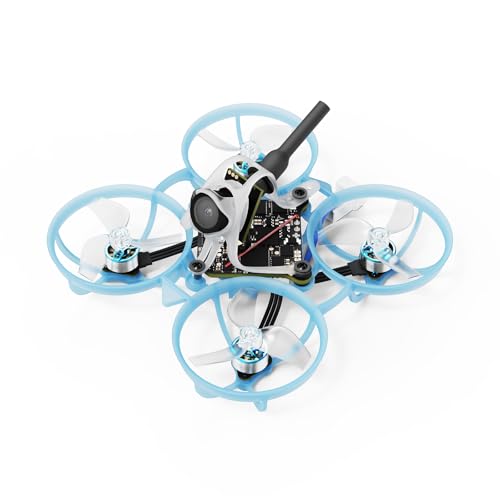
- 0702 25000KV motors with 1219S props
- Matrix 1S 5IN1 II FC with 12A ESC
- Reinforced canopy and frame for crash resistance
Best For: 1S freestyle pilots who want a tiny, durable whoop
Race-Ready Micro Whoop
BETAFPV Air75 II Brushless Quadcopter

- 0802 28000KV motors for fast acceleration
- Matrix 5IN1 II FC with 12A/18A ESC output
- Reinforced frame and canopy for crash resilience
Best For: Experienced pilots focused on racing and track performance
Ultra-Low-Latency HD Whoop
CADDXFPV Curve Micro 16 1S HD Whoop

- 1080p at up to 120fps with low-latency HD FPV
- 32g 1S whoop with 1102 22000KV motors
- Tough prop-protected frame for indoor practice
Best For: Indoor pilots wanting a compact HD whoop with ELRS
Pro-Tuned Indoor Racer

- 80mm frame with 26g ultralight build
- 1:4 thrust-to-weight ratio from 0802 20000KV motors
- ELRS BNF with Betaflight tuning and spare parts
Best For: Experienced pilots focused on indoor racing and freestyle
Immersive Cinematic FPV

- Motion Control is beginner-friendly
- Built-in propeller guards improve durability
- 4K/60fps camera with 155° FOV
Best For: Beginners and creators wanting easy immersive FPV
Brushless Racing Whoop

- 1S brushless whoop for responsive flying
- Matrix 1S FC with 400mW VTX
- No-welding setup with motor plugs
Best For: Pilots wanting a durable micro whoop for racing and freestyle
Ultralight Freestyle Pick – BETAFPV Air65 II Brushless Whoop
The BETAFPV Air65 II is a strong fit for micro fpv drones pilots who want an ultralight 1S whoop that still has real freestyle punch. Its 0702 25000KV motors, 1219S 3-blade props, and reinforced Air II canopy/frame are aimed at fast response, indoor/outdoor maneuvering, and crash resilience.
Best For: Pilots who want a lightweight 1S freestyle whoop with upgraded durability and punchy handling.
Pros:
- 0702 25000KV motors with 1219S 3-blade props for smooth, low-throttle control
- Matrix 1S 5IN1 II FC with 12A continuous ESC and 18A peak output
- 3-point mounting, thickened PCB, and reinforced frame/canopy for better crash resistance
- Designed for both indoor and outdoor freestyle flying
Cons:
- Battery capacity is only 320mAh, so runtime will stay compact
- Built around a 1S setup, so it is not the best pick for longer sessions
- Best value depends on whether you want freestyle performance more than range or endurance
The Air65 II stands out if your priority is a tiny whoop that feels lively without giving up resilience. It is a practical choice for pilots who want a micro fpv drone tuned for responsive flying and frequent crashes.
Beginner RTF Kit – BETAFPV Aquila16 FPV Kit
The BETAFPV Aquila16 FPV Kit is built for newcomers who want micro fpv drones that arrive ready to fly with the gear included. It combines the drone, LiteRadio 2 SE transmitter, and VR03 goggles, plus beginner-friendly flight modes and DVR recording for learning and practice.
Best For: First-time FPV pilots who want a complete starter kit with simulator support and simple controls.
Pros:
- Complete RTF kit with drone, transmitter, goggles, battery, charger, and props
- Three flight modes plus Turtle Mode for easier learning and recovery
- VR03 goggles include DVR recording and a 4.3-inch HD LCD
- LiteRadio 2 SE supports ELRS V3 firmware and simulator practice
Cons:
- Position hold is only available in N mode
- Maximum range is listed at 200 meters
- Some users may need to reseat the camera cable after crashes if signal is lost
This kit is a solid entry point if you want a guided path into FPV instead of piecing together a system yourself. The Aquila16 focuses on ease of use, learning tools, and a straightforward all-in-one setup.
Race-Ready Micro Whoop – BETAFPV Air75 II Brushless Quadcopter
The BETAFPV Air75 II is aimed at pilots who want micro fpv drones with more aggressive performance for racing and track flying. Its 0802 28000KV motors, Matrix 5IN1 II FC, and reinforced Air II canopy/frame package are tuned for high output, quick acceleration, and better impact tolerance.
Best For: Experienced pilots who want a lightweight 1S whoop with strong acceleration and race-oriented handling.
Pros:
- 0802 28000KV motors with an industry-first 0.1mm stator core
- Matrix 5IN1 II FC with 12A continuous and 18A peak ESC output
- Reinforced canopy and frame with optimized ducts and stable flight character
- Listed 7.1:1 thrust-to-weight ratio for explosive acceleration
Cons:
- More specialized for racing and pro-level performance than casual flying
- 1S platform limits battery size and overall endurance
- High-output setup may be more than a beginner needs
The Air75 II makes sense if you value speed and precision over beginner simplicity. It is a compact whoop built to feel sharp, quick, and ready for competitive-style flying.
Longer-Flying Starter Kit – BETAFPV Aquila20 FPV Kit
The BETAFPV Aquila20 FPV Kit is a practical option for micro fpv drones buyers who want a more relaxed training platform with longer flight time. It pairs a 2S propulsion system and 1100mAh smart battery with VR04 goggles and the LiteRadio 4 SE transmitter for an easy all-in-one setup.
Best For: Beginners who want a durable RTF kit with longer flights and simple progression through flight modes.
Pros:
- About 10 minutes of flight time with the included 2S HV 1100mAh smart battery
- Three flight modes plus Turtle Mode for gradual skill building
- VR04 goggles offer one-button recording and up to 2 hours of standby
- PA410 frame is designed to absorb impact and protect internals
Cons:
- The Aquila20 cannot switch from N mode to S/M mode during flight
- Maximum range is listed at 200 meters
- VR04 goggles are included, but micro card is excluded for recording
The Aquila20 leans into training comfort and durability rather than aggressive performance. If you want a beginner kit that stretches flight sessions a bit longer, it is a sensible choice.
Ultra-Low-Latency HD Whoop – CADDXFPV Curve Micro 16 1S HD Whoop
If you’re comparing micro fpv drones for tight indoor flying, the CADDXFPV Curve Micro 16 stands out for its HD video system and lightweight 1S build. It combines 1080p capture at up to 120fps, a 147° field of view, and ELRS support in a compact whoop frame designed for racing lines, freestyle practice, and quick recovery in small spaces.
Best For: Pilots who want a tiny indoor FPV drone with HD video, low latency, and ELRS compatibility.
Pros:
- 1080p up to 120fps with about 30ms latency for a responsive HD view
- 32g ultralight 1S design with 1102 22000KV motors for lively indoor performance
- Tough one-piece whoop frame with full prop protection for crash-prone practice
- Includes 6-channel charging support for 1S 580mAh/680mAh packs
Cons:
- Radio and goggles are not included
- HD system compatibility depends on Ascent goggles/VRX gear
- Best suited to indoor or close-range flying rather than long-range use
Overall, this is a strong pick if your priority is a compact micro whoop that pairs modern HD FPV with a durable training-friendly frame. It looks especially appealing for pilots already in the ELRS and Ascent ecosystem.
Ready-to-Fly Beginner FPV Kit – Tinyhawk Lite FPV Drone Kit
For buyers looking at micro fpv drones as an easy entry into the hobby, the Tinyhawk Lite is built around convenience. This RTF kit includes the drone, FPV goggles, and a controller, plus real FPV video with low latency, a 75mm frame, and a lightweight build that should feel manageable for new pilots learning indoors or in open practice spaces.
Best For: Beginners who want a complete FPV starter kit with goggles and controller included.
Pros:
- Ready-to-fly kit includes FPV goggles and remote control
- Real FPV feed with low latency instead of WiFi-style lag
- Betaflight configurator support lets pilots tune rates and flight behavior
- 750mAh HV battery is designed for longer sessions between charges
Cons:
- Video capture is limited to 720p
- Build uses a plastic frame rather than a premium reinforced shell
- Best positioned as a beginner kit rather than a high-end freestyle platform
As a starter package, the Tinyhawk Lite makes the learning curve easier by bundling the essential gear in one box. It is a practical choice if you want a simple path into real FPV without sourcing separate components.
Pro-Tuned Indoor Racer – R8 ELRS 80mm Micro Whoop
If you’re shopping micro fpv drones for indoor racing or precision freestyle, the R8 is aimed at pilots who already know what they want from a whoop. Its 80mm ultralight frame, 1S brushless power, 160° FOV, and ELRS receiver are tuned for tight control, quick punch-outs, and repeatable practice indoors.
Best For: Experienced FPV pilots who want a lightweight indoor trainer with a locked-in feel.
Pros:
- 80mm ultralight frame at about 26g for agile indoor handling
- 0802 20000KV motors and 1:4 thrust-to-weight ratio for strong punch
- Matrix G4 5-in-1 FC with Betaflight presets and full tuning access
- Includes 2 batteries, charger, spare props, and tool kit for immediate use
Cons:
- BNF package requires your own ELRS transmitter and 5.8GHz goggles
- Flight time is listed at about 3 to 6 minutes per battery
- Geared more toward experienced pilots than first-time beginners
The R8 reads like a serious practice tool rather than a casual toy, with a setup focused on feel, tuning, and control. If you already fly ELRS and want a compact indoor quad that can support progression, this one is well aligned.
Immersive Cinematic FPV – DJI Avata 2 Fly Smart Combo
If you want micro fpv drones-style immersion with a more polished, camera-first experience, the DJI Avata 2 is built for easy flying and tight low-altitude footage. Its motion controller, integrated propeller guards, and 4K/60fps camera setup make it a practical option for beginners who want a simple path into first-person-view flying.
Best For: Beginners and content creators who want an immersive FPV drone with easy controls and 4K video.
Pros:
- Motion Control makes steering feel intuitive without complex stick learning.
- Built-in propeller guards add durability and a more forgiving flying experience.
- 4K/60fps camera with a 155° field of view suits wide, close-up footage.
- Includes goggles and RC Motion 3 for an all-in-one FPV setup.
Cons:
- Not a true micro whoop, so it is larger than typical micro fpv drones.
- Designed more for smooth cinematic flying than pure indoor racing.
Overall, the Avata 2 is a strong pick if your priority is immersive flying with minimal setup friction. It blends safety features, easy controls, and solid image quality into one ready-to-fly package.
Beginner Analog Whoop – APEX FPV Drone Kit
For shoppers looking at micro fpv drones for fast entry into analog flying, the APEX FPV Drone Kit focuses on simplicity and low-latency response. It arrives pre-tuned and ready to fly, with FPV goggles and three batteries included, making it a straightforward starter kit for learning the basics of FPV control.
Best For: First-time FPV pilots who want an analog ready-to-fly kit with goggles and multiple batteries.
Pros:
- Ready to fly and pre-tuned, so there is no complex setup or soldering.
- 5.8G analog FPV system offers near-zero latency for responsive control.
- Three flight modes support beginners, transitions, and full manual acro practice.
- Includes FPV goggles and three batteries for longer practice sessions.
Cons:
- Analog video is standard definition, not HD, and may show snow or scan lines.
- Best suited to beginner freestyle rather than advanced camera work.
This kit is a practical way to get into analog FPV without having to assemble a custom build. Its low-latency feel and beginner modes make it especially useful for pilots who want to practice and progress at their own pace.
Brushless Racing Whoop – BETAFPV Meteor75 Pro
If you want micro fpv drones performance in a compact whoop format, the BETAFPV Meteor75 Pro is built for fast, responsive flying and indoor or outdoor acrobatics. Its 1S brushless setup, upgraded Matrix 1S flight controller, and 5.8GHz 400mW VTX are aimed at pilots who want more control and a more serious racing feel.
Best For: FPV pilots who want a larger 1S brushless whoop for racing, freestyle, and durable practice flying.
Pros:
- 1S brushless design delivers a faster, more responsive flight feel.
- Matrix 1S FC includes a G473 processor and integrated 5.8GHz 400mW VTX.
- Motor plugs and no-welding design make setup simpler and more beginner-friendly.
- LAVA II 1S 580mAh battery supports longer flight time and solid performance.
Cons:
- Built for FPV racing and acrobatics, so it is less about cinematic video.
- Larger than many tiny whoops, so it may not be the smallest indoor option.
The Meteor75 Pro stands out if you want a durable brushless whoop with stronger performance than basic beginner drones. It is a good match for pilots who care more about speed, responsiveness, and practice-friendly construction than camera features.
How We Picked the Best Micro Fpv Drones
We focused on Micro Fpv Drones and kits that offer the best mix of durability, flight performance, ease of setup, and value. Priority went to models with strong community support, modern control links such as ELRS, reliable camera and video systems, and formats suited to real-world flying rather than spec sheets alone.
We also favored options that cover the most common buyer needs: true beginner packages, indoor-friendly whoops, freestyle-capable ultralights, and a few higher-performance picks for pilots who already know what they want.
Quick Comparison
If you want the easiest start, choose an RTF kit with goggles and transmitter included. If you want the lightest, most agile flying experience, look at 1S brushless whoops. For more confident pilots, performance-focused Micro Fpv Drones with stronger motors, better flight controllers, and ELRS support will usually feel sharper and more responsive.
Key Buying Factors for Micro Fpv Drones
Flight Style
Decide whether you want indoor cruising, freestyle practice, racing, or a training setup. Smaller whoops are usually safer and better for tight spaces, while more powerful builds suit open areas and aggressive flying.
Power System and Weight
1S Micro Fpv Drones are common for indoor flying and low-cost practice. Brushless motors generally provide smoother power, better durability, and more consistent handling than brushed alternatives.
Video and Control Link
Look for a clear FPV camera, stable video transmitter, and a control system you can live with. ELRS is a major advantage for range, responsiveness, and future compatibility.
Kit Completeness
RTF and bundle kits reduce setup friction because they include goggles, batteries, and a transmitter. BNF models are better if you already own compatible gear and want to save money or customize your setup.
Indoor Safety and Repairability
For Micro Fpv Drones, prop guards, tough frames, and easy-to-source replacement parts matter a lot. A drone that is quick to repair will stay in the air longer and cost less over time.
Who Should Buy Which Micro Fpv Drones?
New pilots should prioritize a complete kit with beginner modes and easy setup. Freestyle and racing pilots will get more from lightweight brushless whoops with responsive tuning and modern radio support. If you want a more cinematic, camera-focused experience and have room to fly, a larger FPV platform may be the better fit than a true micro. Choose the smallest drone that still matches your flying space, because that usually leads to more practice, fewer crashes, and better long-term value.