
Choosing among the best microscopes for electronics repair means balancing image clarity, working distance, viewing comfort, and the way you prefer to solder. A good scope should make tiny joints, traces, and component markings easier to inspect without forcing you into an awkward bench position.
This roundup compares ten digital, stereo, and specialty microscope setups with useful features such as 4K output, autofocus, HDMI connectivity, adjustable arms, auxiliary lenses, and large displays. Use the guide below to match the format and features to your repair workflow.
Best 10 Microscopes for Electronics Repair Picks for 2026
Best All-Purpose Kit
Andonstar AD246S-M 3-Lens Digital Microscope

- Dedicated soldering lens and adjustable boom arm
- 2160P video with HDMI output
- Includes lenses for coins and biological slides
Best For: Multi-purpose electronics repair and inspection
Best Autofocus Upgrade
Elikliv EM4K-AF 4K Digital Microscope

- Autofocus with AI algorithms and TOF sensor
- 4K video and 52MP image capture
- 8-inch IPS screen with HDMI/USB output
Best For: High-resolution, low-adjustment inspection
Best Optical Stereo Choice
Professional Trinocular Stereo Zoom Microscope

- 3.5X-90X expanded magnification range
- Stable 18-pound base and double-arm boom stand
- Trinocular port for cameras or electronic eyepieces
Best For: Optical bench inspection and camera-ready workflows
Best Large-Screen Value
Andonstar AD210 10.1-Inch Digital Microscope

- Large 10.1-inch IPS display
- 1cm-26cm adjustable working distance
- Three lighting types for repair and inspection
Best For: Comfortable bench soldering and shared viewing
Best Complete Soldering Station

- Three interchangeable lenses
- 2160P HDMI microscope monitor
- Helping hands and expanded work base
Best For: Workbenches needing repair accessories and multiple inspection ranges
Best 3D Viewing Pick
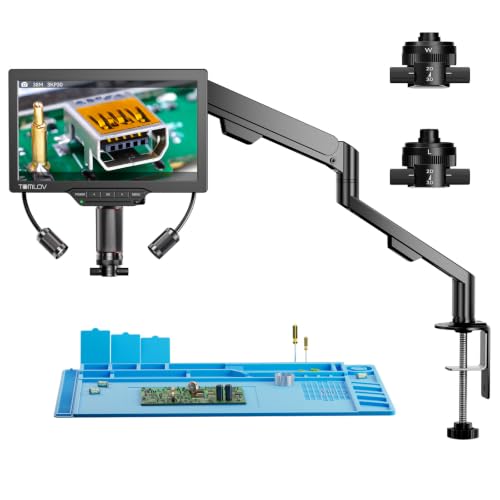
- 3D side-view inspection
- Magnetic dual-lens system
- 3K display with flexible arm
Best For: Repairers who need multiple viewing angles around PCB components
Best All-Purpose Pick
Andonstar AD249S-M 3-Lens Digital Microscope

- Dedicated soldering lens for circuit boards and phones
- 2160P recording with HDMI output and 10.1-inch screen
- Adjustable metal boom arm and extensive accessory kit
Best For: Versatile electronics repair and general microscopy
Best Heavy-Duty Pick
Elikliv EM4K-AF Flex Arm Microscope

- TOF-assisted autofocus adjusts focus in about two seconds
- 4K video and 52MP image capture
- Flexible arm, ring light, battery, and soldering mat included
Best For: Fast, high-resolution bench inspection with minimal refocusing
Best Long-Working-Distance Option
NICE-POWER 13MP HDMI Microscope

- 150X zoom with up to 1000mm working distance
- 1080P HDMI and VGA output from a 13MP camera
- Adjustable 56-LED ring light and foldable stand
Best For: Hands-on repairs needing extra clearance beneath the lens
Best All-Purpose Kit – Andonstar AD246S-M 3-Lens Digital Microscope
For shoppers comparing microscopes for electronics repair, the Andonstar AD246S-M stands out as a flexible digital kit with a dedicated soldering lens, a 7-inch display, HDMI output, and an adjustable boom arm. Its three interchangeable lenses also make it useful beyond circuit-board work.
Best For: Electronics repairers who want one microscope for soldering, coins, and basic biological viewing.
Pros:
- Lens L is designed for circuit-board and mobile-phone repair.
- 2160P video, HDMI output, and included 32GB microSD card support documentation and larger-screen viewing.
- Adjustable metal boom arm and eight LED brightness levels provide a practical soldering setup.
- Windows-compatible measurement software can measure length, calculate area, and capture media.
Cons:
- Changing lenses requires removing and installing screws.
- The three-lens design may be more equipment than buyers focused only on electronics need.
- The listed maximum magnification varies by lens and output setup rather than being a single working level.
The AD246S-M is a strong choice when versatility matters. Its dedicated repair lens and boom stand support hands-on work, while the other lenses and included accessories broaden its usefulness for home labs and demonstrations.
Best Autofocus Upgrade – Elikliv EM4K-AF 4K Digital Microscope
The Elikliv EM4K-AF is a feature-rich option among microscopes for electronics repair, combining autofocus, 4K video, a large 8-inch IPS screen, and a tall stand. Its autofocus system is intended to reduce manual refocusing while you inspect components or work with moving samples.
Best For: Repairers who prioritize autofocus, high-resolution imaging, and a large built-in display.
Pros:
- AI-assisted autofocus and a TOF sensor are designed to adjust focus quickly.
- 4K video and 52MP image capture provide detailed documentation.
- 8-inch IPS screen, HDMI/USB outputs, and a 178-degree viewing angle support comfortable viewing.
- Rechargeable battery, controller, split-screen, and freeze functions add convenience during inspections.
Cons:
- The extensive feature set may be unnecessary for buyers seeking a simple soldering microscope.
- Autofocus performance can still depend on lighting, subject distance, and the workpiece.
- The 10-inch stand and broad base require more bench space than a compact setup.
The EM4K-AF is aimed at users who want a modern, display-first workflow with minimal focus adjustment. Its stand and imaging features make it suitable for detailed repair work, documentation, and inspection tasks beyond electronics.
Best Optical Stereo Choice – Professional Trinocular Stereo Zoom Microscope
For buyers who prefer optical depth and hands-on viewing, this trinocular stereo zoom microscope offers a conventional alternative to digital microscopes for electronics repair. Its zoom optics, long working-distance setup, boom stand, and ring light are well suited to bench inspection and soldering.
Best For: Experienced repairers who want binocular optical viewing with the option to connect a camera or electronic eyepiece.
Pros:
- Continuous 0.7X-4.5X zoom expands to 3.5X-90X with the included auxiliary lenses.
- Trinocular head supports electronic eyepiece and digital-camera configurations.
- Heavy-duty 18-pound steel base and double-arm boom stand provide a stable platform.
- 56S LED ring light offers adjustable, focused illumination with reduced shadows.
Cons:
- It does not include a built-in display or stated digital camera, so imaging may require additional equipment.
- The larger stand and 19.5-inch dimensions need substantial bench space.
- Optical magnification is lower than the headline digital magnification offered by some electronic microscopes.
This model makes sense for users who value natural stereoscopic depth and a stable working distance over an all-in-one screen. The trinocular port also leaves room to add digital documentation later.
Best Large-Screen Value – Andonstar AD210 10.1-Inch Digital Microscope
The Andonstar AD210 is a practical large-screen pick among microscopes for electronics repair. Its 10.1-inch IPS display, generous working distance, strong metal stand, and multiple lighting modes give repairers room to position boards and tools comfortably.
Best For: Electronics hobbyists and repair technicians who want a spacious digital viewing area without switching lenses.
Pros:
- 10.1-inch IPS display with a 178-degree viewing angle supports shared viewing.
- Adjustable 1cm-26cm working distance and tall metal stand accommodate soldering and larger objects.
- Top, side, and bottom LED illumination covers repair, coin, and slide-viewing tasks.
- 1080p video, 12MP photos, remote control, and included 32GB card simplify documentation.
Cons:
- 1080p video resolution is lower than the 2160P or 4K options in this roundup.
- The large display and stand create a relatively substantial bench footprint.
- Its broad all-purpose design may be more than needed for buyers focused solely on compact inspections.
The AD210 is a sensible choice when workspace and viewing comfort matter more than maximum video resolution. Its versatile lighting and extended stand make it especially useful for soldering alongside coin and slide observation.
Best Autofocus Pick – TOMLOV TM4K-AF Max
For electronics repairers who want hands-free focusing, the TOMLOV TM4K-AF Max combines autofocus, a large 10.1-inch IPS display, and a flexible 360-degree arm. Its 4K video, 52MP image capture, and HDMI/USB output make it a feature-rich option among microscopes for electronics repair.
Best For: PCB repair, micro soldering, watch inspection, and users who value autofocus and multi-screen viewing.
Pros:
- TOF distance sensing and AI autofocus help maintain sharp images while working.
- 4K UHD video, 52MP photos, and a 10.1-inch 1280 x 800 IPS screen provide detailed viewing.
- 360-degree spin arm, ring light, HDMI/USB output, and remote controls support flexible bench work.
- Includes 16GB storage, thumbnail and locate functions, and customizable grid lines.
Cons:
- The extensive autofocus, display, and output features may be more than casual users need.
- Its larger screen and articulated stand require a dedicated workspace.
The TM4K-AF Max is a strong choice when convenience and viewing flexibility matter as much as magnification. Its autofocus system and large screen can streamline inspection, while the adjustable arm and illumination are well suited to detailed repair tasks.
Best Complete Soldering Station – Andonstar AD249S-M Plus
The Andonstar AD249S-M Plus is designed as a complete workstation rather than just a camera and screen. With three interchangeable lenses, a 2160P display, helping hands, tool storage, and an expanded base, it is a versatile choice among microscopes for electronics repair.
Best For: Electronics workbenches that need a microscope, soldering accessories, and multiple lens ranges in one setup.
Pros:
- Three lenses cover soldering and repair, general inspection, and biological slides.
- 2160P HDMI viewing supports detailed inspection on the included 10.1-inch monitor or a larger screen.
- Includes helping hands, tool holder, extension base, soldering mat, and component storage boxes.
- Windows software supports measurement, photo capture, and video recording; a 32GB SD card is included.
Cons:
- Changing lenses requires removing and installing screws.
- The extensive station setup takes more bench space than a basic digital microscope.
- Its lens-specific magnification ranges require choosing the appropriate lens for each task.
This model stands out for users who want an organized soldering station with broad inspection capability. The dedicated repair lens and included accessories make it practical for electronics, while the additional lenses extend its usefulness beyond PCBs.
Best 3D Viewing Pick – TOMLOV TM3K-3D
The TOMLOV TM3K-3D brings side-view inspection and 360-degree rotation to the electronics bench. Its magnetic dual-lens system, long-distance lens, adjustable arm, and 7-inch 3K display make it an interesting option for microscopes for electronics repair when viewing components from multiple angles is important.
Best For: PCB repair, solder-joint inspection, watchmaking, and detailed work where side views can reveal more than a straight-on image.
Pros:
- 3D side-viewing and 360-degree rotation help inspect components and solder joints from multiple perspectives.
- Magnetic L and W lenses switch without tools, covering long-distance repair work and wide-angle viewing.
- 3K UHD imaging appears on a 7-inch IPS display, with HDMI and USB options for larger-screen or computer viewing.
- A flexible arm and adjustable gooseneck spotlight support positioning and targeted illumination.
Cons:
- The 7-inch display is smaller than the screens supplied with the other two models.
- Its specialized 3D viewing features may be unnecessary for straightforward, top-down inspection.
- The supplied notes do not specify an autofocus function.
The TM3K-3D is the most specialized choice here for perspective-based inspection. Its side-view capability and rotating imaging can help when component geometry or hidden solder areas matter, while the magnetic lenses keep switching convenient.
Best All-Purpose Pick – Andonstar AD249S-M 3-Lens Digital Microscope
For shoppers comparing microscopes for electronics repair, the Andonstar AD249S-M stands out for its dedicated soldering lens, adjustable boom arm, and HDMI-capable 2160P recording. Its interchangeable lenses also make it useful beyond circuit-board work.
Best For: Electronics repairers who want a versatile microscope for soldering, inspection, coins, and prepared slides.
Pros:
- Includes a Lens L designed for circuit-board and mobile-phone repair.
- 2160P video recording, HDMI output, and a 10.1-inch display support detailed viewing.
- Adjustable metal boom arm provides a larger work envelope for soldering tasks.
- Includes a 32GB microSD card, HDMI cable, remote, tweezers, and prepared slides.
Cons:
- Changing lenses requires removing and installing screws.
- The three-lens system may be more equipment than buyers seeking only electronics inspection need.
- Measurement software is intended for Windows PCs.
The AD249S-M is a strong choice when flexibility matters. Its repair-focused lens and sturdy adjustable stand suit hands-on electronics work, while the additional lenses and accessories broaden its usefulness.
Best Heavy-Duty Pick – Elikliv EM4K-AF Flex Arm Microscope
The Elikliv EM4K-AF Flex is a compelling option among microscopes for electronics repair if you want autofocus and high-resolution imaging. Its TOF-assisted focusing, flexible arm, ring light, and included heat-resistant soldering mat are geared toward efficient bench work.
Best For: Repairers who value quick autofocus, 4K output, flexible positioning, and a ready-to-use soldering workspace.
Pros:
- Autofocus with a TOF sensor can adjust focus within about two seconds.
- Captures 4K video and 52MP images for detailed inspection and documentation.
- Flex arm supports vertical, horizontal, and 360-degree adjustments.
- Includes a 17.7-by-11.8-inch heat-resistant soldering mat and rechargeable battery.
Cons:
- The 10.1-inch display is listed at 1280-by-800 resolution, despite the camera supporting 4K output.
- Autofocus may be unnecessary for users who prefer fully manual control.
- The included 16GB media capacity is smaller than some bundled storage options.
This model is especially appealing for technicians who frequently reposition their microscope or inspect moving workpieces. Its autofocus system reduces repeated manual adjustments, while the included mat helps organize soldering tasks.
Best Long-Working-Distance Option – NICE-POWER 13MP HDMI Microscope
For electronics repairers who need room to work under the lens, the NICE-POWER industrial video microscope offers a 150X zoom C-mount lens with up to a 1000mm working distance. Its 1080P HDMI/VGA output, adjustable ring light, and foldable stand keep the setup practical.
Best For: Electronics repair and inspection where generous working distance and flexible stand positioning are priorities.
Pros:
- 150X zoom lens provides 1-150X magnification on the display.
- Working distance can reach up to 1000mm for comfortable hands-on repairs.
- 13MP camera supports 1080P HDMI and VGA output.
- 56-LED ring light offers adjustable brightness and up to 60,000 lux illumination.
Cons:
- Maximum magnification is lower than some digital microscope options in this roundup.
- The package does not include a battery for the remote control.
- The listed display output is 1080P rather than 4K.
The NICE-POWER is a sensible fit for larger repair setups and tasks requiring tools to reach beneath the lens. Its long working distance and flexible stand can be more useful for soldering than extreme magnification alone.
How We Picked These Microscopes for Electronics Repair
We focused on features that matter during board-level inspection and soldering: usable magnification, working distance, image detail, lighting control, stand stability, viewing comfort, and connection options. The selection includes digital HDMI microscopes, autofocus models, stereo zoom systems, and 3D or dual-lens designs so different types of repair work are represented.
High advertised magnification is not enough on its own. A scope is more useful when it produces a sharp image at a practical working distance and leaves enough room for tweezers, a soldering iron, and other tools.
Quick Comparison
| Type | Best For | What to Look For |
|---|---|---|
| Digital HDMI microscope | Large-screen inspection and recording | Resolution, latency, display size, and lighting |
| Autofocus 4K model | Fast component checks and changing heights | Focus speed, manual override, and arm stability |
| Stereo trinocular microscope | Depth perception and precision soldering | Optical clarity, zoom range, eyepiece comfort, and working distance |
| 3D or dual-lens digital scope | More dimensional board viewing | Lens alignment, viewing modes, and software or display controls |
| Camera-style industrial scope | Flexible imaging and external monitors | C-mount compatibility, output ports, and stand adjustability |
Key Buying Factors for Microscopes for Electronics Repair
Optical Versus Digital Magnification
Optical magnification generally provides more natural depth and detail, which is valuable for delicate soldering. Digital magnification can be convenient and offers large-screen viewing, but excessive zoom may enlarge pixels rather than reveal more useful information.
Working Distance and Stand Design
Prioritize enough clearance for your hands and tools. A flexible arm or auxiliary lens can help position the camera over larger boards, while a stable base reduces vibration. Check whether the stand can reach the area of the board you typically repair.
Image, Lighting, and Display Options
4K output can improve fine-detail viewing on a compatible screen, while HDMI makes connection straightforward. Autofocus is convenient, but manual focus can be preferable when inspecting a specific solder joint. Adjustable LED lighting helps reduce glare from solder and exposed metal.
Ergonomics and Connectivity
Eyepiece spacing, screen height, camera angle, and viewing time all affect comfort. If you work in a shared space or teach repairs, a built-in display is useful. If you document jobs, choose a model with suitable photo or video output.
Who Should Buy Which Microscopes for Electronics Repair?
- Choose a 4K autofocus digital model if you want quick setup, a large display, and easy inspection of boards at different heights.
- Choose a stereo trinocular microscope if depth perception and precise hand positioning matter more than recording convenience.
- Choose a 3D or dual-lens design if you want a more dimensional view of components and board features.
- Choose a flexible-arm HDMI scope if you repair larger boards or regularly change camera positions.
- Choose a camera-style C-mount system if you already have a preferred monitor, stand, or imaging setup.
For most electronics benches, the best choice is the model that delivers a sharp, low-latency view while leaving comfortable room to work—not necessarily the one with the highest printed magnification.