
The best physics experiment sets for homeschool turn abstract lessons into hands-on investigations. Students can build circuits, test forces, explore magnets, study light, and connect classroom concepts to measurable results.
This roundup includes beginner-friendly STEM kits and more focused lab sets for different ages, interests, and lesson plans. Use the guide below to narrow the choices by topic, included equipment, complexity, and value.
Best 10 Physics Experiment Sets for Homeschool Picks for 2026
Hands-On Electromagnetism
EUDAX Electricity & Magnetism Kit
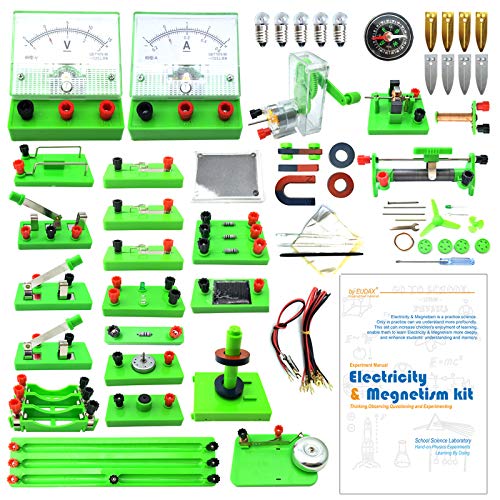
- 79 components for electricity and magnetism
- Includes guided circuit and electromagnet projects
- Color manual and storage bag included
Best For: Grades 9–11 learners studying introductory electromagnetism
Colorful Chemistry Exploration
National Geographic 100+ Experiment Set

- Features 15 supplied chemistry experiments
- Adds 85 household-item experiment ideas
- Includes test tubes, beakers, and pipettes
Best For: Ages 8+ adding chemistry to a homeschool STEM curriculum
Forces in Action
T&K Simple Machines Physics Set

- Builds 26 models with gears and simple machines
- Includes a force-measuring spring scale
- Full-color 32-page instruction manual
Best For: Ages 8+ studying introductory mechanics through models
Light Lab Essentials
Multifunctional Optical Experiment Set

- Explores reflection and refraction of light
- Includes lenses, prism, reflector, and light source
- Recommended for ages 14 and up
Best For: Older students studying hands-on introductory optics
Magnetic Discovery
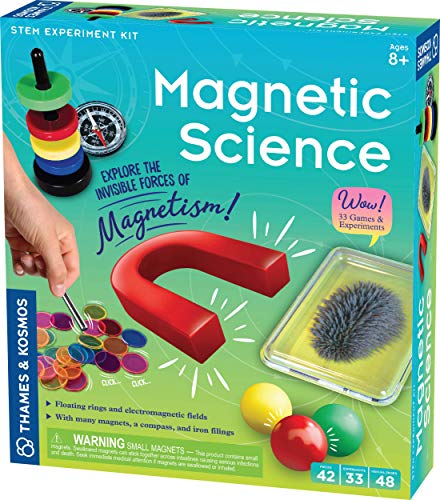
- 33 experiments and games
- Explores magnetic fields
- Includes a 60-page manual
Best For: Ages 8–15 studying magnetism
Mechanics Lab

- 26 mechanics experiments
- Includes pulleys, balance, and ramp
- Covers Newton’s Laws and kinematics
Best For: Ages 14+ studying classical mechanics
Physics Foundations

- 20 hands-on experiments
- Covers forces, motion, and energy
- Includes an NGSS-aligned lesson plan
Best For: Ages 8–14 learning physics fundamentals
Best Basic Circuit Kit
Introductory Electricity Experiments

- Builds series and parallel circuits
- Includes English instructions
- Compact box for storage and transport
Best For: Grades 7–9 homeschool electricity lessons
Best Optics Lab Set

- Includes 37 optics components
- Explores reflection, refraction, and imaging
- Ready-to-use integrated optical bench
Best For: Older students studying a homeschool optics unit
Best Electricity and Magnetism Set

- Includes over 50 guided experiments
- Covers circuits and magnetism
- Comes with 55 items and an illustrated manual
Best For: Older homeschool students seeking extended STEM projects
Hands-On Electromagnetism – EUDAX Electricity & Magnetism Kit
For homeschoolers seeking physics experiment sets for homeschool use, the EUDAX kit provides a broad introduction to electricity and magnetism. Its color manual and collection of components support projects such as series and parallel circuits, fruit batteries, electromagnets, electric bells, and hand-crank generators. Note that three AA batteries are required and are not included.
Best For: Grades 9–11 students exploring introductory electricity, magnetism, and basic electronics through guided projects.
Pros:
- Includes 79 items covering electricity and magnetism activities.
- Supports experiments involving circuits, Ohm’s law, electromagnets, and generators.
- Comes with a color-page manual and storage bag.
Cons:
- Requires three AA batteries, which must be purchased separately.
- The wide range of components may require adult guidance for younger learners.
This is a versatile option for older homeschool students who want a substantial, experiment-focused introduction to electromagnetism rather than a single-topic activity.
Colorful Chemistry Exploration – National Geographic 100+ Experiment Set
Although chemistry-focused, this National Geographic set can complement physics experiment sets for homeschool by adding hands-on scientific investigation to a broader STEM curriculum. It includes materials for 15 activities and a guide with 85 additional experiments using common household items, along with tools such as test tubes, beakers, and pipettes.
Best For: Ages 8 and up who enjoy guided chemistry demonstrations, reactions, crystal growing, and creative STEM activities.
Pros:
- Offers more than 100 listed experiment ideas.
- Includes materials for 15 featured activities.
- Uses hands-on tools and covers reactions, crystals, color changes, and other projects.
Cons:
- It is a chemistry set, not a dedicated physics kit.
- Many bonus activities require additional common household items.
Choose this as a chemistry companion for a homeschool science shelf, especially when you want an engaging way to vary hands-on lessons beyond mechanics and electricity.
Forces in Action – T&K Simple Machines Physics Set
The T&K Simple Machines set is a practical choice among physics experiment sets for homeschool, with 26 model-building exercises focused on how machines change force and motion. Students build examples using wheels and axles, levers, pulleys, inclined planes, screws, wedges, and gears, then use the included spring scale to measure forces.
Best For: Ages 8 and up learning foundational mechanics through models, measurements, and familiar real-world examples.
Pros:
- Covers all six classic simple machines plus gears.
- Includes a spring scale for measuring force direction and magnitude.
- Provides a 32-page, full-color, step-by-step manual.
Cons:
- Focuses primarily on simple machines rather than a broad range of physics topics.
- Model-building pieces are plastic and may require careful assembly.
Its focused scope makes it a strong starting point for elementary or middle-grade mechanics lessons, particularly when you want students to build, test, and connect physics concepts to everyday tools.
Light Lab Essentials – Multifunctional Optical Experiment Set
For homeschool lessons on light, this optical kit offers a compact way to demonstrate reflection and refraction. It includes multiple convex and concave lenses, a triangular prism, acrylic pieces, a multifunctional reflector, and a three-way linear light source. Two AAA batteries are needed for the light source and are not included.
Best For: Learners ages 14 and up studying introductory optics through teacher- or student-led demonstrations.
Pros:
- Supports experiments with lenses, mirrors, prisms, and light reflection.
- Includes three biconvex lenses plus convex and concave lens options.
- Comes with an English color-page manual and adjustable linear light source.
Cons:
- Requires two AAA batteries, sold separately.
- Recommended for ages 14 and up, limiting suitability for younger children.
- The light direction requires screwdriver adjustment.
This is a specialized pick for homeschool optics units rather than an all-purpose physics set, with enough lens and mirror variety to support focused demonstrations of light behavior.
Magnetic Discovery – Hands-On Magnet Experiments
For families seeking physics experiment sets for homeschool, this magnetic science kit offers an accessible introduction to invisible forces. It includes 33 experiments and games using magnets of different shapes and sizes, plus a 60-page full-color manual to guide learners ages 8 and up.
Best For: Homeschool students ages 8–15 exploring magnetism and introductory STEM concepts.
Pros:
- Includes 33 engaging experiments and games.
- Explores magnetic fields and magnetic attraction.
- Includes materials for building an electromagnet.
- Comes with a 60-page full-color manual.
Cons:
- Focuses primarily on magnetism rather than broad physics topics.
- The manufacturer’s recommended age range ends at 15.
This is a focused, approachable choice for younger homeschool learners who are especially interested in magnets. Its experiment count and included manual make it convenient for structured, hands-on lessons.
Mechanics Lab – 26-Experiment Physics Kit
For older students comparing physics experiment sets for homeschool, this mechanics lab kit provides dedicated equipment for hands-on study. Its 26 experiments cover forces, motion, pressure, buoyancy, pulleys, levers, and other classical mechanics topics for learners ages 14 and up.
Best For: Independent homeschool study, family labs, and middle- or high-school physics learners.
Pros:
- Includes a tray balance, pulleys, lever ruler, pressure gauge, spring dynamometer, trolley, and ramp.
- Covers Newton’s Laws, kinematics, gravity, friction, pressure, and buoyancy.
- Supports practical exploration of pulleys and levers.
- Comes with a professional manual and storage box.
Cons:
- Recommended for ages 14 and up, so it may be too advanced for younger students.
- Its broad equipment setup may require more organized storage and lesson preparation.
This is the most lab-oriented option in the group, with hardware designed for systematic mechanics investigations. Choose it when your homeschool curriculum needs more advanced equipment than a general introductory kit provides.
Physics Foundations – Forces, Motion & Energy
This set is a strong fit for families looking for physics experiment sets for homeschool that connect core concepts with visible model builds. Designed for ages 8–14, it includes 20 hands-on experiments covering forces, energy, motion, gravity, friction, acceleration, velocity, inertia, impact, work, and Newton’s laws.
Best For: Ages 8–14 learning foundational physics through guided experiments and builds.
Pros:
- Explores forces, motion, energy, and related fundamentals.
- Uses hands-on models and real-time experiments to visualize concepts.
- Includes components such as a spring scale, building parts, and rubber bands.
- Provides a ready-to-use lesson plan aligned to NGSS standards.
Cons:
- Contains 20 experiments, fewer than the magnetic kit’s 33.
- Uses plastic components, which may offer less specialized equipment than a dedicated mechanics lab.
With its broad topic coverage and lesson-plan support, this kit works well as a structured introduction to physics. It is particularly useful when you want experiments that tie everyday motion and forces to curriculum-friendly explanations.
Best Basic Circuit Kit – Introductory Electricity Experiments
For families comparing physics experiment sets for homeschool, the EUDAX Basic Electricity Circuit Kit offers a straightforward way to build foundational series and parallel circuits. Its English instructions and included storage box make it practical for guided lessons and repeat use.
Best For: Homeschool students in roughly grades 7–9 who are beginning electricity and need hands-on practice with basic current and circuit rules.
Pros:
- Supports series and parallel circuit projects.
- English instructions help guide assembly.
- Encourages hands-on learning, creativity, and electrical awareness.
- Accessories pack into a plastic storage box.
Cons:
- AA batteries are not included.
- The kit focuses primarily on introductory electricity rather than a broad range of physics topics.
This is a compact, focused option for a homeschool unit study, science fair, or STEM activity centered on circuit fundamentals. Families should plan to provide two AA batteries separately.
Best Optics Lab Set – Light, Lenses, and Reflection
Among physics experiment sets for homeschool, this 37-piece optics kit is designed for families studying light through demonstrations of reflection, refraction, lenses, imaging, and color. The integrated 60 cm optical bench is ready to use, helping reduce setup time for structured lessons.
Best For: Older homeschool students, especially learners around age 14 and up, exploring a dedicated optics unit with varied equipment and experiments.
Pros:
- Covers plane, diffuse, convex, and concave mirror reflection.
- Includes lenses, prisms, light sources, imaging screens, mirrors, and water-based components.
- Three adjustable light sources support visible experiment results.
- Acrylic optical pieces are described as durable and shatterproof.
Cons:
- The kit is specialized for optics rather than general physics.
- Its advanced subject matter may be less suitable for younger learners.
This is a strong choice when your homeschool curriculum needs a comprehensive light and optics lab rather than a basic demonstration set. The included storage box and broad component selection make it suitable for repeated lessons.
Best Electricity and Magnetism Set – 50+ STEM Projects
For homeschoolers who want more project variety, the Mysterystone kit combines electricity and magnetism in a starter circuit-board lab. It includes more than 50 guided experiments, making it one of the more expansive physics experiment sets for homeschool in this selection.
Best For: Students roughly ages 13–18 who want extended, project-based exploration of circuits, electromagnets, switches, LEDs, and related STEM concepts.
Pros:
- Offers more than 50 do-it-yourself experiments.
- Covers both electricity and magnetism, including a magnetic switch and Joule’s first law module.
- Includes 55 items and an illustrated manual explaining both procedures and concepts.
- Solid storage case keeps components organized and portable.
Cons:
- The large number of components may require more sorting and supervision than a basic circuit kit.
- The set is aimed at older students and may be too advanced for younger children.
This kit suits families looking for a longer electricity-and-magnetism sequence with room for experimentation beyond the manual’s projects. Its organized case is especially useful when lessons move between home, clubs, or group activities.
How We Picked These Physics Experiment Sets for Homeschool
We selected kits that support practical, curriculum-friendly physics learning across major topics: electricity, magnetism, optics, mechanics, forces, motion, energy, and simple machines. We also considered the variety of experiments, the likelihood that students can work independently, and whether the kit appears suited to a particular age range or school level.
Because these sets differ substantially, the best choice is not necessarily the one with the most parts. A focused optics or mechanics kit may be more useful for a specific unit, while a broader STEM set can provide variety throughout the year. Always verify the current package contents, recommended age, and required household materials before ordering.
Quick Comparison
| Best For | Look For | Featured Kit Types |
|---|---|---|
| Electricity and circuits | Wires, circuit boards, switches, bulbs, motors, or meters | Basic electricity lab kits |
| Magnetism | Magnets, coils, magnetic objects, and guided investigations | Magnetic science and electromagnetism sets |
| Optics | Prisms, lenses, mirrors, light sources, and screens | Reflection and refraction kits |
| Mechanics | Pulleys, balances, force gauges, and moving components | Mechanics lab sets |
| Broad STEM exploration | Several project types and accessible instructions | Multi-topic science and engineering sets |
Key Buying Factors for Physics Experiment Sets for Homeschool
Match the Kit to Your Current Lessons
Choose a specialized set if you are teaching a unit on circuits, lenses, or mechanical advantage. For a full-year program, prioritize a kit with multiple experiment categories or combine smaller focused sets as your curriculum progresses.
Check Age and Difficulty
Elementary learners generally benefit from clear, visual activities and simple components. Middle and high school students may need more quantitative work, repeatable measurements, and equipment such as force gauges, balances, or circuit components. Adult supervision is especially important when experiments involve electricity, sharp parts, heat, or small pieces.
Review What Is Included
Compare the number of activities with the actual equipment supplied. Check whether batteries, power sources, measuring tools, consumables, safety gear, and printed instructions are included or must be purchased separately. Replacement parts and organized storage can also make a kit more practical for repeated homeschool use.
Consider Instructional Quality
Good directions should explain the setup, procedure, expected observations, and the science behind the result. Data tables, challenge questions, and suggestions for changing one variable at a time are useful for building genuine experimental skills rather than encouraging simple assembly.
Who Should Buy Which Physics Experiment Sets for Homeschool?
Choose an electricity or electromagnetism kit for students studying circuits, current, switches, and magnetic effects. Optics sets are a strong fit for lessons involving reflection, refraction, lenses, color, and image formation. Mechanics kits suit learners working on force, balance, pulleys, and measurement, while forces-and-motion sets are useful for broader introductory physics.
For younger children or families seeking wide topic coverage, an accessible chemistry or general STEM set may provide more variety, provided its activities align with your learning goals. For older students preparing for more formal lab work, prioritize Physics Experiment Sets for Homeschool with measurable outcomes, durable components, and enough flexibility to repeat experiments or extend them with student-designed questions.