
Preserve family negatives and slides without sending your originals away. The best portable film scanners make it easier to digitize 35mm film, mounted slides, and less-common formats at home.
We compare ten compact options, from standalone scanners with built-in displays to foldable smartphone-based digitizers, so you can choose the right balance of image quality, speed, compatibility, and convenience.
Best 10 Portable Film Scanners Picks for 2026
Best All-Around Choice
KODAK Slide N Scan Film & Slide Scanner
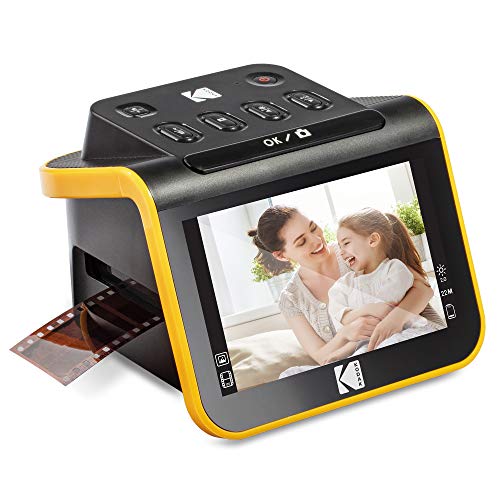
- Scans 135, 110, and 126 film formats
- 5-inch LCD with gallery mode
- Direct SD-card saving and simple editing
Best For: Mixed-format home film and slide archives
Best Touchscreen Workflow
HP FilmScan HPFS500 Film & Slide Scanner
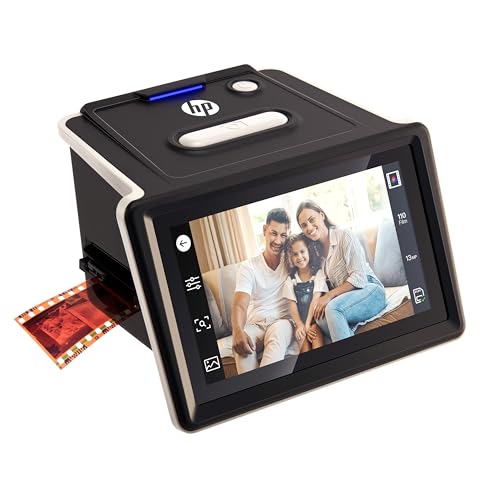
- Standalone scanning without a computer
- 5-inch all-angle touchscreen
- Handles 135, 126, and 110 formats
Best For: Hands-on scanning of mixed film collections
Best for High-Resolution Scans
Magnasonic FS71 24MP Film Scanner

- 24MP JPEG output
- Supports negatives through Super 8 and 35mm
- Scans in less than five seconds each
Best For: Fast, high-resolution digitization of varied formats
Best Large-Display Model

- Large 7-inch tiltable LCD
- Quick-feeding tray for continuous scanning
- One-touch editing and direct SD saving
Best For: Comfortable previewing and batch scanning at home
Best All-in-One Option

- Supports 135, 126, 110, and Super 8 photos
- 5-inch LCD with 16MP or 22MP output
- SD storage and HDMI viewing without a computer
Best For: Home users with varied film formats
Best Budget Travel Pick

- Uses a smartphone for 35mm film and slide capture
- Folds down for compact storage and travel
- Includes LED backlight, tray, and Android app
Best For: Casual beginners and family projects
Best Compact Dedicated Scanner

- 16MP CMOS scanning for 126 and 135 film
- Compact body with 2.31-inch LCD
- Built-in adjustments and SD card saving
Best For: Portable 126 and 135 film digitizing
Best All-Format Standalone Option
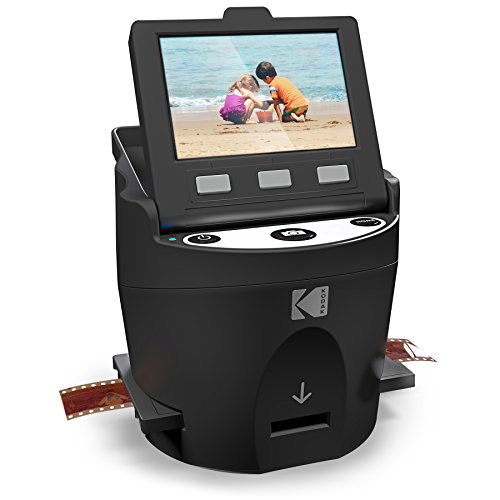
- Scans 35mm, 126, 110, Super 8, and 8mm formats
- Built-in 3.5-inch adjustable LCD
- One-touch JPEG scanning with included adapters
Best For: Dedicated scanning across several supported film formats
Best for Smartphone Beginners
DigitPro M301 Mobile Film Scanner

- Uses a smartphone camera for 35mm scanning
- Foldable, lightweight design with built-in battery
- Free app includes basic editing tools
Best For: Easy, portable 35mm scanning and sharing
Best Space-Saving Design

- Digitizes 35mm slides and negatives
- Folds into a compact box-like shape
- Free app supports editing and sharing
Best For: Travel and occasional 35mm scanning in small spaces
Best All-Around Choice – KODAK Slide N Scan Film & Slide Scanner
For shoppers comparing portable film scanners, the KODAK Slide N Scan offers a convenient standalone workflow for converting 135, 110, and 126 negatives, plus 50mm and compatible slides. Its 5-inch LCD, direct SD-card saving, and simple editing controls make it practical for home archiving.
Best For: Families digitizing mixed-format film and slides with an easy-to-use display.
Pros:
- Supports 135, 110, and 126 negatives and slides.
- Large 5-inch LCD includes gallery mode and wide viewing angles.
- Saves scans directly to SD or SDHC cards up to 32GB.
- Includes film holders, adapters, cleaning brush, USB cable, and HDMI cable.
Cons:
- SD card is not included.
- Supports cards only up to 32GB.
- Requires Windows 7 or later according to the listed system requirements.
The straightforward controls and included accessories make this a well-rounded choice for casual scanning sessions. It is especially appealing if you want to preview, adjust, and save images without relying on complex computer software.
Best Touchscreen Workflow – HP FilmScan HPFS500 Film & Slide Scanner
Among portable film scanners, the HP FilmScan HPFS500 stands out for its computer-free operation and touchscreen controls. It handles 135, 126, and 110 negatives and positive slides, making it suitable for mixed collections that need quick, hands-on digitization.
Best For: Users who want touchscreen control and a standalone scanning process.
Pros:
- Works without a computer during the scanning workflow.
- 5-inch all-angle LCD touchscreen supports previewing and editing.
- Supports 135, 126, and 110 negatives and positive slides.
- Quick-load tray helps speed up scanning sessions.
Cons:
- Its listed sensor resolution is 13MP, with 22MP interpolation.
- Fewer connection options are listed than some competing models.
- Requires Windows 10 or later or macOS 10.15 or later for the stated computer requirements.
The HPFS500 is a practical pick when ease of operation matters more than extensive connectivity. Its touchscreen and quick-load tray are useful for working through a sizable collection without setting up a separate scanner-and-computer station.
Best for High-Resolution Scans – Magnasonic FS71 24MP Film Scanner
The Magnasonic FS71 is one of the more flexible portable film scanners for users who want high-resolution JPEG files and broad format support. It scans 35mm, 110, 126, and Super 8 negatives, along with 135, 126, and 110 slides, while offering onboard image adjustments.
Best For: Users prioritizing 24MP output, broad film compatibility, and quick scans.
Pros:
- Produces 24MP digital JPEG files.
- Supports 35mm, 110, 126, and Super 8 negatives.
- Scans 135, 126, and 110 slides.
- Offers brightness, RGB color correction, flip, and mirror controls without a computer.
Cons:
- SD card and HDMI cable are not included.
- Maximum SD-card capacity is listed as 128GB.
- The included HDMI connection is intended for viewing on a TV or monitor, not described as a computer-scanning connection.
With its broad format support and fast, less-than-five-second scanning claim, the FS71 is well suited to larger home archives. The 5-inch display and onboard adjustments also make it convenient for checking and refining scans before saving them.
Best Large-Display Model – KODAK Slide N Scan Max
For shoppers seeking portable film scanners with an especially generous viewing area, the KODAK Slide N Scan Max pairs a 7-inch tiltable LCD with a quick-feeding tray. It supports 135, 110, and 126 film and saves scans directly to SD or SDHC cards up to 32GB.
Best For: Users who want a large screen for previewing, editing, and sharing scans.
Pros:
- 7-inch tiltable LCD doubles as a digital picture frame.
- Quick-feeding tray supports continuous scanning.
- Handles 135, 110, and 126 film formats.
- One-touch editing simplifies resizing, conversion, and image adjustments.
Cons:
- SD or SDHC card is not included.
- Card support is limited to capacities up to 32GB.
- The listed dimensions and specifications are unusually compact, so buyers should verify the product details before ordering.
The Slide N Scan Max is a strong fit when screen size and straightforward operation are the main priorities. Its large tiltable display makes reviewing scans more comfortable, while the quick-feed tray helps maintain momentum through a batch of family negatives or slides.
Best All-in-One Option – PORTTA 22MP Film Scanner
For shoppers seeking portable film scanners that work without a computer, the PORTTA offers broad format support, a large preview screen, and direct SD card storage. It handles 135, 126, 110, and Super 8 photo film, with 16MP or enhanced 22MP output options.
Best For: Home users who want flexible film-format support, on-device adjustments, and HDMI viewing.
Pros:
- Supports 135, 126, 110, and Super 8 photos, including negatives and slides.
- Offers 16MP standard or 22MP enhanced scans.
- Includes a large 5-inch LCD for previewing and aligning images.
- Saves directly to SD cards up to 128GB and includes HDMI output.
Cons:
- The larger feature set may be more than casual users need.
- Super 8 support is for photos only.
Its computer-free workflow and built-in image controls make this a versatile choice for digitizing varied film collections at home, especially when screen size and storage flexibility matter.
Best Budget Travel Pick – KODAK Mobile Film Scanner
The KODAK Mobile Film Scanner is one of the most compact portable film scanners for casual viewing and smartphone-based capture. Its foldable platform, battery-powered LED backlight, and app support make it suited to simple 35mm scanning and sharing.
Best For: Casual users, families, and beginners who want an inexpensive, lightweight way to experiment with 35mm film.
Pros:
- Works with 35mm color negatives, black-and-white negatives, and color slides.
- Folds into a small box for storage and travel.
- Includes a smartphone platform, film tray, LED backlight, and free Android app.
- Supports scanning, editing, and sharing through a phone.
Cons:
- Image resolution depends on the phone and slide or negative quality.
- It relies on a smartphone rather than scanning independently.
- The supplied notes describe it as mainly intended for casual experimentation.
This is a playful, low-commitment option rather than a dedicated high-resolution digitizer. It makes sense for occasional 35mm projects where portability and ease of use outweigh maximum image control.
Best Compact Dedicated Scanner – BEONEGLOBAL ClearScan MINI
The BEONEGLOBAL ClearScan MINI is a compact dedicated choice among portable film scanners, with a 2.31-inch LCD and 16MP CMOS sensor. It digitizes 126 and 135 film, saves to an SD card, and includes basic editing controls for quick, computer-free handling.
Best For: Users who want a small standalone scanner for 126 and 135 film with straightforward controls.
Pros:
- Produces up to 16MP images with a 1/3-inch CMOS sensor.
- Scans 126 and 135 film in seconds.
- Offers brightness, color, flip, and rotation adjustments onboard.
- Compact design weighs about 10.08 ounces and saves to SD cards up to 32GB.
Cons:
- The SD card is not included.
- Its 2.31-inch screen is smaller than the PORTTA’s 5-inch display.
- Format support is narrower than scanners that also handle 110 or Super 8 photos.
With its lightweight body and dedicated controls, the ClearScan MINI is a practical middle ground for users who want more independence than a smartphone-based scanner but do not need extensive format coverage.
Best All-Format Standalone Option – KODAK SCANZA Film Scanner
For shoppers comparing portable film scanners, the KODAK SCANZA is a compact standalone model that converts supported negatives and slides directly to JPEG files. It includes adapters for 35mm, 126, 110, Super 8, and 8mm film, plus a built-in display for viewing and adjusting scans.
Best For: Users who want a dedicated scanner with broad supported-format compatibility and a built-in LCD.
Pros:
- Supports 35mm, 126, 110, Super 8, and 8mm negatives and slides.
- Built-in 3.5-inch TFT LCD has adjustable brightness and a tilt design.
- Includes multiple adapters, USB and AC power accessories, HDMI cable, and a cleaning brush.
- Offers one-touch scanning plus basic RGB and resolution adjustments.
Cons:
- Does not support film formats beyond those specifically listed.
- SD card is not included, though the scanner supports cards up to 128GB.
- Requires cleaning to help prevent dust and speckles in scanned images.
The SCANZA is the most self-contained choice in this group. Its larger format support and onboard controls make it more versatile than smartphone-based alternatives, while its compact size keeps it practical for home use or transport.
Best for Smartphone Beginners – DigitPro M301 Mobile Film Scanner
This DigitPro model is one of the simplest portable film scanners for casual 35mm digitizing. It uses a smartphone camera, a built-in LED backlight, and a foldable holder to convert black-and-white or color negatives and slides into shareable digital photos.
Best For: Beginners and families who want a lightweight, smartphone-based way to scan 35mm film.
Pros:
- Works with 35mm black-and-white film, color negatives, positives, and slides.
- Foldable design includes a smartphone holder and built-in battery.
- Free companion app provides color and contrast editing without subscriptions.
- Includes a cleaning cloth, phone clip, battery, and illustrated instructions.
Cons:
- Scanning depends on the camera quality of the user’s smartphone.
- Limited to 35mm film and slides.
- Requires a smartphone rather than operating as a standalone scanner.
The M301 prioritizes convenience over dedicated scanning hardware. Its foldable construction and phone-based workflow make it easy to take along, especially for users who want quick digital copies without computer cables or complex setup.
Best Space-Saving Design – TCNEWCL Foldable 35mm Scanner
The TCNEWCL is a compact option among portable film scanners, using a smartphone and built-in LED light to digitize 35mm slides and negatives. Its foldable body stores like a small box, making it convenient for travel or limited storage space.
Best For: Travelers, occasional users, and families seeking a simple foldable 35mm film converter.
Pros:
- Supports 35mm slides and film negatives.
- Folds down for easier storage and transport.
- Simple workflow uses the phone camera and built-in LED backlight.
- Free app supports cropping, rotating, filtering, color and contrast adjustments, and sharing.
Cons:
- Image quality is limited by the resolution of the smartphone camera.
- Supports 35mm media rather than multiple film formats.
- Requires a smartphone and a compatible scanning or editing app.
The TCNEWCL is a practical low-complexity choice when portability and storage matter most. It offers the core tools for occasional 35mm scanning, but users seeking more controlled results may prefer a dedicated scanner.
How We Picked the Best Portable Film Scanners
We focused on the features that matter when scanning a personal film collection: supported film formats, advertised optical or interpolated resolution, preview-screen size, storage and transfer options, power requirements, and overall portability. We also considered whether each model works independently or requires a smartphone, computer, or companion app.
Resolution claims can vary by manufacturer, so treat megapixel ratings as a comparison point rather than a guarantee of final detail. A scanner’s film holder, sensor, lighting, and software processing can affect results just as much.
Quick Comparison
| Scanner type | Best for | What to check |
|---|---|---|
| Standalone LCD scanner | Simple, computer-free transfers | Supported formats, memory card or USB workflow |
| Higher-resolution all-in-one | Large batches and flexible output | Image processing, HDMI or transfer options |
| Compact or mini scanner | Travel and occasional use | Screen size, controls, and included holders |
| Smartphone-based digitizer | Low-cost, highly portable scanning | Phone compatibility, app quality, and alignment |
Key Buying Factors for Portable Film Scanners
Film and Slide Compatibility
Start with the formats in your collection. Most models handle 35mm negatives and slides, while some also support 110, 126, Super 8, or 8mm film. Confirm the exact holder sizes before buying, especially if your archive includes older cartridge formats.
Resolution and Output Quality
Higher stated resolution can help preserve detail for cropping and printing, but it does not automatically produce better scans. Look for even backlighting, secure film positioning, dust-free handling, and adjustable brightness or exposure controls when available.
Workflow and Storage
Standalone scanners with LCD screens are convenient for reviewing frames and often save images to removable memory or transfer them over USB. Smartphone models can be smaller and cheaper, but they depend on your phone’s camera, app, battery, and careful alignment.
Portability and Power
For occasional travel or scanning away from a desk, prioritize a compact body, foldable design, USB power, and minimal accessories. A larger screen and built-in controls may be worth the extra size if you plan to digitize hundreds of frames.
Who Should Buy Which Portable Film Scanners?
Choose a standalone LCD model if you want the simplest process with minimal dependence on another device. A higher-resolution scanner with a larger display is better for substantial archives or users who want more comfortable frame-by-frame checking. Compact mini scanners suit casual users with limited storage space, while smartphone-based options are ideal for quick previews, travel, and budget-conscious digitizing.
Before ordering, verify the included film holders, storage method, cable requirements, and operating-system or app compatibility. If your originals are valuable or irreplaceable, scan carefully, keep the negatives clean, and maintain a second backup of the resulting files.