
Portable sound level meters make it easier to check unwanted noise, verify workplace conditions, troubleshoot equipment, and compare sound levels in different rooms or outdoor spaces. The models in this roundup cover simple handheld testing as well as data logging and export features.
We selected options across several price points and use cases, focusing on measurement range, weighting options, display readability, portability, controls, and useful extras. Use the guide below to narrow the list to the meter that best matches your testing needs.
Best 10 Portable Sound Level Meters Picks for 2026
Best Overall Portable Sound Level Meter

- 30–130 dB range with ±1.5 dB accuracy
- A/C weighting, MAX/MIN, and data hold
- Backlit display with case and batteries included
Best For: General home, workplace, and workshop noise checks
Best Accuracy Portable Sound Level Meter

- ±1 dB accuracy with Class 2 specification
- 35–130 dB range and A/C weighting
- Fast/slow response plus MIN/MAX and hold
Best For: Workplace and environmental measurements where accuracy matters
Best Value Portable Sound Level Meter
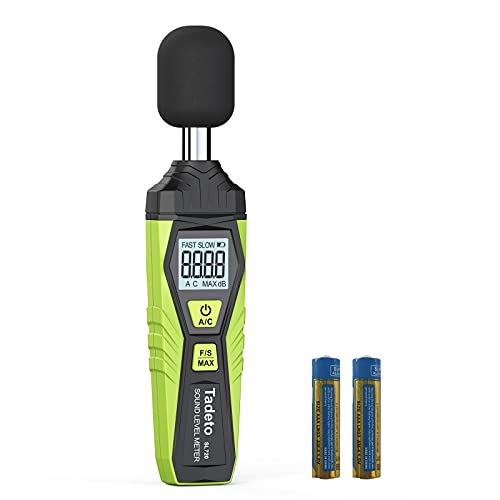
- 30–130 dB range with 0.1 dB resolution
- A/C weighting and fast/slow response modes
- Backlit LCD with low-battery indicator
Best For: Affordable everyday checks at home, work, or job sites
Best Analog-Style Display Portable Sound Level Meter

- Digital display with 0.1 dB resolution
- Fast analog bar graph shows changing levels
- A/C weighting, MAX/MIN, and MAX hold
Best For: Visual monitoring of changing sound levels
Best All-Around Pick
Goldeep SL750A Sound Level Meter

- 30–130 dB range with ±1.5 dB stated accuracy
- A/C weighting plus FAST/SLOW response settings
- MAX/MIN tracking, SONE mode, and included batteries
Best For: Versatile home, workplace, classroom, and outdoor noise checks
Best Simple Value
RISEPRO HT-80A Digital Decibel Meter

- 30–130 dB range with ±1.5 dB stated accuracy
- Backlit display for low-light readings
- Hold, MAX/MIN, FAST response, and auto power-off
Best For: Routine personal, household, study, and workplace monitoring
Best for Data Logging
DANOPLUS DP-441 Sound Level Meter

- Stores and exports up to 43,000 readings
- Colored display, line chart, and adjustable three-color alarm
- Rechargeable battery, A/C weighting, and PC connectivity
Best For: Extended monitoring, documentation, and Windows-based noise analysis
Best Budget Pick
VLIKE LCD Digital Sound Level Meter
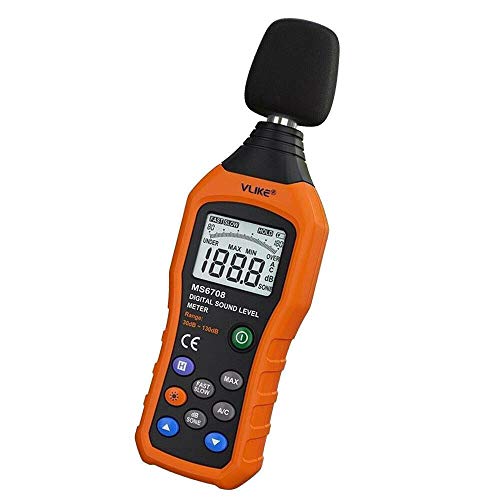
- 30–130 dB range with A/C mode
- Backlit display and max locking
- Compact casing; batteries not included
Best For: Routine household, office, school, and workshop noise checks
Best Rechargeable Option
DANOPLUS Portable Decibel Meter

- 30–130 dB range with ±1.5 dB accuracy
- Rechargeable USB-powered battery
- Data Hold, Max Reading, and bright LED display
Best For: On-the-go monitoring at homes, factories, and construction sites
Best Feature Set
Digital Sound Level Meter S8607

- A-weighted 30–130 dB measurement range
- Fast/slow response with MAX/MIN readings
- Hold function, backlit LCD, and auto-shutdown
Best For: Flexible noise checks in classrooms, homes, offices, and on streets
Best Overall Portable Sound Level Meter – TopTes TS-501B
The TopTes TS-501B is a practical choice among portable sound level meters for checking everyday noise at home, in offices, workshops, schools, or factories. Its 30–130 dB range, A/C weighting, backlit display, and peak-value functions cover a broad set of basic monitoring tasks.
Best For: Home noise checks, noisy-neighbor monitoring, and general-purpose sound measurements.
Pros:
- Measures 30–130 dB with stated ±1.5 dB accuracy.
- Offers A/C weighting, MAX/MIN readings, and data hold.
- Includes a backlit 2.25-inch display, case, and three AAA batteries.
Cons:
- Its frequency range is specified as 30–8000 Hz, which may not suit specialized audio testing.
- Automatic power-off may interrupt longer unattended measurements.
With a comfortable non-slip design and included accessories, the TS-501B balances portability and useful controls. It is a strong all-around option when you want straightforward readings rather than advanced logging features.
Best Accuracy Portable Sound Level Meter – Extech SL510 Class 2 Meter
The Extech SL510 stands out among portable sound level meters for buyers who prioritize a stated Class 2 specification and tighter accuracy. It measures 35–130 dB and adds selectable response speeds, weighting options, and a backlit display for flexible field use.
Best For: Users who want a Class 2 meter for routine environmental and workplace sound measurements.
Pros:
- Claims ±1 dB accuracy and compliance with Class 2 standards.
- Provides A/C weighting, fast/slow response, data hold, and MIN/MAX.
- Includes a microphone windscreen, wrist strap, and three AAA batteries.
Cons:
- Its measurement range begins at 35 dB rather than 30 dB.
- The supplied notes do not mention a carrying case.
The SL510 is a focused choice for readers who value documented accuracy and Class 2 positioning. Its compact battery-powered design and backlit LCD make it suitable for portable checks in changing light conditions.
Best Value Portable Sound Level Meter – Tadeto SL720
The Tadeto SL720 is a straightforward option among portable sound level meters, combining a 30–130 dB range with A/C weighting and adjustable response speeds. Its backlit four-digit LCD and lightweight design make it convenient for routine checks around homes, factories, vehicles, offices, and construction sites.
Best For: Budget-conscious users needing versatile everyday noise monitoring.
Pros:
- Covers 30–130 dB with stated ±2.0 dB accuracy and 0.1 dB resolution.
- Supports A/C weighting and fast or slow response modes.
- Lightweight body, backlit display, and low-battery indicator support portable use.
Cons:
- Its stated accuracy is lower than the TopTes and Extech SL510 models here.
- The supplied notes do not list included batteries or a carrying case.
The SL720 offers a useful feature set without adding complicated controls. Choose it for general noise checks where a broad range, readable display, and response-time selection are more important than the tightest stated accuracy.
Best Analog-Style Display Portable Sound Level Meter – Extech 407730 Digital Meter
The Extech 407730 offers a familiar digital readout paired with a fast-responding analog bar graph, making it a useful alternative among portable sound level meters. It measures 40–130 dB and includes A/C weighting, MAX/MIN recording, and a maximum-hold function.
Best For: Users who want digital readings plus a visual bar graph for tracking changing sound levels.
Pros:
- Provides 0.1 dB resolution across a 40–130 dB range.
- Includes A/C weighting, MAX/MIN recording, and MAX hold.
- Comes with a microphone windscreen and four AAA batteries.
Cons:
- Its stated ±2 dB accuracy is less precise than the Extech SL510.
- The range starts at 40 dB, limiting lower-level measurements.
- The supplied notes do not mention a backlit display.
The 407730 is best suited to users who appreciate a visual indication of sound changes alongside the numerical reading. Its included windscreen and batteries make it ready for basic portable measurements, while the 40 dB lower limit is worth considering before purchase.
Best All-Around Pick – Goldeep SL750A Sound Level Meter
For everyday portable sound level meters use, the Goldeep SL750A combines a broad 30–130 dB range with A/C weighting, selectable response speeds, and MAX/MIN tracking. Its clear display, data hold, anti-slip grip, and included windbreak make it practical for checking noise at home, work, school, or outdoor locations.
Best For: Buyers who want a versatile meter for environmental, workplace, equipment, and music-related noise checks.
Pros:
- Measures 30–130 dB with stated ±1.5 dB accuracy.
- A and C weighting support environmental and higher-intensity sound testing.
- FAST/SLOW response modes and MAX/MIN tracking help with changing or steady noise.
- Includes batteries, a windbreak ball, data hold, and a clear LCD.
Cons:
- The listed frequency response ends at 8 kHz, so it is not intended as a laboratory audio analyzer.
- Uses two AAA batteries rather than a rechargeable battery.
The Goldeep is a strong general-purpose option when flexible weighting and loudness-oriented SONE readings matter. It offers useful controls without the added complexity of PC data logging.
Best Simple Value – RISEPRO HT-80A Digital Decibel Meter
The RISEPRO HT-80A is a straightforward choice among portable sound level meters for routine monitoring. It covers 30–130 dB, provides a backlit display for dark environments, and includes hold, MAX/MIN, and automatic power-off functions in a compact package with a carrying pouch.
Best For: Users who need an uncomplicated meter for personal, household, business, study, or general workplace checks.
Pros:
- 30–130 dB measurement range with stated ±1.5 dB accuracy.
- Backlight improves readability in low-light conditions.
- Data hold, MAX/MIN recording, FAST response, and auto power-off are included.
- Comes with a black carrying pouch and gift box.
Cons:
- Its listed frequency range is 31.5 Hz–4 kHz, narrower than some comparable meters.
- The notes specify Type A frequency weighting only.
This RISEPRO model favors ease of use over advanced analysis. It is a sensible fit for quick readings where backlighting and basic peak/minimum tracking are more important than logging or multiple weighting modes.
Best for Data Logging – DANOPLUS DP-441 Sound Level Meter
The DANOPLUS DP-441 stands out among portable sound level meters when documentation and follow-up analysis are priorities. It can store up to 43,000 readings, connect to a Windows PC for export and analysis, and show real-time changes on a colored screen with a line chart and adjustable alarm indicators.
Best For: Users who need extended noise monitoring, exported records, visual alarms, or PC-based review.
Pros:
- Stores up to 43,000 data points and exports records through a Windows PC connection.
- 30–130 dB range with stated ±1.5 dB accuracy.
- A/C weighting, FAST/SLOW response, and configurable three-color alarm indicators.
- Rechargeable 1,000 mAh battery and DC output are included.
Cons:
- PC connectivity and data analysis add complexity compared with basic meters.
- The supplied compatibility notes list Windows 7, 10, and 11, not other operating systems.
- Its feature set may be more than needed for occasional spot checks.
The DP-441 is the most capable choice here for creating a measurable noise record rather than taking isolated readings. Choose it when storage, export, alarms, and real-time visualization justify a more advanced portable meter.
Best Budget Pick – VLIKE LCD Digital Sound Level Meter
For shoppers comparing portable sound level meters, the VLIKE offers a broad 30–130 dB measuring range in a compact handheld design. Its A/C modes, backlight, and maximum-value lock make it practical for routine checks around homes, offices, schools, roads, workshops, and other environments.
Best For: General-purpose noise checks and portable monitoring on a budget.
Pros:
- Measures sound from 30 to 130 dB with A/C mode and automatic ranging.
- Backlit display supports data gathering in low-light conditions.
- Compact, lightweight casing includes an anti-drop structure and power-saving design.
Cons:
- Batteries are not included and require four AAA cells.
- Cannot store or generate a report directly from the device.
This is a straightforward choice when you need a small, flexible meter for spot measurements rather than report generation or advanced data logging.
Best Rechargeable Option – DANOPLUS Portable Decibel Meter
The DANOPLUS is one of the more convenient portable sound level meters for users who prefer rechargeable power and a pocket-friendly body. It combines a 30–130 dB range with A-weighting, a bright LED display, data hold, and maximum-reading tracking for everyday monitoring.
Best For: Portable noise assessments where rechargeable power and peak readings are useful.
Pros:
- Measures 30.0–130 dB with ±1.5 dB accuracy and 0.1 dB resolution.
- Rechargeable 220mAh lithium-ion battery and included USB charging cable reduce reliance on disposable batteries.
- Data Hold and Max Reading functions help capture current or peak sound levels.
- Bright four-digit LED display is designed for visibility in low-light or dark conditions.
Cons:
- Uses A-frequency weighting rather than offering the VLIKE’s A/C modes.
- Automatic shutdown occurs after 15 minutes unless canceled manually.
Its small 2.08-ounce form and rechargeable battery make it especially convenient for carrying between rooms, job sites, factories, or construction areas.
Best Feature Set – Digital Sound Level Meter S8607
The S8607 is a practical option among portable sound level meters when you want more control over response speed and recorded extremes. It provides A-weighted 30–130 dB measurements along with fast/slow modes, maximum and minimum readings, result hold, a backlit LCD, and automatic power saving.
Best For: Classroom, home, street, and workplace checks that benefit from flexible measurement controls.
Pros:
- Offers a 30–130 dB range, 0.1 dB resolution, and stated ±1.5 dB accuracy.
- Fast and slow response modes help adapt readings to different sound conditions.
- MAX/MIN measurement and result hold make it easier to review notable readings.
- Backlight, low-power indicator, and automatic shutdown support everyday usability.
Cons:
- Its automatic shutdown activates after three minutes of inactivity.
- The supplied notes specify A-weighted measurement rather than selectable A/C modes.
With its response-speed controls and MAX/MIN functions, this meter is a good fit for users who want more hands-on measurement options without moving to a larger instrument.
How We Picked These Portable Sound Level Meters
We focused on meters with practical measurement ranges, straightforward controls, and features that improve real-world usability. Most models cover approximately 30 to 130 dB, making them suitable for checking household noise, classrooms, offices, workshops, events, and general equipment sound. We also considered A and C weighting, maximum and minimum readings, data hold, backlighting, power options, and the usefulness of included data-logging functions.
For more demanding work, accuracy specifications and class ratings matter more than a long feature list. A Class 2 meter, such as the Extech SL510, is a more appropriate starting point for many professional general-purpose measurements than an unspecified consumer meter.
Quick Comparison
- Best for basic everyday checks: Choose a simple 30–130 dB handheld meter with a readable backlit display and data hold.
- Best for professional general use: Look for a recognized accuracy class, dependable controls, and both A/C weighting.
- Best for tracking noise over time: Choose a data logger with substantial memory, rechargeable power, and computer export.
- Best for occasional portability: Prioritize a compact, lightweight design and automatic shutoff over advanced recording features.
Key Buying Factors for Portable Sound Level Meters
Measurement Range and Accuracy
A broad range is useful because quiet rooms and loud machinery can produce very different readings. However, range alone does not guarantee precision. Check the stated accuracy, standards compliance, and class rating when measurements may support workplace decisions, reports, or formal comparisons.
Frequency Weighting
A-weighting approximates how human hearing responds to common environmental noise and is the most useful setting for many everyday checks. C-weighting captures more low-frequency energy and can help with bass-heavy sound, machinery, or louder environments. Having both gives you more flexibility.
Display and Controls
A backlit LCD or LED display helps in dim rooms and makes readings easier to see while standing away from the sound source. Data hold, maximum/minimum recording, and automatic power-off are especially helpful when you cannot watch the screen continuously.
Logging, Export, and Power
If you need trends rather than one-time readings, choose a model with internal memory and data export. Rechargeable meters reduce battery waste, while standard batteries may be easier to replace in the field. Confirm the expected recording capacity and connection method before buying.
Who Should Buy Which Portable Sound Level Meters?
Homeowners and renters generally need an affordable meter with A-weighting, a wide range, backlighting, and data hold for neighbors, appliances, HVAC systems, or room comparisons. Teachers, facility managers, and event staff may benefit from maximum/minimum readings and C-weighting for changing or bass-heavy environments.
Technicians and workplace users should prioritize documented accuracy, a suitable class rating, reliable operation, and controls that are easy to use while wearing gloves or working near equipment. Researchers, inspectors, and users tracking recurring noise should choose a data-logging model with generous memory and export capability rather than relying on manually recorded spot checks.