
The best portable telescopes make it easier to explore the Moon, planets, and brighter deep-sky objects without committing to a bulky observatory setup. This roundup compares compact refractors, Newtonian reflectors, and smart telescopes for different experience levels and budgets.
When choosing among these models, prioritize optical quality, mount stability, setup time, portability, and the kind of observing you actually plan to do.
Best 10 Portable Telescopes Picks for 2026
Best Lightweight Starter

- 70mm fully coated refractor
- Quick no-tool setup
- Backpack and two eyepieces included
Best For: Beginners and families who want portable day-and-night viewing
Best Large-Aperture Value

- 90mm fully coated objective
- 32×–240× stated magnification
- Tripod, bag, and phone adapter included
Best For: Families and beginners wanting brighter, versatile views
Best Smartphone-Guided Pick
Celestron StarSense Explorer LT 114AZ
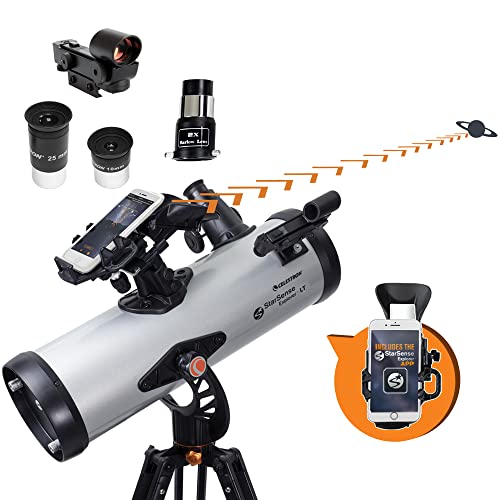
- Phone-guided sky navigation
- 114mm Newtonian reflector
- Includes two eyepieces and 2x Barlow
Best For: Beginners who want help locating night-sky targets
Best for Phone-Assisted Travel

- 70mm fully coated optics
- Phone adapter and wireless remote
- Carry bag and adjustable tripod included
Best For: Beginners seeking portable viewing and simple phone photography
Best Smart Portable Telescope

- 1.85-pound grab-and-go design
- App control with Auto GOTO
- AZ/EQ modes and 90-second exposures
Best For: Travelers and beginners who want automated digital stargazing
Best Traditional Portable Telescope

- 80mm fully coated refractor optics
- Includes backpack and smartphone adapter
- Tool-free setup with two eyepieces
Best For: Families seeking a conventional beginner telescope for travel
Best Portable Telescope for Kids

- 70mm fully multi-coated optics
- 15x–150x stated magnification range
- Phone adapter and wireless remote included
Best For: Kids and beginners exploring the Moon and nature
Best Guided Portable Telescope
Celestron StarSense Explorer DX 130AZ
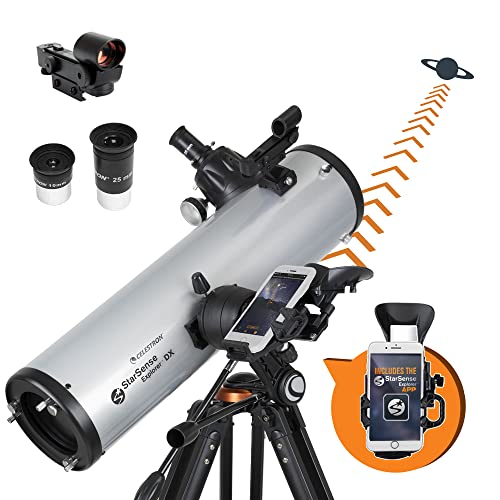
- Smartphone-guided target finding
- 130mm reflector for brighter views
- Includes two eyepieces and a red-dot finder
Best For: Beginners wanting guided backyard and dark-sky astronomy
Best Lightweight Portable Telescope

- Weighs just 3.5 pounds
- Includes phone adapter and remote
- 15X–150X setup for beginner viewing
Best For: Family trips, camping, and first-time observers
Best Portable Telescope with Backpack

- 80mm aperture with coated optics
- Includes backpack and adjustable tripod
- Comes with Moon filter and phone adapter
Best For: Beginners traveling with family for lunar and planetary viewing
Best Lightweight Starter – Celestron Travel Scope 70
The Celestron Travel Scope 70 is a practical choice for shoppers seeking portable telescopes for casual astronomy and daytime viewing. Its 70mm refractor, quick no-tool setup, and included backpack make it easy to take on trips or use with the family.
Best For: Beginners, families, and travelers who want a lightweight telescope for lunar, planetary, and terrestrial viewing.
Pros:
- 70mm fully coated optics provide crisp views of the Moon, planets, and daytime scenery.
- Sets up quickly without tools and includes a full-height tripod.
- Includes 20mm and 10mm eyepieces, finderscope, software, and a padded backpack.
- Backed by a two-year limited warranty and unlimited US-based support.
Cons:
- Its 70mm aperture is more suited to beginner viewing than demanding deep-sky observation.
- Manual focusing and an altazimuth mount require hands-on target adjustment.
For an easy-to-carry first telescope, the Travel Scope 70 balances simple operation, useful accessories, and day-to-night versatility.
Best Large-Aperture Value – Dianfan 90mm Refractor
The Dianfan 90mm refractor is one of the more capable portable telescopes for buyers who want a larger aperture without giving up a carry bag. Its 800mm focal length, stainless steel tripod, and phone adapter support both astronomy and daytime observation.
Best For: Beginners and families seeking brighter views, broad magnification options, and travel-friendly terrestrial or celestial use.
Pros:
- Large 90mm fully coated objective gathers more light for brighter, clearer views.
- Two eyepieces and a 3x Barlow lens provide a stated 32×–240× magnification range.
- Includes a stainless steel tripod, carrying bag, phone holder, and phone adapter.
- The 45° zenith mirror produces correctly oriented images for terrestrial viewing.
Cons:
- At 4.7 kg, it is heavier than some compact beginner refractors.
- Assembly takes about 15 minutes rather than being immediately ready to use.
- Manual focusing and an altazimuth mount require user adjustment.
This model is a strong fit when aperture and versatility matter more than minimizing packed weight.
Best Smartphone-Guided Pick – Celestron StarSense Explorer LT 114AZ
The Celestron StarSense Explorer LT 114AZ stands out among portable telescopes for its smartphone-guided navigation. Dock a compatible phone, use the StarSense Explorer app to locate targets, and view them through the 114mm Newtonian reflector.
Best For: Beginners who want guided help locating planets, nebulae, galaxies, and star clusters.
Pros:
- StarSense technology uses sky recognition to guide users to celestial targets.
- 114mm reflector offers bright views of the Moon, planets, and selected deep-sky objects.
- The app provides a curated list of targets based on time and location.
- Includes 25mm and 10mm eyepieces, a 2x Barlow lens, mount, tripod, and finderscope.
Cons:
- The 10.4-pound setup is less lightweight than compact travel refractors.
- Target tracking and focusing remain manual through the altazimuth mount.
- Using the guidance feature requires a smartphone and the StarSense Explorer app.
If finding objects is the main hurdle, this telescope’s phone-assisted guidance can make the learning curve more approachable while retaining useful aperture.
Best for Phone-Assisted Travel – Gskyer 70mm AZ Telescope
The Gskyer 70mm AZ telescope is a convenient option for portable telescopes shoppers who want a compact refractor with basic phone accessories. Its carry bag, adjustable tripod, smartphone adapter, and wireless remote make it suitable for casual observing and simple image capture.
Best For: Kids, beginners, and travelers interested in Moon and star viewing with smartphone-assisted photography.
Pros:
- 70mm aperture and fully coated optics support bright views for beginner observing.
- Two eyepieces plus a 3x Barlow lens expand the available magnification.
- Includes a 5×24 finderscope, adjustable aluminum tripod, carry bag, and phone adapter.
- Wireless camera remote enables remote phone shutter control.
Cons:
- Its manual focus and altazimuth mount require hands-on adjustments.
- Smartphone use depends on a compatible phone and proper adapter alignment.
- The supplied notes do not specify the exact magnification of each included eyepiece.
This Gskyer is a sensible starter package for casual observers who value portability and phone-friendly accessories over advanced mounting features.
Best Smart Portable Telescope – DWARFLAB Dwarf Mini
For highly mobile stargazing, the DWARFLAB Dwarf Mini is one of the most compact portable telescopes available. Its app control, automated target finding, and 1.85-pound design make it practical for camping, travel, and beginners who want a streamlined digital observing experience.
Best For: Travelers, families, and beginners interested in app-controlled astronomy and deep-sky imaging.
Pros:
- Very lightweight, compact design suited to backpacks and travel.
- App-controlled sky atlas, Auto GOTO, and 360-degree pivot movement simplify target finding.
- Supports AZ and EQ modes, exposures up to 90 seconds, and built-in light-pollution filtering.
- Includes smart cloud processing and a two-year warranty.
Cons:
- Its 30mm objective lens is smaller than the apertures on the conventional refractor models here.
- Manual-and-auto focusing and app-based operation may not suit shoppers seeking a traditional eyepiece experience.
The Dwarf Mini stands out when portability and automated imaging matter most. Choose it for quick, shareable digital astronomy rather than a conventional telescope setup for direct eyepiece viewing.
Best Traditional Portable Telescope – Celestron Travel Scope 80
The Celestron Travel Scope 80 is a practical choice among portable telescopes for buyers who prefer conventional eyepiece viewing. Its 80mm fully coated refractor, included tripod, backpack, and smartphone adapter create a complete beginner-friendly kit for travel and backyard use.
Best For: Families and beginners who want a traditional refractor for lunar, planetary, daytime, and basic deep-sky viewing.
Pros:
- 80mm aperture and fully coated glass lenses support bright, sharp views.
- Includes 20mm and 10mm eyepieces for wider and closer views.
- Sets up without tools and packs into the included padded backpack.
- Comes with a smartphone adapter, finderscope, software, and a two-year US warranty.
Cons:
- At 4.5 pounds, it is less lightweight than the DWARFLAB model.
- Manual focusing and an altazimuth mount require hands-on target locating and tracking.
For a balanced first telescope, the Travel Scope 80 offers useful aperture and a broad accessory package without complicated assembly. It is especially appealing if you want both nighttime astronomy and daytime scenery viewing.
Best Portable Telescope for Kids – 70mm Beginner Refractor
This 70mm refractor is designed for kids, adults, and first-time observers who want portable telescopes with flexible magnification. Fully multi-coated optics, a phone adapter, and a tool-free setup make it suitable for backyard sessions, campsites, and outdoor learning.
Best For: Children and beginners who want a giftable telescope for Moon viewing, nature observation, and smartphone photos.
Pros:
- 70mm aperture with fully multi-coated optics is designed for bright, crisp views.
- Includes eyepieces and lenses supporting a stated 15x to 150x magnification range.
- Tool-free setup, tripod support, and a 5×24 finder scope help beginners get started.
- Includes a phone adapter, wireless remote, gift box, and three-year warranty.
Cons:
- Manual focus means users must adjust the telescope themselves.
- The supplied accessories create flexibility, but higher magnifications can require careful tripod positioning to reduce shake.
- The finder scope image is inverted, which may initially confuse new users.
This model is a friendly entry point for families, combining a manageable aperture with accessories for viewing and phone capture. It makes the most sense as a beginner gift rather than as a fully automated astronomy system.
Best Guided Portable Telescope – Celestron StarSense Explorer DX 130AZ
The Celestron StarSense Explorer DX 130AZ is a strong choice among portable telescopes for beginners who want guided help locating celestial objects. Its smartphone-powered StarSense app, 130mm reflector, and manual slow-motion controls make it practical for backyard observing and darker-sky trips.
Best For: Beginners and families who want guided access to planets, nebulae, galaxies, and star clusters.
Pros:
- StarSense app uses sky recognition to help locate targets.
- 130mm reflector provides bright views of the Moon, planets, and selected deep-sky objects.
- Includes 25mm and 10mm eyepieces, a red-dot finderscope, mount, and tripod.
- Backed by a two-year U.S. warranty and unlimited support.
Cons:
- At 18 pounds, it is less convenient to carry than lightweight travel refractors.
- Manual operation requires users to adjust the altazimuth mount themselves.
This model stands out when guided navigation and stronger deep-sky capability matter more than minimum carrying weight. It is a particularly capable portable telescope for users ready to move beyond basic Moon viewing.
Best Lightweight Portable Telescope – ToyerBee 70mm Refractor
The ToyerBee 70mm refractor is one of the more travel-friendly portable telescopes, weighing 3.5 pounds and including a tripod, phone adapter, and wireless camera remote. Its straightforward setup and included star chart suit casual family observing, camping, and road trips.
Best For: Kids, beginners, and families seeking a lightweight telescope for Moon, planet, landscape, and wildlife viewing.
Pros:
- Lightweight design is convenient for camping and travel.
- 70mm aperture and fully multi-coated optics support day and night viewing.
- Includes 20mm and 6mm eyepieces plus a 3X Barlow lens.
- Phone adapter and wireless remote support basic photos and videos.
Cons:
- The lightweight beginner setup may be less substantial than larger astronomy telescopes.
- Manual focusing and target finding require user adjustment.
Choose this model if portability and a complete beginner package are priorities. The included accessories make it approachable for family use, while the 70mm aperture remains useful for bright lunar and planetary targets.
Best Portable Telescope with Backpack – Celticbird 80mm Refractor
The Celticbird 80mm refractor combines a larger aperture with travel-focused accessories, including a carrying backpack and adjustable tripod. As portable telescopes go, it offers a practical balance for beginners who want clearer lunar and planetary views without a more complex mount.
Best For: Adults, kids, and beginners who want an easy-to-carry telescope for Moon and planet viewing.
Pros:
- 80mm fully coated optics are designed to improve light transmission.
- Backpack stores the telescope accessories for easier travel.
- Adjustable tripod ranges from 17.7 to 52 inches for adults and children.
- Includes 20mm and 9mm eyepieces, a Moon filter, finderscope, and phone adapter.
Cons:
- The 5.8-pound weight is higher than the lightest travel refractors.
- Manual altazimuth operation and focusing require hands-on adjustments.
This is a well-rounded portable telescope for users who value included carrying equipment and a larger 80mm objective. Its 30X and 66X eyepieces are oriented toward accessible Moon and planet observation rather than advanced deep-sky work.
How We Picked These Portable Telescopes
We selected models that emphasize practical portability while covering a range of observing styles and budgets. The list includes lightweight refracting telescopes, larger-aperture Newtonian designs, smartphone-guided Celestron models, and compact smart telescopes that use a connected device to simplify finding and recording targets.
Our comparison focuses on aperture, focal length, optical design, mount usability, included accessories, carrying options, and suitability for beginners. Published magnification claims were treated cautiously because useful magnification depends on optics, atmospheric conditions, and mount stability—not just the highest number printed on the box.
Quick Comparison
- Best for simple travel: The Celestron Travel Scope models and similar 70mm to 80mm refractors are compact, approachable, and generally easy to pack.
- Best for guided locating: Celestron StarSense Explorer telescopes use a smartphone-assisted system to help users locate celestial objects.
- Best for more light-gathering ability: The 114mm and 130mm Newtonian models can reveal more detail than smaller refractors, though their mounts and setup may be less compact.
- Best for minimal weight: The DWARFLAB Dwarf Mini is designed for highly portable, app-assisted observing and imaging rather than traditional eyepiece viewing.
- Best for family beginners: A 70mm or 80mm refractor with a stable alt-azimuth mount, carry case, and simple controls is usually the easiest starting point.
Key Buying Factors for Portable Telescopes
Aperture and Optical Design
Aperture determines how much light a telescope gathers. Larger apertures can provide brighter views and more resolving power, but they typically increase weight and storage requirements. Refractors are often straightforward and low-maintenance, while Newtonian reflectors can offer more aperture for the money but may need occasional alignment.
Portability and Setup
Check the complete packed size and weight, including the tripod and accessories. A backpack or carry bag is useful, but a compact telescope is only genuinely portable if its mount is stable and setup takes just a few minutes.
Mount Stability and Controls
A shaky tripod can make even good optics frustrating to use. Alt-azimuth mounts are intuitive for beginners. Smartphone-guided systems can reduce the difficulty of locating targets, while smart telescopes may automate much of the observing process.
Included Accessories
Look for useful eyepieces, a finder or phone adapter, a tripod, and a protective case. Treat extreme magnification claims skeptically; a smaller range of sharp, usable magnification is more valuable than an inflated maximum.
Who Should Buy Which Portable Telescopes?
Choose a compact 70mm or 80mm refractor if you want an affordable, low-maintenance telescope for travel, casual Moon viewing, or family use. Consider the StarSense Explorer LT 114AZ or DX 130AZ if locating targets is a concern and you want more aperture for planets and brighter deep-sky objects. The larger DX model is better suited to buyers who can accept additional bulk for improved light gathering.
Choose the DWARFLAB Dwarf Mini if your priority is lightweight, app-based astronomy and capturing digital images rather than looking through a conventional eyepiece. For buyers seeking a more traditional high-aperture setup, the 90mm and 80mm refractors offer a balance between reach and portability, provided the included mount is sufficiently steady. Whichever model you choose, realistic expectations, dark skies, and a stable setup will matter as much as the telescope itself.