
Raspberry Pi humanoid robot kits are getting smarter, more capable, and more accessible for builders who want hands-on robotics with real AI features.
Whether you are shopping for STEM learning, vision tracking, voice interaction, or advanced programming, this roundup highlights the best options for different skill levels and use cases.
Best 10 Raspberry Pi Humanoid Robot Kits Picks for 2026
AI Voice & Vision Humanoid

- Raspberry Pi 5 powered with open-source support
- ChatGPT voice and vision interaction features
- 16 bus servos for coordinated humanoid movement
Best For: Advanced AI education, Python learning, and voice/vision robotics experiments
Compact Biped Learning Kit

- Includes Raspberry Pi Pico W controller board
- App control works with Android and iPhone
- LED matrix, obstacle avoidance, and sound features
Best For: Hands-on beginners who want a compact biped robot with app control
Advanced ChatGPT Humanoid

- Raspberry Pi 5 humanoid with open-source support
- ChatGPT multimodal AI for voice and vision
- 20DOF design with educational learning resources
Best For: Advanced learners who want deeper AI robotics and motion-control study
ROS Smart Humanoid

- ROS-based humanoid built for Raspberry Pi 5
- 24 DOF with walking, grasping, and boxing actions
- App, wireless handle, and PC software control
Best For: Technical users who want a ROS humanoid platform with advanced motion
AI Voice & Vision Starter
SunFounder Raspberry Pi Humanoid Robot Kit

- ChatGPT-4o voice and vision support
- 12 servos with 32 robot actions
- Includes camera, mic, app control, and FPV
Best For: Beginners who want an interactive AI robot kit with strong learning support
Vision Arm Navigator
MasterPi 5DOF Raspberry Pi Robot

- 5DOF arm with HD camera and FPV
- OpenCV for sorting, tracking, and line following
- 360° Mecanum-wheel omnidirectional movement
Best For: Teens and adults focused on AI vision, robotic arms, and programmable motion
ROS Humanoid Learner
HIWONDER AiNex Raspberry Pi 5 Robot

- ROS-based humanoid platform with Pi 5/4B support
- 24 servos plus inverse kinematics gait planning
- HD camera and OpenCV for vision tracking
Best For: Students and hobbyists who want an advanced humanoid robot for ROS and AI learning
AI Vision Car Platform
TurboPi Robot Car for Raspberry Pi AI Vision

- ROS2, Python, and OpenCV support
- 2-DOF camera for vision tasks
- 360° Mecanum wheel movement
Best For: STEM learners building AI vision projects on Raspberry Pi
Humanoid AI Education Kit
Tonybot 17DOF AI Vision Humanoid Robot Kit

- 17DOF humanoid with walking and dancing motions
- Arduino, Python, and Scratch support
- AI vision and voice interaction features
Best For: Students wanting a humanoid robot with flexible programming and AI features
Raspberry Pi Humanoid Robot
TonyPi Standard Kit for Raspberry Pi 5
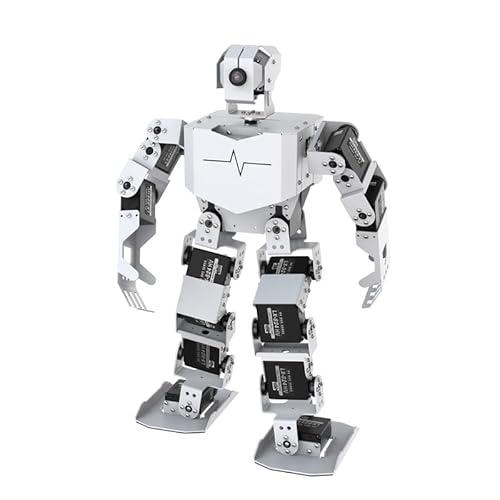
- Raspberry Pi 5 powered humanoid platform
- ChatGPT, voice, and AI vision integration
- Tutorials for OpenCV, MediaPipe, and robotics
Best For: Teens and adults building a Raspberry Pi humanoid AI robot
AI Voice & Vision Humanoid – TonyPi Standard Kit & RPi 5
If you’re comparing raspberry pi humanoid robot kits for AI education, this TonyPi bundle leans hard into voice, vision, and open-source development. It combines Raspberry Pi 5 power with OpenCV, inverse kinematics, and ChatGPT-based interaction, so it suits buyers who want a more advanced build for Python and embodied AI experiments.
Best For: Teens, adults, and makers who want a Raspberry Pi 5 humanoid kit for AI vision, voice control, and Python-based robotics learning.
Pros:
- Raspberry Pi 5-powered platform with open-source access for flexible development
- ChatGPT integration supports voice commands, scene understanding, and multimodal interaction
- HD camera and AI vision features include color recognition, target tracking, line following, and ball kicking
- Includes 16 high-voltage intelligent bus servos for coordinated humanoid motion
Cons:
- Designed for advanced learning, so it may be more than a beginner toy kit
- Requires interest in programming and AI robotics to get the most value
- Battery and external power setup may add to build complexity
This is a strong pick if you want a feature-rich humanoid robot kit that goes beyond basic motion and gives you room to explore modern AI robotics workflows. The included learning resources also make it easier to grow from fundamentals into more advanced projects.
Compact Biped Learning Kit – Freenove Pico W Robot
For shoppers looking for raspberry pi humanoid robot kits in a smaller, budget-friendlier format, this Freenove bipedal kit focuses on hands-on assembly and wireless control. It uses the included Raspberry Pi Pico W board and comes with functions like LED matrix expressions, obstacle avoidance, colorful lights, and app-based operation.
Best For: Beginners and hobbyists who want a compact, app-controlled biped robot kit with included controller hardware and guided assembly.
Pros:
- Raspberry Pi Pico W is included in the kit
- Supports wireless control through the Freenove app on Android and iPhone
- Includes multiple interactive features such as LED matrix expressions, obstacle avoidance, buzzer, and speaker
- Step-by-step assembly tutorial and complete code are provided via download
Cons:
- Battery is not included
- No paper tutorial is provided; instructions are digital only
- Less advanced than full humanoid AI robotics kits
This kit makes sense if you want an approachable robot build with wireless control and expressive features without jumping straight into a large AI humanoid platform. It is more of a guided learning project than a premium robotics showcase.
Advanced ChatGPT Humanoid – TonyPi Advanced RPi 5
If your goal is to buy one of the more capable raspberry pi humanoid robot kits, this TonyPi Advanced model adds more hardware depth for AI education and robotics study. It runs on Raspberry Pi 5 and combines ChatGPT-based interaction, AI vision, and a 20DOF humanoid design for learning Python, machine vision, and deep learning.
Best For: Students, educators, and makers who want a more advanced Raspberry Pi humanoid robot for machine vision, deep learning, and Python programming.
Pros:
- Raspberry Pi 5-powered humanoid platform with open-source access
- ChatGPT multimodal interaction supports voice and vision-based use cases
- 20DOF design offers more complex motion capability than simpler kits
- Includes learning resources for motion control, OpenCV, deep learning, and MediaPipe
Cons:
- Advanced feature set may be overkill for casual buyers
- No batteries required, but the platform is still built for serious learning rather than quick play
- Likely best suited to users comfortable with programming and robotics concepts
This is the stronger choice if you want a more capable TonyPi platform and care about expanded motion complexity. It stands out for buyers who want a serious educational robot rather than a simple remote-controlled figure.
ROS Smart Humanoid – AiNex 24DOF RPi 5 8GB
Among raspberry pi humanoid robot kits, AiNex is the most platform-heavy option here because it is built on ROS and paired with Raspberry Pi 5. It is aimed at users who want a programmable humanoid with 24 intelligent servos, AI vision, and more dynamic action support like walking, hurdling, grasping, kicking, boxing, and automatic standing up.
Best For: Programmers and robotics hobbyists who want a ROS-based Raspberry Pi humanoid robot with advanced motion and control options.
Pros:
- Built on ROS with Raspberry Pi 5 for a more advanced robotics workflow
- 24 DOF and intelligent serial bus servos support complex humanoid motion
- AI vision, OpenCV, and object recognition capabilities are included
- Multiple control methods are available through app, wireless handle, and PC software
Cons:
- Most complex kit in this group, so setup and use may be demanding
- Requires a strong interest in programming and robotics systems
- Battery-powered design may add to overall build and operation considerations
This kit is a good fit if you want a true robotics platform instead of a simpler educational model. The ROS foundation and wide control support make it especially appealing for technical users who want room to experiment.
AI Voice & Vision Starter – SunFounder Raspberry Pi Humanoid Robot Kit
If you want raspberry pi humanoid robot kits that emphasize hands-on interaction, this SunFounder build stands out for combining motion, voice, vision, and app control in one platform. It supports Raspberry Pi Zero 2 W and other Pi boards, and the included camera, mic, speaker, touch sensors, and ultrasonic module make it feel more like a learning companion than a basic chassis.
Best For: Beginners and hobbyists who want an interactive Raspberry Pi robot kit with AI voice features, camera-based recognition, and guided learning resources.
Pros:
- ChatGPT-4o integration supports voice interaction and visual recognition.
- 12 servos enable 32 actions, including walking, sitting, standing, and playful gestures.
- Rich sensor set adds vision, hearing, touch, obstacle detection, and FPV.
- Includes documentation, tutorials, support, and an active forum for setup help.
Cons:
- Requires a compatible Raspberry Pi board, with the Pi purchased separately for some versions.
- Feature-rich design may be more involved than a simple beginner robot build.
This is a strong pick if you want a robot kit that balances educational value with genuinely interactive features. It is especially appealing when you want a more expressive humanoid-style experience without giving up Python programmability.
Vision Arm Navigator – MasterPi 5DOF Raspberry Pi Robot
Among raspberry pi humanoid robot kits and robot-learning platforms, MasterPi is better described as a vision-driven robotic arm car with a strong focus on movement and object handling. Built for Raspberry Pi 5, it combines a 5DOF arm, HD camera, OpenCV-based recognition, and omnidirectional Mecanum wheels for a flexible STEM project.
Best For: Teens and adults who want a Raspberry Pi-powered robot kit centered on vision tasks, target sorting, line following, and programmable motion.
Pros:
- 5DOF arm and end-mounted HD camera support first-person-view object handling.
- OpenCV-based functions enable color sorting, target tracking, and line following.
- Mecanum wheels provide 360° omnidirectional movement.
- App remote control adds convenient motion and grip control.
Cons:
- Raspberry Pi is not included in the main version, so setup may require extra hardware.
- It is a robot car and arm platform, not a true humanoid biped design.
MasterPi makes sense if your priority is practical AI vision experiments over humanoid styling. It offers a capable mix of mechanics, control options, and Python programmability for robotics learners who want a more task-oriented build.
ROS Humanoid Learner – HIWONDER AiNex Raspberry Pi 5 Robot
If you are comparing raspberry pi humanoid robot kits for advanced study, AiNex is aimed squarely at robotics learners who want a more sophisticated biped platform. Built on ROS and powered by Raspberry Pi 5 or 4B, it adds 24 intelligent serial bus servos, an HD camera, mechanical hands, and inverse kinematics gait control for lifelike movement.
Best For: Students, educators, and adult hobbyists who want a ROS-based humanoid robot kit for AI vision, gait planning, and programming study.
Pros:
- ROS-based platform with Raspberry Pi 5/4B support.
- 24 servos and inverse kinematics help create flexible biped movement.
- HD camera and OpenCV support AI vision recognition and tracking.
- Multiple control methods include app, wireless handle, and PC software.
Cons:
- Designed as a more advanced learning platform, so it may be complex for absolute beginners.
- Pi 5 is included in this version, but the overall kit is still a substantial robotics project.
AiNex is the most advanced-feeling option here for users who want a real humanoid learning platform rather than a simpler toy-like build. Its combination of ROS, inverse kinematics, and vision tools makes it a serious educational robot.
AI Vision Car Platform – TurboPi Robot Car for Raspberry Pi AI Vision
If you’re comparing raspberry pi humanoid robot kits for AI and coding practice, TurboPi stands out as a smart robot car rather than a humanoid build. It pairs Raspberry Pi 5 support with ROS2, Python, and OpenCV, so it’s geared toward hands-on experimentation with vision, movement, and autonomous tasks.
Best For: STEM learners who want a Raspberry Pi-based AI vision and robotics platform for coding projects.
Pros:
- Supports ROS2, Python, and OpenCV for AI-focused learning.
- Includes AI vision features like color sorting, target tracking, gesture recognition, and face detection.
- Omnidirectional Mecanum wheels allow 360° movement and flexible routing.
- Comes with source code, experiment examples, and tutorials for self-guided learning.
Cons:
- Not a humanoid robot, so it won’t match humanoid-style projects.
- Raspberry Pi is not included.
- Built as an educational platform, so it’s more about learning than polished consumer automation.
TurboPi makes sense if your goal is to explore AI robotics with a Raspberry Pi 5 environment and strong vision-based features. It offers a solid balance of movement, camera feedback, and learning materials for practical coding projects.
Humanoid AI Education Kit – Tonybot 17DOF AI Vision Humanoid Robot Kit
For shoppers exploring raspberry pi humanoid robot kits, Tonybot is worth a look for its humanoid form and AI-focused features, even though it is powered by ESP32 rather than Raspberry Pi. It combines 17 servos, voice control, vision tools, and three programming options, making it a flexible education kit for building and coding interactive robot behaviors.
Best For: Learners who want a humanoid robot kit with AI vision, voice interaction, and beginner-friendly programming options.
Pros:
- Humanoid design with 17 intelligent servos for walking, dancing, kicking, and standing up automatically.
- Supports Arduino, Python, and Scratch programming.
- Includes AI vision and voice interaction features such as face recognition, target tracking, and line following.
- Offers tutorials plus support for additional sensors and modules.
Cons:
- Uses ESP32, not Raspberry Pi.
- Some multimodal large AI features are listed for the Ultimate Kit only.
- Best suited to education and experimentation rather than plug-and-play consumer use.
Tonybot is a strong pick if you want a true humanoid robot platform with approachable programming paths and room to expand. It’s especially appealing for learners who want motion, vision, and voice interaction in one project kit.
Raspberry Pi Humanoid Robot – TonyPi Standard Kit for Raspberry Pi 5
If you specifically want raspberry pi humanoid robot kits, TonyPi is the closest match in this group because it is powered by Raspberry Pi 5 and built as a humanoid AI vision robot. It combines ChatGPT-based interaction, voice commands, and camera-driven recognition, so it fits buyers who want an advanced learning platform for AI robotics and Python development.
Best For: Teens and adults who want a Raspberry Pi 5 humanoid robot kit with AI vision, voice control, and open-ended coding.
Pros:
- Powered by Raspberry Pi 5 with OpenCV and inverse kinematics support.
- Includes ChatGPT integration for multimodal interaction and AI-driven responses.
- Supports voice command recognition, color recognition, target tracking, ball kicking, and line following.
- Comes with extensive tutorials covering motion control, deep learning, MediaPipe, and sensor use.
Cons:
- Standard kit is sold with Pi 5 2GB, which may limit heavier projects compared with larger-memory setups.
- Designed for education and development, so setup will suit hobbyists and learners more than casual users.
- Requires a Raspberry Pi ecosystem, so it’s not a standalone robot.
TonyPi is the most directly aligned option here for Raspberry Pi-based humanoid robotics. It offers a strong mix of AI features and educational support, making it a good platform for serious hands-on learning.
How We Picked These Raspberry Pi Humanoid Robot Kits
We focused on kits that balance capability, learnability, and value. Priority went to models with useful motion control, camera or vision features, clear programming support, and strong documentation or ecosystem support. We also favored kits that make sense for different buyer types, from classroom learners to advanced hobbyists.
Quick Comparison
At a high level, the main differences come down to degrees of freedom, AI features, supported controllers, and how much assembly and coding experience is required. Some Raspberry Pi Humanoid Robot Kits are built for guided education and basic interaction, while others are better suited to complex movement, perception, and open-ended experimentation.
Entry-Level Vs. Advanced
Entry-level kits are usually easier to assemble and program, with simpler motion and clearer learning pathways. Advanced kits often add more servos, more precise gait control, AI vision, and broader expansion options, but they also demand more setup time and technical confidence.
Key Buying Factors for Raspberry Pi Humanoid Robot Kits
First, check compatibility. Make sure the kit supports the Raspberry Pi model you plan to use and that power, control boards, and software libraries are all clearly documented. Second, consider degrees of freedom and movement quality. More joints can improve realism and flexibility, but they also increase tuning complexity.
Next, evaluate the AI and sensing features. Camera-based tracking, object recognition, voice interaction, and obstacle avoidance can be genuinely useful, but only if the software is stable and the workflow is realistic for your skill level. Also look at programming support: Python, Scratch, ROS, Arduino IDE, or app control can make a big difference depending on who will use the robot.
Finally, think about the experience you want. Some buyers want a classroom-friendly STEM project, while others want a platform for ROS experiments, humanoid walking, or AI research. The best choice is the one that matches your goals, not just the longest feature list.
Who Should Buy Which Raspberry Pi Humanoid Robot Kits?
Choose a simpler educational kit if you are new to robotics, buying for a student, or want fast setup with approachable coding. Choose a midrange AI-equipped model if you want voice interaction, vision tasks, and room to grow without jumping straight into a research-grade system.
If you are an advanced maker or developer, look for Raspberry Pi Humanoid Robot Kits with ROS support, higher DOF counts, open-source software, and stronger expansion potential. Those platforms are better suited for experimentation, customization, and more sophisticated autonomy.