
Choosing the right RC airplane for indoor use comes down to stability, size, and easy control. The best models are light, durable, and forgiving enough to handle tight spaces without constant repairs.
In this roundup, we focus on options that make indoor flying more approachable for beginners, kids, and casual hobby pilots who want smoother launches, better low-speed control, and less stress in the living room or gym.
Best 10 Rc Airplanes for Indoor Use Picks for 2026
Micro Indoor Trainer

- Ultra-light PP foam build for indoor use
- 2.4GHz 3-channel control with stable handling
- Slow flyer designed for zero-wind spaces
Best For: Beginners and hobby flyers needing a compact indoor trainer
Ultra-Micro SAFE Trainer
Champ Anniversary Special Edition

- Ready to fly right out of the box
- SAFE technology helps prevent crashes
- Ultra-micro size works in bigger indoor spaces
Best For: New pilots learning on a factory-assembled trainer
Mini Foam Indoor Flyer
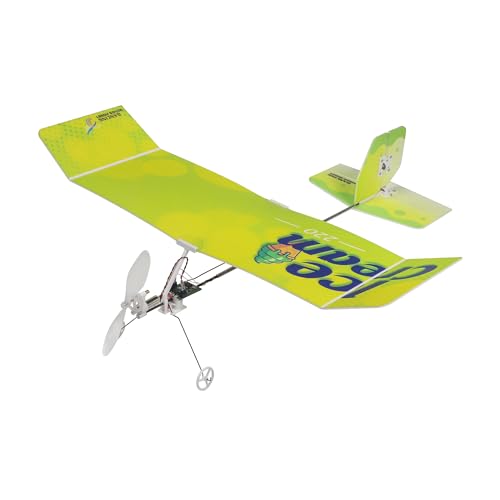
- 220mm wingspan for tight indoor areas
- Lightweight foam build for reduced damage
- 3CH control with built-in ESC support
Best For: Small-space flyers wanting a compact indoor plane
Feature-Packed LED Flyer
4DRC RC Plane with 2 Batteries

- Headless mode and altitude hold simplify flying
- EPP foam and enclosed propellers add durability
- LED lights and stunt modes boost casual fun
Best For: Beginners wanting easy controls and visual features
DIY Indoor Aerobatic Kit

- 450mm wingspan for indoor and park flying
- PP foam and carbon rods for added impact resistance
- DIY kit with stable structure for 3D aerobatics
Best For: DIY-minded hobbyists who want a compact aerobatic plane
Beginner Stability Trainer

- Six-axis gyroscope for steadier flight
- Flexible EPP foam helps absorb impacts
- Hand-launch or smooth-surface takeoff options
Best For: Beginners learning to fly in large open spaces
Compact Indoor Trainer

- 13.8-inch wingspan for easier indoor handling
- 6-axis gyroscope for self-stabilizing flight
- EPP foam body with extra batteries and parts
Best For: Kids and beginners who want a stable indoor trainer
Indoor Stunt Flyer

- One-key takeoff/landing for easier indoor flying
- 360° flips, rolls, and circling for stunt play
- Foam EPP build with protected propellers
Best For: Families wanting a safe, trick-focused indoor plane
Balanced Beginner Biplane

- 6-axis gyro helps smooth out indoor flying
- Bend-proof foam design improves crash resistance
- Compact, foldable build is easy to carry
Best For: Beginners and families learning indoor flight
LED Foam Hybrid

- One-button takeoff/landing and headless mode for beginners
- Altitude hold plus 3 speed modes support learning
- LED lights and foam build suit indoor play
Best For: Beginners wanting an easy indoor flyer with lighting
Micro Indoor Trainer – E43 Mosquito 3CH Slow Flyer
If you’re shopping for rc airplanes for indoor use, the E43 Mosquito is built around slow, stable flying in tight spaces. Its ultra-light foam build and 3-channel control make it a practical pick for living rooms, garages, and other zero-wind environments where precision matters more than speed.
Best For: Beginners and hobby flyers who want a lightweight indoor plane that is easy to manage in small spaces.
Pros:
- Very lightweight PP foam construction helps it handle crashes better indoors.
- 2.4GHz 3-channel control offers responsive, stable handling.
- Slow-flight design is well suited to indoor and other calm flying areas.
- Partially assembled for a faster setup experience.
Cons:
- Instructions are noted as less detailed than ideal.
- Best performance is in zero-wind conditions.
This is a hobby-grade option, so it makes the most sense for buyers who want more than a toy-grade flyer. If you want an indoor plane that prioritizes easy control and durability over tricks, this one fits the brief well.
Ultra-Micro SAFE Trainer – Champ Anniversary Special Edition
HobbyZone Champ Anniversary Special Edition 515mm BNF Basic with Safe Select, HBZ04950
Check Price On AmazonFor rc airplanes for indoor use, the HobbyZone Champ Anniversary Special Edition stands out as a ready-to-fly ultra-micro trainer. It’s designed for small flying areas like yards, parks, and even indoor spaces such as a basketball court, with SAFE technology to help reduce crashes while you learn.
Best For: Newer pilots who want a factory-assembled trainer with built-in flight assistance.
Pros:
- Factory-assembled and ready to fly right out of the box.
- SAFE technology helps make learning easier and more forgiving.
- Ultra-micro size is suitable for indoor use in larger open spaces.
- Includes the specialized Champ Anniversary edition design.
Cons:
- Requires a compatible Spektrum DSMX/DSM2 transmitter, battery, and charger sold separately.
- Better suited to open indoor areas than very cramped rooms.
This is the most trainer-focused option in the group, especially if you want something assembled for you and supported by flight-assist features. It’s a strong pick when learning safety and control are the main priorities.
Mini Foam Indoor Flyer – E23 ICE Cream RTF
If you want rc airplanes for indoor use in a smaller package, the E23 ICE Cream is built for compact flying areas. Its lightweight foam design, small wingspan, and 3-channel setup make it a practical indoor flyer for simple control and basic maneuvering.
Best For: Indoor flyers who want a very small, lightweight plane for tight spaces and casual practice.
Pros:
- Compact 220mm wingspan is ideal for indoor and small flying areas.
- Lightweight foam build helps reduce damage risk in close quarters.
- 3-channel control and built-in ESC support easier handling.
- Includes a 3.7V battery for extended enjoyment.
Cons:
- Manual is the only included component listed in the notes.
- Best suited to simple indoor flying rather than advanced aerobatics.
This model is about convenience, compactness, and keeping things manageable indoors. If you value a small footprint and straightforward flight characteristics, it fits nicely into the indoor category.
Feature-Packed LED Flyer – 4DRC RC Plane with 2 Batteries
This isn’t the most indoor-focused of the rc airplanes for indoor use, but it does offer beginner-friendly controls and durable foam construction that can be useful for casual practice. With headless mode, altitude hold, and multiple speed modes, it’s built to be easy to learn, though the product itself is positioned for outdoor use.
Best For: Beginners who want simple controls, stunt features, and LED visibility for casual flying practice.
Pros:
- Headless mode and altitude hold make control easier for newer pilots.
- 3 speed modes plus aerobatic rolls and 360° circling add variety.
- EPP foam construction and enclosed propellers improve durability and safety.
- LED lights make it easier to track during low-light flying.
Cons:
- Listed for outdoor use, so it is not the strongest match for indoor-only buyers.
- Features like fast take-off and aerobatics may be more than some indoor spaces need.
Even though it includes a lot of beginner-friendly features, this plane is better viewed as a versatile casual flyer than a dedicated indoor model. If you want easy controls and visual flair more than strict indoor specialization, it can still be appealing.
DIY Indoor Aerobatic Kit – Viloga Mini RC Plane Kit
If you want rc airplanes for indoor use with a more hands-on build experience, this 450mm wingspan foam biplane kit is a compact option designed for indoor and park flying. Its lightweight PP foam construction with carbon rods is aimed at durability, while the stable structure supports 3D aerobatic performance once assembled.
Best For: Hobbyists and older kids who want a small DIY aerobatic plane they can build and fly in indoor spaces or small parks.
Pros:
- 450mm wingspan keeps it compact for indoor and park use.
- Lightweight PP foam with carbon rods adds impact resistance.
- Stable structure is tuned for 3D aerobatic flying.
- Bright finish gives it a standout look in the air.
Cons:
- It is a kit, so assembly is required before flying.
- Best suited to users comfortable with DIY building.
Overall, this is a strong pick if you value the build process as much as the flight itself. It fits the rc airplanes for indoor use niche well, especially for flyers who want something lightweight, compact, and more performance-oriented.
Beginner Stability Trainer – Foam RC Planes
For rc airplanes for indoor use, this foam trainer-style plane is built around stability and easy handling, making it a straightforward entry point for beginners. The built-in six-axis gyroscope, lightweight foam construction, and hand-launch or smooth-surface takeoff options make it practical for learning in large open indoor areas.
Best For: Beginners and families who want an easy-to-fly foam plane for large indoor spaces or open outdoor areas.
Pros:
- Built-in six-axis gyroscope helps keep flight stable.
- Lightweight EPP foam is designed to handle bumps and impacts.
- Can be hand-thrown or launched from a smooth surface.
- Includes two rechargeable batteries for more flying time.
Cons:
- The notes specify outdoor usage, so it is best in larger open areas.
- Not the most compact choice for very small indoor rooms.
This is a practical beginner-friendly option if your indoor flying space is spacious and unobstructed. It focuses more on easy control and durability than advanced aerobatics, which is exactly what many first-time flyers need.
Compact Indoor Trainer – RC Plane Cessna 172
If you’re comparing rc airplanes for indoor use, this Cessna 172-style model stands out for its compact 13.8-inch wingspan and self-stabilizing 6-axis gyroscope. The EPP foam body and included landing gear make it a practical choice for controlled indoor flying, especially for beginners who want a ready-to-fly setup.
Best For: Kids, adults, and beginners who want a small, stable RC airplane for indoor practice and easy handling.
Pros:
- Compact 13.8-inch wingspan suits indoor maneuvering.
- 6-axis gyroscope supports easy, self-stabilizing flight.
- EPP foam construction is made for durability and crash resistance.
- Includes two batteries plus extra propellers and landing gear.
Cons:
- Two-channel control is simple, but less advanced than multi-channel planes.
- Still needs enough room to fly safely indoors.
This model is a sensible pick if you want a small trainer that is easy to manage without a steep learning curve. Its size and stabilization features make it one of the more approachable options for indoor practice.
Indoor Stunt Flyer – 4DRC V32 Foam RC Airplane
If you’re looking for rc airplanes for indoor use, the 4DRC V32 is built around easy takeoff, stable control, and stunt features that work well in open rooms, gyms, and similar indoor spaces. Its foam EPP build, protective propeller structure, and one-key launch/landing make it approachable for beginners while still giving more experienced flyers room to practice flips and rolls.
Best For: Kids and adults who want a beginner-friendly indoor rc airplane with stunt features and added safety.
Pros:
- One-key takeoff and landing simplify indoor flying.
- 360° flips, circling, and stunt rolls add variety.
- Foam EPP body and protected propellers improve durability and safety.
- LED lights help visibility in dim indoor spaces.
Cons:
- Advanced stunt features may be more than a true first-time flyer needs.
- Best indoor use still depends on having enough open space.
- Requires 2 C batteries, which are included, but not rechargeable.
The V32 makes sense if you want indoor play that leans more toward fun tricks than scale realism. It stands out as a practical foam plane for families who want something easy to launch, hard to damage, and lively enough to keep kids interested.
Balanced Beginner Biplane – KF801 RC Biplane
For shoppers comparing rc airplanes for indoor use, this biplane is aimed at easy, controlled flying with an auto-balance gyro and a bend-proof foam design. The compact 24 cm wingspan and 2.4GHz control help it fit casual living-room practice or larger indoor spaces, while still being ready for outdoor use when you want more room.
Best For: Beginners, kids, and families who want a stable indoor-capable RC airplane that is easy to learn.
Pros:
- 6-axis gyroscope auto-corrects for smoother takeoffs and landings.
- Flexible, impact-resistant foam helps it bounce back after crashes.
- Compact, foldable design is easy to pack and carry.
- 2.4GHz control supports interference-free flying up to 164 ft.
Cons:
- Indoor flying still works best in open rooms with enough clearance.
- The design is built for stability, so it may not feel as flashy as stunt-focused planes.
- Manufacturer age guidance is broad, so younger children may still need supervision.
This is a sensible pick if your priority is learning to fly rather than doing aggressive tricks. The auto-balancing system and durable foam construction make it a strong choice for family practice sessions and confidence-building flights.
LED Foam Hybrid – Foam RC Drone Airplane Toy
If you’re browsing rc airplanes for indoor use, this foam drone-airplane hybrid focuses on beginner-friendly controls and durable construction. Features like one-button takeoff and landing, altitude hold, headless mode, and three speed settings make it easier to handle in indoor spaces, while the built-in LED lighting helps it stay visible during low-light play.
Best For: Beginners who want an easy-to-fly indoor foam flyer with lights and simple controls.
Pros:
- One-button takeoff/landing and headless mode simplify operation.
- Altitude hold and three speed modes support learning at different skill levels.
- Foam construction and protected propellers help with durability.
- LED lights and breathing-light effect improve visibility and play value.
Cons:
- The product is presented as a drone-airplane hybrid, not a traditional fixed-wing plane.
- Indoor use is best in open, obstacle-free areas.
- Advertised for ages 12 and up, so it may be too advanced for younger kids.
This model is a good fit if you want a simple flyer that adds a bit of visual flair. Its beginner controls and two included rechargeable batteries make it a practical choice for longer indoor sessions and casual practice.
How We Picked the Best Rc Airplanes for Indoor Use
We focused on aircraft that are small enough for indoor spaces, light enough to reduce crash damage, and simple enough for newer pilots to control. We also looked at build material, flight stability, control layout, battery convenience, and whether the model is likely to be fun in tighter environments rather than just outdoors.
Quick Comparison
For Rc Airplanes for Indoor Use, the best choices usually fall into three groups: ultra-micro foam planes for the smallest spaces, stable trainers for learning basic turns and throttle control, and more agile models for pilots who want flips or aerobatics once they have the room and experience. If you want the easiest learning curve, prioritize slower, lighter designs with forgiving handling. If you want more excitement, look for stronger stabilization and durable foam construction.
Key Buying Factors for Rc Airplanes for Indoor Use
Size and Weight
Smaller wingspans and lighter airframes help reduce damage and make it easier to fly in limited space. Ultra-light foam is usually the safest choice for home use.
Stability and Control
Features like gyro assistance, safe mode, or auto-balance can make a big difference for beginners. A stable plane is much easier to keep level at low speed.
Durability
Indoor flying still means occasional bumps, so bend-resistant foam and simple repairability matter. A tough nose and flexible frame can extend the life of the plane.
Flight Style
Some models are designed for smooth slow flight, while others are better for 3D tricks or fast turns. Match the flight style to your space and skill level.
Power and Battery Setup
Shorter flight times are common in small RC aircraft, so extra batteries or easy charging can improve the experience. Consider how often you want to swap packs between flights.
Who Should Buy Which Rc Airplanes for Indoor Use?
Beginners and younger flyers should start with the most stable, slow-flying options that are easy to recover after mistakes. Intermediate pilots may prefer a compact plane with more responsive control and better maneuverability. If you want indoor entertainment with a more exciting feel, pick a durable model with stunt capability, but only if your space can safely handle it.
Overall, the best choice depends on how much room you have, how confident you are with controls, and whether you value calm practice flights or more active aerobatics. For indoor use, forgiving handling usually matters more than raw speed.