
Choosing the right RC airplane can make the difference between a fun first flight and a frustrating crash. The best models balance stability, control, and durability so beginners can learn quickly.
In this roundup, we focus on rc airplanes that are easy to fly, practical for outdoor use, and suited to a range of skill levels from first-time pilots to casual hobby flyers.
Best 10 Rc Airplanes Picks for 2026
Beginner-Ready Warbird

- 6-axis gyro with 3 assist modes
- Throw launch and aerobatic button
- Up to 20 minutes of flight time
Best For: Beginners who want a stable warbird trainer
Light-Up Foam Glider
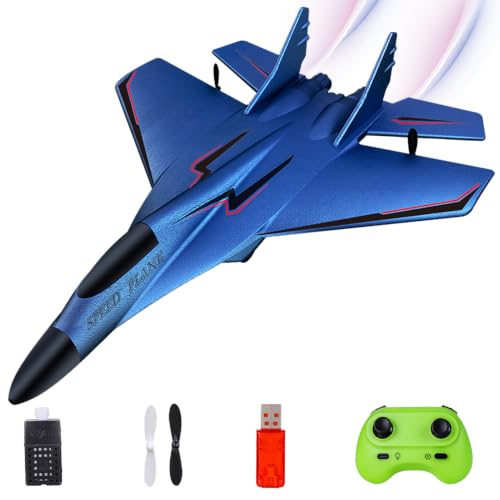
- 2-channel control with stable 2.4G signal
- LED lights for night flying
- Lightweight foam build
Best For: Casual flyers who want easy outdoor flights with lights
Stable Beginner Warbird

- 6-axis gyro stabilization
- Two takeoff modes plus two batteries
- About 40 minutes of flight time
Best For: Beginners wanting a stable warbird with extra runtime
Stunt-Ready LED Jet

- 360° flips and aerobatic rolls
- One-key takeoff/landing with headless mode
- LED lights and foam safety features
Best For: Pilots who want stunt flying and night visibility
Beginner-Friendly F-22 Trainer
2CH F-22 RC Glider for Kids & Beginners

- Self-stabilizing flight helps beginners learn faster
- Lightweight foam body is built for slight crashes
- 2.4GHz control lets multiple planes fly together
Best For: kids and beginners who want a simple, crash-resistant starter plane
Step-Up Trainer with Gyro Assist

- XPILOT stabilization adds stable, easy flying
- Three flight-assist levels support skill growth
- Up to 656 ft range and about 20 minutes of flight
Best For: beginners and adults who want a trainer with progression modes
Simple Ready-to-Fly Glider
HAWK'S WORK CESSNA RC Airplane

- Self-stabilization makes it easier to learn
- Foam body is designed to handle slight crashes
- Includes extras like spare props, batteries, and charger
Best For: kids and first-time pilots who want a simple starter glider
Beginner-Friendly P-51 Trainer

- XPILOT stabilization for easier control
- Three flight modes for skill progression
- Propeller saver helps reduce damage
Best For: Adults and beginners learning outdoor RC flight
Long-Run Beginner Glider

- 6-axis gyro helps self-correct in flight
- Two batteries deliver 40+ minutes total
- Two speeds and two launch modes
Best For: Kids and beginners who want longer practice flights
Stable F4U Trainer

- XPILOT and flight assist improve stability
- Up to 15 minutes of flight time
- Ground or hand-launch takeoff options
Best For: Beginners wanting a stable outdoor trainer with stunt potential
Beginner-Ready Warbird – Volantex RC P-51D Mustang
If you want rc airplanes that are easy to learn on but still capable of real aerobatics, this VolantexRC P-51D Mustang is a strong starting point. The 4CH setup, Xpilot gyro stabilizer, and three flight-assist modes give beginners a gentler learning curve, while the throw-to-launch and aerobatic button add extra fun once you’re comfortable.
Best For: New pilots who want a stable beginner trainer with room to grow.
Pros:
- 6-axis gyro and 3 assistance levels help simplify learning
- Throw launch and aerobatic features make takeoff and flying more engaging
- 2.4GHz control system offers a 656-foot range and anti-interference
- Ready-to-fly design includes the needed components for quick setup
Cons:
- Requires transmitter batteries before you can fly
- Designed for outdoor use, so it’s not the best choice for tight indoor spaces
This is a practical pick if you want a beginner-friendly rc airplane that still feels like a true warbird. Its stable flight help and simple setup make it easier to get airborne fast, while the added aerobatic options keep it interesting as your skills improve.
Light-Up Foam Glider – MAXBECK Su-35 RC Plane
For shoppers comparing rc airplanes that are simple to handle and visually fun, this MAXBECK Su-35 focuses on easy flying and night visibility. Its 2-channel control, stable 2.4G signal, and light foam build make it approachable for newcomers, while the LED lights help it stand out after dark.
Best For: Casual flyers who want a lightweight foam plane with LED night flying appeal.
Pros:
- 2-channel control keeps operation straightforward
- 2.4G signal is described as stable for outdoor flying
- LED lights improve visibility and make night flights more fun
- Lightweight foam construction helps with easy handling
Cons:
- Requires a long taxi run or a thrown launch to take off
- Best suited to outdoor use rather than indoor flying
This model makes sense if you want a beginner-friendly foam rc airplane with a playful look and extra night-time presence. It stays focused on simplicity, so it’s more about easy outdoor flying than advanced maneuvering.
Stable Beginner Warbird – P-51D Mustang 3CH RC Plane
This P-51D Mustang is aimed at buyers looking for rc airplanes that are beginner-friendly without feeling stripped down. The built-in 6-axis gyro, two takeoff modes, and switchable speed settings make it easier to learn, while the included extra battery support gives you more time in the air.
Best For: New pilots who want a stabilized warbird with longer play sessions.
Pros:
- 6-axis gyro stabilization supports easier flying
- Two takeoff modes offer hand launch or taxi takeoff options
- Two batteries provide about 40 minutes of flight time total
- Durable EPP foam airframe is built for outdoor bumps and crashes
Cons:
- Model details list a very young age recommendation that may be confusing
- Designed primarily for outdoor flying
Overall, this is a sensible rc airplane for someone who wants a forgiving trainer with a classic warbird look. The longer runtime and stable flight aids make it a solid choice for practice sessions and family flying.
Stunt-Ready LED Jet – 4DRC V32 Foam RC Airplane
If you’re shopping for rc airplanes that lean more toward stunts and visual flair, the 4DRC V32 is built around easy takeoff and crowd-pleasing tricks. It includes gravity sensing, rolls, 360-degree circling, headless mode, altitude hold, and three speed options, plus LED lighting for flying after sunset.
Best For: Kids and adults who want a stunt-capable foam plane with light effects.
Pros:
- 360° flips, rolls, and circling add stunt options
- One-key takeoff/landing and headless mode simplify operation
- LED lights make evening flying easier to see
- EPP foam build and propeller protection help with durability and safety
Cons:
- Plastic is listed in the details, so material info is inconsistent with the foam description
- Best suited to open flying areas rather than tight spaces
This rc airplane stands out if you want more than basic forward flight. It combines easy controls with stunt features, making it a fun pick for pilots who want a plane that can do more once it’s in the air.
Beginner-Friendly F-22 Trainer – 2CH F-22 RC Glider for Kids & Beginners
If you want one of the simplest rc airplanes to get started with, this 2CH F-22 glider keeps the learning curve low. Its built-in self-stabilization, lightweight foam build, and 2.4GHz control system make it a practical pick for kids and first-time flyers who want an easy outdoor trainer.
Best For: Kids and beginners who want an easy-to-fly foam glider with basic controls and crash resistance.
Pros:
- Built-in self-stabilization helps make flying easier for beginners.
- Durable foam structure is designed to handle slight crashes.
- 2.4GHz radio control supports flying multiple planes without interference.
- Includes spare propellers, extra batteries, glue, and a USB charging cable.
Cons:
- 2-channel control is basic compared with more advanced rc airplanes.
- Designed for outdoor use, so it is not the most versatile option.
- Best results still depend on reading the manual and practicing.
Overall, this is a straightforward starter plane that focuses on stability and durability rather than advanced performance. It makes sense for anyone prioritizing simple control and a ready-to-fly setup.
Step-Up Trainer with Gyro Assist – volantexrc P-40 RC Plane
This volantexrc RC airplane is aimed at beginners who want room to grow. The XPILOT stabilization system, 3-level flight assistance, and ready-to-fly setup make it a practical choice if you want a trainer that can move from assisted flying to more manual control over time.
Best For: Beginners and adults who want a trainer with stabilization, progression modes, and longer outdoor flights.
Pros:
- XPILOT gyro stabilization supports very stable, easier flight.
- Three assist levels let pilots progress from beginner to expert control.
- 2.4GHz control reaches up to 656 ft with strong anti-interference.
- Gear box system is designed to improve thrust and help flight time last about 20 minutes.
Cons:
- Requires batteries for the transmitter before you can fly.
- Outdoor-focused setup may be less convenient for indoor use.
- Full manual control is best after some practice with the assist modes.
As a trainer-style pick in the rc airplanes category, this model stands out for giving new pilots a clearer path forward. It should appeal to anyone who wants stability now and more control later.
Simple Ready-to-Fly Glider – HAWK'S WORK CESSNA RC Airplane
For shoppers comparing rc airplanes for an easy first purchase, this HAWK’S WORK glider keeps things simple. The built-in self-stabilization system, durable foam construction, and ready-to-fly package make it a straightforward option for kids and beginners who want basic control without a complicated setup.
Best For: Kids and first-time pilots who want a ready-to-fly foam glider with simple controls and support extras.
Pros:
- Built-in self-stabilization helps make the plane easier to fly.
- Durable foam build is meant to survive slight crashes.
- 2.4GHz controller allows multiple planes to fly without mutual confusion.
- Includes spare propellers, batteries, charger, and a user manual.
Cons:
- 2-channel control is limited to basic up/down and left/right movement.
- Designed for outdoor use rather than general all-around flying.
- Manual guidance is still important for the best first-time experience.
This is a sensible entry-level choice if you want a low-stress path into the hobby. It focuses on stability, durability, and convenience rather than advanced aerobatics.
Beginner-Friendly P-51 Trainer – LEAMBE 4 Channel RC Plane
If you’re comparing rc airplanes for an easy first step into aerobatic flying, this LEAMBE P-51 Mustang is built around stability and simple control. The lightweight foam airframe, XPILOT stabilization, and three flight modes make it a practical pick for learning outdoors without feeling overly twitchy.
Best For: Adults and older beginners who want a stable, ready-to-fly RC airplane with basic aerobatic capability.
Pros:
- Xpilot gyro stabilization helps keep flights self-stable and easier to manage.
- Three modes support beginner, intermediate, and experienced flying.
- Propeller saver technology is designed to reduce damage and makes repairs simpler.
- 2.4GHz control reaches up to 656 feet, with up to 12 minutes of flight time.
Cons:
- Made for outdoor use, so it’s not a true indoor flyer.
- Single included battery means flight sessions are limited to about 12 minutes.
- Best results still depend on reading the manual and learning the controls first.
Overall, this is a solid training-style RC plane if you want a beginner-friendly model that still leaves room to practice aerobatic moves. The stability features and repair-minded design make it a sensible buy for new pilots.
Long-Run Beginner Glider – SIMREX P51 Foam RC Plane
This SIMREX model is one of the more beginner-focused rc airplanes for outdoor park flying, thanks to its foam build, 6-axis gyro, and simple two-speed setup. It’s designed to be forgiving for first-time pilots while giving you enough battery life to practice without constant recharging.
Best For: Kids and beginners who want a forgiving foam RC plane with long total flight time.
Pros:
- 6-axis gyro adds automatic stabilization to help smooth out mistakes.
- Two rechargeable batteries provide over 40 minutes of total flight time.
- Two speed modes and two launch modes make learning more flexible.
- Crash-resistant EPP foam is better suited to bumps and grassy landings.
Cons:
- Remote batteries are not included and require 3 AAA batteries.
- Best suited to outdoor parks and fields rather than indoor use.
- Flying performance is tuned more for beginner stability than advanced aerobatics.
For new pilots who want more airtime and less frustration, this is a practical choice. The extra batteries and stabilization features make it easier to build confidence before moving to more advanced RC planes.
Stable F4U Trainer – LEAMBE 4 Channel RC Plane
If you want rc airplanes that are easy to control but still capable of stunts, this LEAMBE F4U Corsair keeps the formula simple. It uses EPP foam, XPILOT stabilization, and flight control assistance to help beginners get comfortable with takeoff, landing, and basic aerobatics outdoors.
Best For: Beginners and adults who want a stable outdoor RC plane with longer flight time.
Pros:
- XPILOT stabilization and flight assistance support smoother learning.
- Up to 15 minutes of flight time is slightly longer than many starter planes.
- Can launch from the ground or by throw, adding flexibility.
- Crash-resistant EPP foam and propeller saver help protect the plane.
Cons:
- Designed for outdoor use, so it needs open space.
- Best performance still depends on basic control practice.
- Only one included battery, so longer sessions may require downtime for charging.
As a beginner-friendly trainer, this Corsair balances stability with a little extra flight time and stunt potential. It’s a good fit if you want an outdoor plane that is approachable now but still fun as your skills improve.
How We Picked the Best Rc Airplanes
We looked for Rc Airplanes that offer forgiving flight behavior, straightforward controls, and beginner-friendly setup. Priority went to models with stabilization features, durable foam construction, and a reputation for easier launch and recovery.
We also considered flight mode simplicity, parts availability, and whether the plane makes sense for kids, teens, or adults who want a low-stress flying experience.
Quick Comparison
For most beginners, 2-channel and 3-channel aircraft are the easiest starting point because they reduce complexity and help pilots focus on throttle, steering, and basic orientation. If you want more maneuverability or plan to grow into aerobatics, a 4-channel model is usually the better long-term choice.
Warbird-style aircraft often look more realistic and can be more exciting, while gliders and trainer-style planes typically provide smoother, more stable handling. Decide whether your priority is easy learning, outdoor fun, or performance-oriented flying.
Key Buying Factors for Rc Airplanes
Control Channels
Channel count directly affects how much control you have. Two-channel Rc Airplanes are simplest, three-channel models add better directional control, and four-channel options allow more advanced maneuvering.
Stability Features
Look for gyros, flight stabilization, and beginner modes if you are new to flying. These features can reduce overcorrection and make the aircraft easier to keep level.
Durability and Repairability
Foam airframes are common for a reason: they are light, forgiving, and easier to repair after minor impacts. If you expect rough landings, choose a model with spare parts support or a sturdy prop and nose design.
Flight Environment
Many Rc Airplanes perform best outdoors in light wind with a wide open area. Check the recommended launch space and wind tolerance before buying, especially for very light foam gliders.
Age and Skill Level
Some planes are better for kids and true beginners, while others are more suitable for older users who want aerobatics or a more realistic warbird experience. Match the plane to the pilot, not just the look.
Who Should Buy Which Rc Airplanes?
If you want the easiest possible learning curve, choose a 2-channel or stabilization-assisted trainer. If you want a balance of control and simplicity, 3-channel Rc Airplanes are a strong middle ground. If you already have some flying experience or want more exciting maneuvers, a 4-channel aircraft will offer more room to grow.
For gift buyers, foam warbirds and ready-to-fly models are appealing because they feel more complete and are often easier to get airborne quickly. For anyone prioritizing confidence and fun over complexity, the best choice is usually the plane that flies predictably and matches the pilot’s experience level.